A quiet Sunday among the roses became a full-scale royal conversation after Meghan Markle shared rare photographs of Princess Lilibet and Prince Archie. The affectionate garden snapshots delighted many followers, but they also reopened familiar arguments about privacy, selective visibility, family branding, and the impossible standards applied to the Duke and Duchess of Sussex.
Meghan Markle did not announce a palace engagement, reveal a secret documentary, or launch another product destined to sell out before most people found the checkout button. She simply posted photographs of her children enjoying the family gardenand the internet responded as though a constitutional amendment had been hidden behind the rose bushes.
On April 27, 2025, the Duchess of Sussex shared three images featuring Prince Archie and Princess Lilibet at the family’s California home. At the time, Archie was five years old and approaching his sixth birthday, while Lilibet was three and due to turn four in June.
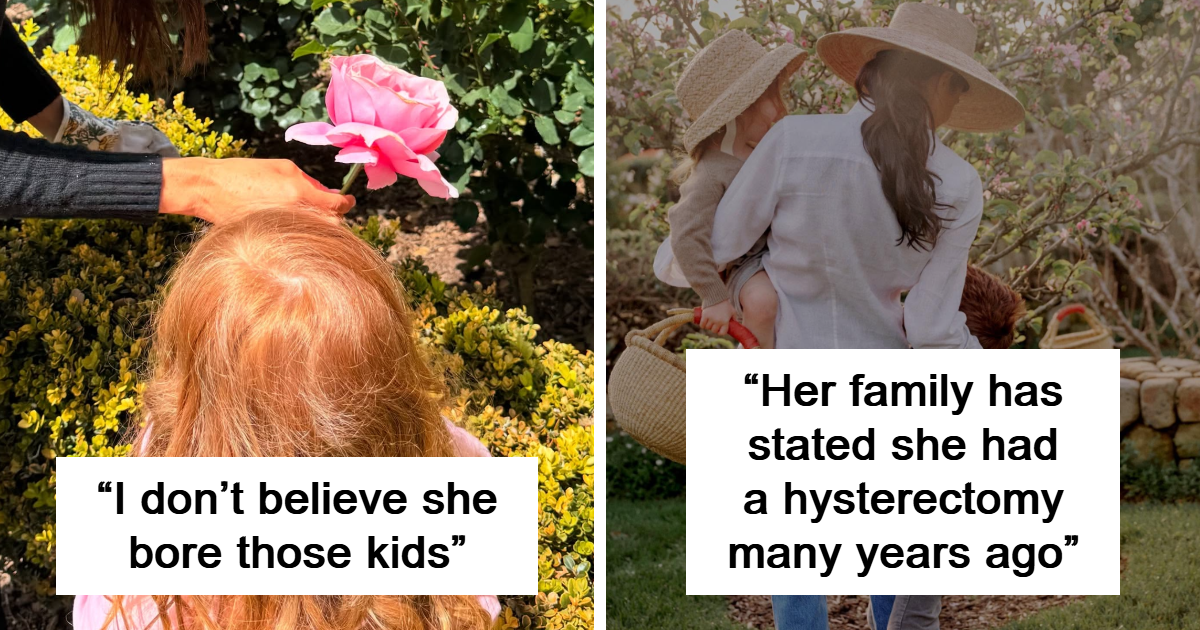
The pictures showed Meghan offering a pink rose to Lilibet, whose long red hair was photographed from behind. Archie appeared studying the flowers before proudly holding a large bloom toward the camera. His face was covered by the rose, continuing the Sussexes’ established practice of giving the public glimpses of their children without providing clear, close-up portraits.
Meghan captioned the post, “Sunday kind of love…with my little loves.” It was short, warm, and apparently powerful enough to launch several hundred arguments before lunch.
What Meghan Markle’s Rare Family Photos Revealed
The photographs were not dramatic in the traditional royal sense. There were no balconies, ceremonial uniforms, polished carriages, or children being instructed to wave at precisely the correct angle. Instead, the images emphasized an ordinary family activity: a mother and her children picking roses on a sunny weekend.
That simplicity was the point. Meghan’s social media presence in 2025 increasingly presented domestic life through food, gardening, entertaining, motherhood, and carefully selected personal memories. The garden photographs matched that visual language almost perfectly.
Princess Lilibet’s red hair attracted immediate attention
Much of the lighter commentary focused on Lilibet’s long red hair, which appeared especially bright in the California sunlight. Archie’s shorter hair also showed reddish tones. Fans quickly observed the resemblance to their father, Prince Harry, whose red hair has been one of his most recognizable features since childhood.
Some followers described the children as carrying the Spencer family look, referencing Harry’s late mother, Princess Diana, and her relatives. Others debated whether Archie’s coloring appeared darker than Lilibet’s. This was harmless when expressed affectionately, although the conversation occasionally wandered into the strange internet territory where strangers behave like amateur geneticists working without a laboratoryor manners.
The children’s faces remained mostly hidden
The Sussexes have shared photographs of Archie and Lilibet before, but they generally avoid exposing the children’s faces in recent public posts. They are often photographed from behind, at a distance, in profile, or with another object obscuring identifying details.
The rose Archie held toward the camera provided a particularly cheerful version of this approach. Viewers could see his interest in the garden and participate in the family moment without receiving a fully identifiable portrait.
For many parents, that represents a reasonable compromise. A family can share a memory while limiting the most sensitive visual information. For some critics, however, the partial visibility created a different complaint: why post the children at all if their faces will remain hidden?
That question became one of the main dividing lines in the reaction.
Why The Photos Received Such Mixed Reactions
Meghan Markle rarely inspires neutral scrolling. Admirers saw the photographs as affectionate and natural. Critics viewed them as calculated. A third group seemed primarily concerned with discovering somethinganythingto argue about before the roses had even finished opening.
Supporters praised the relaxed family moment
Positive reactions emphasized how happy and peaceful the garden appeared. Fans appreciated seeing the children involved in an outdoor activity rather than posing for a formal portrait. The images suggested that Archie and Lilibet were learning about flowers, food, and the natural environment around their home.
Supporters also defended Meghan’s right to determine how much of her family life becomes public. From this perspective, showing the children from behind is not hypocritical; it is an example of controlled sharing. Parents routinely decide which pictures belong on public accounts, which stay in private group chats, and which must never escape the camera roll under any circumstances.
The photographs also helped humanize two children who are frequently discussed as royal symbols rather than young people. Archie and Lilibet may hold the titles of prince and princess, but the images showed them doing something millions of children enjoy: examining flowers and proudly presenting their discoveries to a parent.
Critics questioned the Sussexes’ privacy strategy
Other commenters argued that sharing any photographs of the children conflicted with Harry and Meghan’s previous emphasis on privacy and media intrusion. Some asked why the couple would include Archie and Lilibet in public posts while continuing to conceal their faces.
That criticism often depends on treating privacy as an all-or-nothing concept. Under that interpretation, a public figure must either reveal everything or disappear entirely. Real privacy, however, is usually selective. People may share a vacation photograph without publishing their hotel room number. They may discuss parenthood without broadcasting a child’s school, schedule, medical information, or daily location.
The Sussexes have not argued that they should never appear publicly. Their objections have more often concerned harassment, unauthorized photography, security, aggressive media practices, and losing control over personal information. A photograph voluntarily selected by a parent is fundamentally different from an image captured through pursuit or intrusion.
Reasonable observers can still debate how much children should appear in content connected to a famous parent’s public profile. Yet “they wanted privacy” does not automatically mean “they promised permanent invisibility.”
Some reactions crossed an obvious boundary
Unfortunately, the discussion also produced intrusive comments about the children’s appearance and baseless conspiracy rhetoric about their existence or parentage. Such claims have circulated within hostile online communities for years, despite having no credible foundation.
Children should not become targets merely because adults dislike their parents. Archie and Lilibet did not choose royal titles, international media attention, family disputes, or social media fandoms that treat every photograph like evidence in a detective drama nobody commissioned.
Criticism of public figures is normal. Speculating aggressively about minors is not thoughtful media analysis; it is simply a failure to recognize boundaries.
A Carefully Controlled Look At Sussex Family Life
The garden post was part of a broader shift in Meghan’s public communication. After returning to Instagram in early 2025, she began sharing more direct glimpses of life in California. These included family celebrations, cooking projects, gardening, photographs connected to her lifestyle brand, and occasional moments involving Harry, Archie, or Lilibet.
This approach gave Meghan greater control over how those moments were presented. Rather than relying on paparazzi photographs or anonymous descriptions, she could select the picture, timing, caption, and amount of detail.
Media control is especially significant for Harry. He has repeatedly connected his concerns about press behavior to the experiences of his mother, Princess Diana, whose life was subjected to relentless photographic pursuit. For the Sussex family, choosing when and how to publish an image may be less about avoiding public life and more about establishing consent.
The strategy is also effective public storytelling. The photographs communicate several ideas without explaining them directly: the family is together, the children are growing, the home is peaceful, and Meghan’s interests in gardening and food are integrated into daily life.
That does not mean every image is spontaneous or commercially meaningless. Public figures rarely maintain social accounts without considering their wider image. However, a photograph can be both personally meaningful and consistent with a professional identity. Most people who post a suspiciously perfect brunch are familiar with this concept, even if no lifestyle company is involved.
How The Post Connected With Meghan’s Lifestyle Brand
The visual style of the photographs naturally complemented Meghan’s developing lifestyle business, As Ever, as well as her Netflix series, With Love, Meghan. Both projects highlighted cooking, preserves, flowers, entertaining, friendship, and the small rituals that make a home feel personal.
Roses growing in the family garden therefore carried more meaning than decorative background. They supported the domestic world Meghan was presenting across her public work: polished but approachable, luxurious but rooted in familiar activities.
Critics interpreted this overlap as evidence that family imagery was being used to strengthen a commercial brand. Supporters saw something less sinistera mother whose work reflects the interests already present in her home.
The truth may sit comfortably between those interpretations. Meghan’s public and private identities inevitably overlap. She is a mother, entrepreneur, former actress, duchess, producer, and lifestyle personality. A gardening post can express genuine family affection while also reinforcing the themes associated with her projects.
Modern social media rarely offers a clean division between personal expression and public positioning. That is true for celebrities, small-business owners, influencers, and the neighbor who posts seventeen photographs every time her sourdough starter develops a new bubble.
The Larger Debate About Children And Social Media
The reaction to the Archie and Lilibet photos reflects a broader discussion about “sharenting,” the practice of parents posting information, photographs, or videos about their children online.
Sharing family experiences can help relatives stay connected and allow parents to celebrate meaningful moments. It can also create risks. A child may eventually dislike an image, personal details can remain searchable for years, and photographs may travel far beyond their original audience.
Privacy specialists generally encourage parents to think about consent, identifying information, location clues, embarrassing material, and the permanence of digital content. A picture that seems harmless today may become part of a child’s online identity before that child is old enough to understand what an online identity is.
Meghan and Harry’s practice of avoiding clear facial images does not eliminate every concern, but it demonstrates awareness of the issue. Their posts generally reveal atmosphere and relationships rather than detailed information about the children’s routines.
The April garden pictures did not identify a school, disclose a precise schedule, announce a live location, or expose a vulnerable moment. They communicated that the children were picking roses at home. Compared with the level of information many family accounts publish daily, it was a restrained disclosure.
Why Every Meghan Markle Post Becomes A Cultural Test
Part of the intense reaction has little to do with flowers or children’s photography. Meghan has become a symbol onto which audiences project opinions about the monarchy, race, wealth, celebrity, marriage, media power, American ambition, British tradition, and whether homemade jam should require a waiting list.
Those who admire her tend to interpret new posts generously. Those who distrust her often see manipulation in the same material. The result is a feedback loop in which even an ordinary family photograph becomes evidence for conclusions people reached years earlier.
This polarization helps explain why the comments appeared so disproportionate to the content. There was no major revelation in the garden pictures. The children’s faces were not unveiled, no royal relationship was addressed, and no private family dispute was discussed. Yet the post became news because access to Archie and Lilibet remains rare and because Meghan’s public choices are examined with exceptional intensity.
The images succeeded partly because they left room for interpretation. Viewers saw only fragments: red hair, roses, sunlight, a mother’s smile, and a child presenting a flower. The missing details allowed supporters and critics to complete the story according to their existing beliefs.
Experiences And Lessons Behind The Royal Photo Debate
The experience surrounding Meghan Markle’s family photographs is surprisingly relatable, even for parents whose social posts are not immediately analyzed by entertainment reporters on two continents. Sharing a child’s picture often begins as a simple emotional impulse. A parent sees a joyful moment, takes a photograph, and wants friends or relatives to experience a small piece of that happiness.
Then the questions arrive. Is the account public? Does the photograph reveal a school uniform, house number, street sign, or regular location? Will the child find the image funny in ten years, or will it become the photograph they beg everyone to delete before their first job interview?
Many families develop informal rules through experience. They may avoid bath-time photographs, medical details, tantrums, embarrassing stories, and images that reveal where a child spends each day. Some ask older children for permission before posting. Others use private albums or messaging groups instead of public feeds.
The Sussex approach illustrates another practical option: share the setting without fully revealing the child. A photograph from behind can preserve the emotion of an experience while reducing facial identification. A strategically positioned flower, hat, shadow, or parent can do the same job. It is not perfect privacy, but it creates a boundary.
Parents also learn that audiences do not always respect those boundaries. Some viewers complain when children are shown; others complain when they are hidden. One group demands authenticity, while another warns against oversharing. Famous parents face an amplified version of a problem experienced in ordinary families: everybody has an opinion, and remarkably few people agree on where the correct line should be drawn.
A useful lesson is to establish the purpose of sharing before pressing the button. Is the photograph being posted to celebrate a child, preserve a family memory, promote a product, attract attention, or satisfy public curiosity? Multiple motivations may exist, but recognizing them makes the decision more deliberate.
Another lesson concerns commentary. Adults discussing famous families should remember that children can eventually read what has been written about them. Jokes about appearance, genetics, legitimacy, intelligence, or family relationships do not disappear simply because they were typed beneath a celebrity post. A child may one day encounter an archive of strangers debating the most personal details of their life.
The rose-garden post therefore offers a small but valuable case study. Meghan shared enough to communicate affection but withheld clear portraits. The public received a family moment, while Archie and Lilibet retained a degree of visual privacy. It was neither total secrecy nor unrestricted access.
For parents considering their own social media habits, the most responsible approach is rarely “post everything” or “never post anything.” It is to share thoughtfully, minimize identifying information, respect a child’s developing autonomy, and remember that a meaningful memory does not require unlimited distribution.
And when a child proudly hands over a rose, it is entirely acceptable to enjoy the moment before wondering what several million strangers might say about it.
Conclusion: A Sweet Post Caught In A Familiar Storm
Meghan Markle’s rare photos of Princess Lilibet and Prince Archie offered a warm glimpse of family life in California. The children explored a rose garden, their red hair caught the sunlight, and Meghan shared the moment using a simple expression of maternal affection.
The mixed reactions said more about the culture surrounding the Sussexes than about the photographs themselves. Supporters saw warmth, normality, and sensible privacy protections. Critics questioned the couple’s motivations and public-image strategy. A smaller but louder group crossed into invasive speculation that children should never be expected to endure.
Meghan and Harry appear to be developing a middle path: they will occasionally share their family, but they will do so through images they choose and boundaries they control. Not everyone will approve, because universal agreement on anything involving the Sussexes may be rarer than a royal family group chat without tension.
Still, the essential story remains refreshingly uncomplicated. A mother spent Sunday in the garden with her children. They picked roses. She took photographs. The internet supplied the thorns.