Note: Body-only HTML, cleaned for direct web publishing, with no extraneous citation markup.
Some headlines are loud for a day and gone by dinner. This one lingers. Not because it is flashy, but because it is almost unbearably human: a little boy, a dead sister, a mother on trial, and a courtroom forced to listen to a child describe the moment everything in his life split in two. Seventeen years later, that child is no longer a child. He is an adult with a family, a job, and enough distance to look back at the case that made him a public symbol before he was old enough to tie all the emotional knots himself.
The story centers on AJ Hutto, whose testimony in a Florida courtroom helped send his mother, Amanda Lewis, to prison for life after the 2007 drowning death of his half-sister, Adrianna Hutto. In 2025, AJ publicly addressed the case again, saying he still stands by what he told the court as a 7-year-old. That would be dramatic enough on its own, but this case has never stayed neatly folded inside one legal file. It has always lived in the messier places too: memory, grief, trauma, credibility, public doubt, and the impossible burden placed on children when grown-up violence lands in their lap like a live grenade.
So this article is not just about a headline that sounds like it came from the darkest corner of cable TV. It is about why the AJ Hutto case still unsettles people, why the legal questions never fully disappeared, and why his decision to speak out after 17 years has reopened a national conversation about child witness testimony, family trauma, and what justice looks like when the most important voice in the room once belonged to a first grader.
The Florida Case That Never Really Went Away
To understand why this story still gets attention, you have to start in Esto, Florida, in August 2007. Adrianna Hutto, age 7, was found unresponsive in the family’s backyard pool. Her mother, Amanda Lewis, said it was a tragic accident. Emergency crews responded, but Adrianna died. At first glance, it looked like a terrible drowning, the kind of story communities file under “unthinkable” and then try not to revisit.
But the case changed direction when AJ, who was 6 at the time of Adrianna’s death and 7 by the time he testified, told investigators and later jurors that what happened was not an accident at all. He said his mother had held Adrianna under the water as punishment. That testimony became the emotional center of the prosecution’s case. If you are thinking, “That is an awful lot to ask of a child,” congratulations, your moral alarm system is working properly.
In 2008, Amanda Lewis was convicted of first-degree felony murder and aggravated child abuse in connection with her daughter’s death. She received a life sentence without parole. In 2010, a Florida appeals court affirmed the conviction. The court rejected Lewis’s argument that aggravated child abuse could not serve as the underlying felony for felony murder in this case and held that the convictions would stand.
That legal outcome gave the case a formal ending, but not an emotional one. Public fascination continued because the details were so stark: a child witness, a pool drowning, a mother who insisted she was innocent, and a courtroom scene that felt less like justice in action and more like a family imploding in real time.
What AJ Hutto Said Then and What He Says Now
For years, AJ Hutto stayed largely out of the public eye. That silence mattered. It gave the case a kind of ghost-story quality. People remembered the testimony, the tears, the drawings shown in court, and the brutal emotional contradiction of a boy testifying against his mother. But they did not know what that boy became.
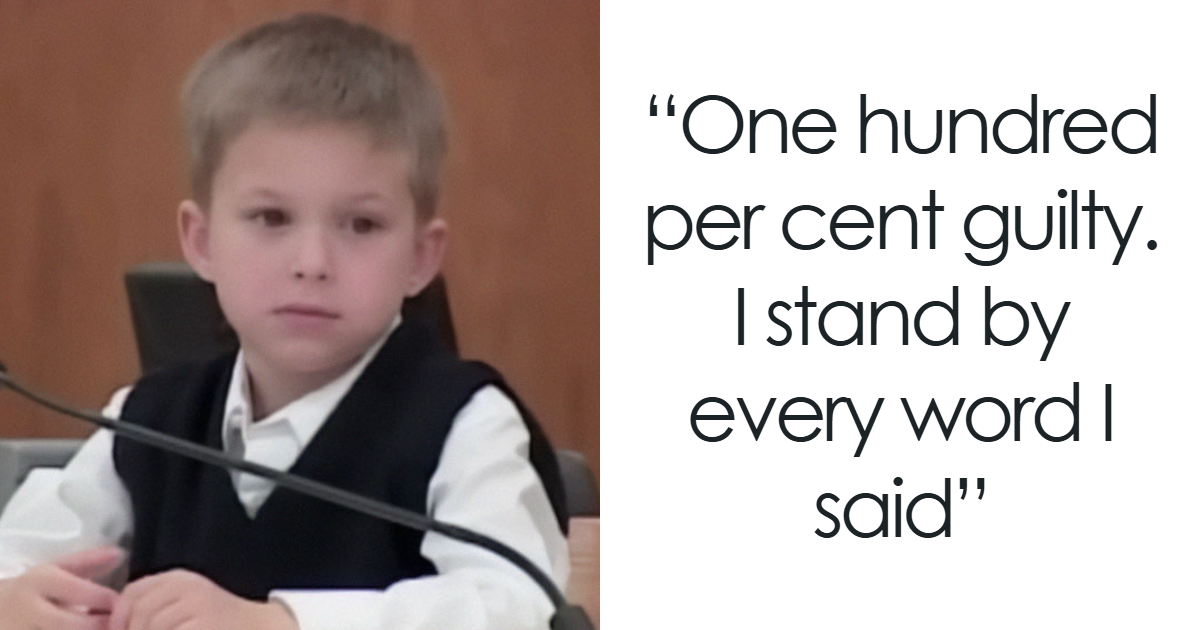
Then came the 2025 wave of renewed attention. In coverage of AJ’s adult remarks, he said he still believed his testimony was true and that he had not been coached into saying what he said. He also described the experience as heartbreaking, while making clear that he believed the violence and dysfunction in the home had been real. He reportedly said he stood by every word and described the life he found after adoption as radically different from the one he left behind.
That matters because many old true-crime stories survive on recycled narration. This one changed because a central figure spoke in his own voice again. He did not sound like someone interested in internet theater. He sounded like a man trying to close a door that the public keeps reopening.
There is a grim irony here. As a child, AJ became important because of what he said. As an adult, he became important again because he said he meant it. That is not a sequel anyone would volunteer to star in.
At the same time, Amanda Lewis has continued to maintain her innocence. Supporters and legal advocates have argued that the case was flawed, that the physical evidence was mishandled or overstated, and that a conviction resting so heavily on a young child’s account deserves renewed scrutiny. That tension is exactly why the story remains compelling: the witness has reaffirmed his account, while the defense side has continued to argue that the legal process itself was compromised.
Why This Story Still Hits So Hard
A Child Witness Carried the Weight of an Entire Case
Most people struggle to order coffee before age 7 without changing their mind twice. AJ Hutto had to take the stand in a murder trial. That alone explains why this case still punches people in the chest.
Child witnesses occupy a deeply uncomfortable place in the justice system. On one hand, children can provide real, accurate accounts of events they have experienced. On the other hand, decades of research show that trauma, questioning style, stress, and suggestion can affect how children recall and describe what happened. That does not mean child testimony is automatically unreliable. It means it must be handled with exceptional care, because childhood memory is not a courtroom robot. It is a human system under stress.
Trauma Does Not Make a Person Silent, Linear, or Easy to Read
One reason the AJ Hutto case continues to divide public opinion is that people still want trauma to behave neatly. They want the perfect victim, the perfectly consistent witness, the perfectly packaged timeline, and the kind of emotional tone that makes everybody in the courtroom nod in agreement. Real trauma does not do clean lines.
Federal guidance on child forensic interviewing warns that trauma can affect a child’s ability or willingness to report violent events in a straightforward way. Children may remember fragments, snapshots, or sensory details rather than a calm, chronological narrative. In other words, inconsistency is not always proof of lying, but consistency alone is not proof of accuracy either. That is exactly what makes these cases so difficult.
The Public Never Stops Looking for a Villain and a Certainty
This case also reveals something uncomfortable about us. We like crime stories to come with a final answer, preferably one that fits on a coffee mug and survives a social media caption. But the AJ Hutto case resists that flattening. It is legally resolved in one sense, emotionally unresolved in another, and newly contested again because of later post-conviction claims.
That combination keeps the story alive. It is not just “Did he tell the truth?” or “Was justice done?” It is also “How much certainty can any system produce when trauma, childhood, family violence, and public storytelling all collide?” That is a much harder question, and frankly, it is less marketable on a T-shirt.
The Legal Twist: Why the Case Is Back in the Conversation
If this were only a retrospective about AJ Hutto’s adult comments, the story would still be significant. But there is another reason it resurfaced: Amanda Lewis’s case has seen new post-conviction activity.
In late 2025, a motion for post-conviction relief was filed on Lewis’s behalf, raising claims about constitutional problems tied to jury selection and juror conduct. Reporting on those filings said the defense identified four issues, including the removal of a juror, Lewis’s absence during that process, and concerns about another juror’s age and outside exposure to prejudicial information. In February 2026, a court ordered the state to respond to those allegations.
That does not mean Lewis has been cleared. It does not mean AJ’s testimony has been invalidated. It means the legal system is being asked to look again at how the conviction was secured. And when a case already hinged so heavily on a child witness, any later procedural challenge gets amplified. Public reaction becomes less about one filing and more about an old fear: what if the system got the answer wrong, or got the answer right through a process that was still flawed?
This is where responsible writing matters. Sensational retellings love certainty because certainty sells. Real legal analysis has to make room for two truths at once: a jury convicted Amanda Lewis, and later legal challenges have kept the case from settling quietly into history.
What the Story Reveals About Childhood Trauma
Beyond the courtroom, this case opens a larger conversation about adverse childhood experiences, sometimes called ACEs. Federal public health guidance defines these as potentially traumatic events in childhood, including abuse, neglect, witnessing violence, and household instability. That description reads like a checklist no child should ever have to complete, yet many do.
When children experience violence or sudden loss, the effects can stretch far beyond the original event. National trauma resources describe outcomes that may include anxiety, guilt, shame, sleep problems, trouble concentrating, withdrawal, aggression, depression, risky behavior, and long-term health consequences. Children who witness violence or lose a loved one in a sudden, violent way may also experience traumatic grief, where the horror of the death interferes with the normal process of mourning.
That helps explain why stories like AJ Hutto’s do not really end when the verdict is read. Court transcripts capture testimony. They do not capture what it costs a child to become evidence.
And that may be the most haunting part of all. Public audiences often treat these cases like puzzles. But for the people inside them, they are not puzzles. They are childhoods with the roof blown off.
Why AJ Hutto Speaking Out Matters in 2026
Even though the headline references “after 17 years,” the meaning of AJ Hutto speaking out has only grown sharper with time. Today, the story lands in a cultural moment when people are more aware of trauma, more skeptical of institutions, and more likely to revisit old convictions through the lens of procedure, psychology, and forensic practice.
AJ’s comments matter because they challenge one of the easiest public assumptions: that a child in a notorious case must eventually renounce what he said. He did not. Instead, the available reporting indicates that he reaffirmed it. That does not solve every debate around the case, but it does change the emotional temperature. It reminds the public that the little boy people remember from courtroom footage became an adult who still lives with the consequences of what he witnessed, what he said, and what the justice system did with it.
In SEO terms, this is a true crime story. In human terms, it is a story about survival, memory, and the ugly fact that some children are forced into adult-sized truths long before they are ready.
Added Perspective: The Experiences Stories Like This Leave Behind
When people read a headline like Man Who Sent His Mom To Prison At Age 7 For Drowning His Sister Speaks Out After 17 Years, they often focus on the shock value first. That is understandable. The wording is arresting. But the real emotional core of the story is not the headline-sized drama. It is the lived experience underneath it.
Imagine being a child in a home where fear is normal enough that your body learns it before your vocabulary does. Imagine the confusion of loving a parent, fearing a parent, needing a parent, and then being asked by police, lawyers, social workers, and jurors to explain that parent. Children in violent or chaotic homes often do not experience life in neat categories. Their memories can be emotional, fragmented, vivid in some places and blurry in others. A smell, a look, the sound of water, the tension in a room before something bad happens; these details can sit in the nervous system long after the event itself.
Now add grief. Not ordinary grief, but traumatic grief. The death is not just sad; it is shocking, frightening, and entangled with guilt, confusion, and fear. A child in that position may feel sorrow over the person who died, fear of the person blamed, and even guilt for surviving. Those emotions do not politely take turns. They pile on top of one another like luggage at an airport carousel that has clearly given up.
Then comes the courtroom experience. Adults sometimes talk about “having your day in court” as if it is some noble civic ritual. For a child, it can feel like the opposite. Strange rooms. formal language. grown-ups arguing about what you meant. people staring. people doubting. people believing you too quickly. All of it can be overwhelming. Even when testimony is necessary, it can still leave a child feeling exposed, responsible, and permanently tied to the worst thing that ever happened in their family.
And what about afterward? That is the part many headlines skip. After the verdict, children still have to grow up. They still go to school, build relationships, avoid triggers, navigate anniversaries, and figure out who they are apart from the case. Some find stability through adoption, therapy, faith communities, or supportive relatives. Some build careers in service-oriented work because structure and purpose feel safer than chaos. Some stay private because public curiosity feels like another invasion.
That is why AJ Hutto speaking out resonates so strongly. It is not just a legal update or a true-crime revival. It is a reminder that children who survive family violence do not freeze in time like courtroom screenshots. They become adults carrying complicated memories, complicated loyalties, and complicated healing. And if there is any lesson worth taking from stories like this, it is that justice should not stop at conviction or acquittal. It should also ask what support, protection, and dignity the surviving child receives after the cameras leave.
Conclusion
The AJ Hutto story remains powerful because it sits at the crossroads of crime, memory, and childhood trauma. It is about a 2007 death, a 2008 conviction, a 2010 appeal, a 2025 public reemergence, and a 2025–2026 legal aftershock. But more than any date on the timeline, it is about what happens when a child becomes the hinge on which a murder case turns.
Seventeen years after his testimony, AJ Hutto’s decision to speak out did not make the story simpler. It made it more human. And maybe that is the point. Real cases are rarely tidy. They come with pain, contradiction, and long shadows. This one just happens to come with a child witness who grew up and reminded the world that the story never belonged to the headline in the first place.