Kate Winslet has built a career on emotional precision, period-drama gravitas, and the kind of screen presence that makes audiences sit up a little straighter. So naturally, one of her most unforgettable television moments involves her dressed as a nun, calmly giving spectacularly inappropriate phone-sex advice on the set of a fake Holocaust movie. Comedy, like life, is rarely polite enough to knock first.
The scene comes from Extras, the razor-edged HBO/BBC sitcom created by Ricky Gervais and Stephen Merchant after the success of The Office. The show followed struggling background actor Andy Millman, played by Gervais, and his sweetly chaotic friend Maggie Jacobs, played by Ashley Jensen, as they drifted through film sets, awkward conversations, celebrity encounters, and professional humiliation. Each episode featured a famous guest star playing a warped, exaggerated version of themselves. Kate Winslet’s appearance remains one of the series’ most talked-about cameos because it managed to be shocking, smart, and weirdly elegant at the same time.
But according to later comments from the show’s creators, the aired version was not even as outrageous as originally written. Winslet reportedly pushed back on a couple of lines she found too offensive, making Ricky Gervais and Stephen Merchant tone down the material. Considering what actually made it to television, this raises a deeply academic question: what on earth was left on the cutting-room floor?
Why Kate Winslet’s Extras Cameo Still Gets People Talking
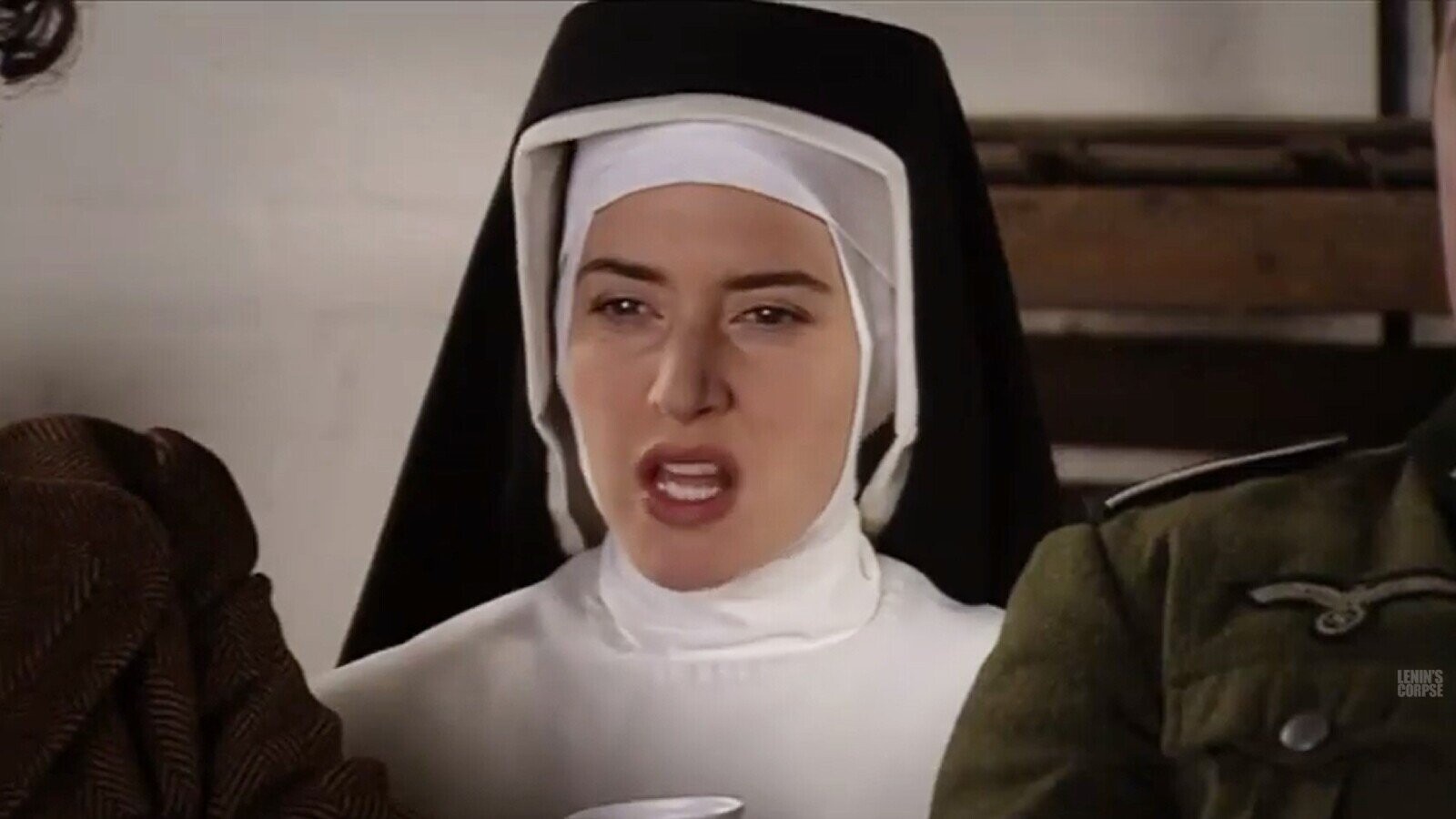
Winslet appeared in the third episode of the first season, titled simply “Kate Winslet.” In the episode, she plays a fictionalized version of herself starring in a solemn World War II drama called Sisters of Mercy, where she portrays a nun sheltering Jewish people during the Holocaust. That setup alone is already a loaded satirical target. The joke is not about the tragedy itself; it is about prestige Hollywood’s habit of treating certain serious subjects as golden tickets to awards glory.
The episode has two comic engines running at once. First, Andy is trying to impress a woman while making a mess of religion, morality, and basic social awareness. Second, Maggie is dealing with a boyfriend who wants her to talk dirty on the phone, while she has absolutely no idea how to do it. Enter Winslet, in full nun costume, offering coaching so explicit that the contrast becomes the punchline. The image is ridiculous: one of the world’s most respected actresses, dressed for spiritual dignity, delivering advice that would make a sailor drop his sandwich.
That clash is the secret of the scene. Winslet does not perform it as if she is begging for laughs. She plays it with straight-faced authority, as though she is explaining how to reset a printer or fold a fitted sheet. The more serious she is, the funnier it gets. This is not celebrity cameo acting in the “look, famous person!” sense. It is a sharp comic performance built on timing, composure, and the willingness to dent a polished public image.
The Line Kate Winslet Would Not Cross
Years after the episode aired, Ricky Gervais reflected that most celebrities who appeared on Extras were surprisingly willing to be outrageous. The premise depended on A-listers mocking themselves, not floating through the scene like protected museum pieces. Winslet, by all accounts, was game for the joke. She embraced the absurdity, leaned into the adult humor, and helped create one of the show’s most memorable sequences.
Still, being game does not mean having no boundaries. Gervais later said Winslet objected to a couple of lines that were especially offensive. The exact cut lines have not been publicly detailed, which is probably for the best. Some mysteries belong in sealed vaults, next to unaired sitcom pilots and whatever hairstyle photos celebrities delete from old phones.
Her decision matters because it shows the difference between fearlessness and carelessness. Winslet did not reject the scene, the joke, or the idea of making herself look ridiculous. She simply recognized that a few lines tipped from funny into unnecessarily offensive. That is not artistic cowardice. That is taste. Comedy often works best when someone in the room knows where the cliff edge is and says, “Funny view, but let’s not drive the bus off it.”
Ricky Gervais, Stephen Merchant, and the Comedy of Discomfort
To understand why this moment worked so well, it helps to understand the style of Extras. Gervais and Merchant specialized in cringe comedy, but not just the kind where characters say rude things and everyone gasps. Their best work finds the tiny social trapdoor under a normal conversation. A character wants approval. Another character misunderstands. Someone lies to seem more impressive. Suddenly, a harmless chat becomes a slow-motion fall down a staircase made of embarrassment.
In The Office, David Brent was funny because he believed he was charming while everyone else could see the disaster happening in real time. In Extras, Andy Millman is more self-aware, but he is still needy, impatient, and desperate to be taken seriously. He wants artistic respect, but he is surrounded by nonsense: useless agents, humiliating auditions, fame-hungry performers, and celebrities behaving like funhouse-mirror versions of themselves.
The celebrity cameos gave the show a unique playground. Ben Stiller could become a self-important director. Patrick Stewart could cheerfully pitch a wildly inappropriate film idea. Daniel Radcliffe could parody awkward post-child-star adulthood. Winslet’s episode belongs in that same hall of fame because it takes the gap between public image and private absurdity and stretches it until it squeaks.
Why Winslet Was the Perfect Guest Star
Kate Winslet was not a random famous face dropped into the script. She was precisely the kind of actor the joke required. By 2005, she was already associated with serious performances, literary adaptations, romantic tragedy, and prestige filmmaking. She had starred in Titanic, earned multiple Academy Award nominations, and built a reputation as a performer with emotional depth rather than celebrity fluff.
That made her Extras role funnier. The show asks viewers to imagine that behind the refined actress is someone cheerfully cynical about awards campaigns and startlingly confident about filthy vocabulary. It is a comic inversion of her image, but it never feels mean-spirited. Winslet appears to be in on the joke from the first second.
The episode also includes the now-famous Oscar-bait gag: Winslet’s fictional self suggests that starring in a Holocaust film is a reliable route to awards recognition. The joke became even more eyebrow-raising in hindsight because Winslet later won the Academy Award for Best Actress for The Reader, another Holocaust-related drama. Reality, apparently, saw the joke and replied, “Interesting. Let’s make this awkward forever.”
The Scene’s Real Target: Hollywood Seriousness
It would be easy to remember the Winslet cameo only for its adult humor, but the episode is sharper than that. The real target is not sex talk. It is Hollywood seriousness, awards-season calculation, and the way prestige can become a costume just as theatrical as a nun’s habit. Winslet’s character is filming a grave historical drama while casually explaining something wildly inappropriate between takes. That contrast punctures the inflated importance of the set.
In other words, Extras is laughing at the machinery around art: the ambition, the image management, the desperate hope that one role will finally change everything. Andy wants a speaking part. Maggie wants relationship advice. Winslet’s fictional self wants an Oscar. Everyone is chasing validation, just at different levels of fame.
That is why the cameo has aged better than many shock-comedy bits from the same era. The scene is not merely trying to be naughty. It is structured around character, status, and contradiction. Winslet’s authority makes the absurdity funnier. Maggie’s innocence makes it more uncomfortable. Andy’s presence makes it more socially disastrous. The whole thing is a comedy blender, and somehow the lid stays on.
Why Toning It Down May Have Made It Funnier
There is an old comedy lesson hiding inside this story: the most extreme version of a joke is not always the funniest version. Sometimes the line that gets cut is the one that would have made the audience stop laughing and start thinking about the writer. Shock can create a laugh, but it can also hijack the scene. Once viewers feel a joke is trying too hard to offend them, the machinery becomes visible.
Winslet’s pushback may have helped preserve the rhythm of the scene. The final version is already outrageous enough to create surprise, but it remains playful rather than sour. It lets viewers enjoy the absurdity without feeling that the show is elbowing them in the ribs and whispering, “Can you believe we said that?”
That balance is difficult. Too soft, and the joke loses its spark. Too harsh, and the joke becomes a dare. The aired scene lands because it feels like a confident comic performance, not a writerly endurance test. Winslet’s boundary may have been less of a limitation than an edit. Good comedy often benefits from someone saying, “Cut that one. The better joke is next.”
Celebrity Self-Parody Before Social Media Changed Everything
When Extras premiered in 2005, celebrity self-parody did not operate the way it does now. Today, actors routinely make fun of themselves on podcasts, TikTok clips, late-night sketches, and carefully managed viral campaigns. Public image is flexible, ironic, and constantly refreshed. Back then, seeing a major star aggressively subvert their persona on a scripted sitcom felt more surprising.
That is one reason Winslet’s appearance had impact. She was not simply showing that she had a sense of humor. She was giving the show permission to rough up the idea of “Kate Winslet” as a cultural object. The fictional Kate was ambitious, blunt, hilariously inappropriate, and completely unbothered by the sacred atmosphere of serious cinema. It was a performance about performance, which is exactly the kind of layered joke Extras loved.
The cameo also helped establish that Extras was not going to treat famous guests like ornaments. Celebrities came on the show to be used, not worshipped. That was the bargain. The bigger the star, the funnier the deflation could be.
What Modern Writers Can Learn From the Winslet Moment
For writers, comedians, and content creators, the Winslet story offers a useful lesson about creative collaboration. Boundaries do not automatically weaken bold material. In many cases, they sharpen it. A performer who says no to a line may be protecting the tone, the character, or the audience’s trust. The goal is not to avoid risk; the goal is to make the risk worth taking.
There is also a difference between offensive comedy and comedy about offensive behavior. Extras often places awful or embarrassing comments in the mouths of characters who are clearly flawed. The audience is invited to laugh at the social failure, not necessarily applaud the statement. That distinction is delicate, and it depends heavily on performance, context, and clarity.
Winslet seemed to understand that balance. She could play a fictional version of herself as outrageous without letting the scene become shapeless provocation. Her restraint did not dull the joke. It gave it a cleaner edge.
Experience Section: Watching the Scene Today Feels Like Opening a Comedy Time Capsule
Rewatching Kate Winslet’s Extras scene today is a strange experience because it feels both very 2005 and oddly fresh. The pacing belongs to an era before every joke was clipped, captioned, and fired into the internet cannon within minutes. The scene breathes. It lets awkwardness collect in the air. No one rushes to explain the joke, soften the silence, or rescue the characters from embarrassment. That patience is part of its charm.
The first experience many viewers have is simple disbelief. There is Kate Winslet, internationally respected dramatic actress, wearing a nun’s habit and discussing adult intimacy with the brisk seriousness of a driving instructor. The brain needs a second to adjust. That pause is where the laugh begins. The humor is not only in what she says; it is in the gap between what audiences expect from her and what she is willing to perform.
Another interesting experience is noticing how much Ashley Jensen contributes. Maggie’s confusion gives the scene its emotional anchor. If Winslet is the comic flamethrower, Maggie is the dry curtain standing nearby. Her discomfort, innocence, and complete lack of seductive vocabulary make the advice seem even more absurd. Without Maggie’s reaction, Winslet’s lines would just be outrageous. With Maggie, they become a miniature disaster.
For fans of cringe comedy, the scene also captures the joy of watching people behave badly in a controlled environment. Nobody watching actually wants to be in that conversation. Imagine standing on a film set, surrounded by crew members, while a movie star in religious costume offers graphic romance coaching. Most people would suddenly become fascinated by a nearby sandwich table. But from the safety of a couch, the embarrassment becomes delicious.
The scene also invites a broader reflection on boundaries in comedy. Knowing that Winslet rejected some lines makes the final version more interesting, not less. It reminds viewers that comedy is made through choices. Someone wrote the line. Someone read it. Someone questioned it. Someone revised it. What arrives on screen is not pure chaos; it is negotiated chaos wearing sensible shoes.
That is especially relevant now, when audiences often debate whether comedy has become too cautious or not cautious enough. The Winslet example suggests a better question: does the joke serve the scene? Her aired cameo is still bold, still adult, still surprising, and still funny. The fact that she had limits did not make the performance timid. It made the final product smarter.
There is also pleasure in watching a star understand exactly how to parody herself. Some celebrity cameos fail because the famous guest wants credit for being brave without actually looking foolish. Winslet goes further. She lets the fictional version of herself be vain, inappropriate, cynical, and absurdly confident. She does not wink too hard at the audience. She trusts the writing, trusts the tone, and trusts that viewers will understand the difference between Kate Winslet the person and “Kate Winslet” the comic invention.
That trust is why the scene still works. It is not merely a dirty-talk joke. It is a performance about status, image, ambition, and the strange little workplace known as a film set. It captures the awkward truth that famous people are still people, actors are still workers, and even the most dignified costume cannot protect anyone from a ridiculous conversation. In the end, Winslet did not just tone down an explicit scene. She helped tune it into one of the funniest and most durable moments in Extras.
Conclusion
Kate Winslet’s unforgettable Extras cameo remains a perfect example of how risky comedy can work when it is guided by performance, context, and just enough restraint. Ricky Gervais and Stephen Merchant built a series around discomfort, but Winslet brought something special to the formula: prestige, fearlessness, and a clear sense of where the joke should stop. Her decision to reject a couple of overly offensive lines did not weaken the scene. It likely helped make it sharper, cleaner, and more rewatchable.
The result is a cameo that still circulates in pop-culture memory because it is more than shock value. It is a wicked satire of awards culture, celebrity image, and the absurd contrast between public dignity and private ridiculousness. Winslet proved that a great actor can be hilarious without abandoning craft. She also proved that sometimes the funniest word in comedy is not the most explicit one. Sometimes it is simply: no.