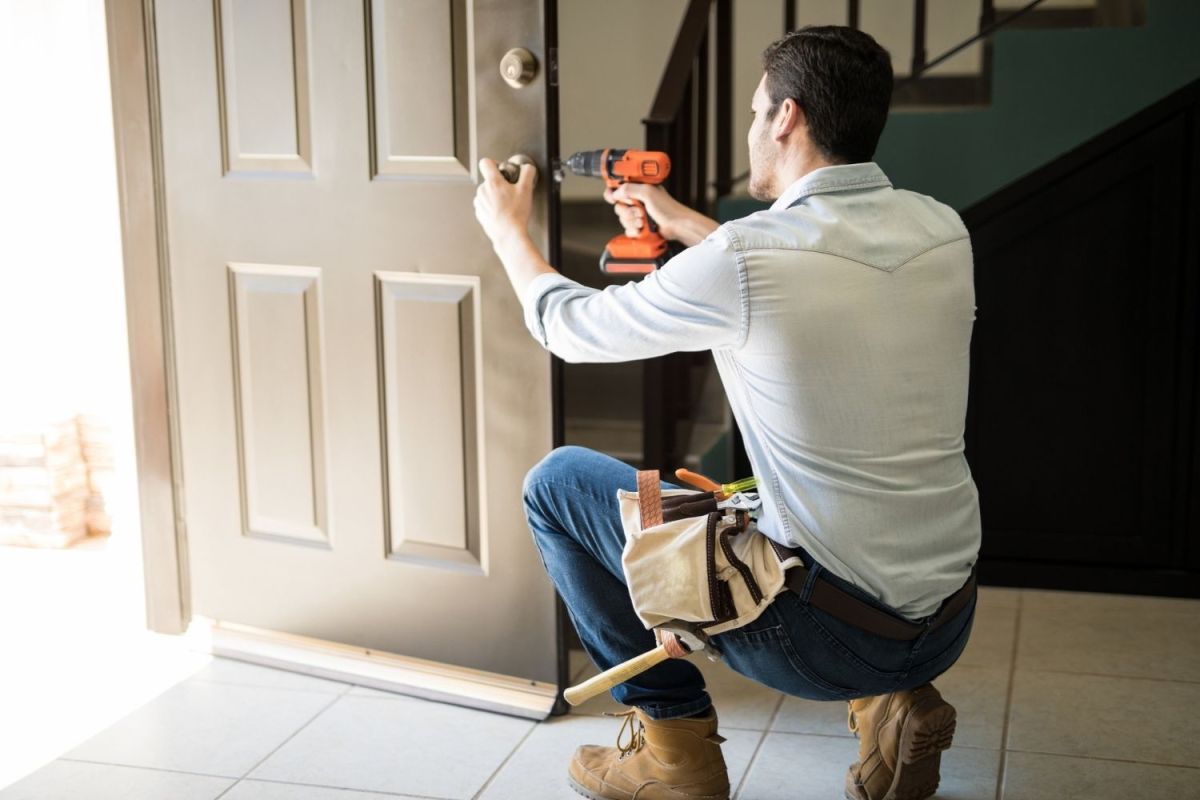
A new door can improve privacy, security, energy efficiency, and curb appeal. It can also expose your home-improvement budget to a surprising collection of extra charges. The door in the showroom may cost $300, but once labor, hardware, trim, disposal, and frame repairs join the party, the final invoice may look very different.
For most U.S. homeowners, door installation costs range from roughly $300 for a straightforward interior replacement to $2,500 or more for a typical exterior entry door. Custom doors, double-door systems, sidelights, structural modifications, and large patio openings can push a project beyond $5,000. In especially elaborate cases, the total may reach five figures.
This guide breaks down the cost of installing a door, explains what contractors include in their estimates, and offers realistic budget examples. In other words, we are opening the door to door pricing. Yes, that joke was inevitable.
Average Door Installation Cost at a Glance
Door installation prices vary because “install a door” can describe several very different projects. Hanging a replacement slab in a sound bedroom frame is not the same job as rebuilding a rotted exterior opening and fitting a weather-resistant entry system.
| Door project | Typical installed cost |
|---|---|
| Basic interior slab-door replacement | $300–$700 |
| Interior prehung door | $450–$1,000 |
| Bifold or closet door | $250–$800 |
| Barn door with standard hardware | $600–$2,500 |
| Pocket door | $800–$2,500 |
| Standard exterior entry door | $900–$2,500 |
| Storm door | $200–$700 |
| French or double doors | $1,500–$5,000+ |
| Sliding patio door | $1,000–$5,000+ |
| Custom entry system with sidelights | $3,000–$10,000+ |
These are broad planning ranges rather than guaranteed quotes. Local labor rates, product quality, building conditions, and the exact scope of work can pull the final price in either direction.
How Door Installation Costs Are Calculated
The Price of the Door
The door itself may account for a small or enormous portion of the project. A basic hollow-core interior door can cost well under $200, while a premium solid-wood entry system with decorative glass and sidelights can cost several thousand dollars before anyone picks up a level.
Common door materials include engineered wood, medium-density fiberboard, solid wood, fiberglass, steel, aluminum, vinyl, and glass. Hollow-core products are generally the least expensive. Solid-core and solid-wood doors cost more but can provide better sound control, durability, and a more substantial feel.
Professional Labor
Labor for a straightforward interior replacement may fall between approximately $150 and $500. Exterior-door labor often starts higher because the installer must handle weatherproofing, insulation, security, flashing, threshold alignment, and heavier materials.
A difficult exterior installation can exceed $1,000 in labor, especially when two workers are needed or the opening requires repair. Contractors may quote a flat project fee or charge by the hour. In higher-cost metropolitan areas, hourly rates can be significantly above national averages.
Removal and Disposal
Removing the old door may be included in the base price, but hauling it away is not always free. Disposal commonly adds $40 to $150 per door. The charge may be higher for oversized doors, glass panels, or multiple units.
Ask whether “removal” means taking the old door off its hinges or removing the complete frame, casing, threshold, and related materials. Those are very different workloads hiding behind one innocent-looking word.
Hardware and Accessories
Knobs, levers, hinges, deadbolts, smart locks, kick plates, closers, tracks, handles, doorbells, peepholes, and decorative hardware can add $50 to more than $1,000. A basic passage knob may barely disturb the budget. A premium electronic lockset can arrive carrying the financial confidence of a small appliance.
Some doors include hinges or predrilled lock openings. Others arrive as blank slabs that require the installer to cut hinge mortises and bore holes for the lockset.
Interior Door Installation Cost
Most interior door installations cost less than exterior projects because they do not require extensive flashing, waterproofing, or insulated thresholds. A standard bedroom or bathroom door may cost $300 to $1,000 installed, depending on whether it is a slab or prehung unit.
Hollow-Core Versus Solid-Core Doors
Hollow-core doors are inexpensive, lightweight, and easy to handle. They work well for closets and low-traffic rooms, but they do little to block sound. Solid-core doors cost more and are heavier, but they improve privacy and generally feel sturdier.
Upgrading several bedrooms from hollow-core to solid-core doors can be worthwhile in a busy household. Just remember that the heavier slabs may require stronger hinges and careful adjustment.
Closet, Bifold, and Sliding Doors
A simple bifold closet door is often one of the more affordable installations, typically costing $250 to $800. Mirrored bypass doors, custom tracks, and unusual opening sizes increase the price.
Barn doors commonly cost $600 to $2,500 installed once the track, mounting board, hardware, and labor are included. Before ordering one, confirm that the wall has enough uninterrupted space for the door to slide open. Light switches have an unfortunate habit of occupying precisely the wrong spot.
Pocket Doors
Pocket doors slide into the wall, making them useful in bathrooms, closets, and tight rooms. Installation in new construction is relatively straightforward. Retrofitting one into an existing wall is more expensive because the contractor may need to open drywall, relocate wiring or plumbing, modify studs, and repair the wall.
A typical pocket-door project costs $800 to $2,500, although complicated retrofits can exceed that range.
Exterior Door Installation Cost
A standard exterior entry-door installation commonly costs $900 to $2,500, including a midrange door and professional labor. A basic steel door installed in an existing, undamaged opening may cost less. Solid wood, decorative glass, custom dimensions, and extensive frame repairs push the total upward.
Steel Entry Doors
Steel is a popular budget-friendly material. It provides security, resists warping, and is available in many factory-finished styles. Installed prices often begin around $600 to $1,800 for basic configurations, although upgraded glass and hardware can raise the total.
Steel can dent, and exposed damage may eventually rust, so proper finishing and maintenance matter.
Fiberglass Entry Doors
Fiberglass doors resist moisture and can imitate the appearance of wood without demanding the same maintenance. Installed costs generally range from about $1,000 to $4,000, depending on quality, insulation, glass, and design.
Premium fiberglass entry systems can cost considerably more, but they are often chosen for durability in humid, rainy, or coastal climates.
Wood Entry Doors
Wood provides a classic, high-end appearance, but it is usually the most maintenance-intensive option. A stock wood entry door may fit into a $1,500 to $4,000 installed budget. Custom hardwood, carving, decorative glass, or matching sidelights can move the price above $5,000.
Wood doors need protection from moisture and strong sunlight. Without regular sealing or refinishing, that beautiful front door may begin expressing itself through swelling, cracking, or warping.
Slab Versus Prehung Door Costs
What Is a Slab Door?
A slab is the door panel by itself. It does not include a frame. A slab can save money when the existing jamb is square, solid, and compatible with the new door.
However, installing a slab requires accurate hinge placement, trimming, planing, drilling, and alignment. The product may be cheaper, but the labor is not automatically cheaper. A contractor must essentially persuade a blank rectangle to cooperate with an existing frame that may have shifted over several decades.
What Is a Prehung Door?
A prehung door arrives attached to a new frame. It is generally the better choice when the existing jamb is damaged, badly out of square, or being replaced as part of a remodel.
Interior prehung installation commonly costs $450 to $1,000. Exterior prehung systems cost more because they are heavier and must be sealed against air and water. The installer still needs to level, shim, fasten, insulate, trim, and finish the unit, so “prehung” does not mean “magically installs itself while everyone drinks coffee.”
Major Factors That Raise the Final Price
A Damaged Frame or Rough Opening
Rot, termites, water damage, split jambs, and out-of-square framing can transform a routine replacement into a carpentry project. Installing a new frame may add roughly $350 to $600 for a standard opening, while significant structural repairs can cost much more.
Nonstandard Dimensions
Standard doors benefit from mass production. Oversized, extra-tall, unusually narrow, arched, or historic doors may require custom manufacturing and additional installation time. Custom work can double or triple the product cost.
Changing the Size or Location
Replacing one door with another of the same size is usually the least expensive option. Widening an opening may involve framing, drywall, siding, masonry, electrical wiring, plumbing, or structural engineering. Creating a completely new exterior opening can cost several thousand dollars beyond the price of the door.
Sidelights, Transoms, and Double Doors
Sidelights and transoms add natural light and visual drama, but they also add glass, framing, flashing, finishing, and installation complexity. Double doors require precise alignment so both panels close evenly. Installed entry systems with these features frequently cost $3,000 to $10,000 or more.
Paint, Stain, and Trim
Some quotes stop once the door operates correctly. Painting, staining, caulking, and installing new casing may be separate. New trim can add a few hundred dollars per opening, especially when it must match historic or custom millwork.
Permits and Code Requirements
A like-for-like interior replacement rarely requires a permit, but requirements differ by jurisdiction. Structural changes, enlarged exterior openings, fire-rated assemblies, and certain multifamily projects may need approval. Ask the local building department or contractor before work begins.
Three Realistic Door Installation Budget Examples
Example 1: Replacing a Bedroom Door
- Solid-core interior slab: $220
- Labor to fit and hang it: $275
- New lever and hinges: $85
- Paint and supplies: $70
- Estimated total: $650
This example assumes the existing frame is in good condition and the homeowner handles minor touch-up painting.
Example 2: Installing a Midrange Front Door
- Fiberglass prehung entry door: $900
- Removal and installation labor: $650
- Lockset and deadbolt: $220
- Insulation, sealant, trim, and disposal: $230
- Estimated total: $2,000
This is a typical replacement in an existing opening without major rot or structural work.
Example 3: Upgrading to Double Doors With Glass
- Double-door system: $3,200
- Labor and weatherproofing: $1,500
- Opening and framing modifications: $1,200
- Premium hardware: $500
- Interior and exterior finish work: $600
- Estimated total: $7,000
If hidden water damage appears after demolition, the contingency fund may also receive an invitation.
How to Save Money on Door Installation
Choose a standard-size door whenever possible. Reusing a sound frame, keeping the existing opening, and selecting readily available hardware can reduce both product and labor costs.
For multiple interior doors, ask whether the contractor offers a volume rate. Mobilization and setup costs can be spread across the project, so installing six doors at once may cost less per door than scheduling six separate visits.
Get at least three itemized estimates. Each quote should identify the door model, labor, removal, disposal, hardware, frame work, trim, finishing, warranty, and permit responsibilities. Comparing only the bottom-line number is risky when one contractor includes painting and another plans to leave you staring at bare wood.
You can also purchase hardware or handle simple painting yourself. Avoid cutting costs on exterior flashing, structural work, or security-related installation. A poorly sealed front door can create drafts and water damage that cost far more than the original labor savings.
DIY Versus Professional Installation
An experienced DIYer may successfully replace a standard interior slab or install a simple storm door. The necessary tools can include a drill, level, pry bar, chisels, saw, nailer, shims, measuring tools, and safety equipment.
Professional installation is usually the safer choice for exterior doors, oversized units, expensive materials, glass systems, fire-rated doors, pocket-door retrofits, and structural modifications. Exterior doors must resist weather and forced entry while opening, closing, and latching smoothly.
DIY savings disappear quickly when a door is cut too short, the hinge mortises are misplaced, or the frame is installed out of square. A door that slowly swings open by itself is not haunted. It is probably telling you the jamb is not plumb.
Is a New Door Worth the Cost?
A new door can be a practical and visible home improvement. Interior doors improve privacy, noise control, and room design. Exterior doors may enhance security, weather resistance, and curb appeal.
The best value usually comes from fixing a genuine problem rather than buying the most expensive product available. A midrange fiberglass or steel entry door, correctly installed and sealed, may outperform a luxury door placed in a damaged frame.
Energy-efficiency standards, rebates, and tax incentives can change. Before purchasing an exterior door based on a promised incentive, verify current eligibility through official federal, state, local, or utility sources.
Conclusion: Build the Budget Around the Opening, Not Just the Door
Door installation generally costs $300 to $1,000 for common interior projects and $900 to $2,500 for standard exterior replacements. Specialty doors, glass panels, custom dimensions, damaged framing, and structural changes can raise the total into the thousands.
The most reliable budget includes the product, labor, hardware, removal, disposal, frame repairs, trim, finishing, permits, and a contingency allowance of approximately 10% to 20%. That last category is not pessimism. It is a polite acknowledgment that houses enjoy keeping secrets behind their trim.
Request itemized quotes, confirm what is excluded, and prioritize correct installation over the lowest initial price. A properly fitted door should operate smoothly, seal tightly, and remain dependable for yearsnot scrape the floor every time humidity enters the chat.
Homeowner Experiences: What Door Projects Teach You
Door installation often looks deceptively simple from the outside. The old door comes out, the new one goes in, and everyone returns to normal life before lunch. Actual projects tend to reveal that the condition of the opening matters as much as the product selected.
One common experience is discovering that an inexpensive slab replacement demands more skilled labor than expected. A homeowner may purchase a $150 interior door, only to learn that it needs trimming, hinge mortises, a lock bore, edge finishing, and several rounds of adjustment. By the time the work is complete, a slightly more expensive prehung unit might have produced a similar total cost.
Exterior replacements frequently produce a different lesson: hidden damage changes everything. An installer may remove the old threshold and find soft wood beneath it. What began as a one-day replacement can require new subfloor material, framing repairs, flashing, and exterior trim. This does not necessarily mean the contractor invented extra work. Water damage is simply very good at remaining quiet until demolition begins.
Homeowners also learn to examine door swing direction carefully. A beautiful door ordered with the wrong handing may block a light switch, collide with furniture, or open toward an inconvenient area. Before ordering, stand in the doorway and visualize how the door will operate. Confirm whether it swings inward or outward and whether the hinges belong on the left or right.
Another recurring lesson concerns finish work. People often assume a newly installed door will arrive completely painted, trimmed, sealed, and ready for a dramatic reveal. Some estimates cover only mechanical installation. The installer may leave nail holes, raw casing, primer, or small drywall gaps for a painter to finish later. Asking about these details before signing the contract prevents the classic final-day conversation: “It works perfectly, but why does it look unfinished?”
Multiple-door projects offer their own experience. Replacing every interior door at once creates a more consistent appearance and may reduce the cost per opening, but minor variations become obvious. Floors are not perfectly level, walls are not perfectly plumb, and two openings that appear identical may differ by half an inch. Careful field measurements are more reliable than assumptions based on the home’s original plans.
Finally, homeowners tend to appreciate a good installer after living with a bad door. Proper installation is visible in small details: even gaps, a latch that engages without force, smooth movement, secure hinges, clean caulk lines, and a threshold that stops drafts without dragging. These details are not flashy, but they separate a lasting improvement from a rectangular daily annoyance.
The practical takeaway is to budget for the entire opening, verify the scope in writing, and leave room for repairs. Buying the door is only the opening chapter. The frame, wall, hardware, finish, and installer write the rest of the story.
Note: All prices are general U.S. planning estimates. Actual door installation costs vary by location, product specifications, site conditions, contractor rates, and the scope included in the quote.