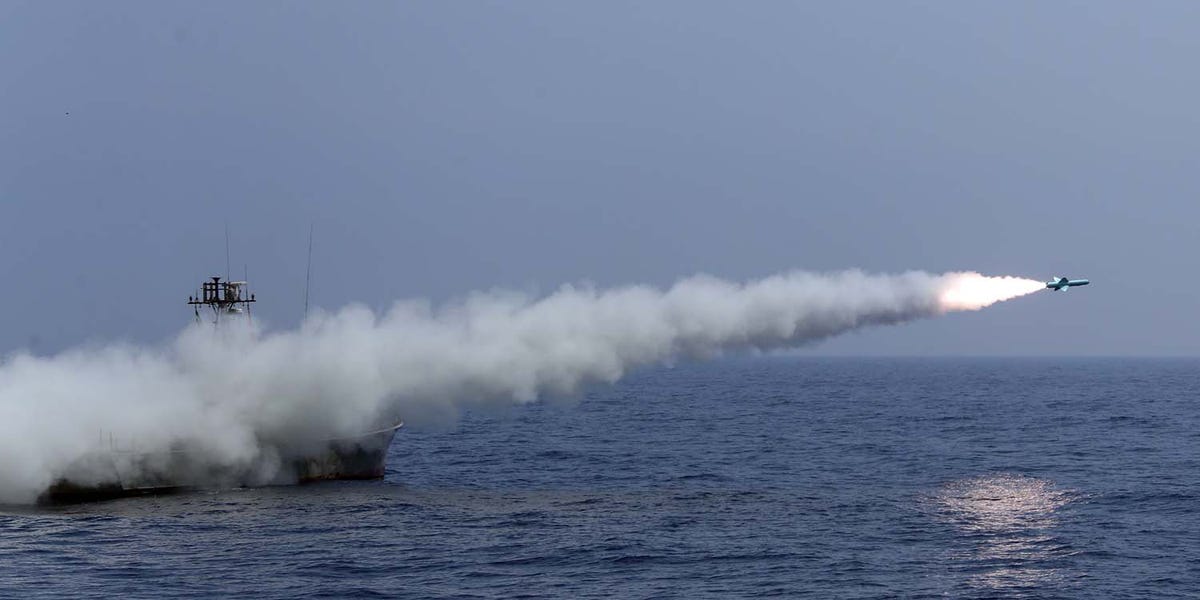
Some countries build warships that look exactly like what you would expect: gray, boxy, and serious enough to make a spreadsheet blush. Iran, on the other hand, has decided to build missile-slinging catamarans for the Islamic Revolutionary Guard Corps Navy, and that choice says a lot about how Tehran thinks naval warfare works in the Persian Gulf. These are not vanity projects designed to win yacht club trophies. They are fast, heavily armed, unusually shaped combatants built for a region where geography is tight, tempers are short, and shipping lanes are always one bad week away from becoming front-page news.
The headline sounds almost comic at first glance. Catamarans? Missiles? Are we talking about a luxury ferry that got drafted into a Tom Clancy novel? Not quite. Iran’s newer twin-hulled warships, especially the Shahid Soleimani class operated by the Revolutionary Guard navy, represent a serious attempt to upgrade from the old formula of swarming speedboats and harassment tactics into something more flexible, more survivable, and far more dangerous. In plain English, Iran is trying to build ships that can still play the fast, nasty, close-to-shore game, but with better sensors, better range, more missiles, and a bigger command-and-control role.
That matters because the Revolutionary Guard navy is not some side character in Iran’s military cast. It is the force most closely tied to operations in the Persian Gulf and the Strait of Hormuz, one of the world’s most important maritime chokepoints. If you want to understand why Iran is investing in these strange-looking vessels, you have to start there: not with aesthetics, but with strategy. These catamarans are shaped by the narrow waters, heavy traffic, and constant military signaling that define the Gulf. They are built for sea denial, intimidation, and escalation control all at once.
Iran’s New Naval Formula Is About More Than a New Hull
For years, Iran’s Revolutionary Guard navy built its reputation on asymmetric warfare. That meant fleets of small fast boats, surprise maneuvers, harassment of commercial shipping, coastal missile batteries, drones, naval mines, and the ever-present possibility that a local incident could spiral into a broader crisis. This model was cheap, hard to fully suppress, and well matched to the geography of the Gulf. It also had limitations. Tiny boats can swarm, harass, and threaten, but they cannot easily serve as durable command ships, provide layered air defense, or operate far from base with the same confidence as larger combatants.
That is where the missile catamaran comes in. Iran’s newer Guard vessels appear to bridge two worlds: the classic Iranian “mosquito fleet” mentality and a more conventional corvette-like naval capability. Analysts have pointed out that these ships may serve as command hubs for flotillas of explosive boats, drones, and other smaller craft. In other words, Iran is not abandoning the swarm. It is giving the swarm a brain, a shield, and a longer arm.
This is a meaningful shift. Iran’s naval playbook has long focused on making life miserable for stronger navies rather than beating them in a fair fight. That basic logic has not changed. What has changed is the hardware. A larger catamaran with anti-ship missiles, air-defense systems, and facilities for smaller craft gives Iran more options. It can threaten shipping, escort friendly units, coordinate distributed attacks, and potentially remain on station longer than the speedboats that made the Guard famous. It is still an asymmetric tool. It is just wearing a more tailored suit now.
Why a Catamaran, of All Things?
The twin-hull design is not a random choice, and it is not simply there because it looks futuristic in propaganda footage. Catamarans offer several practical advantages for a navy that wants speed, stability, and deck space without immediately jumping into full-size frigate territory. A wider beam can improve stability in rougher water. The design can also create useful internal volume and more flexible topside arrangements for missiles, sensors, launchers, and flight or drone operations. That matters when you are trying to cram a surprising amount of combat power onto a vessel that still needs to move quickly and operate in constrained waters.
Iranian officials and outside analysts have also tied the catamaran layout to reduced radar signature and better seakeeping. Whether those stealth claims should be accepted at face value is another question entirely. Iran has a habit of marketing every new military toy as invisible, unstoppable, and presumably capable of doing your taxes. Still, even if the stealth language is exaggerated, the design does offer a lower, sleeker, more modern profile than the Guard’s legacy small-boat fleet. That alone changes how the vessel can be used, especially when paired with missiles and drones.
There is also a psychological element. These ships look different because they are meant to signal a different kind of force. Iran wants regional rivals, Western planners, and domestic audiences to see an indigenous naval industry that is no longer limited to speedboats with attitude. A missile catamaran says: we can still swarm you, but we can also field something that looks and behaves more like a modern guided-missile combatant.
Speed, Range, and Presence
One of the most important changes in these catamarans is not merely what they carry, but how far they may be able to go. Iranian claims and outside reporting suggest that the class was designed with significantly better endurance than the Revolutionary Guard navy’s traditional fast attack craft. That matters because range expands the menu of operations. A vessel that can stay out longer and operate farther from shore is useful for escort missions, deterrent patrols, drone support, Red Sea presence, and the broader narrative Tehran pushes about extending its influence beyond the immediate Gulf.
Iran has spent years trying to show it can project maritime power outside its home waters, from the Gulf of Oman to the Indian Ocean and beyond. The catamaran format fits that ambition neatly. It remains small enough to serve the Guard navy’s preferred style of warfare, but large enough to support a more persistent and more organized presence. Think of it as the difference between a street fighter and a field commander. Both can throw punches. Only one can coordinate the rest of the brawl.
What These Missile Catamarans Appear to Carry
The headline promise is not subtle: these boats sling missiles. Reporting and technical analysis indicate that the Shahid Soleimani class introduced vertical launch systems on an Iranian warship for the first time, along with box launchers for anti-ship cruise missiles. That is a big deal. A ship with both anti-surface and air-defense capabilities is more than a floating ambush point. It becomes a multi-role combatant that can protect itself better, escort other forces, and complicate the targeting problem for an adversary.
Open-source assessments suggest the class carries medium-range and shorter-range surface-to-air missiles in vertical launch cells, anti-ship cruise missiles in box launchers, a forward gun, and multiple close-in guns for defense. There are also signs of a helicopter deck or at least a platform area that can support aviation or drone activity, plus space for launching and recovering smaller fast attack craft from the stern. That combination is what makes the ship so interesting. It is not just a missile carrier. It is a small ecosystem.
And that ecosystem fits perfectly with how Iran prefers to fight at sea. A single catamaran is useful. A catamaran controlling drones, cueing smaller boats, coordinating missile attacks, and operating under the umbrella of shore-based sensors and coastal missiles is much more serious. Iran’s maritime strategy is layered, not linear. These ships make the layers denser.
The Weapons Matter, but the Mix Matters More
It is easy to fixate on missile ranges and launcher counts, because missile numbers make defense analysts happy in the same way baseball statistics make fans happy. But the more important story is how these capabilities interact. Anti-ship missiles threaten surface vessels. Surface-to-air missiles improve survivability. Smaller craft aboard the ship extend reach and flexibility. Drones improve scouting and targeting. Put that together and you get a ship designed not to duel an American destroyer in open water, but to make every approach to the Gulf more complicated, more crowded, and more dangerous.
That is classic Iranian military logic. Tehran generally does not seek symmetrical naval competition with the United States. It seeks enough layered threat to raise costs, generate uncertainty, and create political pressure. A missile catamaran is a very Iranian answer to that challenge: part corvette, part mothership, part coastal ambush platform.
Why the Strait of Hormuz Is the Real Main Character
No discussion of Iran’s new naval hardware makes sense without the Strait of Hormuz. This narrow waterway is one of the most strategically important passages on Earth because a huge share of globally traded oil moves through it. Iran’s Guard navy operates in and around this space for a reason. Geography gives Tehran leverage. Even if it cannot dominate the sea, it can threaten disruption, raise insurance costs, spook markets, and force bigger navies to devote time and resources to escort, surveillance, and mine-countermeasure work.
The Guard’s maritime mission is built around pressure in confined waters. That includes fast boats, drones, missiles, and the potential use of civilian ports, islands, and coastal terrain as parts of a wider denial architecture. A missile catamaran strengthens that architecture because it can move with more punch than a speedboat and with more agility than a larger conventional ship. It is well suited to a theater where the message often matters almost as much as the missile.
In practical terms, these vessels give Iran more ways to threaten commercial and military traffic without betting everything on one kind of platform. That matters in a crisis. A swarm can harass. A mine can delay. A coastal battery can intimidate. A missile catamaran can help tie those pieces together while adding its own offensive and defensive firepower. It is another knot in a web designed to make commanders hesitate and shipping companies sweat.
These Ships Also Reveal Iran’s Limits
For all their strengths, Iran’s missile catamarans are not magic. They remain relatively small combatants operating against adversaries with vastly superior surveillance, airpower, submarine forces, and precision-strike capabilities. A sleek twin hull and a handful of launchers do not erase the basic military balance in the Gulf. If anything, the very need for these ships reflects Iran’s understanding that it cannot win a straight conventional naval contest. It can only make that contest costly and messy.
There is also the persistent problem of verification. Much of what is publicly known about these vessels comes from Iranian announcements, state media footage, and open-source imagery interpreted by outside analysts. That means some details remain uncertain, and some official claims are almost certainly inflated. This does not make the ships meaningless. It just means we should separate serious capability from theatrical narration. Iran is building real combatants, but it is also building a story about those combatants.
Still, even the propaganda tells you something useful. Tehran would not hype these vessels so aggressively if it did not believe they served a real operational and political purpose. The point is not only to fight with them. The point is to be seen having them.
The Bigger Message Iran Wants to Send
At the strategic level, Iran’s missile catamarans are a message in steel and aluminum: the Revolutionary Guard navy intends to evolve without abandoning its core doctrine. Tehran is not replacing swarming tactics with a mini-blue-water navy. It is upgrading the swarm era. These ships suggest a force that wants to coordinate more, survive longer, reach farther, and layer its threats more intelligently.
That message is aimed outward and inward. Outward, it tells the United States, Gulf Arab states, and commercial shipping interests that Iran is improving its maritime toolkit. Inward, it tells domestic audiences that sanctions, isolation, and pressure have not frozen Iranian military innovation. In that sense, the catamarans are weapons, symbols, and bargaining chips all at once.
And yes, they are also catamarans with missiles on them, which remains one of the more aggressively overachieving sentences in modern naval reporting.
What the Experience Looks Like in the Real World
To understand why these vessels matter, it helps to stop thinking like a brochure writer and start thinking like the people who would actually live with their consequences. For a commercial ship captain entering the Gulf, the experience is not cinematic in the Hollywood sense. It is procedural, tense, and deeply boring right up until it is absolutely not. The radar picture gets busy. Advisories matter. Insurance clauses matter. Every unusual movement at sea suddenly becomes a conversation. A Revolutionary Guard missile catamaran does not have to fire a shot to influence that experience. Its mere presence can make crews more cautious, operators more expensive, and routes more politically sensitive.
For naval planners, the experience is different but no less stressful. The problem is not just one ship. It is one ship as part of a layered system that may include drones overhead, smaller fast attack craft nearby, coastal missile batteries on land, electronic warfare, and the possibility of civilian traffic cluttering the battlespace. A missile catamaran is dangerous in isolation, but it is much more dangerous as a node inside a distributed network. That means any response has to account for sensors, communications, targeting chains, and escalation dynamics. In naval warfare, the platform is rarely the whole story. The network is the story, and Iran clearly understands that.
For regional governments, the experience is political as much as military. Gulf states do not need to believe every Iranian claim to take the trend seriously. A force built around longer-range, more heavily armed, and more visible Guard vessels changes the rhythm of regional deterrence. It creates new patrol patterns, new procurement arguments, new intelligence requirements, and new calculations about how quickly a shipping incident could turn into a regional crisis. In a place where perception can move markets faster than facts, a modern-looking missile catamaran is a strategic communication tool all by itself.
For analysts and observers, the experience is a lesson in how smaller powers innovate under pressure. Iran does not build naval power the way the United States or China does. It mixes indigenous production, doctrinal improvisation, propaganda, and selective borrowing from foreign design ideas. The result can look strange from the outside, but “strange” is not the same thing as irrelevant. These catamarans may not fit a traditional Western template, yet they fit Iran’s operating environment rather well. They are built for constrained waters, distributed threats, layered signaling, and politically useful ambiguity.
And for anyone watching global trade, the experience is simple: every upgrade in Iran’s maritime toolkit increases the premium on vigilance. Markets do not wait for perfect certainty. They react to risk, and these ships are risk made visible. They embody the kind of capability that can sit in the gray zone between peacetime posturing and wartime action, which is precisely where Iran often prefers to operate. That is why the catamarans matter. Not because they are invincible, and not because they will replace every older Guard tactic, but because they sharpen the edge of an already complicated maritime challenge.
Conclusion
Iran is building missile-slinging catamarans because they fit its worldview at sea. The Revolutionary Guard navy does not need a fleet that mirrors the U.S. Navy. It needs a fleet that can threaten shipping, coordinate smaller craft, complicate targeting, and exploit the geography of the Gulf. The Shahid Soleimani class and related designs appear to do exactly that. They are not superweapons, but they are not gimmicks either. They are the product of a country trying to turn limited conventional strength into maximum regional leverage.
So the next time someone says “catamaran,” you might think of beach resorts, tropical cocktails, and sunscreen applied with reckless optimism. Iran would prefer you think of vertical launch systems, anti-ship missiles, drone support, and a long, nervous transit through the Strait of Hormuz. That, in a nutshell, is the whole point.