Childhood is a magical period when curiosity is limitless, imagination is powerful, and common sense is still downloading over a painfully slow connection. A child can transform a garden hose into a gas pump, a family secret into lunchtime news, or a harmless household object into the centerpiece of the most uncomfortable show-and-tell presentation in school history.
The most memorable childhood mistakes are rarely planned acts of destruction. They usually begin with innocent reasoning: “This button probably does something interesting,” “Mom said to shut the door,” or “Everyone deserves to know about Dad’s mysterious pasta-making friend.” Unfortunately, children are remarkably talented at carrying a simple idea to its catastrophic conclusion.
The following stories are rewritten and condensed from publicly shared childhood recollections. They illustrate common patterns rather than independently verified events. Some are funny, some are painful, and several make a strong case for locking up the matches, scissors, car keys, garden tools, and possibly the entire garage.
Why Kids Can Cause Enormous Problems Without Meaning To
Children do not process risk the way adults do. Executive-function skillsincluding planning, impulse control, working memory, and the ability to anticipate consequencesdevelop gradually throughout childhood and adolescence. A seven-year-old may understand that rocks can break glass while somehow failing to connect that knowledge to the rock currently flying from a baseball bat toward the neighbor’s driveway.
Young children also explore through direct experimentation. They drop things, press buttons, repeat phrases, copy adults, test physical limits, and interpret language literally. This behavior supports learning, but it can also produce flooded bathrooms, disabled vehicles, emergency-room visits, and explanations beginning with, “Technically, I did exactly what you said.”
Moral judgment develops over time as well. Research suggests younger children often focus heavily on visible outcomes and may have difficulty balancing intention, knowledge, negligence, and consequences. Adults looking back can therefore feel intense guilt about an action their younger selves were not developmentally equipped to understand fully.
30 Of the Worst Things People Accidentally Did as Kids
-
The Game With a Terrifying Name
An eight-year-old asked his father whether they could play the “naked man game,” casually adding that it was normally played when the babysitter visited. After several seconds of parental panic, the child opened a closet and pointed to the board game Operation. The naked man was simply the illustrated patient.
-
The Living-Room Demonstration
One child discovered that rubbing against the couch produced an interesting physical sensation. Believing this to be a groundbreaking scientific achievement, he invited both parents into the room for a live demonstration and enthusiastically offered to teach them. His parents reportedly responded with the stunned silence of people reconsidering every decision they had ever made.
-
The Pool That Apparently Attacked First
A young child walked directly into a swimming pool and was shocked when the water behaved like water. After being rescued, the child reportedly acted as though the pool had violated an agreement. It was an early lesson in cause and effect, although the pool declined to issue an apology.
-
Calling Wolves for Entertainment
One child invented a woodland activity that involved standing near the trees and howling until actual wolves appeared. The personal record was three. The game ended only when survival instinct finally arrived, several minutes late and looking exhausted.
-
The Pasta That Exposed an Affair
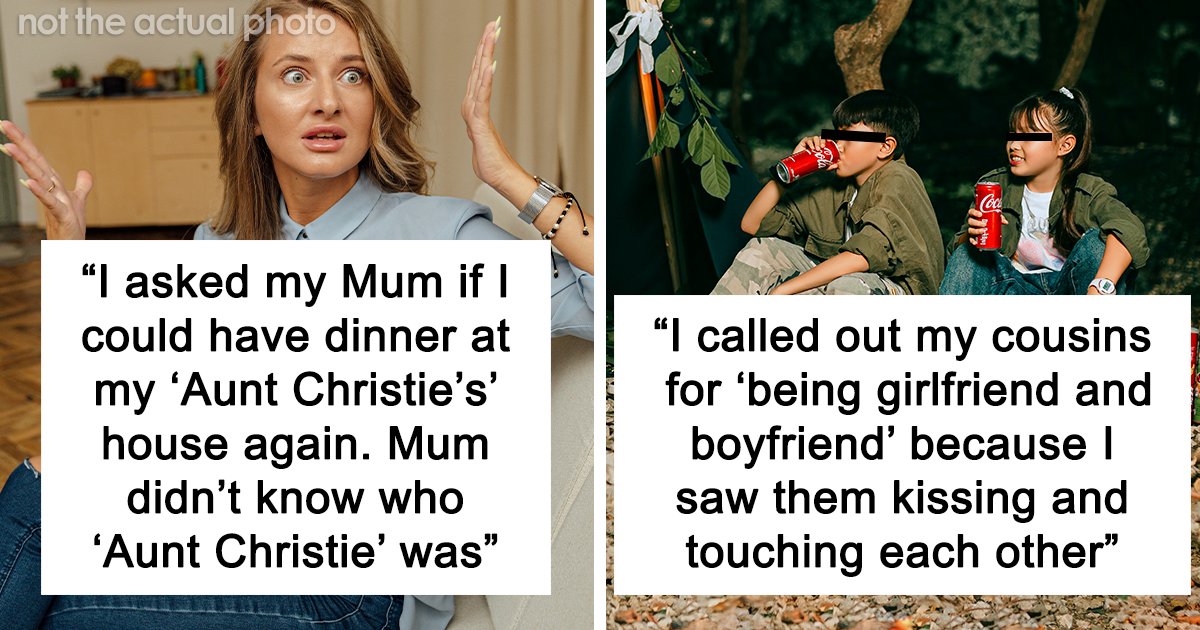
A child asked Mom whether the family could eat at “Aunt Christie’s” house again because she made excellent pasta. Mom had never heard of Aunt Christie. That was because Christie was not an aunt but Dad’s coworkerand secret romantic partner. The child did not destroy the marriage; the pasta merely delivered evidence.
-
The Welcome-Home Party Nobody Attended
While visiting relatives, a child called home and asked to extend the trip by one week. Dad agreed. Years later, the child learned that Dad had prepared a surprise welcome-home party, complete with decorations, barbecue, cake, and invited guests. Rather than reveal the disappointment, he quietly canceled everything.
-
The Most Unfortunate Show-and-Tell Object
A literal-minded student found a device labeled “personal massager” and decided it would be perfect for show-and-tell. The teacher recognized the adult product immediately, removed it with admirable calm, and made a delicate telephone call to the child’s mother. Education occurred that day, though not according to the lesson plan.
-
The Anniversary Vomit Finale
A seven-year-old woke with an upset stomach and entered the parents’ candlelit bedroom during an anniversary celebration. Before explaining the problem, the child projectile-vomited across the romantic setting. Candles, music, intimacy, and possibly one expensive comforter were all defeated in seconds.
-
A Vocabulary Error With Terrible Implications
After angrily using an adult phrase toward a parent, one child later repeated a grammatically altered version to a friend. The child believed it simply meant that an argument had occurred. Anyone overhearing the conversation would have reached a drastically different conclusion.
-
The Bedtime Snack Investigation
A six-year-old wanted to spy on visiting adults and invented a request for a bedtime snack. When Mom refused, the child loudly announced that snacks had been allowed during a previous visit with a different adult guest. The room went silent as the adults realized the child had unintentionally introduced evidence into a relationship dispute.
-
The Neighbor’s Secret Family
A child told a playmate about the playmate’s brother. The problem was that the playmate did not know a brother existed. The child then cheerfully explained that the shared father had another family with another woman. Neighborhood relations became slightly less neighborly after that.
-
The Locked Bathroom Stall Prank
A mischievous child locked public restroom stalls and escaped underneath the doors. Returning to the same store the next day, the child crawled beneath one of those doorsonly to encounter an elderly man using the stall. Both participants left with a story neither had requested.
-
The Penny That Defeated a Car
A child inserted a penny into a vehicle’s cigarette-lighter socket. The coin caused an electrical problem that drained the battery and puzzled mechanics for days. To the child, it was a five-second experiment. To the adults, it was an expensive mechanical mystery with copper-colored fingerprints.
-
Backyard Batting Practice
One young baseball enthusiast repeatedly launched rocks over the backyard fence. Neighbors eventually gathered to discuss the mysterious damage appearing on their vehicles. The child listened quietly, apparently realizing for the first time that objects did not disappear from reality after crossing a fence.
-
The Nursery’s Concerning Telephone Call
A toddler told nursery employees that her favorite activity was “doing crack with Mommy.” Alarmed staff contacted the family. The child was referring to cracking the shells of boiled eggs with a spoon. Breakfast was innocent; the phrasing deserved its own legal counsel.
-
The Backyard Fire Experiment
A child decided to burn trash during a dry summer, using cardboard, lighter fluid, and a barrel. The flames escaped and spread toward nearby trees before firefighters arrived. The experience caused genuine fear and remorse, especially after the child realized a wild animal had been harmed.
-
Refueling the Car With a Garden Hose
A little girl had watched adults put fuel into a vehicle and decided to help. She inserted a garden hose into the fuel opening and filled the tank with water. Her intentions were generous. The engine’s opinion was considerably less positive.
-
The Too-Honest Mother’s Day Poem
An eight-year-old wrote a loving poem for a mother struggling with depression. The poem emphasized that the child still loved her despite her frequent crying. It was meant as unconditional support, but reading it aloud turned a tender tribute into a painfully public description of private suffering.
-
The Homemade Tire-Disabling Plan
Determined to avoid a family outing, one child placed nails beneath the parents’ car tires. The plan demonstrated creativity, commitment, and absolutely no understanding of repair bills, road safety, or the fact that adults can simply use another vehicle.
-
Smoking the Chemically Treated Lawn
Two children found an old pipe, filled it with grass clippings, and attempted to smoke it. Unfortunately, the lawn had recently been treated with chemicals. One child became seriously ill and required medical care, turning a pretend-grown-up experiment into a frightening toxic exposure.
-
Following the Door Rule Too Precisely
A child had been instructed to keep a bedroom door closed so a younger sibling could not enter. The child slammed it while the sibling’s finger was in the doorway, causing a devastating injury. It was obedience without situational awarenessthe worst possible interpretation of “make sure the door is shut.”
-
The Accidental Bookstore Theft
A Pokémon-obsessed child continued reading a coveted handbook while walking through a mall, only noticing it was still in hand at the parking lot. The child confessed immediately. The exhausted parent looked at the distant store, looked at the book, and made a morally flexible transportation-based decision.
-
Using an Iron on Wrinkled Fingers
A three-year-old observed that an iron removed wrinkles from clothing. Noticing wrinkles on wet fingers, the child applied the same solution to human skin and suffered serious burns. The reasoning had internal logic; the missing information was that shirts and hands have radically different maintenance instructions.
-
Ruining Santa for an Entire Class
A kindergartner announced that Santa Claus was not real, believing this information would help classmates become more knowledgeable citizens. Several children cried, the teacher demanded an apology, and the young whistleblower refused because the statement was technically accurate. Holiday diplomacy had failed.
-
An Extremely Inappropriate Greeting
While meeting a new neighbor, a six-year-old impulsively smacked the neighbor’s mother on the backside. No thoughtful motive existed; the child simply acted on a bizarre impulse. The embarrassed woman then had to walk next door and explain the incident to equally mortified parents.
-
The Gardening Tool Accident
A seven-year-old helping an elderly neighbor lifted a pitchfork over one shoulder and accidentally struck her in the head. She needed stitches but insisted it had been an accident. Her forgiveness became the most important part of a memory that could otherwise have produced lifelong shame.
-
Beer in the Cartoon Lunchbox
A second grader packed a can of beer inside a Pikachu lunchbox, hoping to impress friends at school. Suspicious behavior alerted Mom before departure. The beverage never reached the cafeteria, but the story became permanent family material for embarrassing future dates and dinner guests.
-
The Family Secret Announced at Full Volume
A child witnessed two related older children behaving inappropriately and openly accused them during a family gathering. The disclosure triggered arguments, investigations, and canceled holidays. Although the child did not understand the full situation, speaking up exposed conduct that adults needed to address.
-
The Security Deposit Confession
Parents carefully cleaned a rental home’s carpets before a landlord’s inspection, hoping to hide stains left by the family dog. Their preschooler greeted the landlord and proudly announced that the dog regularly used the living room as a bathroom. The landlord checked beneath the carpet. The deposit did not survive.
-
The Broken Arm Nobody Recognized
A four-year-old fractured an arm but complained so little that the injury went untreated. The child simply supported the damaged arm with the other hand. By the time a doctor discovered the fracture, it had already begun healing incorrectlya reminder that quiet children can still be seriously hurt.
What These Childhood Disasters Have in Common
The stories range from comic misunderstandings to incidents involving real injury, but most share three ingredients: incomplete knowledge, immediate curiosity, and an inability to predict the next five steps. A child sees an iron flatten fabric and assumes it can flatten skin. Another knows gasoline enters a hole in the car and decides that water entering the same hole must also be helpful.
Literal language creates another category of chaos. Children repeat expressions without understanding adult meanings, reveal information without recognizing it as secret, and describe ordinary activities using vocabulary that alarms teachers. Their statements can be factually sincere while socially explosive.
Home safety therefore matters more than simply telling children to “be careful.” Matches, lighters, chemicals, sharp tools, medicines, electrical cords, and dangerous appliances should be physically inaccessible. U.S. safety organizations recommend locks, secure storage, outlet protection, active supervision, and age-appropriate explanations because curiosity regularly outruns verbal rules.
Parents also need responses that separate the child from the behavior. A frightening mistake requires accountability, repair, and safety education, but labeling a child as “bad,” “stupid,” or “a liar” can replace learning with shame. Calm, immediate consequences and opportunities to tell the truth help children connect actions with outcomes while preserving communication.
Experiences and Lessons From Looking Back at Childhood Mistakes
Adults often remember their childhood disasters with a strange combination of laughter, embarrassment, and delayed horror. Something that once felt like an ordinary experiment becomes terrifying when viewed through adult eyes. The child who launched rocks over a fence remembers only practicing a swing; the adult understands shattered windshields, repair costs, and the possibility of injuring someone. Growing up means finally seeing the invisible consequences that childhood could not calculate.
Memory complicates these experiences. Personal recollections are not perfect recordings. They can be reshaped by family retellings, photographs, later information, and the emotional meaning attached to an event. A person may “remember” details partly because the story was repeated at every Thanksgiving dinner. That does not make the emotional lesson false, but it does mean childhood anecdotes should be treated as recollections rather than courtroom transcripts.
Family storytelling can transform a humiliating incident into a form of connection. The beer hidden in the cartoon lunchbox becomes the story Mom tells every new partner. The accidental bookstore theft becomes evidence of a child’s honesty. The ruined anniversary eventually becomes funny because everyone survived, the bedding was washable, and romance presumably received a second appointment.
Not every story should be converted into comedy, however. Serious injuries, unsafe sexual behavior, animal harm, fire-setting, poisoning, or revelations of abuse require thoughtful adult intervention. Humor can reduce shame, but it should never erase the victim’s experience or discourage someone from seeking help. A compassionate response recognizes both intention and impact: the child may not have meant harm, yet the harm still deserves care and repair.
These recollections also reveal how much children depend on adults to design safe environments. Telling a preschooler not to touch an iron is useful; unplugging and storing it safely is better. Explaining that chemicals are dangerous helps; locking them away is essential. Children should learn responsibility, but adults remain responsible for anticipating hazards that developing minds cannot reliably recognize.
When adults carry guilt about something they did at six or seven, perspective matters. Remorse can demonstrate mature empathy, but permanent self-punishment does not repair the past. A healthier response may involve apologizing where possible, making restitution, supporting a related cause, or simply acknowledging that the adult understands what the child could not. Responsibility does not require pretending a young child possessed an adult brain.
Finally, these childhood mistakes remind us why honest communication is so valuable. A child who expects screaming or humiliation will hide the broken lamp, swallowed chemical, electrical shock, or painful arm. A child who believes an adult will listen is more likely to report danger quickly. The goal is not to raise children who never make mistakesthat product has not yet entered mass production. The goal is to raise children who tell the truth, accept help, repair damage, and gradually develop better judgment.
Conclusion
The worst things people accidentally did as kids often began with innocent curiosity and ended with adults calling mechanics, teachers, firefighters, doctors, landlords, or relatives. These stories are entertaining because childhood logic is so recognizable: direct, imaginative, sincere, and frequently missing one critical piece of information.
Behind the humor is a useful reminder. Children need boundaries, supervision, safe environments, and explanations they can actually understand. They also need room to confess mistakes without being permanently defined by them. A child may flood the car, expose an affair, ruin an anniversary, or destroy a security deposit. With guidance and time, that same child can become a responsible adult who looks back and says, “I finally understand why everyone was screaming.”