Buying a ghost town sounds like the kind of decision someone makes after three coffees, two bad real estate apps, and one dangerously inspiring Western movie. Yet in the American West, “ghost town for sale” is not just a campfire joke. It is a real estate category with dust, deeds, collapsed roofs, old mines, legal headaches, and enough silence to make your phone feel socially needy.
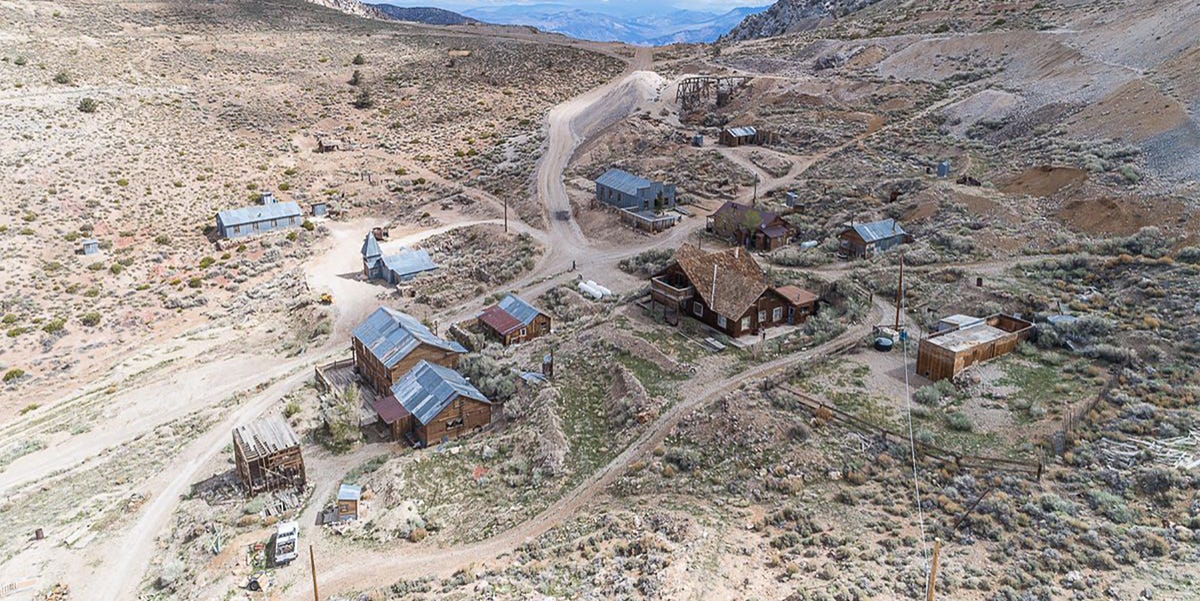
The most famous modern example is Cerro Gordo, a former mining town high in California’s Inyo Mountains near Death Valley. Once a bustling silver and lead operation, Cerro Gordo became a symbol of boom-and-bust ambition: fortune arrived loudly, left quietly, and forgot to take the buildings with it. In 2018, entrepreneur Brent Underwood and partners bought the town for about $1.4 million, turning a strange headline into a long-term preservation project.
But this story is bigger than one buyer and one dusty road. It is about why ghost towns exist, what it takes to bring one back to life, and why Americans remain so fascinated by places where the past seems to be standing right there, leaning slightly, asking if anyone remembered to fix the roof.
What Is a Ghost Town, Really?
A ghost town is usually a place that once had a working community but lost the economic reason for its existence. In the American West, that reason was often mining. Gold, silver, lead, copper, borax, and other minerals created instant towns almost overnight. Workers arrived, saloons opened, hotels filled, merchants followed, and newspapers announced prosperity with the confidence of a man selling umbrellas in a drought.
Then the ore ran out. Or prices collapsed. Or the railroad went somewhere else. Or water became scarce. Or the mine shut down after accidents, ownership disputes, fire, weather, or war. When the main industry disappeared, people packed up and moved on. Buildings were abandoned, furniture was left behind, and the town slowly shifted from “promising settlement” to “excellent place to film a dramatic YouTube intro.”
Not every ghost town is completely empty. Some have caretakers, seasonal visitors, a museum, a few residents, or preservation staff. Bodie, California, for example, is preserved as a State Historic Park in a famous condition known as “arrested decay,” meaning the goal is not to make the town look new but to keep it from disappearing. That phrase sounds like a medical diagnosis for an old barn, but it captures the preservation challenge perfectly.
The Real Story Behind Buying Cerro Gordo
Cerro Gordo means “fat hill” in Spanish, a name that became fitting once miners discovered the richness inside the mountain. Founded in the 1860s, the town grew into one of California’s most important silver-producing camps. Its minerals helped feed the growth of Los Angeles, and its remote location made every success more difficult and every failure more dramatic.
At its peak, Cerro Gordo had hundreds of buildings and thousands of people moving through its mining economy. There were workers, merchants, teamsters, cooks, investors, families, and the usual Wild West collection of optimists with bad boots and worse decision-making skills. The surrounding mines eventually stretched for miles underground, a hidden industrial world of tunnels, shafts, equipment, and danger.
By the time modern buyers arrived, Cerro Gordo was no longer a roaring mining camp. It was a fragile historic site with old structures, abandoned equipment, no simple infrastructure, difficult road access, and a reputation larger than its population. Buying it was not like buying a cabin. It was more like adopting a mountain with trust issues.
Why Would Anyone Buy a Ghost Town?
The honest answer is part romance, part madness, part preservation, and part entrepreneurial instinct. A ghost town offers something rare: a complete environment with a story already built into every board, nail, bottle, and weathered doorway. You do not have to invent atmosphere. The atmosphere is there, wearing a hat and judging your modern plumbing plans.
1. Preservation of American history
Many ghost towns are physical records of the mining frontier. They show how people lived, worked, traveled, built businesses, and chased opportunity before highways, smartphones, and same-day delivery. Preserving a place like Cerro Gordo means protecting a chapter of American history that could otherwise collapse into dust, souvenir rumors, or private neglect.
2. Tourism and education
Ghost towns attract travelers because they feel more immersive than a traditional museum. Visitors can walk a street, see a schoolhouse, peek into a store, or stand near a mine entrance and understand that history was not just a paragraph in a textbook. It had weather, bills, injuries, celebrations, boredom, bad coffee, and probably at least one person complaining about rent.
3. Content and storytelling
The modern Cerro Gordo story became widely known because of online storytelling. The “Ghost Town Living” project turned restoration, solitude, snowstorms, fires, old mines, and daily problem-solving into a public narrative. That matters because digital attention can help fund preservation, recruit volunteers, sell merchandise, attract donors, and build a community around a place that otherwise might remain hidden.
The Dream Versus the Dusty Reality
From a distance, owning a ghost town looks cinematic. You imagine sunsets, wooden porches, antique lamps, and dramatic thoughts about destiny. Up close, it becomes a spreadsheet wearing work gloves.
The first problem is infrastructure. Many ghost towns lack dependable water, sewer systems, electricity, internet, road access, and emergency services. At Cerro Gordo, snow, floods, wind, and rough roads have all been part of the challenge. A historic building may look beautiful on Instagram, but it still needs structural support, fire protection, permits, insurance, materials, and people willing to haul things uphill without turning into a philosophical puddle.
The second problem is safety. Old mining towns often contain unstable buildings, hidden shafts, sharp debris, contaminated materials, and equipment that belongs in a museum, not in someone’s casual weekend experiment. Responsible preservation requires professional evaluation, barriers, documentation, and clear visitor rules. A ghost town is not an amusement park where the ghosts have signed liability waivers.
The third problem is money. The purchase price is only the opening scene. Restoration can cost far more than the original deal. Historic lumber, skilled labor, road repair, water systems, roofing, fire prevention, legal compliance, and museum-quality preservation all add up quickly. When people say, “I bought a ghost town,” the follow-up should probably be, “And then the ghost town bought the rest of my budget.”
The American Hotel Fire: A Preservation Wake-Up Call
One of the most painful moments in Cerro Gordo’s modern history came in 2020, when the historic American Hotel burned down along with nearby structures. The hotel had been a centerpiece of the town’s restoration vision, and its loss showed how vulnerable historic wooden buildings can be in remote, dry, windy places.
The fire changed the story from quirky adventure to serious preservation mission. It reminded followers and supporters that saving a ghost town is not simply about making a cool destination. It is about racing against weather, time, decay, accident, and limited resources. Old buildings do not wait politely while humans organize fundraising campaigns. They lean, crack, rot, burn, freeze, and occasionally collapse with the dramatic timing of a theater kid.
Rebuilding in a place like Cerro Gordo is complicated. It requires respect for historical appearance, modern safety standards, logistics, and local regulations. A reconstructed hotel cannot merely look old; it must function safely in a harsh environment. That balance between authenticity and survival is one of the central challenges of ghost town restoration.
Why Ghost Towns Still Capture the American Imagination
Ghost towns are popular because they combine history, mystery, architecture, travel, and imagination. They are quiet places with loud stories. A visitor does not need to believe in actual ghosts to feel haunted by abandoned rooms, empty streets, and the knowledge that thousands of people once considered this place the center of their world.
They also challenge the myth of permanent success. Boomtowns were built on confidence. People invested money, labor, dreams, and reputations into places that later emptied out. That makes a ghost town strangely modern. It is a reminder that economies change, technology moves, industries vanish, and even the loudest gold rush eventually has to clean up after itself.
There is also a freedom fantasy. Many people dream of leaving crowded cities and owning a wide-open place where nobody complains about parking. A ghost town takes that fantasy to its most extreme form. Instead of buying a house, you buy the street, the saloon, the bunkhouse, the mine, the view, and the silence. Then the silence asks you to repair the septic system.
Lessons From Other Famous Ghost Towns
Cerro Gordo is not alone. Across the United States, preserved ghost towns show different ways to handle abandoned history.
Bodie, California
Bodie is one of the best-known ghost towns in America. Its preservation model is not about polishing the past but stabilizing it. Buildings remain weathered, interiors look frozen in time, and the town’s remote setting adds to the experience. Bodie teaches an important lesson: sometimes the best restoration is restraint. Not every historic place needs fresh paint and gift-shop jazz hands.
Calico, California
Calico, another old mining town, took a more visitor-friendly route. Restored and operated as a heritage attraction, it offers a version of the Old West designed for tourism and education. It is more polished than Bodie and less raw than Cerro Gordo. Calico shows how ghost towns can become family destinations, though the challenge is always keeping entertainment from swallowing authenticity.
Garnet, Montana
Garnet is often praised as one of Montana’s best-preserved ghost towns. Like many mining settlements, it rose with mineral wealth and declined when that wealth faded. Garnet highlights the importance of public stewardship, local history, and careful interpretation. A preserved ghost town is most valuable when visitors leave with more than photos; they should leave understanding how people lived and why the town failed.
The Business Side of Owning a Ghost Town
Turning a ghost town into a sustainable project requires several income streams. Tours, overnight stays, donations, merchandise, events, memberships, books, videos, and partnerships can all help. But the business model must be built around preservation, not exploitation. If the town becomes only a backdrop for viral content, the history gets flattened into decoration.
A smart ghost town project needs a clear identity. Is it a museum? A retreat? A film location? A research site? A tourism stop? A nonprofit preservation effort? The answer shapes every decision, from insurance to bathrooms. And yes, bathrooms matter. Civilization can be measured by many things, but visitors will judge your historic dream very quickly if nature calls and history does not provide facilities.
There is also a branding advantage. A ghost town already has a story, a name, a visual style, and a built-in sense of curiosity. “Come visit our old mining town” is stronger than “Please admire this vacant acreage.” But strong branding must be matched with access, safety, interpretation, and respect for the people who lived there before the town became photogenic.
Ethics: Who Owns the Past?
Buying a ghost town raises an uncomfortable question: can one person own a piece of collective history? Legally, property can be bought and sold. Culturally, the answer is more complicated. Mining towns are connected to Indigenous history, immigrant labor, environmental damage, regional development, and generations of families whose stories may not appear on a deed.
Responsible ownership means listening, researching, documenting, and collaborating. It means treating artifacts as historical evidence, not props. It means resisting the urge to exaggerate legends when the real story is already interesting enough. A town does not need fake hauntings when it has real miners, real families, real ambition, real hardship, and real consequences.
The best ghost town preservation does not simply ask, “How can we make this place popular?” It asks, “How can we keep this place honest?”
So, Was Buying a Ghost Town a Good Idea?
That depends on your definition of “good idea.” If a good idea is easy, profitable, predictable, and approved by every financial advisor within a fifty-mile radius, then buying a ghost town is probably not it. If a good idea is meaningful, difficult, memorable, and capable of saving history from disappearance, then the answer changes.
Cerro Gordo’s modern story proves that a ghost town can become more than an abandoned place. It can become a classroom, a restoration project, a digital community, a personal mission, and a reminder that the past is not as distant as it looks. Sometimes it is just up a steep road, behind a locked gate, waiting for someone stubborn enough to bring tools.
Experience Notes: What “I Bought a Ghost Town” Really Feels Like
The first experience is the silence. Not peaceful silence, at least not right away. It is the kind of silence that makes you hear your own jacket move and wonder whether old buildings are supposed to creak that confidently. In a city, silence is rare and expensive. In a ghost town, silence comes free with every collapsing porch.
Walking through a ghost town changes the way you understand history. A schoolhouse is not just a schoolhouse. It becomes a question: who sat here, who taught here, who looked out the window and dreamed of leaving? A hotel is not just a hotel. It is a ledger of travelers, arguments, meals, storms, repairs, and rumors. Even a rusted can or broken bottle feels less like trash and more like punctuation in a sentence someone stopped writing a century ago.
The second experience is responsibility. At first, the town feels like an adventure. Then you notice that the roof needs help, the road is failing, the water system is fragile, and every decision has consequences. If you move too fast, you damage authenticity. If you move too slowly, the weather does the damage for you. Preservation becomes a negotiation with time, and time is not known for offering generous payment plans.
The third experience is loneliness. A ghost town can look romantic in photographs, but daily life in a remote place is demanding. There are no quick errands. No easy repairs. No casual dinner down the block. If equipment breaks, you solve it or wait. If snow blocks the road, your schedule becomes a suggestion. If the wind starts throwing dust around like it owns the place, you remember that nature never signed your business plan.
The fourth experience is wonder. Every restored board, every discovered document, every old tool cleaned and cataloged feels like a small conversation with the past. You begin to understand that saving a ghost town is not about conquering it. It is about earning permission to continue its story. The buildings do not become yours in the usual sense. You become their temporary caretaker.
The final experience is humility. Buying a ghost town may sound like the ultimate act of ownership, but it quickly teaches the opposite. You cannot control the mountain, the weather, the old mines, the fire risk, or the pace of decay. You can only show up, learn, repair, protect, and tell the truth as carefully as possible. That is the strange beauty of it. A ghost town does not need someone to make it alive in a fake way. It needs someone to help people notice that it never fully died.
Conclusion
“I Bought a Ghost Town” is a title that sounds funny at first, but the real story is surprisingly deep. It is about risk, preservation, American mining history, entrepreneurship, loneliness, tourism, and the emotional weight of caring for a place most people forgot. Cerro Gordo shows how a remote abandoned town can become meaningful again when history, storytelling, and stubborn effort meet on the same dusty road.
Buying a ghost town is not a shortcut to easy fame or instant profit. It is a long conversation with old wood, hard weather, empty streets, and unfinished dreams. But when done with respect, it can turn abandonment into education and decay into purpose. That may be the real treasure hidden in the mountainnot silver, not viral attention, but the chance to keep a remarkable piece of the American West from vanishing.
Note: This article is an original, plagiarism-free synthesis based on real publicly available information about American ghost towns, historic mining towns, Cerro Gordo, Bodie, Calico, Garnet, and modern preservation challenges.