If your bike has started sounding like a tiny haunted gate, congratulations: your chain is asking for attention. A properly lubricated bicycle chain helps your drivetrain run smoother, quieter, and more efficiently. It can also reduce wear on expensive parts like your cassette and chainrings, which is excellent news for both your ride quality and your wallet.
The good news is that lubing a bike chain is not advanced wizardry. You do not need a secret mechanic handshake, a garage full of fancy gadgets, or the patience of a monk. You just need the right lubricant, a rag, a few minutes, and a willingness to get a little bit grimy in the name of mechanical happiness.
This guide breaks the process into 13 simple steps, explains how to choose the right bike chain lube, and helps you avoid the classic mistakes that turn a smooth drivetrain into a crunchy mess. By the end, you will know how to clean and lube your bike chain the right way, whether you ride a road bike, mountain bike, commuter, or e-bike.
Why Lubing Your Bike Chain Matters
Your bike chain is a hardworking little beast. It transfers power from your legs to the wheels, deals with dirt, water, dust, grit, and road grime, and spends its life bending, flexing, and moving under pressure. Without lubrication, the rollers and pins inside the chain create extra friction. That leads to noise, rough shifting, corrosion, and faster wear.
In plain English, a dry chain is bad manners. It squeaks, complains, and slowly eats your drivetrain. A well-lubed chain, on the other hand, runs quietly and helps your bike feel fast, tidy, and ready for action.
Before You Start: What You Need
- Bicycle-specific chain lube
- A clean, lint-free rag or two
- Degreaser or chain cleaner if the chain is especially dirty
- A chain-cleaning tool or soft brush, optional but helpful
- Gloves, optional unless you enjoy black fingerprints on everything you own
Wet Lube vs. Dry Lube
Before you start dripping anything on your chain, choose the right lubricant for your riding conditions.
Dry Lube
Dry lube is best for dry, dusty conditions. It tends to attract less grime, which makes it a favorite for fair-weather road rides and dusty trails. The tradeoff is that it does not last as long in wet weather and usually needs to be applied more often.
Wet Lube
Wet lube is better for rain, mud, slushy roads, or humid conditions. It sticks around longer and resists water better, but it can attract dirt if you use too much or fail to wipe off the excess. In other words, wet lube is loyal, but a little clingy.
How to Lube a Bicycle Chain: 13 Steps
Step 1: Shift Into an Easy Gear
Shift your bike into the small chainring up front and a middle or smaller cog in the back. This gives you easier access to the chain and makes backpedaling simpler. If your bike is in a repair stand, wonderful. If not, leaning it carefully against a wall works too.
Step 2: Inspect the Chain First
Take a quick look at the chain before adding lube. Is it just a little dusty, or does it look like it rolled through a swamp and then joined a charcoal mine? If the chain is only lightly dirty, a rag wipe may be enough. If it is caked with grime, do a deeper cleaning first. Adding fresh lube to a filthy chain is like putting cologne on gym socks. Technically possible, spiritually wrong.
Step 3: Wipe the Chain With a Dry Rag
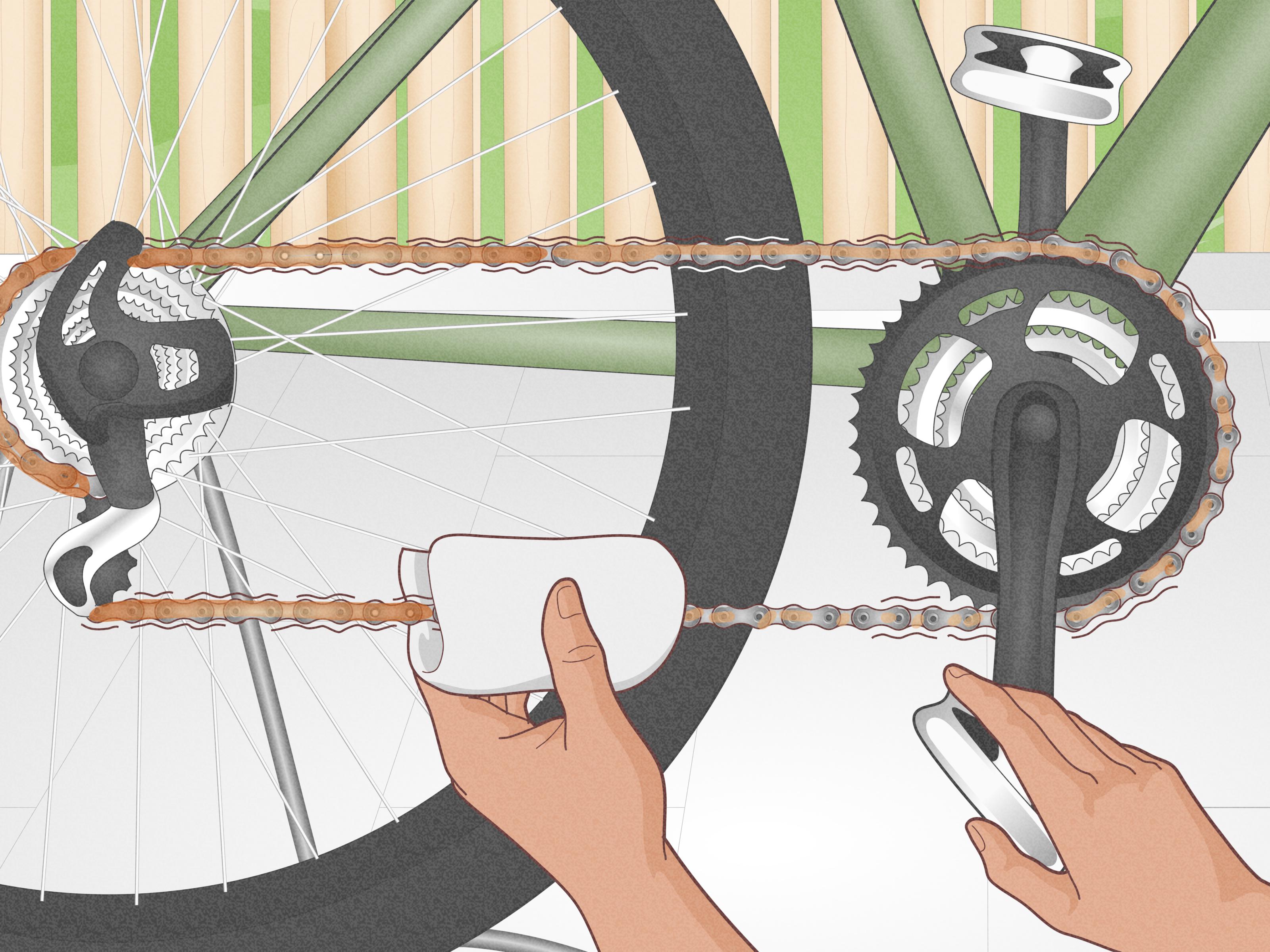
Grab a clean rag and hold it around the lower section of the chain while you slowly backpedal. This removes surface dirt, old residue, and loose grime. Do not squeeze like you are trying to crush the chain into powder. A firm, controlled grip is enough.
Step 4: Degrease if Necessary
If your chain is really dirty, use a bike-safe degreaser and either a chain-cleaning tool or a brush. Work the degreaser into the links, rollers, and side plates, then wipe everything clean. If you remove the chain for deep cleaning, make sure it is completely dry before relubing and reinstalling it.
Step 5: Let the Chain Dry Completely
This step gets skipped more often than leg day. Do not apply lube to a chain that is still wet from degreaser, rinse water, or cleaning solution. Moisture can dilute the lubricant and trap contamination where you do not want it. Give the chain time to air-dry, or wipe it thoroughly with a dry rag.
Step 6: Find Your Starting Point
Pick one chain link as your starting point so you know when you have completed a full rotation. Some people choose the master link if their chain has one. Others just pick a random link and hope for the best. We support a more organized lifestyle here.
Step 7: Apply One Drop Per Link
Now for the main event. Hold the lube bottle over the inside of the lower chain run and slowly backpedal. Apply one small drop to each roller or link. Not a stream. Not a dramatic waterfall. One drop per link is usually enough. The goal is to get lubricant inside the moving parts of the chain, not all over the outside like cake frosting.
Step 8: Complete One Full Rotation
Keep backpedaling until you return to your starting point. This ensures the entire chain has been treated evenly. If you lose track halfway through, do not panic. Just finish the loop carefully rather than turning your drivetrain into a guessing game.
Step 9: Let the Lube Settle In
Give the lubricant a few minutes to penetrate the rollers and pins. If you can lube the chain after a ride instead of right before the next one, even better. That extra time helps the lube work its way into the chain where it actually matters.
Step 10: Wipe Off the Excess
This step is the difference between “nicely maintained bike” and “grime magnet on wheels.” Use a clean rag to wipe the outside of the chain while backpedaling. The lubrication needs to stay inside the chain, not on the exterior where it collects dust and gunk. If your chain looks shiny and oily on the outside, you probably used too much.
Step 11: Check the Rest of the Drivetrain
While you are already down there making friends with the drivetrain, inspect the cassette, chainrings, and derailleur pulleys. If those parts are crusted with grime, clean them too. A freshly lubed chain running through filthy cogs is like washing one sock and declaring laundry complete.
Step 12: Spin the Cranks and Test Shift
Backpedal a few more times, then run through the gears if possible. The chain should sound quieter and shifting should feel smoother. If you still hear squeaks or roughness, the chain may need a more thorough cleaning, additional lube on missed links, or it may be worn and ready for replacement.
Step 13: Ride and Recheck Later
Take the bike for a short ride. Afterward, give the chain a quick look. If excess lube has worked its way outward, wipe it again. Going forward, relube based on conditions, not just the calendar. Rain, mud, dust, and long rides can all speed up the need for maintenance.
Common Mistakes to Avoid
Using Too Much Lube
More is not better. A heavily soaked chain usually attracts more grime, which increases wear and creates that familiar black sludge that appears on your calf, sock, and soul.
Lubing a Dirty Chain
If the chain is packed with grit, clean it first. Fresh lube on a filthy chain can trap abrasive particles inside the moving parts.
Using the Wrong Product
Use bicycle chain lube, not random household oil. Bike-specific lubes are designed for drivetrain loads and riding conditions. Your chain deserves better than mystery fluid from the bottom shelf in the garage.
Skipping the Wipe-Down
Wiping off excess lube is not optional. It is part of the job. If you skip it, dirt will show up like it got a formal invitation.
Ignoring Chain Wear
Lubrication helps, but it cannot save a worn-out chain forever. If your chain stretches past its service limit, replace it before it wears out the cassette and chainrings too.
How Often Should You Lube a Bike Chain?
There is no universal magic number because riding conditions matter more than a strict schedule. As a general rule, lube your bike chain whenever it starts sounding dry, shifting feels rough, or the drivetrain looks dusty after rides. You will usually need more frequent lubrication after rain, muddy trail days, gritty commutes, or bike washing.
Some riders lube every week, some every few rides, and some only after the bike starts squeaking loud enough to attract neighborhood concern. That last group should do better. Listen to the chain. It is surprisingly honest.
Special Tips for Different Types of Bikes
Road Bikes
Road riders often prefer lighter applications and cleaner drivetrains. Dry lube is usually a good choice in fair weather, though wet lube can be better for rainy commutes or long-distance wet conditions.
Mountain Bikes
Mountain bikes collect grime like it is a hobby. Clean the drivetrain more often and choose lube based on trail conditions. Mud usually calls for wet lube. Dusty singletrack often favors dry lube.
Commuter Bikes
For everyday commuting, durability matters. If you ride in mixed weather, an all-conditions or wet-style lube may be practical, provided you stay disciplined about wiping off the excess.
E-Bikes
E-bikes place extra load on chains because of higher torque. Keep the chain clean and properly lubricated, and check it more often than you might on a standard bike.
Real-World Experience: What Lubing a Bicycle Chain Actually Feels Like
The first time many riders lube a bike chain, they expect something dramatic. Sparks. Enlightenment. A sudden transformation into a home mechanic with perfect forearms and an organized tool wall. What usually happens instead is this: you stare at the bottle, drip too much on the first ten links, miss three links in the middle, get chain marks on your fingers, and then wonder whether the bike is now “professionally serviced” or merely “slightly more slippery.”
That is normal. Bike maintenance gets better fast with repetition.
One of the most common experiences is discovering that noise does not always mean disaster. A squeaky chain can sound tragic, but often the fix is simple. A good wipe-down, careful lube application, and a final pass with a dry rag can make the drivetrain sound almost new. Riders are often shocked by how much smoother shifting feels after a proper chain service, especially if they have been unknowingly riding around with a dry chain for weeks.
Another real-world lesson is that over-lubing is ridiculously easy. Many beginners assume the chain should look wet and glossy when finished. Then they go for a ride, pick up half the road, and end up with a drivetrain that resembles a brownie made of sand. After that, the “wipe off the excess” rule suddenly becomes memorable. Pain is a teacher. A greasy cassette is the classroom.
Weather also changes the entire experience. In dry summer conditions, a chain can stay impressively clean if you use the right amount of dry lube. In rainy or muddy conditions, the whole process becomes more frequent and more dramatic. You clean, lube, wipe, ride, and then return home to discover your drivetrain looks like it was excavated from an archaeological site. That is not failure. That is just cycling with enthusiasm in ugly weather.
Commuters often develop the smartest habits because their bikes must work every day. They learn to do quick chain checks by sound and feel. If the bike starts to sound scratchy, if shifting loses its crispness, or if the chain looks dusty after a week of city riding, they know it is time for five minutes of maintenance. That consistency often matters more than perfection.
There is also a very satisfying emotional side to lubing a chain. It is one of the simplest bike tasks that gives an immediate result. The bike gets quieter. Pedaling feels better. You feel vaguely competent and heroic. You may even start inspecting your drivetrain with the serious expression of a pit-lane mechanic. This is how it starts. Next thing you know, you own three brushes, two degreasers, and very strong opinions about chain wax.
Experienced riders often say the same thing: the best chain maintenance routine is the one you will actually do. It does not need to be complicated every time. A quick rag wipe after a dirty ride and a careful relube can prevent bigger problems later. Deep cleans have their place, but consistency wins. Think of chain care like brushing your teeth. Ignore it for too long, and eventually something expensive gets involved.
So yes, lubing a bicycle chain is a small task. But it teaches a bigger lesson: bikes reward attention. Give them a little care, and they return the favor with smoother rides, quieter miles, and fewer unpleasant surprises halfway up a hill.
Conclusion
Learning how to lube a bicycle chain is one of the easiest ways to keep your bike fast, quiet, and reliable. The keys are simple: clean the chain first, choose the right lube for your conditions, apply one drop per link, let it settle, and wipe off the extra. Do that consistently, and your drivetrain will thank you with smoother shifting and longer-lasting parts.
It is not glamorous, but it works. And sometimes the most satisfying upgrade is not a fancy carbon part or a shiny new wheelset. Sometimes it is just a bike that stops sounding like a shopping cart full of silverware.