Interest rates are often discussed like they are weather reports for economists: “Rates are up, bring an umbrella.” But for everyday investors, rising or falling interest rates can do far more than change a headline. They can change how people save, borrow, spend, invest, panic, celebrate, and occasionally make a financial decision at 2:13 a.m. after reading one dramatic market article.
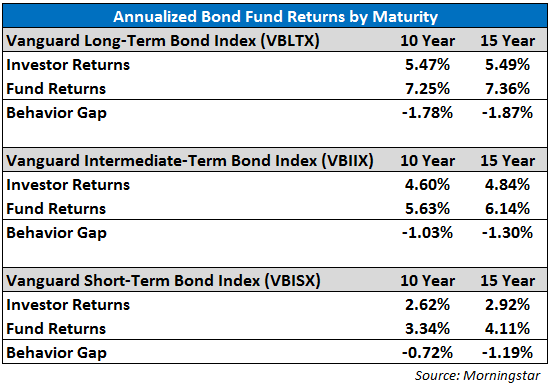
That is where the behavior gap comes in. The behavior gap is the difference between an investment’s published return and the return investors actually earn after buying, selling, chasing, pausing contributions, or moving to cash at inconvenient moments. Interest rates do not create every bad decision, but they can make emotional investing feel much more tempting.
When rates rise, investors may become nervous about stocks, bonds, mortgages, credit card balances, and the economy. When rates fall, investors may feel pushed to take more risk because safe cash investments no longer seem exciting. In both situations, the biggest danger is rarely the rate itself. It is the reaction to the rate.
What Is the Behavior Gap?
The behavior gap is the performance difference between what an investment earns over time and what the average investor earns while moving money in and out of that investment. A fund may post a respectable long-term return, but investors who buy after rallies and sell after declines can receive much less.
Think of it like joining a gym in January, skipping February, returning in April, quitting in June, and then complaining that the treadmill did not improve your fitness. The treadmill did its job. The schedule was the problem.
In investing, the behavior gap usually comes from a few familiar habits:
- Buying investments after they have already become popular.
- Selling after market declines because fear feels more urgent than a long-term plan.
- Chasing higher yields without understanding the risks involved.
- Trying to predict every interest-rate move, recession, or stock-market headline.
- Holding too much cash after becoming discouraged by volatility.
- Changing a portfolio because of emotions rather than goals, time horizon, and risk tolerance.
Interest rates can intensify all of these behaviors because they affect the price of money. They influence borrowing costs, savings yields, mortgage affordability, bond prices, business investment, consumer spending, and stock valuations. In other words, rates do not merely move numbers on a screen. They move people.
Why Interest Rates Have Such a Strong Effect on Investor Behavior
An interest rate is essentially the price of borrowing money. For borrowers, higher rates generally mean more expensive loans. For savers and lenders, higher rates can mean better yields on deposits, money market funds, certificates of deposit, Treasury bills, and other income-focused investments.
That sounds simple enough. The complication is that investors rarely experience interest rates in a vacuum. They feel rates through real-life consequences: a larger monthly mortgage quote, a credit card statement that suddenly looks like it joined a luxury club, a bond fund that lost value, or a savings account finally paying enough interest to become interesting at dinner parties.
Interest Rates Change the Appeal of Cash
When cash yields are near zero, investors often feel pressure to move money into stocks, real estate, dividend funds, high-yield bonds, or more speculative investments. The thought process is understandable: “Why leave money in cash if it earns almost nothing?”
When rates rise, however, cash and short-term Treasury securities can offer more attractive income. Suddenly, staying in cash feels safer and more rewarding. That can be useful for emergency savings and short-term goals, but it can also tempt long-term investors to abandon diversified portfolios just because cash finally looks fashionable.
The problem is not holding cash. Every household needs cash reserves. The problem is confusing a temporary opportunity for a permanent investment strategy.
Interest Rates Affect Bond Prices
Bond prices and interest rates generally move in opposite directions. When market interest rates rise, existing bonds with lower fixed payments often become less attractive, so their prices may fall. When rates fall, older bonds paying higher rates may become more desirable, which can push their prices higher.
This relationship can surprise investors who assume bonds are always calm, quiet, and incapable of causing emotional damage. Bonds can be less volatile than stocks in many circumstances, but they still carry interest-rate risk. Longer-term bonds are often more sensitive to rate changes than shorter-term bonds.
When bond funds decline during a rate-hiking cycle, some investors sell because they believe bonds have “stopped working.” That reaction can widen the behavior gap. A bond allocation may still serve important roles in a portfolio, including diversification, income, liquidity, and support for future rebalancing. Selling solely because bond prices fell can turn temporary discomfort into a permanent loss.
Interest Rates Influence Stock Valuations
Interest rates also influence stocks, although not in a neat one-rate-up,-stocks-down formula. Higher rates can raise borrowing costs for businesses, reduce consumer spending, and make future corporate earnings worth less in today’s dollars. Growth-oriented companies, especially those expected to produce more profits in the future, can be particularly sensitive to changing rate expectations.
That sensitivity creates a behavioral trap. Investors may see stock prices decline after rate increases and conclude that the market will never recover. They may sell just when valuations have become more reasonable. Later, if stocks rebound, the same investors may return after prices have already climbed.
It is the financial version of leaving a movie halfway through because the plot gets tense, then buying a ticket again after everyone starts talking about the happy ending.
How Rising Interest Rates Can Widen the Behavior Gap
Rising rates can make investors feel as though every financial decision requires a helmet. Borrowing becomes more expensive, bond prices may decline, stock markets may become volatile, and news coverage can sound like an emergency broadcast with better graphics.
Here are several ways rising rates can influence investor behavior.
1. Panic Selling During Market Volatility
Rate increases often create uncertainty. Investors may worry that higher borrowing costs will slow the economy or cause stock prices to fall further. That fear can lead to panic selling.
But selling after a decline can lock in losses and leave investors sitting on the sidelines if markets recover. Investors who move to cash often face a second difficult decision: when to get back in. Unfortunately, the answer is usually not obvious until after the opportunity has passed.
2. Overreacting to Better Cash Yields
Higher rates can make savings accounts, CDs, money market funds, and Treasury securities more attractive. That can be excellent news for emergency funds, near-term expenses, and conservative investors with short time horizons.
However, a long-term investor may make a mistake by moving all retirement money into cash simply because the current yield looks appealing. A five percent yield can feel wonderful today, but retirement planning may still require long-term growth to keep pace with inflation, taxes, and decades of future spending.
Cash is a tool, not a personality trait.
3. Selling Bonds at the Wrong Time
When rates rise, bond prices often fall. Investors who bought bond funds for stability may feel frustrated when they see negative returns. Some may sell the fund just as new bonds entering the portfolio begin offering higher yields.
A thoughtful investor looks beyond the recent price decline. The key questions are whether the bond allocation still fits the portfolio’s purpose, whether the investor needs the money soon, and whether the duration and credit risk remain appropriate.
4. Ignoring Debt Because It Feels Overwhelming
Higher rates can increase the cost of variable-rate debt, including some credit cards, home equity lines of credit, and adjustable-rate loans. A common response is avoidance. People may stop opening statements, delay making a repayment plan, or hope that the numbers will become polite on their own.
They usually do not.
Rising rates make debt management more important. Paying down high-interest consumer debt can provide a risk-free financial benefit that is often more valuable than searching for the next hot investment. Investors should consider their entire household balance sheet, not just the brokerage account.
How Falling Interest Rates Can Also Create Bad Decisions
Lower interest rates can feel like a financial party: borrowing becomes cheaper, bond prices may rise, and investors may become more optimistic about stocks and real estate. But lower rates can create their own version of the behavior gap.
1. Chasing Yield
When safe cash yields fall, investors may feel frustrated by low income. That frustration can push people toward riskier investments promising higher yields, including lower-quality bonds, complex income products, highly leveraged real estate deals, private investments, or stocks chosen only for their dividend yield.
A higher yield is never just a higher yield. It may come with more credit risk, liquidity risk, market risk, duration risk, or the possibility that the investment’s price falls sharply. The yield may be attractive because the investment carries a reason for concern.
2. Borrowing Too Much Because Money Feels Cheap
Lower rates can make mortgages, car loans, and business loans more affordable. That can help consumers and businesses make sensible investments. But cheap borrowing can also encourage overconfidence.
People may buy more house, more car, more investment property, or more lifestyle than their income can comfortably support. If rates rise later, or income falls, the financial plan may become much less charming.
3. Assuming Asset Prices Only Go Up
Lower rates can support higher valuations for many assets, but no one should confuse a favorable rate environment with a guarantee. Investors who become too confident may take more risk than their goals and time horizon allow.
This is especially dangerous when people start believing that every dip is a buying opportunity, every speculative investment is a future winner, and every friend discussing real estate has somehow become an economist.
Interest Rates and the Psychology of Market Timing
Interest-rate news can make market timing feel logical. Investors hear predictions about future central-bank decisions, inflation reports, employment data, bond yields, and recession risks. The temptation is to move money before the next announcement.
The challenge is that financial markets often react before the official rate decision happens. Markets may rise when rates increase if the news was less severe than expected. Markets may decline when rates fall if investors fear a weakening economy. The headline alone does not tell the whole story.
Trying to time interest rates requires getting several things right:
- Predicting what policymakers will do.
- Predicting what markets already expect.
- Predicting how stocks and bonds will react.
- Knowing when to re-enter after moving out.
That is a lot of predictions for one cup of coffee.
A better approach for many investors is to build a diversified portfolio that reflects their goals, risk tolerance, and investment horizon. Instead of betting everything on the next rate move, investors can use disciplined rebalancing, automatic contributions, and a clear plan for cash needs.
How to Reduce the Behavior Gap When Rates Change
The goal is not to ignore interest rates. Rates matter. They affect debt, income, asset prices, and household budgets. The goal is to respond intentionally rather than emotionally.
Create a Written Investment Policy
A simple investment policy statement can act like a financial seat belt. It should explain why you invest, how much risk you can handle, how assets are allocated, when you will rebalance, and what events do not require a portfolio overhaul.
For example, your plan may state that you will not make major investment changes because of a single Federal Reserve meeting, a one-week stock-market decline, or a cable-news segment featuring a red chart and dramatic music.
Match Cash to Your Time Horizon
Money needed within the next few years may belong in safer, more liquid investments such as insured savings accounts, short-term CDs, money market funds, or short-term Treasury securities. Money intended for long-term goals may need a different mix of assets.
Separating short-term spending money from long-term investment money can reduce the urge to sell stocks or bonds during a stressful period.
Review Debt Alongside Investments
When rates rise, review variable-rate debt and high-interest balances. Paying down expensive debt may improve cash flow and reduce financial stress. Lower financial stress can also improve investment behavior because investors are less likely to raid retirement accounts or sell assets during volatility.
Rebalance Instead of Reacting
Rebalancing means bringing a portfolio back toward its intended asset allocation. When one part of a portfolio rises or falls sharply, rebalancing can encourage investors to trim what became oversized and add to what became underweight.
This process may feel boring. That is a compliment. Boring is underrated in investing, along with diversification, emergency funds, and not replying to every group chat.
Use Automation Carefully
Automatic retirement contributions and scheduled investments can reduce the pressure to make perfect timing decisions. Regular contributions may help investors keep participating during both strong and weak markets.
Automation does not eliminate risk, but it can reduce the temptation to stop investing every time rates move or headlines become noisy.
Conclusion: Interest Rates Are a Test of Discipline
Interest rates affect much more than mortgage payments and bond yields. They influence how investors feel about risk, cash, debt, stocks, bonds, and the future. Rising rates may encourage fear and overreaction. Falling rates may encourage yield chasing and overconfidence.
The behavior gap grows when investors let short-term rate changes replace long-term planning. The strongest response is not pretending rates do not matter. It is creating a financial structure that can handle changing rates without forcing emotional decisions.
Keep enough cash for real-life needs. Manage expensive debt. Match investments to time horizon. Diversify. Rebalance with purpose. And remember that the goal is not to win an argument about the next interest-rate decision. The goal is to make your money useful for the life you want to build.
Real-World Experiences: How Interest Rates Affect the Behavior Gap
The following examples are illustrative composites based on common investor experiences. They are not individual financial advice or promises of results.
The Investor Who Moved Everything to Cash
Consider Maya, a long-term investor who had steadily contributed to her retirement account for years. She understood that stocks could fluctuate, but rising interest rates made every headline feel more alarming. Bond funds were down. Growth stocks were down. Her mortgage renewal quote was higher than expected. It seemed as though the financial universe had personally selected her for a practical joke.
When her retirement account dropped, Maya moved nearly everything into cash. At first, the decision felt smart. Her cash account earned a yield that looked much better than it had a few years earlier, and her account balance stopped moving around every day.
Then markets began recovering before she felt emotionally ready to invest again. She waited for a “clear sign” that it was safe. Of course, clear signs tend to arrive after prices have already moved. Maya eventually bought back in, but she had missed part of the recovery. The behavior gap was not caused by the rate increase itself. It came from turning a temporary feeling of safety into a permanent investment decision.
The Saver Who Chased Income
Then there was Daniel, who had spent years receiving very little interest on his savings. When rates fell again, he became annoyed by his lower cash yield. He started searching for investments that promised much higher income.
Daniel found several products with attractive yields. Some involved lower-quality debt. Others were concentrated in a narrow area of the market. One offered a payout so high that it should have arrived wearing a warning label and carrying a small trumpet.
He focused on the monthly income rather than the total return, liquidity, credit quality, and downside risk. When market conditions changed, the value of the investments fell. Daniel learned that a high yield is not a free upgrade. It may be compensation for risk that becomes obvious only when investors least want to see it.
His behavior gap came from chasing the feeling of income, not from a lack of investment options. A more disciplined approach would have started with his spending needs, risk tolerance, time horizon, and the role each investment played in his overall plan.
The Homebuyer Who Looked Beyond the Monthly Payment
Priya was shopping for her first home during a period of higher mortgage rates. At first, she felt discouraged because the monthly payment on homes she liked was higher than she expected. Friends told her to wait for rates to fall. Others told her to buy immediately before prices went even higher. The advice was loud, confident, and almost completely contradictory.
Instead of treating mortgage rates as the only decision factor, Priya looked at the full picture. She reviewed her emergency savings, job stability, expected length of stay, total monthly housing costs, maintenance expenses, and how much room she had in her budget if rates or costs changed.
She ultimately chose a home below the maximum amount she had been approved to borrow. That decision gave her more flexibility and reduced stress. Her experience shows that interest rates can influence housing decisions, but they should not make them alone. A manageable payment matters more than winning a debate about whether rates will be lower next year.
The Retiree Who Rebuilt a Plan Instead of Chasing Headlines
Robert had recently retired and was worried about how changing interest rates would affect his income. He had bonds, dividend stocks, cash savings, and a few CDs. When rates rose, he was tempted to sell every older bond holding and move everything into the newest high-yield option available.
Instead, he reviewed his expected expenses for the next several years. He separated near-term spending money from longer-term investments and considered when individual bonds and CDs would mature. He also looked at how much income he needed versus how much risk he could reasonably accept.
Robert did not need a heroic prediction about rates. He needed a plan that made his next few years feel secure enough that he would not make fear-driven decisions. The result was not exciting, but it was effective. His portfolio became easier to understand, his cash flow became more predictable, and he stopped checking bond-market headlines before breakfast.