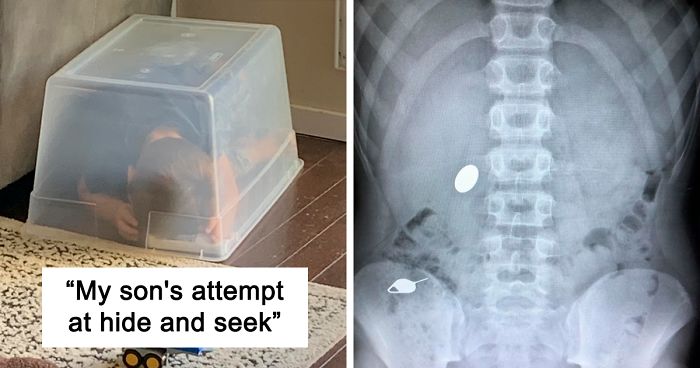
Kids are brilliant. Kids are creative. Kids can also spend ten minutes looking for the toy that is currently in their hand.
That contradiction is one of the great joys of childhood. A child can remember the exact location of a piece of candy from six months ago yet somehow forget that socks belong on feet. They can invent a surprisingly complex imaginary economy involving stuffed animals, then decide the most sensible way to clean a spilled drink is to cover it with seventeen paper towels and quietly walk away.
Before anyone takes the word “stupid” too seriously, the ridiculous things kids do usually have very little to do with intelligence. Childhood is basically an extended research-and-development program. Executive functionsincluding planning, working memory, attention control, and self-regulationdevelop over time rather than arriving fully assembled. Children also learn by experimenting, playing, imitating adults, testing cause and effect, and occasionally producing results that make nearby grown-ups question reality.
The following 50 examples are original composites inspired by the kinds of harmless kid-logic stories parents, relatives, teachers, and caregivers commonly share. Nobody is being diagnosed, and no individual viral story has been copied. We’re simply celebrating that magical stage of life when confidence often arrives several years before common sense.
Why Kids Do Things That Make Absolutely No Sense
Adults know that ice melts, hiding requires concealing your entire body, and saying “I didn’t eat the cookie” becomes less convincing when chocolate is covering half your face. Children have to discover these inconvenient details.
Play is one of their major learning tools. Organizations including the American Academy of Pediatrics, NAEYC, PBS KIDS, and Boston Children’s Hospital emphasize that play gives children opportunities to explore, solve problems, practice social behavior, develop imagination, and understand their surroundings.
Curiosity also outruns judgment sometimes. The American Academy of Pediatrics notes that young children may not yet recognize dangers or reliably remember rules while they’re busy exploring, which is one reason adult supervision and childproofing matter.
In other words, kid logic isn’t necessarily broken logic. It’s logic running version 3.2 while adults are expecting version 30.0.
50 Hilariously Stupid Things Kids Did
1. Looked for the toy already in their hand
A full household search was launched. Couch cushions were removed. Adults were accused. The missing toy eventually emerged from the detective’s own left hand.
2. Hid behind a curtain but left both feet visible
Technically, 80 percent of the child had disappeared. Apparently that was enough to qualify as invisibility.
3. Put an ice cube in a pocket “for later”
Several minutes afterward, there was outrage that somebody had apparently poured water into the pocket.
4. Whispered a secret at maximum volume
“DON’T TELL MOM, BUT THIS IS A SECRET!” could probably be heard three houses away.
5. Wore shoes on the wrong feet and defended the decision
They weren’t uncomfortable. They were “faster this way.” Science was unavailable for comment.
6. Cleaned the bedroom by moving everything under the bed
The floor looked fantastic. The bed had mysteriously gained six inches in elevation.
7. Tried to repair a broken cookie with tape
Engineering: excellent. Culinary judgment: needs additional testing.
8. Fed a houseplant part of a sandwich
The reasoning was flawless from one perspective: plants are alive, living things get hungry, therefore the fern wants lunch.
9. Denied eating dessert while visibly wearing dessert
Frosting on the cheeks. Crumbs on the shirt. Absolute commitment to the defense.
10. Put a stuffed animal in time-out
The offense? Apparently the bear had been “rude all morning.”
11. Apologized to furniture after bumping into it
Honestly, this one might be more civilized than stupid.
12. Asked whether a 100-year-old person remembered dinosaurs
History gets compressed significantly when your entire lifetime can be counted on one hand.
13. Put an umbrella over a stuffed animal indoors
The weather forecast said rain. Nobody specified where.
14. Wore two watches to become “twice as on time”
If productivity gurus haven’t already turned this into a seminar, they probably will.
15. Used socks as gloves because gloves were missing
Problem identified. Available resources assessed. Fashion sacrificed. Mission accomplished.
16. Created a restaurant where everything cost $50
Cereal: $50. Water: $50. One grape: somehow also $50. Inflation has reached the playroom.
17. Measured hunger with a ruler
The final diagnosis was reportedly “nine inches hungry.”
18. Put a “DO NOT ENTER” sign on the bedroom door
Then repeatedly invited everyone over to make sure they had read the sign.
19. Wrapped a sibling’s own toy and gave it back as a present
Low budget. High confidence. Surprisingly sustainable.
20. Saved an empty candy wrapper because it “still smelled good”
Sentimental value takes many forms.
21. Used enormous amounts of toilet paper to clean a tiny spill
The original problem was three drops of water. The new problem resembled a paper manufacturing accident.
22. Asked why the moon kept following the car
This classic childhood question is actually charming evidence of a developing understanding of distance and perspective.
23. Made goggles mandatory for taking a shower
Apparently the bathroom had recently been promoted to aquatic training facility.
24. Put a sticker on a banana and called it a barcode
Retail experience: limited. Entrepreneurial spirit: considerable.
25. Declared “I’m never talking again”
The silence lasted approximately seven seconds.
26. Covered their ears and announced, “I can’t hear you”
This wasn’t an observation. It was a strategy.
27. Drew a family portrait where everybody had enormous teeth
Nothing technically wrong with that. Still slightly unsettling on the refrigerator at midnight.
28. Adopted a rock
The rock received a name, bed, birthday, and emotional backstory before dinner.
29. Made a cardboard laptop and complained that the internet was slow
Customer support determined that the primary issue was that the computer was made of cereal packaging.
30. Put a blanket over a mess to make it disappear
Object permanence occasionally becomes negotiable when chores are involved.
31. Tried to reserve a snack by writing their name on it
Unfortunately, labeling a cookie does not prevent another sibling from understanding exactly whom they’re stealing it from.
32. Created sidewalk rules nobody else knew
One square was lava. Another was a crocodile. A third apparently imposed a ten-second dancing requirement.
33. Wore a backpack backward to prevent theft
Security improved. Walking through narrow spaces did not.
34. Packed six toys for school but forgot the schoolwork
Priorities had been established. The educational system simply disagreed with them.
35. Asked whether store mannequins wake up after closing
Then spent the remainder of the shopping trip keeping a suspicious eye on them.
36. Tried to make a wet piece of paper dry by staring at it
After fifteen seconds: “Why isn’t this working?”
37. Put a pillow on the floor so a dropped toy wouldn’t get hurt
Physics questionable. Empathy outstanding.
38. Left a blank thank-you card because they’d already said thanks
Why repeat information? Efficient communication begins early.
39. Tried to negotiate bedtime using tomorrow’s bedtime
“I’ll go to bed twice tomorrow.” Financial markets would admire the creativity of this debt restructuring.
40. Counted “one, two, three, five” and insisted four was taking the day off
Everyone deserves vacation time.
41. Asked whether fish get thirsty
This sounds ridiculous for about three seconds, at which point many adults realize they aren’t completely sure how to explain the answer.
42. Put a toy phone in the refrigerator because it was “overheating”
The troubleshooting instincts were impressive. The technical documentation was not consulted.
43. Wrote a note to their future self and opened it immediately
Technically, three seconds later is the future.
44. Tried to trick a sibling by hiding in the exact same place every time
Consistency is usually considered a virtue.
45. Announced a magic trick, closed their eyes, and asked whether everyone could still see them
The answer caused deep disappointment.
46. Packed for a weekend trip with eleven stuffed animals and no clothes
Essential items are subjective.
47. Asked a parent to “pause” a real-life conversation
Growing up with digital media creates some ambitious expectations for reality’s user interface.
48. Tried to make the family pet participate in school
The pet’s attendance record was excellent. Academic engagement remained low.
49. Put a lost tooth somewhere “the tooth fairy can’t steal it”
This significantly complicated the traditional transaction.
50. Asked why adults don’t simply buy more money
Congratulations. The child has solved economics.
The Surprisingly Smart Side of Kid Logic
A major reason these stories are funny is that children’s conclusions frequently make sense when you examine the information available to them.
Consider the child who gives food to a plant. They know plants are alive. They know living things need food. The incorrect conclusion isn’t random; it’s an attempt to connect two accurate ideas without yet understanding the biology between them.
Or consider a cardboard box becoming a spaceship, restaurant, castle, or computer. Pretend play involves using symbols, creating rules, assigning roles, and building stories. Pediatric and early-education sources consistently describe imaginative and child-directed play as an important setting for practicing language, social interaction, creativity, flexible thinking, and problem solving.
Developmental research also shows that risk assessment and executive functions change as children grow. That helps explain the famous childhood pattern of having enough ability to climb somewhere but not enough foresight to appreciate why climbing there was a terrible proposal.
When Funny Kid Behavior Isn’t Funny
Most of the examples above are ordinary silliness. Adults should make a distinction, however, between harmless experimentation and situations involving genuine danger.
Very young children can be curious without understanding hazards, so medicines, toxic household products, small batteries, unsafe water access, and other serious risks should be managed through prevention and supervision rather than expecting a child to consistently recognize the danger.
Likewise, one ridiculous decision doesn’t tell you anything meaningful about a child’s intelligence or development. CDC developmental guidance emphasizes looking at broader patterns in how children play, learn, communicate, behave, and move. Parents who have genuine developmental concerns should discuss those patterns with an appropriate health professional instead of diagnosing a child from one memorable incident.
Why Adults Never Forget These Stories
Childhood mistakes tend to become family folklore because they’re snapshots of a mind actively constructing its understanding of the world.
The toddler who thinks closing their eyes makes them invisible will eventually understand perspective. The kid who believes the moon follows the family car will learn more about distance. The aspiring entrepreneur charging $50 for cereal may eventually understand pricesalthough judging by airport restaurants, perhaps that child was simply ahead of schedule.
And today’s embarrassing kid story frequently becomes tomorrow’s story everyone begs to hear again.
More Experiences: What Living With Kid Logic Actually Feels Like
The suspicious silence experience
Adults who spend enough time around young children eventually learn an important rule: loud children are usually easier to supervise than silent children.
Noise means something recognizable is happening. Blocks are being stacked. Toys are being chased. Someone is singing the same line from a song for the 46th time.
Sudden silence creates questions.
You walk into the next room and discover that a highly experimental project has begun. Perhaps every stuffed animal has been tucked into a kitchen cabinet because they’re “sleeping at a hotel.” Maybe removable stickers have colonized an entire piece of furniture. The child looks up proudly because, from their perspective, this isn’t a mess. It’s progress.
The impossible explanation experience
Another universal adult challenge is explaining something that seems obvious until a child asks “why?” five times.
Why does the moon follow us?
Why can’t Tuesday come before Monday?
Why can’t we buy money?
Why does the dog need a leash if the dog already knows where home is?
At question number one, you’re confident. At question number four, you’re reconsidering your education.
Children’s curiosity can reveal how many adult assumptions are simply things we’ve stopped questioning. PBS KIDS describes young children as natural investigators who form ideas, ask questions, and explore their surroundings. Encouraging that curiosity can help turn ridiculous questions into genuine learning opportunities.
The “technically correct” experience
Some of the funniest kid moments happen when the child isn’t actually wrong.
Tell a child to put their toys “somewhere safe,” and the toys may end up inside a shoe.
Ask them to put dirty clothes “by the washing machine,” and you may find a perfect circle of socks surrounding the appliance without a single sock inside it.
Tell them not to draw on the wall, and they may draw on the door.
The adult intended a rule. The child received a highly specific legal document and immediately began searching for loopholes.
These moments can be frustrating, but they’re also reminders that children are still learning how language, expectations, consequences, and context fit together.
The confidence-without-data experience
Children frequently possess an inspiring level of confidence unsupported by any available evidence.
They can announce that they know how to build a rocket, cook dinner, repair a television, train the cat, or become president of the household. When asked how, the plan may involve tape, three couch cushions, and a cereal spoon.
That confidence can produce absurd results, but the underlying willingness to experiment isn’t something adults necessarily want to eliminate. Safe play and exploration give children room to test ideas, encounter small failures, adjust strategies, and try again. Research and guidance on play repeatedly connect these experiences with problem solving, learning, creativity, and developing self-regulation.
The story-that-lives-forever experience
Finally comes the child’s greatest miscalculation: assuming adults will ever forget what happened.
They will not.
A kid can grow up, graduate, get a job, and become an otherwise respectable person. None of this will stop a relative from eventually saying, “Remember when you tried to save an ice cube in your pocket?”
Every family collects these moments. Their details differ, but the basic formula is remarkably consistent: curiosity plus incomplete information plus enormous confidence equals a story that survives for decades.
That’s probably why adults love sharing funny things kids did. Beneath all the teasing is affection for the strange, temporary way children see the worlda period when cardboard boxes have unlimited possibilities, stuffed animals require medical appointments, furniture deserves apologies, and hiding your face clearly makes the rest of your body disappear.
Conclusion
The funniest childhood mistakes aren’t proof that kids are stupid. They’re evidence that children are learning in public, often loudly and with spectacular confidence.
Executive function, judgment, language, social understanding, risk perception, and problem-solving skills develop gradually. Meanwhile, play and curiosity encourage children to test ideas about how the world operates. Sometimes the experiment works. Sometimes somebody ends up wondering why an ice cube disappeared inside a pocket.
Adults provide the boundaries and safety. Kids provide the experiments. Families get the stories.
And years later, when those children become adults themselves, they’ll probably tell the next generation exactly the same thing every parent has said since the beginning of time:
“What on earth made you think that was going to work?”
Note: The humorous examples in this article are original composite scenarios rather than copied social-media posts. Developmental context was synthesized from reputable U.S. pediatric, educational, academic, and child-development resources, including the CDC, American Academy of Pediatrics, Harvard Center on the Developing Child, NAEYC, NIH/PubMed, Child Mind Institute, Boston Children’s Hospital, PBS KIDS, Cleveland Clinic, University of Illinois, UNICEF USA, and psychology research resources.