Note: This article is written as publication-ready web copy based on current interior design, furniture retail, and natural stone care guidance.
A marble-topped coffee table is the living room equivalent of a crisp white shirt, a good leather shoe, and a dramatic movie entrance all rolled into one. It looks polished without trying too hard. It can make a basic sofa suddenly appear “curated.” And, depending on the version you choose, it can cost less than a weekend getaway or more than a used car with surprisingly good mileage.
That is where the high/low conversation gets interesting. Marble coffee tables live in two worlds: the investment-piece world of thick natural stone, sculptural bases, and designer silhouettes, and the budget-friendly world of marble-look finishes, smaller-scale tables, mixed-material designs, and clever dupes. Both can be beautiful. Both can be practical. Both can also be wrong for your space if you choose by looks alone.
This guide breaks down how to shop for marble-topped coffee tables, when to splurge, when to save, how to style them, and how to avoid turning your elegant living room centerpiece into a coaster crime scene.
Why Marble-Topped Coffee Tables Still Feel So Fresh
Marble has never really gone out of style because it does two things at once: it feels ancient and modern. The veining gives every slab movement, while the smooth surface adds a tailored, architectural quality. In a living room, that contrast is gold. A marble-topped coffee table can soften a boxy sectional, elevate a simple apartment sofa, or add a little visual drama to a room that has become overly beige and emotionally committed to throw pillows.
The popularity of marble furniture also fits several larger home design trends: natural materials, quiet luxury, organic modern interiors, mixed textures, and statement surfaces. Designers often use marble because it brings pattern without needing color. White Carrara-style marble feels classic and bright. Black marble feels moody and glamorous. Brown, green, burgundy, and taupe marble add warmth and personality, especially in rooms that need richness without more clutter.
High vs. Low: What Actually Changes?
The difference between a high-end marble coffee table and a lower-priced option is not just the logo on the receipt. It usually comes down to material, construction, thickness, finish, base quality, and long-term durability.
The High: Natural Marble and Designer Construction
High-end marble-topped coffee tables often use genuine marble slabs, solid stone, hand-finished details, or premium mixed materials like oak, walnut, brass, steel, or cast metal. These pieces tend to have better proportions, heavier construction, and more refined edges. You might see dramatic veining, honed finishes, rounded bullnose edges, sculptural bases, or stone tops that feel substantial rather than decorative.
The appeal is obvious: a luxury marble coffee table can become the anchor of the room. It does not need much styling. A book, a low bowl, and one slightly smug candle are often enough. The stone itself is the artwork.
The tradeoff? Natural marble is heavy, porous, and sensitive to acids. Red wine, lemon, vinegar, coffee, and even certain cleaners can leave stains or etching if spills sit too long. That does not mean marble is too delicate for real life; it means it prefers owners who own coasters and remember where they put them.
The Low: Faux Marble, Marble Veneer, and Mixed-Material Savings
Budget marble coffee tables usually rely on faux marble finishes, marble-look laminate, printed stone patterns, sintered stone, engineered surfaces, or thinner marble tops paired with MDF, metal, or wood veneer bases. Many look surprisingly good from a normal standing distance, especially in photos and smaller rooms.
Lower-priced options are ideal for renters, first apartments, family rooms, dorm-style living spaces, or anyone who loves the marble look but does not want to panic every time someone sets down an iced latte. Some faux marble tables also include storage drawers, nesting designs, lift tops, or lower shelves, which can be more useful than a single slab of stone.
The downside is that cheaper marble-look finishes can chip, peel, scratch, or look flat up close. Repeated moisture exposure may damage low-quality surfaces. The veining can appear too perfect, too gray, or too obviously printed. In other words, the table may say “Italian villa” online and “printer cartridge” in person.
Best Marble Coffee Table Styles for Different Rooms
1. Round Marble Coffee Tables
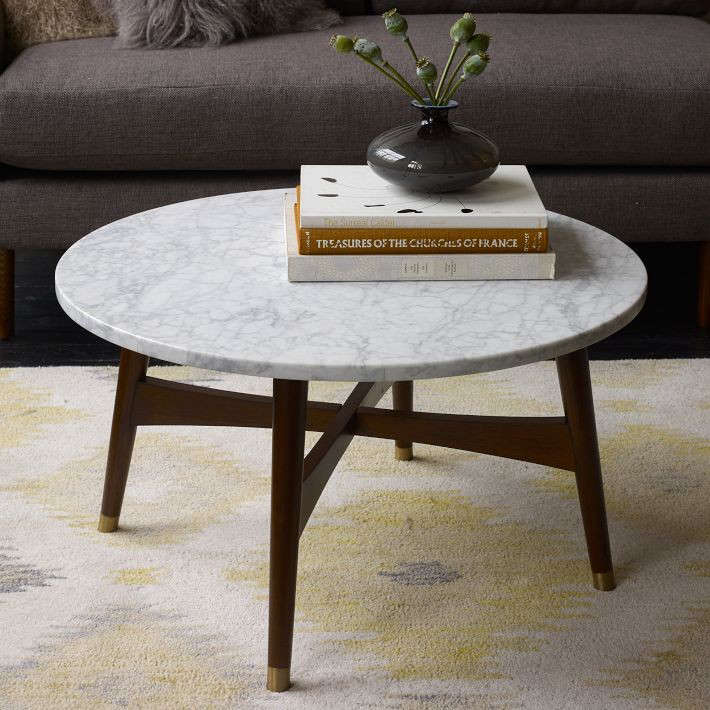
Round marble coffee tables work beautifully in small living rooms, rooms with sectionals, and spaces where people walk around furniture often. The absence of sharp corners makes the room feel more open and forgiving. A round white marble top with a black metal base feels modern; a round marble top with a wood pedestal feels warmer and more organic.
Choose round if your sofa has hard lines, your room feels cramped, or your household includes kids, pets, or guests who walk like they are auditioning for a furniture collision commercial.
2. Rectangular Marble Coffee Tables
Rectangular coffee tables are classic for a reason. They pair well with standard sofas and longer seating arrangements. A rectangular marble-topped table provides plenty of surface area for books, trays, remotes, snacks, and the decorative bowl nobody is allowed to move but everyone secretly questions.
For a high-end look, choose a rectangular table with a slim metal frame, solid wood base, or waterfall stone effect. For a budget look that still feels elevated, choose a faux marble top with clean lines and avoid overly shiny gold legs unless your room can support the glam factor.
3. Oval Marble Coffee Tables
Oval tables are the diplomat of coffee table shapes. They offer the length of a rectangle but the softness of a round table. This makes them especially good for narrow rooms, transitional interiors, and spaces that mix traditional and modern pieces.
An oval marble top can also look more custom than a basic rectangle. If you want a table that feels elegant but not stiff, oval is a smart middle ground.
4. Nesting Marble Tables
Nesting tables are one of the best “low” solutions for small spaces. You can pull them apart when entertaining and tuck them together when the room needs breathing space. Marble-look nesting tables also deliver the visual punch of stone without the weight or cost of one large slab.
This style is especially useful for apartments, multipurpose living rooms, and anyone whose coffee table sometimes needs to become a laptop desk, snack station, homework zone, and emergency laundry-folding platform.
5. Marble and Wood Coffee Tables
Marble and wood are a winning pair because they balance each other. Marble brings cool polish; wood brings warmth. A white marble top on a walnut or oak base feels timeless. A darker marble top on a light wood base feels more contemporary and relaxed.
This combination is especially good if you like organic modern, Japandi, midcentury-inspired, or warm minimalist interiors. It keeps marble from feeling too formal or hotel-lobby serious.
When to Splurge on a Marble-Topped Coffee Table
Splurge when the coffee table is the main statement piece in your living room. If your sofa, rug, and chairs are neutral, a dramatic marble table can do the heavy design lifting. It can add pattern, texture, and structure without requiring loud colors or trendy accessories.
It also makes sense to invest if you plan to keep the table for years, you prefer natural materials, and you are comfortable with the care routine. A genuine marble table can age beautifully when treated well. Small imperfections may even become part of its character, like laugh lines for furniture.
Consider a higher-end table if:
- You want real stone with unique veining.
- The table will be a focal point, not just a surface.
- You already own quality seating and need a piece with visual weight.
- You prefer timeless materials over trend-driven finishes.
- You are willing to use coasters, trays, and proper cleaners.
When to Save Instead
Save when your lifestyle is busy, messy, temporary, or delightfully chaotic. If your living room sees takeout dinners, craft projects, toddlers, pets, roommates, or frequent parties, a faux marble or marble-look coffee table may be the better choice. It gives you the look without the emotional support group required after every spill.
Saving also makes sense if you are still figuring out your style. Marble is versatile, but table shape and scale matter. Buying a budget-friendly option first can help you test whether you actually like living with a stone-look centerpiece before investing in the real thing.
Consider a lower-priced table if:
- You rent or move often.
- You need storage, lift-top features, or nesting flexibility.
- You have young kids or pets.
- You want the marble look but not the marble maintenance.
- You are decorating on a tight budget.
How to Choose the Right Size
A beautiful marble coffee table can still look wrong if the scale is off. The general rule is to choose a coffee table about one-half to two-thirds the length of your sofa. The height should be close to the seat height of the sofa or slightly lower. Too tall, and it feels awkward. Too low, and everyone has to perform a small yoga routine to reach their drink.
Leave about 16 to 18 inches between the coffee table and sofa so people can move comfortably. In tighter spaces, consider round, oval, or nesting tables. In larger rooms, a square or oversized rectangular table can help fill the seating area and make the arrangement feel intentional.
How to Style a Marble Coffee Table Without Overdoing It
Marble already has movement, so styling should be edited. The goal is not to cover the stone; the goal is to let it breathe. Think of the marble as the lead singer. Accessories are backup vocals. Nobody came for a 14-piece remote-control orchestra.
Use Contrast
Pair cool marble with warm materials: wood bowls, woven trays, leather boxes, ceramic vessels, or linen-covered books. This keeps the table from feeling sterile. If the marble is white or gray, add warmth through brass, walnut, terracotta, or soft greenery. If the marble is black or dark brown, add lighter objects for contrast.
Keep It Functional
A coffee table is not a museum pedestal. Use a tray for remotes, coasters, matches, or small objects. Add one stack of books, one sculptural item, and one organic element like flowers, branches, or a small plant. Then stop. Walk away. Do not add seven more things because the internet made you nervous.
Respect the Veining
If your marble has bold veining, choose simple accessories. If the stone is subtle, you can add more texture or color. A heavily veined table rarely needs complicated styling. It already woke up dramatic.
Marble Care: The Rules That Actually Matter
Natural marble is durable, but it is not invincible. It is a calcareous stone, which means acidic substances can react with the surface and cause etching. Etching looks like dull spots or cloudy marks, and it is different from staining. Staining happens when liquid penetrates the stone; etching happens when acid changes the surface finish.
For daily care, wipe the table with a soft cloth. For deeper cleaning, use warm water with a mild dish soap or a pH-neutral stone cleaner. Dry the surface afterward. Avoid vinegar, lemon juice, bleach, abrasive powders, harsh household cleaners, and rough scrubbers.
Use coasters under drinks, felt pads under decorative objects, and trays under anything that might leak, sweat, stain, or leave a ring. If your marble is unsealed or lightly sealed, be extra careful. Some manufacturers recommend resealing periodically, but always follow the specific care instructions for your table.
High/Low Shopping Examples
High Look: Thick Natural Marble With Sculptural Base
This is the statement option. Think genuine marble, strong veining, and a base that looks designed rather than assembled. A table like this works best in a room where the surrounding furniture is quieter. Let it be the centerpiece.
Best for: formal living rooms, design-forward apartments, neutral interiors, luxury spaces, and anyone who believes furniture should have main-character energy.
Low Look: Faux Marble With Slim Metal Frame
This is the classic budget-friendly choice. A faux marble top with a simple black, brass, or chrome frame can look stylish without draining the decorating budget. The trick is to choose a restrained design. The more dramatic the fake veining and shiny finish, the more likely it is to look inexpensive.
Best for: first apartments, small living rooms, renters, students, and anyone who wants style without signing a financial peace treaty with a coffee table.
High Look: Marble and Solid Wood
A marble top paired with solid oak, mango wood, walnut, or acacia creates a warm, grounded look. This style is less flashy than metal-and-marble designs and often feels more livable.
Best for: organic modern rooms, warm minimalism, family spaces, and neutral interiors that need texture.
Low Look: Marble-Look Nesting Tables
Nesting tables are practical and stylish, especially when space is limited. A pair of round faux marble nesting tables can create a layered look and adapt to real life. Pull them apart for guests, push them together for everyday use.
Best for: apartments, compact living rooms, flexible seating areas, and people who like furniture that does more than sit there looking pretty.
Common Mistakes to Avoid
Buying Too Big
Marble has visual weight. A large marble table can overwhelm a small room faster than you can say “free delivery.” Measure carefully and tape the dimensions on the floor before buying.
Ignoring the Base
The top gets the attention, but the base determines the style. Brass feels glamorous. Black metal feels modern. Wood feels warm. Chrome feels sleek. A bulky base can make marble feel heavy, while an open frame can make it feel lighter.
Choosing Fake Marble That Looks Too Perfect
Real marble has irregular veining. If the pattern repeats too obviously, the table may look artificial. Look for subtle movement, natural color variation, and a finish that is not overly glossy.
Forgetting Maintenance
If you buy real marble, plan for real care. Coasters are not optional decor; they are tiny bodyguards. Use them proudly.
Is a Marble-Topped Coffee Table Worth It?
Yes, if you choose the right version for your budget, lifestyle, and room. A marble-topped coffee table can instantly elevate a living space, but the best choice is not always the most expensive one. The right table should fit how you actually live.
If you want a long-term statement piece and enjoy natural materials, invest in real marble. If you want a stylish look with less worry, choose faux marble, sintered stone, or a mixed-material option. If your living room is small, go round or nesting. If your room is large, consider rectangular or square. If your home is full of snacks, pets, and people who do not understand coasters, proceed with wisdom and washable throws.
Personal Experience: What Living With Marble-Topped Coffee Tables Teaches You
The first thing you learn from living with a marble-topped coffee table is that it changes the mood of the room immediately. Even a simple sofa looks more intentional when marble enters the picture. The table becomes the visual center, and suddenly the room feels designed instead of merely furnished. It is the kind of piece that makes guests say, “Oh, this is nice,” while casually checking whether you have become more sophisticated since the last time they visited.
The second thing you learn is that marble has a personality. It is elegant, yes, but it is not low-maintenance in the way a solid wood or metal table can be. A marble table asks for small habits: use a coaster, wipe spills quickly, avoid acidic cleaners, and do not drag rough ceramic objects across the top. These habits are not difficult, but they do require consistency. Marble rewards careful people and mildly judges everyone else.
In real homes, the best marble coffee tables are the ones that match the rhythm of daily life. In a quiet adult living room, a natural marble table can be perfect. It can hold art books, flowers, a small tray, and maybe two glasses of wine placed responsibly on coasters. In a family room where kids are building block cities, eating snacks, and testing gravity with juice cups, faux marble may be the smarter hero. It gives the room a polished look without making everyone nervous.
Another experience worth mentioning is how much the base changes the feeling of the table. A white marble top with brass legs can feel glamorous and dressy, almost like jewelry for the living room. The same white marble on a black metal base feels more modern and graphic. Put marble on a chunky wood base, and suddenly it feels warmer, calmer, and more natural. This is why two marble tables with similar tops can create completely different rooms.
Styling also becomes easier once you stop trying too hard. Marble does not need a mountain of accessories. In fact, too many objects can hide the best part: the stone. A low bowl, a stack of books, a candle, and a natural element like branches or flowers are usually enough. The table should still have space for real life. A coffee table that cannot hold coffee has misunderstood the assignment.
One practical lesson: always check weight and delivery details before buying. Real marble can be extremely heavy. Moving it up stairs, through narrow doors, or across delicate flooring is not a casual afternoon activity. If you are buying a large natural marble table, measure the path into the room, not just the room itself. Your future self, your floors, and whoever gets volunteered to help will appreciate it.
The final lesson is that high and low can both look beautiful when chosen thoughtfully. A luxury marble coffee table can be a forever piece. A budget marble-look table can be a smart style upgrade. The secret is honesty. Know how you live, how much maintenance you tolerate, and how much visual weight your room can handle. Marble is timeless, but the right marble-topped coffee table is personal. Choose the one that makes your living room feel finished, functional, and just fancy enough to make takeout sushi feel like a design choice.
Conclusion
Marble-topped coffee tables remain popular because they offer instant sophistication, natural pattern, and flexible style. The high-end versions bring genuine stone, unique veining, and heirloom potential. The low-cost versions offer the look for less, often with added storage and less maintenance anxiety. Neither choice is automatically better. The best table is the one that fits your room, your budget, and your actual life.
Before buying, consider size, shape, base material, care needs, and how the table will function every day. A marble coffee table should not just look good in a product photo. It should support movie nights, morning coffee, guest visits, quiet reading, and the occasional decorative object you bought because it looked expensive in the store lighting.