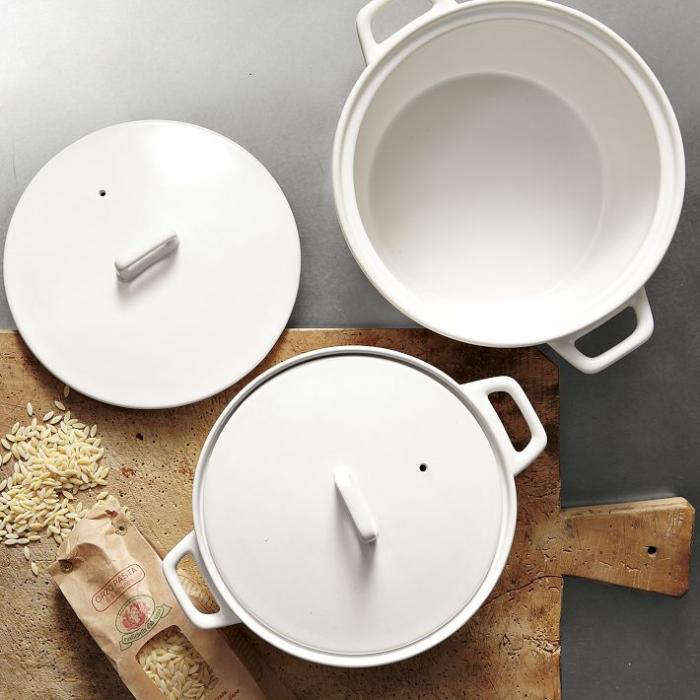
A great casserole dish should do more than prevent bubbling cheese from colonizing the bottom of your oven. It should cook evenly, hold heat, move gracefully from oven to table, and look good enough that nobody asks why dinner is being served from “the pan.” The High/Low Japanese-Inspired Ceramic Casserole concept brings all those qualities together in one deceptively simple object.
The phrase “High/Low” comes from a design comparison published by Remodelista in 2012. The original feature paired affordable black-and-white ceramic casseroles from West Elm with the more expensive Cotta Oval Casserole by Japanese ceramics brand 4th-market. Both delivered a restrained, Japanese-inspired appearance, but at different price points. At the time, the West Elm pieces were listed from $39 to $49, while the Cotta casserole was approximately $57. Those figures are historical rather than current retail prices.
More than a decade later, the comparison remains useful. It demonstrates that thoughtful kitchen design is not always about buying the most expensive object. Sometimes the “low” version captures the essential look and function. Sometimes the “high” version earns its premium through materials, craftsmanship, proportions, or longevity. The trick is knowing which differences matter after the casserole meets melted cheese, tomato sauce, and an aggressively hot oven.
What Makes This Casserole Japanese-Inspired?
The casserole is Japanese-inspired rather than necessarily a traditional Japanese donabe. That distinction matters. A donabe is an earthenware cooking pot traditionally designed for direct-flame cooking, hot pot, rice, soup, steaming, and other communal dishes. A Western ceramic casserole may share the donabe’s rounded form, lid, earthy material, and oven-to-table purpose without being suitable for a stovetop burner.
The Japanese influence in the High/Low casserole is most visible in its quiet geometry. There are no ornamental handles shaped like vegetables, no rooster painted on the lid, and no color palette that appears to have escaped from a candy store. Instead, the dish favors an oval body, compact handles, a low domed lid, and a black or white finish.
A Restrained Color Palette
Black and white allow the silhouette, texture, and food to become the visual focus. A white casserole makes roasted vegetables and golden gratins appear brighter. A black casserole creates dramatic contrast with rice, noodles, cream sauces, and pale dumplings. Both finishes slide easily into modern, rustic, Scandinavian, industrial, or traditional kitchens without demanding that the curtains coordinate with the cookware.
Soft, Functional Proportions
The rounded corners and oval profile are not merely aesthetic decisions. An oval vessel can accommodate small roasts, layered vegetables, fish fillets, baked pasta, and gratins while remaining compact enough for the center of a dining table. The original Cotta model was described as suitable for individual starters, gratins, or light meals for two. Its heat-resistant earthenware construction was also listed as oven-, microwave-, and dishwasher-safe.
Beauty Without Kitchen Theater
Japanese-influenced household design often makes everyday function visually satisfying. The casserole looks intentional without looking precious. It can sit on an open shelf, but it does not collapse emotionally when placed beside a wooden spoon and a bag of onions.
The High Version Versus the Low Version
In the original High/Low comparison, the affordable West Elm casseroles closely echoed the premium Cotta dish. Both were available in black and white, both included lids, and both were designed to travel from cooking area to dining table. The visual gap was small enough to make shoppers pause before paying more.
| Feature | High Option | Low Option |
|---|---|---|
| Original product | 4th-market Cotta Oval Casserole | West Elm Ceramic Casserole with Lid |
| Design | Minimal oval Japanese earthenware | Similar black-or-white oven-to-table form |
| Original published price | Approximately $57 | $39 medium and $49 large |
| Main appeal | Japanese brand, refined proportions, heat-resistant earthenware | Accessible price and a comparable minimalist appearance |
| Best buyer | Design enthusiast or frequent oven-to-table cook | Budget-conscious shopper seeking the same general look |
Price alone does not determine value. The premium option may offer better-balanced handles, a lid that seats more precisely, a more tactile glaze, or production methods that appeal to buyers interested in Japanese ceramics. The affordable option may be the smarter choice for an occasional cook, a first apartment, or a household where cookware regularly encounters enthusiastic children and dangerously crowded sinks.
How Ceramic Changes the Cooking Experience
Ceramic and earthenware heat differently from thin metal bakeware. They generally warm more gradually, hold heat effectively, and continue keeping food warm after leaving the oven. This behavior makes them particularly useful for lasagna, scalloped potatoes, baked rice, gratins, cobblers, and other dishes intended to remain hot during a leisurely meal. Ceramic also creates a more presentable serving vessel than a disposable aluminum tray, although the aluminum tray has never pretended to have self-esteem.
Food editors frequently recommend attractive oven-to-table cookware because it eliminates the need to transfer dinner to a separate platter. Epicurious has highlighted Japanese Banko-yaki casserole ware as both functional and elegant, while Martha Stewart’s experts note that ceramic dishes retain heat well and provide an attractive presentation for layered dishes such as lasagna.
Gentle, Even Heat
A substantial ceramic body can moderate abrupt changes in oven heat. Instead of heating almost instantly like a thin metal pan, the dish builds warmth through its walls and base. This can help creamy casseroles cook gently and can reduce the risk of scorching around the perimeter before the center is ready.
That does not mean every ceramic dish performs identically. Wall thickness, clay composition, glaze, dimensions, and oven temperature all influence results. A deep casserole produces a softer, moister center, while a broad, shallow model exposes more surface area for browning. Martha Stewart’s casserole guidance emphasizes choosing the correct dish size because an oversized pan can dry out the filling, while an undersized one can overflow.
Excellent Heat Retention
Japanese donabe are especially admired for gradual heating and strong heat retention. Porous Iga clay takes time to warm but continues radiating heat after the burner is turned off. Although a Japanese-inspired casserole may use a different ceramic formula, the same general benefit applies: dinner stays warmer at the table, and flavors have time to settle together.
A Lid That Controls Moisture
A fitted lid traps steam, limits evaporation, and protects delicate ingredients during the first part of cooking. It is useful for braised chicken, baked rice, beans, vegetable stews, and pasta dishes that need moisture before their final uncovered browning.
Remove the lid during the last 10 to 20 minutes when you want crisp edges or a deeply colored topping. Leave it on when the goal is tender rice, juicy meat, or vegetables that surrender peacefully rather than turning into oven-dried evidence.
Japanese Ceramic Traditions Behind the Look
Japan has an exceptionally long and varied ceramic history. Museum collections document functional earthenware vessels dating to the Jōmon and Yayoi periods, while later Japanese kilns developed regional traditions with distinct clays, glazes, forms, and firing techniques. Japanese ceramic production has continually balanced utility, local identity, international influence, and artistic experimentation.
Two traditions are particularly relevant to modern heat-resistant cookware: Iga-yaki and Banko-yaki.
Iga-Yaki Donabe
Iga-yaki pottery comes from Iga, where local clay has been used for ceramics for centuries. Modern donabe makers value its porous structure, which supports gradual heating and effective heat retention. Traditional all-purpose donabe can be used for soup, hot pot, stews, rice, fish, and vegetables, depending on the vessel’s construction.
Banko-Yaki Heat-Resistant Ware
Banko ware is associated with Yokkaichi in Mie Prefecture. Producers developed highly heat-resistant clay containing petalite during the twentieth century, helping Banko donabe become widely used in Japanese households. Epicurious has featured a Banko-yaki casserole that could be used on the stovetop, in the oven, and at the table.
These traditions help explain why Japanese-inspired cookware feels more like a dining object than a piece of equipment. Cooking and presentation are not treated as two unrelated jobs. The vessel participates in both.
What Can You Cook in a Japanese-Inspired Ceramic Casserole?
1. Miso Mushroom Baked Rice
Combine rinsed short-grain rice with broth, mushrooms, ginger, scallions, and a moderate amount of miso. Bake covered until the rice absorbs the liquid, then rest before opening. Add sesame seeds and a small pat of butter for a savory finish that politely crosses cultural boundaries.
2. Soy-Glazed Chicken and Vegetables
Arrange chicken thighs over sliced cabbage, carrots, and onions. Add a sauce of soy, mirin, ginger, and a little brown sugar. Cook covered to retain moisture, then uncover near the end so the chicken develops color.
3. Macaroni and Cheese
A minimalist Japanese-inspired casserole has no objection to American comfort food. Its heat retention helps keep the cheese sauce warm, and the oval form creates plenty of browned perimeter pieces. Those edge portions may need to be allocated by treaty.
4. Individual Gratins
A small oval casserole is ideal for potatoes, cauliflower, leeks, seafood, or leftover roasted vegetables layered with cream and cheese. Because the dish can go directly to the table, even a simple weeknight gratin looks suspiciously organized.
5. Fruit Cobbler or Bread Pudding
Ceramic bakeware is equally useful for dessert. The slower heat response can support gentle custard cooking, while the attractive finish turns the same vessel into a serving dish. Just confirm that the specific lid, glaze, and dish are rated for the recipe’s temperature.
How to Choose the Right Ceramic Casserole
Check the Intended Heat Sources
“Ceramic” does not automatically mean stovetop-safe. Some casseroles are made strictly for ovens and microwaves, while flameware and certain donabe can tolerate direct gas heat. Induction compatibility is even less common unless the pot includes a specialized base. Follow the manufacturer’s instructions rather than conducting an expensive experiment with fire.
Choose a Useful Capacity
A small one- to two-quart casserole works for side dishes, desserts, starters, and meals for one or two. A three-quart model suits many family casseroles. Larger vessels are better for entertaining but become heavy when filled with food. Handles should provide enough space for thick oven mitts, not just the fingertips of a concert pianist.
Examine the Lid
The lid should sit securely without wobbling excessively. A small amount of movement is normal in handmade or rustic ceramics, but a poor fit can release too much steam. Check that the knob remains easy to grip when wearing oven mitts.
Look for Food-Safe Materials
Buy cooking ceramics from a reputable manufacturer or retailer and confirm that the product is intended for food use. Consumer Reports advises extra caution with antique, damaged, heavily worn, hobby-made, or uncertain imported ceramics because some glazes and decorative coatings may contain lead. A bright glaze is not automatically unsafe, but undocumented cookware is not the ideal place for culinary gambling.
Decide Whether Craftsmanship Matters to You
The high option makes sense when you appreciate its production story, tactile glaze, proportions, regional ceramic tradition, or potential longevity. The low option makes sense when it delivers the needed capacity, safety, appearance, and performance without straining the household budget.
The best value is not always the cheapest dish or the most expensive one. It is the casserole that gets used frequently instead of spending ten years on a shelf waiting for a dinner party important enough to justify its existence.
Care Tips for Ceramic and Earthenware Casseroles
Clay and ceramic cookware can last for years when handled correctly, but it dislikes abrupt temperature changes. Food & Wine recommends gradual heating, cooling a clay pot before washing, using wooden utensils, and checking whether the vessel requires seasoning. Traditional donabe may be seasoned with a rice porridge before first use, while ordinary glazed stoneware often needs no seasoning at all.
- Read the manufacturer’s care and temperature instructions.
- Do not place a cold dish into a blazing-hot oven unless it is specifically rated for that transition.
- Avoid setting hot ceramic on a cold, wet, or metal surface; use a dry trivet.
- Do not pour cold liquid into a very hot casserole.
- Let the dish cool before washing it.
- Use nonabrasive sponges to protect the glaze.
- Dry porous earthenware completely before storage.
- Do not use a broiler unless the manufacturer explicitly permits it.
Thermal shock occurs when parts of a vessel expand or contract at different speeds because of a rapid temperature change. Although some modern stoneware is engineered to resist it, not every ceramic casserole has that protection. The safest habit is to avoid dramatic freezer-to-oven, oven-to-sink, or refrigerator-to-direct-flame transitions unless the product documentation approves them.
Experience Notes: Living With a Japanese-Inspired Ceramic Casserole
The experience of using this style of casserole begins before any food goes into it. Unlike a shiny stainless-steel pan that announces itself as equipment, a black or white oval ceramic dish looks calm on the counter. It feels more like part of the room. You can leave it on an open shelf without making the kitchen resemble a restaurant supply warehouse.
On the first cooking day, the most noticeable difference is weight. Ceramic feels substantial even before dinner is added. Once the dish contains chicken, vegetables, sauce, and a lid, carrying it becomes a two-handed operation. Generous handles suddenly matter. Tiny decorative grips may look charming in a photograph, but photographs rarely wear oven mitts.
A covered baked-rice dish is an excellent first test. The casserole warms gradually, steam gathers beneath the lid, and the rice cooks in a quiet environment with fewer exposed areas drying out. When the dish comes out of the oven, it continues radiating heat during the resting period. Opening the lid immediately releases an impressive cloud of steam, but waiting allows moisture to settle and makes the rice easier to serve.
The oven-to-table transition is where the design earns its keep. Instead of spooning the rice into another bowl and creating one more item for the dishwasher, you place the casserole on a trivet and bring it directly to the table. The black exterior frames pale rice and colorful vegetables beautifully. A white version gives the meal a lighter, cleaner presentation. Either way, dinner appears more deliberate, even when the recipe was inspired by three vegetables approaching retirement in the refrigerator.
On another evening, a shallow potato gratin reveals the value of the oval shape. The curved perimeter creates numerous browned edge portions, while the lid can protect the top during the early part of baking. Removing it near the end lets the cheese color without leaving the center undercooked. The casserole remains hot well into the meal, which is excellent for second servings and less excellent for anyone who confidently grabs the side without remembering that ceramic retains heat.
Cleanup is usually straightforward when the interior is smoothly glazed. Soaking the cooled dish briefly loosens baked sauce, and a soft sponge handles most residue. The important word is “cooled.” Moving hot ceramic directly into cold dishwater is a risky shortcut. Ceramic has a long memory for thermal mistakes, and its preferred method of filing a complaint is cracking.
Over time, the casserole’s real strength becomes versatility. It can hold baked pasta one night, roasted fruit the next, and dinner rolls on a holiday table. With the lid removed, it becomes a serving bowl for vegetables or salad. A small version works for two-person meals, while a larger one turns communal dining into the default presentation.
The limitations also become clear. A traditional donabe may support direct-flame cooking, but a Japanese-inspired oven casserole may not. You cannot assume that visual similarity equals identical construction. It is also heavier and slower to preheat than metal bakeware. Recipes developed in thin aluminum pans may require slightly more time, especially when dense ingredients are packed deeply.
Still, the slower pace is part of the appeal. This is cookware that encourages serving from the center of the table and letting people help themselves. The lid comes off, steam rises, and the meal becomes an event without requiring formal place settings or a speech. That communal quality connects the casserole to the spirit of Japanese clay-pot dining even when the recipe inside is baked ziti, scalloped potatoes, or peach cobbler.
After several uses, the high-versus-low question feels less theoretical. A budget model that heats reliably, fits your oven, cleans easily, and has comfortable handles may be the perfect purchase. A handcrafted or Japanese-made vessel may justify its higher cost through refined details and the satisfaction of using a thoughtfully produced object. Neither choice wins automatically. The winner is the one you reach for on an ordinary Tuesday.
Final Verdict
The High/Low Japanese-Inspired Ceramic Casserole is more than a tale of two similar dishes at different prices. It represents a useful approach to shopping: identify the qualities you genuinely value, compare materials and specifications, and separate meaningful craftsmanship from superficial resemblance.
The premium Cotta casserole offered heat-resistant Japanese earthenware, elegant proportions, and a strong connection to oven-to-table dining. The affordable West Elm alternative captured much of the same minimalist black-or-white appearance for less. Although those original products and prices belong to a 2012 comparison, the lesson remains current.
Choose a casserole with the right capacity, dependable handles, a well-fitting lid, clearly documented heat compatibility, and food-safe materials. Treat it gently around sudden temperature changes. Then fill it with something comforting, carry it directly to the table, and enjoy the rare kitchen object that can cook dinner and improve the scenery at the same time.