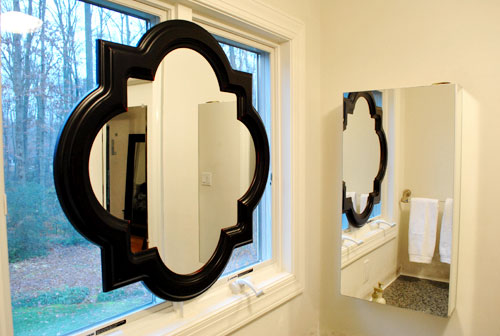
Hanging a bathroom mirror in front of a window sounds like one of those design ideas that should come with a warning label: “Beautiful, but may cause overthinking.” After all, bathrooms usually follow a predictable formula: vanity, wall, mirror, light fixture, done. But real homes love to laugh at formulas. Sometimes the sink sits directly under a window. Sometimes the only good vanity wall has glass where drywall should be. And sometimes the best natural light in the whole house is right where your mirror needs to go.
The good news? A bathroom mirror in front of a window can look intentional, bright, and surprisingly high-end when planned correctly. It can make a small bathroom feel larger, bring natural light into your morning routine, and create a layered designer look that says, “Yes, I meant to do that,” even if the window got there first.
The not-so-good news? You cannot simply hang a heavy mirror from a curtain rod, hope for the best, and call it “European.” Bathroom humidity, privacy, glare, backlighting, window operation, and proper mounting all matter. This guide walks through how to make the idea work beautifully and safely, with practical design tips, installation considerations, and real-world experience from bathrooms where the window and mirror had to learn to share personal space.
Can You Hang a Bathroom Mirror in Front of a Window?
Yes, you can hang a bathroom mirror in front of a window, but the method matters. The mirror should be supported by a secure structure, such as ceiling blocking, side-wall brackets, a sturdy frame, or a professionally installed suspension system. It should not be attached directly to window glass, weak trim, or a thin sash that was never designed to carry weight.
Designers often use mirrors near or opposite windows to bounce light around a room. In a bathroom, this trick can be especially valuable because natural light makes the space feel cleaner, fresher, and larger. When the vanity sits below a window, placing the mirror in front of it may be the most practical solution. Instead of fighting the layout, you turn the window into part of the design.
The key is to decide whether the mirror should float, pivot, suspend, or partially overlap the window. Each approach creates a different look and solves a different problem. A suspended mirror feels custom and architectural. A pivot mirror offers flexibility. A narrow oval mirror keeps more window visible. A round mirror softens all the straight lines in a small bath. In other words, the window is not ruining your bathroom. It is just auditioning for a supporting role.
Why This Layout Works So Well
It Makes Small Bathrooms Feel Bigger
Bathrooms are often short on square footage and long on things that need storage, plumbing, and privacy. A mirror placed in front of or near a window can visually expand the room by reflecting light and creating depth. Even if the bathroom is modest, the combination of glass, reflection, and daylight can make it feel less boxed in.
This is especially helpful in powder rooms, narrow bathrooms, and older homes where the sink location was decided long before anyone cared about “spa-like vibes.” If your bathroom has a window over the sink, a mirror in front of that window can preserve the natural brightness while still giving you a functional grooming area.
It Adds Natural Light Where You Need It
Natural light is a bathroom luxury. It helps with shaving, skincare, makeup, and checking whether your shirt is black, navy, or that mysterious third color only bathroom lighting can invent. A mirror in front of a window lets you enjoy daylight at the vanity instead of blocking it with a solid wall cabinet.
However, daylight alone is not enough. If the window is directly behind the mirror, your face may be backlit, which can create shadows. That is why side lighting, sconces, or an LED mirror can make the setup much more practical.
It Creates a Custom Designer Look
A floating mirror in front of a bathroom window looks intentional when the proportions are right. It adds dimension and gives the room a boutique-hotel feel. Instead of the standard mirror-flat-against-wall arrangement, you get layers: vanity, mirror, window, view, and light. That layered effect makes even a simple bathroom feel more designed.
Best Mirror Styles for Hanging in Front of a Bathroom Window
Suspended Mirror
A suspended mirror is one of the most elegant solutions. It usually hangs from the ceiling, upper window frame area, or a reinforced support bar. This works best when you want the mirror centered over the sink while keeping some of the window visible around it.
Choose a suspended mirror with strong hardware and a frame that looks good from every angle. Since the back of the mirror may be visible from outside or from certain bathroom angles, avoid anything unfinished or flimsy. A metal-framed mirror in black, brass, bronze, or brushed nickel often works well because it feels purposeful and moisture-resistant.
Pivot Mirror
A pivot mirror is attached with side brackets and can tilt slightly forward or backward. This is useful when the window creates awkward reflections or when different household members need different viewing angles. Pivot mirrors are also great for traditional, farmhouse, and transitional bathrooms because they feel classic rather than trendy.
For a window installation, the brackets must attach to solid side supports, not weak trim. If the window is wide and there is no wall surface on either side, this may require custom framing or professional help.
Round or Oval Mirror
A round or oval mirror can be a smart choice because it blocks less of the window visually than a large rectangle. Curved shapes also soften the hard lines of tile, cabinetry, and window frames. A round mirror centered over the faucet can look charming in a powder room, while a tall oval mirror can work beautifully in a narrow bathroom.
If privacy is a concern, choose a mirror large enough to cover the most exposed part of the window while still allowing light to pass around the edges. Think of it as a stylish privacy shield that also lets you check your hair. Multitasking at its finest.
Frameless Mirror
A frameless mirror can keep the look clean and minimal, especially in modern bathrooms. The downside is that frameless mirrors often need clips, channels, or adhesive systems that may not be ideal for a window-front installation. If you want a frameless look, consider a custom glass professional who can specify safe mounting hardware.
Articulating Wall Mirror
When the window cannot be blocked or the sink is slightly off-center, an articulating mirror can save the day. This type of mirror extends from the side wall on an arm and can swing into position when needed. It is practical for tight spaces, vintage bathrooms, and layouts where a fixed mirror would interfere with the window.
How to Plan the Right Height and Size
Bathroom mirror height should be based on the users, the vanity, the faucet, and the window. A common design approach is to place the center of the mirror around average eye level, often in the range of 57 to 65 inches from the floor. Another practical rule is to keep the mirror a few inches above the faucet or backsplash so splashes do not constantly attack the glass like tiny water ninjas.
When the mirror is in front of a window, you also need to consider the window rails, locks, muntins, and opening direction. Do not cover hardware you need to reach. Do not block a window that must open for ventilation or emergency access. If the window has a beautiful grid pattern, align the mirror with it instead of fighting it. Symmetry is your friend here.
For width, a mirror that is slightly narrower than the vanity usually looks balanced. But if the window is narrower than the vanity, follow the window proportions instead. The goal is not to force a standard mirror size into a non-standard situation. The goal is to make the whole wall look composed.
Privacy Comes First
A bathroom window is lovely until you realize the neighbor’s upstairs window has a direct line of sight to your toothpaste routine. Before hanging a mirror in front of a window, check privacy during the day and at night. Stand outside if possible and look toward the bathroom with the lights on. This is not glamorous research, but it is useful research.
Several privacy options work well with a mirror-window setup:
- Frosted window film: A simple way to soften the view while keeping daylight.
- Reeded or textured glass: More permanent and decorative than film.
- Top-down/bottom-up shades: Useful when you want privacy below and light above.
- Café curtains: Charming in cottage, vintage, and traditional bathrooms.
- Water-resistant shutters: Good for bathrooms with high humidity.
If the mirror covers the center of the window, you may only need privacy treatment around the exposed glass. Frosted film is especially popular because it keeps the room bright without adding fabric that can trap moisture. Just choose a product suitable for humid spaces and apply it neatly. Crooked film will bother you every morning before coffee, and nobody needs that.
Do Not Ignore Bathroom Ventilation
Bathrooms create moisture. Showers, baths, sinks, and steam all raise humidity, which can lead to foggy mirrors, peeling paint, swollen wood, mildew, and mysterious smells that no candle should have to fight alone. If your mirror blocks part of the window, ventilation becomes even more important.
A bathroom window can help with fresh air, but it should not be your only moisture-control strategy if it is often closed, covered, or blocked by the mirror. A properly sized exhaust fan is usually the better solution. Many bathroom ventilation guidelines use 50 CFM as a common minimum for small bathrooms, while larger bathrooms often need more airflow based on square footage.
For everyday use, run the fan during showers and for a while afterward. If your bathroom has persistent condensation, consider a humidity-sensing fan switch. Moisture does not care how pretty your mirror is. It will still try to sneak into every seam, frame, and corner.
Lighting Tips for a Mirror in Front of a Window
The biggest lighting challenge with this layout is backlighting. If bright daylight comes from behind the mirror, your face may appear shadowed. That is not helpful when shaving, applying makeup, tweezing eyebrows, or checking whether you look awake enough for a Monday.
The best solution is layered lighting. Add sconces on both sides of the mirror if there is room. If side sconces are not possible, use a ceiling light combined with a lighted mirror or slim vertical fixtures near the vanity. Avoid relying only on a single overhead light, which can cast shadows under the eyes and chin.
For modern bathrooms, an LED mirror can be useful, but check the electrical requirements before buying. Hardwired mirrors should be installed according to local code, and wet-location safety matters. If the wiring needs to pass near a window or through tile, call a qualified electrician. Electricity and bathroom steam are not a DIY comedy duo.
Safe Installation: What to Know Before You Drill
The most important rule is simple: the mirror must be supported by structure, not decoration. Window trim may look solid, but it is often not designed to carry the weight of a mirror. Heavy mirrors should be anchored into studs, blocking, masonry, or appropriate heavy-duty anchors rated for the mirror’s weight.
Common installation methods include:
- French cleats: Strong and stable for heavier framed mirrors.
- D-rings with rated hooks: Good for many framed mirrors when properly anchored.
- Side brackets: Often used for pivot mirrors.
- Ceiling suspension: Best when the mirror needs to float in front of the glass.
- Custom metal frames: Ideal for large or designer installations.
Always weigh the mirror or check the manufacturer’s specifications. Use hardware rated above that weight, not “close enough if nobody slams the door.” Bathrooms are active spaces. Doors close, drawers bump, kids tug towels, and someone will eventually lean on the vanity while questioning their life choices. Build in safety.
If the mirror is large, expensive, antique, lighted, or suspended from the ceiling, professional installation is worth considering. A pro can add blocking, locate studs, protect tile, and make sure the mirror hangs level. Level matters. A crooked mirror in front of a window will haunt you quietly forever.
Moisture-Resistant Materials Matter
Bathrooms are not gentle environments. Choose mirror materials that can handle humidity. Powder-coated metal, aluminum, stainless steel, sealed wood, resin, and moisture-resistant finishes tend to perform better than raw wood or cheap composite frames. If you love a vintage wood mirror, seal it properly and keep it away from direct shower spray.
Also inspect the mirror backing. Low-quality mirrors can develop black edges or spots over time when moisture reaches the reflective coating. A bathroom-rated mirror is a better investment, especially when the mirror sits near a window where condensation may form.
Design Examples That Work
Small Powder Room With a Round Mirror
Imagine a narrow powder room with a small vanity under a tall window. A 24-inch round brass mirror suspended in front of frosted glass keeps the room bright while adding warmth. A single pendant or two slim sconces provide evening light. The result feels charming, not cramped.
Modern Bathroom With a Floating Rectangular Mirror
In a clean modern bathroom, a black-framed rectangular mirror can hang from the ceiling in front of a wide window. The frame echoes black faucet and shower hardware. Frosted film on the lower sash preserves privacy, while the upper glass keeps the room sunny.
Traditional Bath With a Pivot Mirror
A pivot mirror mounted between side supports can look classic over a marble-topped vanity. This works especially well if the window sits close behind the sink but has enough side wall for sturdy brackets. Add shaded sconces for softer light and a polished, timeless feel.
Common Mistakes to Avoid
The first mistake is choosing a mirror that is too large. Blocking the entire window can make the bathroom feel darker and defeat the purpose of having natural light. Leave breathing room around the mirror when possible.
The second mistake is forgetting privacy. Daytime privacy and nighttime privacy are not the same. A window that seems private in daylight can become a glowing stage when the bathroom lights are on after sunset.
The third mistake is poor lighting. A mirror in front of a window may look beautiful in photos but perform badly in real life if your face is always in shadow. Add task lighting.
The fourth mistake is weak mounting. Never trust tiny screws, decorative trim, or mystery anchors with a heavy mirror. Use proper hardware, hit solid structure when possible, and get help lifting.
The fifth mistake is blocking the window completely. If the window opens, make sure it still opens enough to be useful. If it has locks, shades, or screens, make sure you can still reach them.
Quick Planning Checklist
- Measure the vanity, window, faucet height, and ceiling height.
- Check privacy from outside during both day and night.
- Choose a mirror shape that complements the window proportions.
- Confirm the mirror will not block locks, cranks, or ventilation.
- Add side lighting or an LED mirror to prevent shadows.
- Use moisture-resistant frame materials.
- Mount into studs, blocking, ceiling joists, or rated anchors.
- Consider professional help for suspended, heavy, or wired mirrors.
Real-World Experiences With Hanging a Bathroom Mirror in Front of a Window
In real bathrooms, this layout usually begins with a problem. The homeowner wants a normal vanity mirror, but the bathroom says, “Best I can do is a window.” At first, it feels awkward. Then, after a few sketches, measurements, and maybe one dramatic sigh in the tile aisle, the idea starts to look less like a compromise and more like a feature.
One common experience is discovering that natural light is wonderful but not always flattering from behind. A homeowner may install a beautiful mirror in front of the window and love how it looks at noon. Then evening arrives, the overhead light turns on, and suddenly the mirror is more decorative than useful. The fix is usually simple: add sconces, a lighted mirror, or a better ceiling fixture. Good lighting turns the setup from “pretty but annoying” into “why doesn’t every bathroom have this?”
Another lesson is that privacy should be tested, not assumed. Many people think frosted glass solves everything until they check the view from outside at night. The best approach is to layer privacy: frosted film on the lower portion, a mirror covering the central sightline, and perhaps a shade that can close when needed. This keeps the bathroom bright without giving the neighborhood a front-row seat to your skincare routine.
Installation is where many DIY plans become more serious. A small mirror may be manageable, but a large framed mirror in front of a window often needs blocking, ceiling support, or custom brackets. Homeowners who try to rely on trim alone usually end up rethinking the plan quickly. The safest installations feel solid from the start. If the mirror wiggles, shifts, or makes you nervous when you clean it, the hardware is not good enough.
Maintenance is another real-life factor. A mirror in front of a window may collect condensation on both the mirror and the nearby glass. If the bathroom lacks strong ventilation, water spots and fog become part of the morning routine. People who are happiest with this setup usually run the exhaust fan, keep a microfiber cloth nearby, and choose finishes that do not panic at the first sign of steam.
The most successful projects also respect proportion. A mirror that is too tiny looks accidental, like someone gave up halfway through decorating. A mirror that is too huge can make the window pointless. The sweet spot is usually a mirror that covers enough glass to be functional while leaving a visible border of daylight around it. That border is what makes the design feel layered and intentional.
In the end, homeowners often find that hanging a bathroom mirror in front of a window gives the room personality. It solves a layout challenge, keeps natural light in play, and creates a memorable focal point. It is not the easiest bathroom mirror idea, but when done well, it has that custom-designed charm that makes guests say, “Oh, that’s clever,” which is basically the Super Bowl of small-bathroom compliments.
Conclusion
Hanging a bathroom mirror in front of a window can be both practical and beautiful when you treat it as a design feature rather than a layout problem. The best results come from balancing natural light, privacy, ventilation, mirror size, and secure installation. Choose a moisture-resistant mirror, plan the lighting carefully, and make sure the mounting system is strong enough for daily use.
This idea works especially well in small bathrooms, powder rooms, and vanities placed under windows. A suspended mirror can feel modern and custom, a pivot mirror can feel classic and flexible, and a round or oval mirror can soften the whole space. Just remember: the mirror should serve your routine, not merely pose for photos. If you can see clearly, maintain privacy, open or ventilate the bathroom, and trust the installation, then your window-front mirror is doing its job.
Note: This article is based on real bathroom design, installation, ventilation, and home-improvement guidance commonly used by reputable U.S. design and remodeling resources. For heavy, suspended, antique, or hardwired mirrors, consult a qualified installer or electrician before drilling, wiring, or modifying window framing.