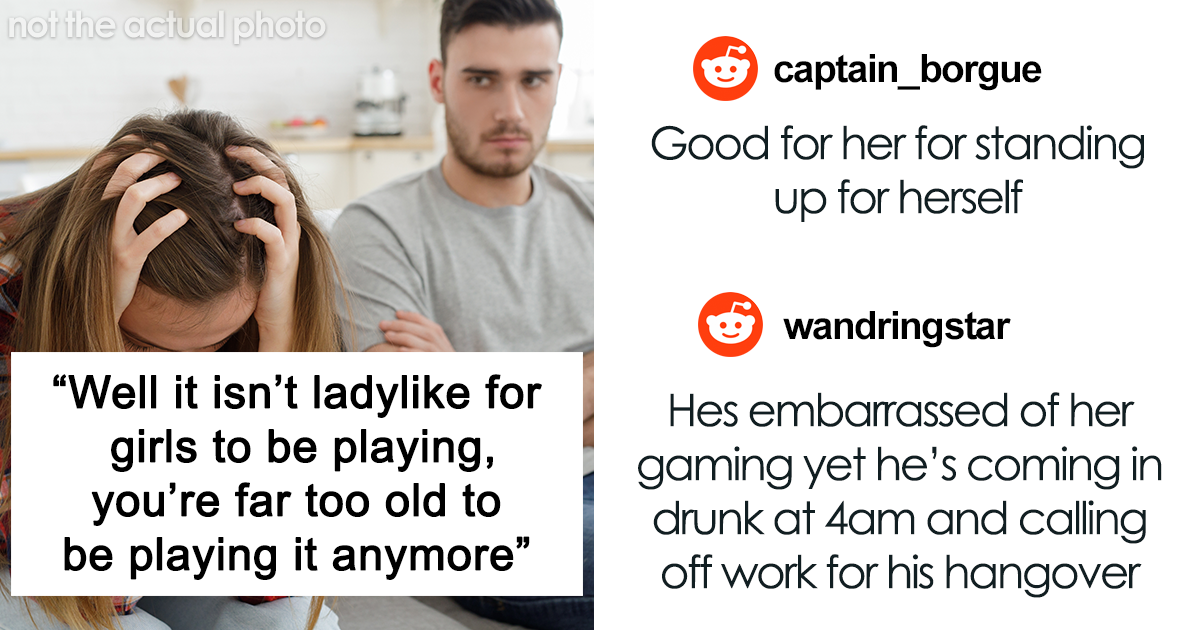
There are many questionable relationship opinions floating around the internet, but “video games aren’t ladylike” deserves its own little trophypreferably one shaped like a dusty Victorian fainting couch. In a world where millions of women play games on consoles, PCs, phones, tablets, and handheld devices, telling a girlfriend she is somehow less feminine for relaxing with a controller is not just outdated. It is also impressively silly, like trying to ban women from using Wi-Fi because routers do not match their nail polish.
The story behind the title is instantly relatable because it touches a nerve far beyond gaming. A woman wants to decompress. Her boyfriend does not understand her hobby. Instead of asking what she enjoys about it, he mocks her and calls it “unladylike.” The issue is not whether someone likes video games. Couples do not have to share every hobby. The real problem is disrespect: turning a harmless way to unwind into a test of femininity, maturity, or relationship worthiness.
Gaming has become one of America’s most normal entertainment habits. People play puzzle games on lunch breaks, cozy farming games after work, competitive shooters with friends, story-driven adventures on weekends, and mobile games while waiting for laundry to stop sounding like a helicopter. Players are not one type of person. They are parents, students, nurses, engineers, artists, grandparents, introverts, extroverts, and yes, women who may be perfectly “ladylike” while absolutely destroying a boss fight.
Why the “Isn’t Ladylike” Comment Hits So Hard
Calling a girlfriend’s hobby “not ladylike” is not a harmless joke when it is used to shame her. The phrase carries a long history of telling women to be smaller, quieter, softer, prettier, more agreeable, and less interested in anything considered “masculine.” In this case, the boyfriend is not simply saying, “I do not enjoy gaming.” He is implying, “Your joy makes you less acceptable as a woman.” That is where the red flag starts waving like it has been waiting all day for its big moment.
Healthy relationships leave room for individuality. One partner may love hiking; the other may prefer air conditioning and snacks. One may watch sports; the other may watch historical documentaries about castles and betrayal. The point is not to become identical people. The point is to respect each other’s harmless interests, especially the ones that help a partner relax after a stressful day.
Mockery is different from playful teasing. Playful teasing has warmth and consent. Mockery has a target. When someone repeatedly makes jokes that make their partner feel embarrassed, childish, or unattractive, the humor is no longer cute. It becomes a power move wearing a clown nose.
Video Games Are a Normal Way to Unwind
For many adults, video games serve the same function as reading, watching TV, gardening, knitting, working out, cooking, or scrolling through photos of dogs wearing tiny raincoats. They offer a mental shift. They let the brain leave work stress, school pressure, family drama, or general life chaos for a while. A good game gives structure: a quest, a puzzle, a goal, a world with rules. Compared with real life, where the “main quest” may be finding matching socks and answering emails, that can feel refreshing.
Research on leisure and stress consistently supports the idea that enjoyable activities can help people recover emotionally. Hobbies offer a pause button. They create positive feelings, restore attention, and provide a sense of control. Gaming can do that too, especially when played in moderation and chosen intentionally. A cozy game can be calming. A strategy game can be mentally stimulating. A multiplayer game can be social. A story game can feel like an interactive novel where the reader occasionally has to defeat a dragon.
The key is balance. Gaming becomes unhealthy when it consistently replaces sleep, responsibilities, relationships, exercise, schoolwork, work, or basic self-care. But the same is true of almost anything. Reading until 4 a.m. every night is not automatically sophisticated just because a bookmark is involved. Balance matters more than whether the hobby comes with pages, plants, paintbrushes, or pixels.
Women Have Always Belonged in Gaming
The idea that gaming is “for guys” has never been as accurate as stereotypes suggest. Women play across genres and platforms: mobile puzzle games, open-world adventures, role-playing games, simulation games, horror games, rhythm games, competitive games, and indie games that make players cry over a little animated mushroom. The gaming audience is broad, and the cultural image of “the gamer” has been slowly catching up with reality.
Part of the problem is visibility. Many women who play games do not always call themselves “gamers,” often because the label has been treated like a gatekeeping badge. Some women also avoid voice chat or hide their gender online to reduce harassment. That does not mean they are less involved. It means the space has not always been equally welcoming.
So when a boyfriend says gaming is not ladylike, he is not only insulting his girlfriend. He is repeating an old stereotype that many women have spent years pushing back against. Women do not need permission to enjoy technology, competition, storytelling, fantasy worlds, or digital creativity. A woman can wear lipstick and love horror games. She can bake cookies and play ranked matches. She can enjoy fashion and build a terrifyingly efficient virtual city. Human beings contain multitudes. Sometimes those multitudes include a headset.
The Real Relationship Issue Is Respect
This kind of conflict is rarely just about the hobby. If it were only about games, the conversation would sound different. A respectful partner might say, “I do not really understand the appeal, but I am glad it helps you relax.” Or, “Can we make sure we still have time together tonight?” Or even, “Show me what you are playing; I want to see why you like it.” Those are normal, mature responses.
A disrespectful response sounds like, “That is childish,” “That is unattractive,” “Girls should not do that,” or “It is not ladylike.” These comments are not about problem-solving. They are about control. They pressure the girlfriend to trade her authentic preferences for a version of herself that makes her boyfriend more comfortable.
Relationship experts often warn that contempt and personal criticism can damage trust. There is a huge difference between discussing a behavior and attacking a person’s identity. “I miss spending time together when you game every night” is a conversation. “You are not ladylike because you game” is a character attack. One opens a door. The other throws a controller through the emotional window.
When Gaming Becomes a Convenient Scapegoat
Sometimes a partner criticizes a hobby because there is a real underlying issue. Maybe they feel ignored. Maybe quality time has dropped. Maybe gaming is happening during meals, dates, chores, or important conversations. In that case, the concern may be valid, but the delivery still matters.
For example, saying, “I feel lonely when you play for five hours every evening and we do not talk” is fair. Saying, “Women should not play video games” is not fair. One addresses time and connection. The other drags gender stereotypes into the room, puts them on the couch, and asks everyone to pretend this is wisdom.
Couples can set healthy boundaries around hobbies without shaming each other. They can agree on tech-free dinners, shared weekend plans, quiet hours, or solo hobby time. A girlfriend can enjoy gaming and still be present in the relationship. A boyfriend can dislike gaming and still be respectful. The trouble begins when one partner believes their preferences should define the other person’s personality.
Why “Unladylike” Is Such a Weak Argument
The word “ladylike” is often used as if it has a fixed meaning, but it usually changes depending on who is using it. For some people, ladylike means polite. For others, it means quiet. For others, it means traditionally feminine. For the boyfriend in this story, it apparently means “does not hold a controller,” which is a very specific and frankly fragile definition.
Modern femininity is not a tiny decorative box. Women define it for themselves. Some women feel feminine in dresses; others feel feminine in hoodies. Some love makeup; others do not. Some unwind with yoga; others unwind by speed-running a level while eating cereal. None of these choices cancel womanhood.
Using “ladylike” as a weapon often reveals more about the person saying it than the person receiving it. It suggests discomfort with women having interests outside traditional expectations. It may also suggest insecurity. If a boyfriend feels threatened by his girlfriend enjoying a hobby he associates with men, the problem is not the girlfriend’s controller. The problem is his narrow view of gender.
Gaming Can Be Social, Creative, and Surprisingly Meaningful
People who dismiss games as mindless often have not paid attention to how varied games have become. Some games are basically interactive films. Some are logic puzzles. Some are digital art galleries with emotional damage. Some teach resource management, teamwork, patience, pattern recognition, communication, and problem-solving. Some are simply silly, and that is allowed too. Not every hobby needs to become a résumé bullet point.
For many players, games also create community. Friends who live far apart can meet in a virtual world. Couples can play co-op games and learn very quickly who is calm under pressure and who screams when a digital goat appears unexpectedly. Families can bond across generations through sports games, party games, and puzzle games. Gaming is not automatically antisocial. In many cases, it is social glue.
Even solo gaming can be emotionally useful. After a long day, not everyone wants to talk, perform, explain, or be “on.” A game can offer private decompression. It gives the player a small world where effort produces feedback and progress is visible. That can be deeply satisfying, especially during stressful seasons when real-life progress feels slow.
How the Girlfriend Could Respond
If a woman is dealing with a partner who mocks her gaming, the first step is to separate preference from disrespect. He does not have to play games. He does not have to understand every storyline, console, character build, or why “just one more mission” is the most dangerous sentence in the English language. But he does need to respect her.
A clear response might be: “Gaming helps me relax, and I am not okay with being mocked for it. You can dislike the hobby, but please do not call it unladylike or make jokes at my expense.” This sets a boundary without starting a war. It focuses on the behavior and the impact.
If he has a real concern about time together, that can become a separate conversation: “I am happy to talk about balancing gaming and couple time, but I will not discuss it through insults.” That distinction matters. It prevents the conversation from turning into a referendum on whether women are allowed to enjoy digital dragons.
What the Boyfriend Should Learn
The boyfriend in this situation has a choice. He can double down on an outdated stereotype, or he can grow up a little and realize that his girlfriend’s hobby is not a threat to him. A partner’s joy should not be treated like suspicious evidence. If she relaxes with games and still manages her life, responsibilities, and relationship, then the obvious response is: great, she has a healthy outlet.
He might also consider why the hobby bothers him. Does he think games are immature? Does he associate them only with men? Does he worry she will spend less time with him? Does he feel excluded? Honest answers could lead to a real conversation. Mocking her will not.
Support does not require becoming Player Two. It can be as simple as asking about the game, listening for five minutes, or not interrupting her relaxation time with judgment. Sometimes love looks like bringing snacks while your partner fights a final boss you do not understand.
Signs the Comment Is Part of a Bigger Pattern
One bad comment can be a mistake. A pattern of shaming is something else. If a partner regularly labels harmless interests as unattractive, childish, embarrassing, or inappropriate, that may signal a deeper control issue. Today it is gaming. Tomorrow it could be clothes, friends, music, career goals, makeup, body language, or how loudly she laughs at a meme.
A healthy partner may express opinions, but they do not try to shrink someone into a custom-made role. They do not treat love like a dress code. They do not make their partner audition for approval by giving up harmless interests. Respect means allowing the person you love to remain fully human, even when their favorite hobby is not yours.
Experiences Related to the Topic: When a Hobby Becomes a Relationship Test
Many people have had some version of this experience, even if the hobby was not gaming. One person is excited about something simple and personal, and the other person reacts with judgment. Maybe it is a boyfriend teasing his girlfriend for playing cozy games. Maybe it is a girlfriend mocking her boyfriend for collecting trading cards. Maybe it is a partner rolling their eyes at fan fiction, painting miniatures, watching anime, making playlists, building model trains, or spending Saturday morning perfecting sourdough bread like a flour-covered wizard.
The emotional sting is similar because hobbies often represent more than entertainment. They are little pockets of identity. They are how people rest, explore, create, compete, connect, and feel like themselves again. When someone mocks a harmless hobby, it can feel like they are mocking the part of you that lights up when life finally gives you a free hour.
In gaming specifically, the experience can be extra loaded for women because many have already dealt with gatekeeping. A woman may have heard comments like “You only play easy games,” “You are not a real gamer,” “Your boyfriend must have taught you,” or “Name five characters from this franchise or surrender your controller immediately.” So when a romantic partner adds “not ladylike” to the pile, it does not land as one isolated joke. It lands on top of a cultural history of being told that the hobby is not really hers.
One common experience is the “secret gamer” phase. Some women downplay how much they play because they do not want to be judged. They say, “I only play sometimes,” even though their save file has more hours than a part-time job. They avoid voice chat. They use neutral usernames. They laugh off their skills. This is not because gaming is shameful. It is because the reactions can be exhausting.
Another common experience happens inside relationships: one partner assumes relaxation must look a certain way. If she unwinds with a bath, a book, or a romantic comedy, it is accepted. If she unwinds by putting on headphones and entering a fantasy world with swords, spaceships, or suspiciously emotional raccoons, suddenly there is a committee meeting about femininity. The double standard is obvious. The need for rest is human. The format of rest is personal.
The best couples learn to be curious instead of judgmental. They ask, “What do you like about it?” They notice whether the hobby makes their partner calmer, happier, or more energized. They may not join in, but they make room for it. They understand that love does not mean turning your partner into a mirror. It means letting them be a whole person beside you.
A useful experience-based rule is this: if the hobby is not harming anyone, not consuming the person’s entire life, and not being used to avoid every responsibility, then the first response should be respect. Concerns about balance can be discussed kindly. But mocking someone’s harmless joy is never the mature option. It is emotional junk food: quick, cheap, and bad for the relationship long-term.
For anyone who has been shamed for gaming, the takeaway is simple: enjoying video games does not make you less feminine, less mature, or less worthy of respect. It makes you a person with a hobby. That is all. And if someone thinks your controller cancels your womanhood, they may need to update their software.
Conclusion
The boyfriend’s “isn’t ladylike” comment says much more about his assumptions than about his girlfriend’s hobby. Video games are a mainstream form of entertainment, relaxation, creativity, and connection. Women play them, enjoy them, discuss them, design them, stream them, review them, and sometimes dominate them with frightening precision. There is nothing inherently unfeminine about gaming.
The deeper lesson is about respect in relationships. Partners do not need identical hobbies, but they do need basic kindness. If gaming interferes with couple time or responsibilities, that can be discussed like adults. But shaming someone for how they relax is not communication. It is control dressed up as tradition.
A girlfriend who unwinds with video games is not failing some imaginary ladylike exam. She is simply choosing a form of rest that works for her. And honestly, in a stressful world, finding a harmless way to decompress is not something to mock. It is something to protectpreferably with snacks, boundaries, and maybe a spare controller for anyone brave enough to learn.
Note: This article is synthesized from real public information and research themes on gaming demographics, stress relief, women in gaming, online harassment, leisure activities, and healthy relationship communication. It is written as original editorial content for web publication and does not include source links by request.