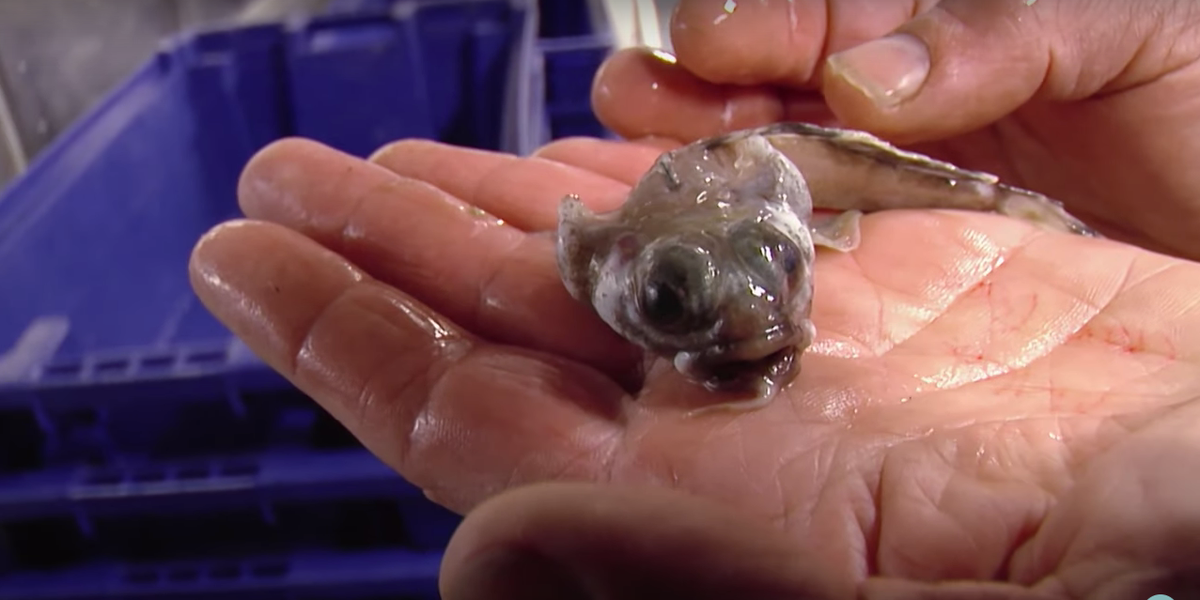
Some animals enter the scientific record with majestic names, dramatic silhouettes, and documentary-ready charisma. Others arrive looking like a half-melted gummy bear with googly eyes. The “gross new species of fish found in Antarctica” belongs proudly to the second group. It is pink, slippery-looking, soft-bodied, and almost suspiciously squishy. In other words, it is exactly the kind of creature that makes the internet say, “Absolutely not,” while scientists say, “Please pass the specimen jar.”
The fish that inspired this wonderfully rude headline was reported during coverage of Expedition Antarctica, where scientist Andrew Stewart encountered a strange Antarctic snailfish. It had a gelatinous body, oversized eyes, and unusual markings along its fins. To a casual viewer, it looked like a tiny sea ghost that forgot to finish rendering. To researchers, it was another clue that Antarctica’s icy waters still hide an astonishing amount of life we barely understand.
And that is the real story. The “gross” part may get the click, but the science is far more interesting. Antarctic fish are not weird by accident. Their bodies are shaped by freezing water, darkness, pressure, limited food, and isolation. What looks slimy or fragile on camera may actually be a masterpiece of survival engineering.
What Was the Gross Antarctic Fish?
The viral fish was described as a type of snailfish, a member of the family Liparidae. Snailfish are famous for their soft, scale-free, often translucent bodies. Many look more like tadpoles, jelly candies, or deep-sea marshmallows than the streamlined fish people usually imagine.
Snailfish live in cold waters around the world, including the Arctic and Antarctic, and some species occupy extreme depths. Their bodies can appear rubbery and delicate because they are built for life under conditions very different from a sunny coral reef or a neighborhood aquarium.
In the Antarctic discovery story, the fish’s unusual color pattern and fin structure caught Stewart’s attention. Its big eyes made it look oddly expressive, as if it had just read the comments section. The creature’s pink, gelatinous appearance led to the “gross” label, but that word says more about human taste than fish biology. In Antarctica, cute is optional. Survival is not.
Why Snailfish Look So Strange
Snailfish are soft-bodied for good reasons. In deep, cold environments, a lightweight, flexible body can be useful. Many species do not need heavy armor or hard scales. Instead, their bodies are adapted to pressure, low temperatures, and life near the seafloor.
They Are Built for Cold Water
Antarctic waters are brutally cold, but fish that live there have evolved remarkable ways to cope. Some polar fish produce antifreeze proteins that help prevent ice crystals from growing inside their bodies. That sounds like science fiction, but it is real biology. Nature basically gave these fish a built-in winter survival kit, minus the tiny scarf.
They Often Have Gelatinous Bodies
The squishy appearance of snailfish is not a flaw. It is part of their design. In deep-sea environments, firm bones and thick muscles are not always the winning strategy. A softer body can reduce energy demands and help the fish move through high-pressure habitats.
They Can Look Transparent or Pink
Many snailfish have pale, pinkish, or translucent skin. In dark underwater habitats, flashy colors are not exactly necessary. If your home is cold, dim, and far from beach vacation lighting, there is little evolutionary pressure to dress like a tropical parrotfish.
Is It Officially a New Species?
Here is where the story needs a little scientific seatbelt. Viral headlines often say “new species” the moment an unusual animal appears on camera. In formal science, however, a species is not officially recognized until researchers compare specimens, analyze features, often study DNA, and publish a description in a scientific journal.
The 2019 snailfish was treated as a likely new or unfamiliar species because its features did not match what the scientist expected. That does not automatically mean it had already gone through the full taxonomic process. Think of it like discovering a mystery item in your fridge. You may be confident it is not lasagna, but you still need more analysis before giving it a Latin name.
This distinction matters because Antarctica has produced many genuine, formally described fish discoveries. For example, in 2024 researchers described Akarotaxis gouldae, also called the banded dragonfish, from waters off the western Antarctic Peninsula. That species was confirmed using genetic analysis and physical comparisons with museum specimens. So yes, new Antarctic fish species are real; science just prefers paperwork with its sea monsters.
Antarctica Is a Biodiversity Mystery Box
Antarctica may look empty from above, but its surrounding ocean is packed with specialized life. The Southern Ocean contains fish, krill, seals, penguins, whales, sponges, worms, crustaceans, and other organisms that have evolved in isolation for millions of years.
The continent’s marine ecosystems are especially fascinating because cold temperatures and geographic isolation create unusual evolutionary pathways. Many Antarctic fish belong to groups found nowhere else. Some have antifreeze proteins. Some live under ice shelves. Some survive in deep water where humans can only visit with cameras, traps, and very expensive equipment that should never be dropped.
Why Scientists Care About a Slimy-Looking Fish
A strange fish is not just a strange fish. It can tell scientists about evolution, climate change, ecosystem health, and the history of the Southern Ocean. Every newly documented species adds another piece to the puzzle.
New Species Reveal Hidden Evolution
When a fish looks different from known relatives, researchers ask why. Did it evolve in isolation? Did glaciers separate populations? Did it adapt to a particular depth or food source? In Antarctica, these questions are especially important because ice has repeatedly advanced and retreated over geological time.
Small Fish Support Larger Animals
Fish larvae and small polar fish can be important prey for penguins, seals, and larger fish. Even a tiny, odd-looking species may play a role in the food web. Remove enough small players, and the big charismatic animals can feel the consequences.
Museum Collections Still Hold Surprises
Modern discoveries do not always happen in dramatic underwater footage. Sometimes they happen in museum drawers. Researchers comparing preserved specimens can realize that what was once labeled as one species is actually another. That is what happened with the banded dragonfish, which had been overlooked in collections before genetic and physical comparisons clarified its identity.
The Role of DNA in Identifying Antarctic Fish
Old-school taxonomy relied heavily on visible traits: fin shapes, body proportions, markings, teeth, bones, and other anatomical details. Those traits still matter. But DNA has become a powerful tool for separating species that look almost identical.
In the case of Akarotaxis gouldae, researchers compared mitochondrial DNA and then examined adult specimens from scientific collections. The evidence showed that the banded dragonfish was distinct from a closely related species. This combination of genetics and morphology is increasingly common in modern fish taxonomy.
The viral snailfish story fits into the same bigger picture. Antarctica is difficult to sample, and many species are rare, deep-living, or poorly known. Sometimes scientists need years of comparisons before they can confidently say, “Congratulations, weird little fish, you are officially new.”
Why Antarctica Keeps Producing Weird Fish
Antarctica is a natural laboratory for evolution. Its waters are cold, isolated, and physically demanding. Species that survive there often develop unusual traits. To humans, those traits may look bizarre. To evolution, they are simply practical.
Extreme Cold Creates Extreme Adaptations
Cold water slows biological processes, changes how muscles work, and threatens body fluids with freezing. Fish that survive in this environment need specialized chemistry and physiology. Antifreeze proteins are one famous example, but cold adaptation can also affect metabolism, growth, reproduction, and behavior.
Deep Water Rewards Strange Body Plans
Deep-sea fish often look delicate because they live under pressure that supports their bodies. Bring some deep-sea creatures to the surface, and they may lose shape because the pressure has changed so dramatically. That is why “gross” photos can be misleading. The animal may look odd in our world because it belongs perfectly to another one.
Isolation Encourages New Species
When populations become separated by glaciers, currents, depth, or geography, they can slowly diverge. Over long periods, those differences may become large enough to create separate species. Antarctica’s icy history makes it a prime region for this kind of evolutionary separation.
Is the Fish Dangerous?
No evidence suggests that the Antarctic snailfish from the viral story is dangerous to people. Its biggest threat to humanity is probably making someone say “ew” into their lunch. Snailfish are not horror villains. They are small marine animals trying to live in a place where the water is cold enough to make your eyebrows reconsider their career path.
The better question is whether humans are dangerous to these fish. Antarctic ecosystems are changing as temperatures shift, sea ice patterns fluctuate, and fishing activity expands in parts of the Southern Ocean. Small or range-limited species may be vulnerable before scientists even understand them well.
Krill, Penguins, and the Bigger Antarctic Food Web
Antarctic krill are central to the Southern Ocean food web. They feed penguins, whales, seals, seabirds, fish, and squid. Commercial krill fishing is managed internationally, but scientists continue studying how fishing pressure, climate variability, and ecosystem changes interact.
This matters for newly discovered fish because many young fish live in upper water layers where krill fisheries operate. If larval fish are accidentally caught as bycatch, or if krill availability changes, the effects can ripple through the ecosystem. A small fish with a funny face may be connected to penguins, seals, and whales in ways that are not immediately obvious.
What Makes This Discovery So Shareable?
The headline works because it combines three irresistible ingredients: Antarctica, a new species, and a creature that looks like it was designed during a power outage. People love animals that challenge expectations. The internet may laugh first, but curiosity usually follows.
That is useful. A funny headline can bring attention to serious science. Many readers who clicked because of a “gross fish” learned about snailfish, polar adaptation, deep-sea biology, and the hidden biodiversity of the Southern Ocean. That is a win for science communication, even if the fish did not consent to becoming a meme.
What We Can Learn From the Gross Antarctic Fish
The biggest lesson is simple: weird does not mean worthless. Strange-looking animals often reveal some of the most elegant solutions in biology. A gelatinous body may be an adaptation. Big eyes may help in dim habitats. Odd fin markings may separate one species from another. A fish that looks like a slippery cartoon may hold clues to evolution in one of Earth’s harshest environments.
The second lesson is that the ocean is still underexplored. Humans have mapped planets, named stars, and built machines that can argue with us about grammar, yet we are still discovering fish on our own planet. Antarctica reminds us that Earth has not run out of surprises.
The third lesson is conservation. Discovering a species is exciting, but discovering it in a rapidly changing environment is also a warning. Scientists need more research, better monitoring, and careful management to protect ecosystems before rare species disappear unnoticed.
Experience Section: What This Discovery Feels Like From Deck to Lab
Imagine standing on a research vessel near Antarctica. The air is sharp enough to make every breath feel freshly polished. Ice floats nearby like broken architecture. The ocean looks dark, cold, and ancient. Scientists lower equipment into water that most people will never touch, then wait while the sea decides whether to share a secret.
When the sample comes back, nobody expects glamour. Antarctic fieldwork is not a luxury cruise with lab coats. It is wet gloves, cold fingers, careful labels, humming equipment, and the constant awareness that one mistake can ruin valuable data. Then someone notices a small fish that does not look quite right. It is pinkish, soft, wide-eyed, and frankly a little ridiculous. The first emotional response might be laughter. The second is attention.
That moment is the magic of field science. Discovery rarely arrives with dramatic music. It arrives in a tray, in a net, in a jar, or under a microscope. A creature that looks “gross” to the public becomes a serious question for researchers. What family does it belong to? Has anyone described it before? Do the fins match known species? Are the markings unusual? Is it a juvenile form of something familiar, or a species hiding in plain sight?
Back in the lab, the experience changes. The fish is no longer just a strange face from a cold ocean. It becomes measurements, photographs, tissue samples, comparisons, and database searches. Scientists may compare it with museum specimens collected decades earlier. They may examine fin rays, body proportions, pigmentation, bones, and genetic sequences. The process is slow, but that slowness is the point. Science is careful because nature is complicated.
For readers, the experience is different but still valuable. A headline about a gross Antarctic fish opens a door. At first, the creature seems funny. Then it becomes fascinating. You start learning that snailfish can live in extreme environments, that Antarctic fish may carry antifreeze proteins, that young fish can be part of delicate food webs, and that museum collections can still reveal new species years after specimens were collected.
The emotional journey moves from “ew” to “wow.” That is a powerful shift. It shows how curiosity can turn discomfort into respect. Many important animals are not conventionally beautiful. Worms, krill, deep-sea fish, sponges, and microbes may not decorate posters like penguins do, but they keep ecosystems running. The gross fish is a reminder that nature does not exist to match human aesthetics. It exists because it works.
There is also a humbling experience in realizing how much remains unknown. Antarctica is not just a frozen backdrop for adventure documentaries. It is a living system with species that have evolved through ice ages, darkness, pressure, and isolation. Every strange fish is a message from that system: keep looking, keep asking, and do not judge too quickly.
In the end, the gross new fish is not gross at all. It is specialized, rare, and scientifically valuable. It may never become a plush toy, although honestly, someone should try. But it has already done something important. It made people pay attention to Antarctic biodiversity, and attention is often the first step toward understanding.
Conclusion
The “gross new species of fish found in Antarctica” is more than a funny headline about a slimy-looking creature. It is a window into one of the least understood marine environments on Earth. The Antarctic snailfish that caught public attention shows how unusual life can become when evolution works under cold, pressure, darkness, and isolation. Newer discoveries, such as the formally described banded dragonfish, prove that the Southern Ocean still has many biological surprises waiting in nets, cameras, and museum drawers.
So the next time a strange Antarctic fish appears online looking like a damp jellybean with existential anxiety, give it some respect. It may not be pretty by human standards, but it is a survivor from one of Earth’s toughest neighborhoods. And in science, that is beautiful enough.
Note: This article is written for web publication in standard American English and is based on real scientific reporting and institutional research summaries. The 2019 viral “gross fish” story refers to an unusual Antarctic snailfish observed during expedition coverage, while formally described Antarctic fish discoveries continue to expand scientific understanding of Southern Ocean biodiversity.