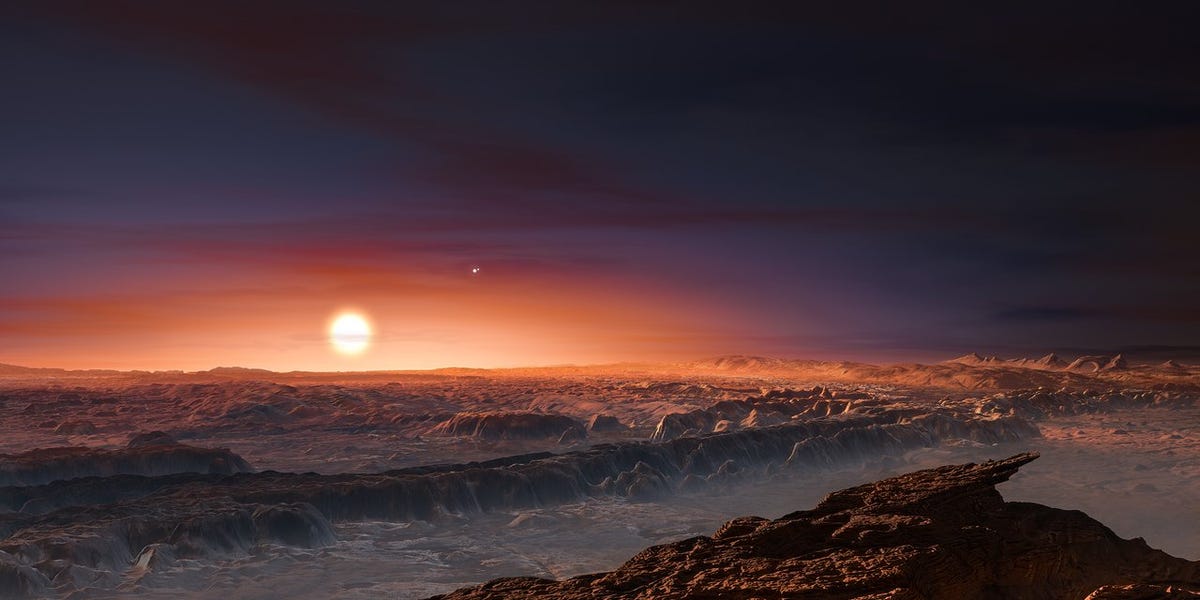
Somewhere beyond the comfortable neighborhood of our solar system, planets are doing absolutely wild things. Some are hotter than lava ovens. Some may rain glass sideways. Some orbit two stars, making every sunset feel like a dramatic movie poster. Others are rocky, quiet, and possibly sitting in the “just right” zone where liquid water could exist. These distant worlds are called exoplanets, and they have transformed astronomy from a science of “maybe” into a science of “look what we found.”
An exoplanet, also called an extrasolar planet, is any planet outside our solar system. Most orbit stars, just as Earth orbits the Sun, while a smaller number may wander alone through space as rogue planets. Scientists have now confirmed more than 6,000 exoplanets, and the evidence suggests that planets are not rare cosmic decorations. They are common. In fact, our Milky Way likely contains billions of them. That means the universe is not just filled with stars; it is filled with worlds.
The study of exoplanets matters because it answers one of humanity’s oldest questions: Are we alone? It also helps scientists understand how planets form, why solar systems look different, and whether Earth is ordinary, extraordinary, or somewhere in the wonderfully confusing middle.
What Are Exoplanets?
Exoplanets are planets that exist beyond the Sun’s family of eight official planets. They can be enormous gas giants like Jupiter, small rocky worlds like Earth, icy planets similar to Neptune, or strange hybrids that do not exist anywhere in our own solar system. That last part is important. Before exoplanet discoveries became common, scientists mostly used our solar system as the model for how planetary systems should look. Then the universe politely kicked that model across the room.
The first confirmed exoplanets were discovered in the early 1990s orbiting a pulsar, the dense leftover core of a dead star. In 1995, astronomers confirmed 51 Pegasi b, the first planet found around a Sun-like star. It was a shocker: a giant planet orbiting extremely close to its star. This type of planet became known as a “hot Jupiter.” Imagine Jupiter moving into Mercury’s apartment and turning the thermostat to “surface of a toaster.” That discovery showed scientists that other planetary systems could be dramatically different from ours.
Why Exoplanets Changed Modern Astronomy
Exoplanets turned the search for other worlds from speculation into measurement. Instead of merely wondering whether planets existed around other stars, astronomers began counting them, weighing them, estimating their sizes, studying their orbits, and even analyzing their atmospheres. The field moved fast because technology improved quickly. Space telescopes, powerful ground observatories, precision instruments, and sophisticated data analysis all helped reveal tiny signals hidden in starlight.
This is not easy work. A planet next to a star is like trying to spot a firefly beside a stadium floodlight from hundreds of miles away. Yet scientists have developed several clever techniques to identify these distant worlds. Each method reveals different clues, and together they build a fuller picture of what exoplanets are like.
How Scientists Find Exoplanets
The Transit Method
The most productive exoplanet discovery method is the transit method. When a planet passes in front of its star from our point of view, it blocks a tiny amount of starlight. Astronomers measure that slight dip in brightness. If the dip repeats on a regular schedule, it may indicate an orbiting planet.
This method helped NASA’s Kepler mission discover thousands of exoplanets and candidates. It is also central to TESS, the Transiting Exoplanet Survey Satellite, which surveys bright nearby stars. Transits can reveal a planet’s size, orbital period, and distance from its star. When combined with other observations, transits can also help scientists study an exoplanet’s atmosphere.
The Radial Velocity Method
The radial velocity method, sometimes called the wobble method, looks for tiny movements in a star caused by the gravity of an orbiting planet. Planets do not technically orbit motionless stars. Instead, both star and planet orbit a shared center of mass. If a planet is massive enough, it makes its star wobble slightly.
Astronomers detect this wobble by measuring shifts in the star’s light. As the star moves toward and away from us, its light shifts slightly in wavelength. This method is especially useful for estimating a planet’s mass. When scientists know both a planet’s size and mass, they can calculate density and make educated guesses about whether it is rocky, gaseous, or something in between.
Direct Imaging
Direct imaging is the celebrity photograph of exoplanet science: difficult, rare, and exciting when it works. Instead of detecting a planet indirectly, astronomers capture actual light from the planet. This is extremely challenging because stars are overwhelmingly bright compared with their planets. Special instruments block starlight so the faint planetary glow can be seen.
Direct imaging works best for young, large planets far from their stars. These planets are still warm from formation and shine in infrared light. The James Webb Space Telescope has strengthened this area by observing exoplanets in infrared wavelengths, helping scientists study young gas giants and planetary systems in greater detail.
Gravitational Microlensing
Gravitational microlensing sounds like a phrase invented to scare freshmen out of astronomy class, but the idea is elegant. When one star passes in front of a more distant star, the gravity of the nearer star bends and magnifies the background star’s light. If the foreground star has a planet, the planet can create an additional brief signal.
This method can detect planets that are very far away and planets orbiting at wide distances from their stars. It can even help identify low-mass worlds that may be difficult to find with other techniques. The downside is that microlensing events are rare and usually do not repeat, so scientists have to catch them at just the right moment.
Astrometry
Astrometry measures the precise position of a star in the sky. If a planet’s gravity tugs the star, the star may appear to move in a tiny pattern. This method is technically demanding because the motion is extremely small, but it is valuable for understanding planetary masses and orbits. As instruments become more sensitive, astrometry may become even more important in future exoplanet research.
Main Types of Exoplanets
Scientists often group exoplanets into broad categories: gas giants, Neptune-like planets, super-Earths, and terrestrial planets. These categories are useful, but they are not perfect boxes. The universe loves exceptions. It has the energy of a chef who follows no recipe and somehow still makes dinner interesting.
Gas Giants
Gas giants are large planets mostly made of hydrogen and helium, similar to Jupiter and Saturn. Some orbit very close to their stars and are called hot Jupiters. These planets can complete an orbit in just a few days. Because they are large and close to their stars, they are easier to detect than smaller, Earth-like planets.
Neptune-Like Planets
Neptune-like exoplanets are similar in size to Neptune or Uranus. They often have thick atmospheres and may contain mixtures of hydrogen, helium, water, ammonia, methane, and heavier materials. Some are called mini-Neptunes when they are smaller than Neptune but still likely wrapped in gas. Our solar system does not have planets between Earth and Neptune in size, yet these worlds appear to be common elsewhere.
Super-Earths
Super-Earths are planets more massive than Earth but lighter than Neptune. The name does not mean they are automatically habitable or “Earth, but with better parking.” A super-Earth may be rocky, gaseous, watery, volcanic, frozen, or a combination scientists are still trying to understand. Their abundance is one of the biggest surprises of exoplanet science.
Terrestrial Planets
Terrestrial exoplanets are rocky worlds like Earth, Mars, Venus, and Mercury. These are especially interesting in the search for life because a rocky surface and moderate temperatures could allow liquid water to exist. However, being rocky is only one piece of the habitability puzzle. Atmosphere, star type, orbit, magnetic protection, and geological activity all matter.
The Habitable Zone: Helpful, But Not Magic
The habitable zone is the region around a star where temperatures could allow liquid water on a planet’s surface. It is sometimes called the “Goldilocks zone” because it is not too hot and not too cold. This idea is useful, but it is not a guarantee of life. Venus sits near the inner edge of our Sun’s habitable zone and is basically a pressure cooker with a dramatic weather problem. Mars is near the outer edge and is cold and dry today.
For an exoplanet to be truly habitable, many conditions must work together. It needs the right kind of atmosphere, a stable climate, suitable chemistry, and probably long-term protection from harmful radiation. Red dwarf stars, for example, are common and can host planets in close-in habitable zones, but they may also produce strong flares that affect planetary atmospheres.
Famous Exoplanet Examples
51 Pegasi b
51 Pegasi b is historically important because it was the first confirmed exoplanet discovered around a Sun-like star. Its close orbit shocked astronomers and helped launch the modern era of exoplanet research. It proved that giant planets could exist far closer to their stars than expected.
TRAPPIST-1 System
TRAPPIST-1 is one of the most famous planetary systems beyond our own. It contains seven known rocky planets orbiting a small, cool star about 40 light-years away. Several of these planets are in or near the habitable zone. Scientists have studied the system with telescopes including Spitzer, Hubble, Kepler, and Webb. It remains one of the best laboratories for understanding compact systems of rocky worlds.
Proxima Centauri b
Proxima Centauri b orbits the nearest star to the Sun, Proxima Centauri. Because the system is only about 4.2 light-years away, it naturally attracts attention. The planet is roughly Earth-sized and orbits in the star’s habitable zone, but its actual environment remains uncertain. Proxima Centauri is an active red dwarf, and stellar activity could strongly affect the planet’s atmosphere.
K2-18 b
K2-18 b has drawn attention because observations have detected water vapor and other atmospheric clues. It is larger than Earth and may be a sub-Neptune or a possible ocean-bearing world, depending on scientific interpretation. It is not “Earth 2.0,” but it is an excellent example of how atmosphere studies are reshaping exoplanet science.
Studying Exoplanet Atmospheres
Finding an exoplanet is exciting, but studying its atmosphere is where the detective work becomes truly fascinating. When a planet transits its star, some starlight passes through the planet’s atmosphere before reaching our telescopes. Molecules in that atmosphere absorb certain wavelengths of light. By studying those patterns, astronomers can identify possible ingredients such as water vapor, carbon dioxide, methane, sodium, helium, and other gases.
Hubble helped pioneer atmospheric studies of exoplanets, and the James Webb Space Telescope has pushed the field forward with powerful infrared observations. Webb can examine details that were previously difficult or impossible to measure, especially for planets with complex atmospheres. Scientists are not just asking whether exoplanets exist anymore. They are asking what their skies are made of.
Could Exoplanets Host Life?
The honest answer is: maybe, but we do not know yet. No confirmed life has been found beyond Earth. Still, exoplanets offer the best places to search. Scientists look for biosignatures, which are chemical clues that could be associated with life. Examples may include certain combinations of oxygen, methane, carbon dioxide, and water vapor. However, interpreting biosignatures is tricky because nonliving processes can sometimes produce similar signals.
The search for life is not about finding one magic molecule and shouting, “Aliens!” across the laboratory. It requires context. What type of star does the planet orbit? How old is the system? Does the planet have clouds? Is its atmosphere stable? Could volcanoes or sunlight explain the chemistry? Good science moves carefully, even when everyone secretly wants the headline to include the phrase “tiny space neighbors.”
Why Exoplanets Help Us Understand Earth
Exoplanets do more than feed our curiosity about alien worlds. They help us understand Earth by comparison. When scientists study thousands of planets, they can see patterns. How common are rocky planets? How often do planets form in habitable zones? Why do some planets keep atmospheres while others lose them? What makes a solar system stable?
Earth is the only known inhabited planet, but exoplanets give scientists a broader sample. They show how planets evolve under different conditions, around different stars, and in different orbital arrangements. In that sense, exoplanets are cosmic mirrors. By studying them, we learn what makes Earth familiar, rare, fragile, and remarkable.
The Future of Exoplanet Exploration
The future of exoplanet science is moving toward characterization. Discovery is still important, but the next big step is understanding what these worlds are actually like. Missions and observatories will continue searching for smaller planets around nearby stars, while Webb and future telescopes study atmospheres in greater detail.
Scientists are especially interested in rocky planets around nearby stars because those worlds offer the best chance for deep atmospheric study. Future observatories may be designed to directly image Earth-like planets and search for atmospheric signs of habitability. The dream is not just to find another pale blue dot, but to understand whether it has oceans, clouds, seasons, or perhaps life.
Conclusion: Exoplanets Make the Universe Feel Biggerand Closer
Exoplanets have changed how we see the cosmos. A generation ago, planets outside our solar system were mostly theoretical. Today, thousands are confirmed, and new discoveries continue to expand the map. We have found hot Jupiters, super-Earths, mini-Neptunes, rocky systems, young giant planets, and worlds that challenge almost every neat assumption scientists once made.
The most thrilling part is not simply that exoplanets exist. It is that we can study them. We can measure their sizes, estimate their masses, analyze their atmospheres, and compare them with Earth. Each discovery adds one more clue to the grand mystery of planet formation, habitability, and life in the universe.
Exoplanets remind us that Earth is not sitting in an empty cosmic room. It is part of a galaxy rich with worlds. Some are hostile, some are strange, some are beautiful in theory, and some may one day become the focus of the most important discovery in human history. Until then, the search continues, powered by telescopes, mathematics, patience, and the deeply human habit of looking up and wondering what else is out there.
Experiences Related to Exoplanets: Learning to See the Invisible
The most interesting experience related to exoplanets is realizing that we usually cannot see them directly. For many people, astronomy feels visual. We imagine colorful nebulae, bright stars, crisp planets, and dramatic telescope images. Exoplanet science is different. It teaches patience. It asks us to appreciate small signals: a tiny dip in brightness, a slight wobble in starlight, a faint atmospheric fingerprint. At first, that can feel underwhelming. Then it becomes amazing.
Imagine sitting outside on a clear night and looking at a bright star. To the naked eye, it is just a point of light. It does not announce whether it has planets. It does not blink politely in Morse code saying, “Three rocky worlds here, please update your spreadsheet.” Yet hidden in that starlight may be evidence of an entire planetary system. Learning about exoplanets changes the way the night sky feels. Stars stop being simple dots and become possible suns with their own families of worlds.
A beginner’s experience with exoplanets often starts with surprise. The first surprise is how many have been found. The second is how strange they are. Hot Jupiters orbit their stars in days. Super-Earths exist in huge numbers, even though our solar system has none. Some planets orbit binary stars. Others may have thick atmospheres, global oceans, or extreme weather that makes Earth’s worst storm look like a mildly annoyed ceiling fan.
Another memorable experience is exploring online exoplanet catalogs or NASA visual tools. Searching through confirmed planets can feel like browsing a travel site for destinations no human can visit. You can compare orbital periods, star types, planet sizes, and discovery methods. It is oddly satisfying, like cosmic window shopping. “This one has a year shorter than a weekend. This one is bigger than Jupiter. This one might be rocky. This one is absolutely not where I would build a vacation cabin.”
For students, writers, and curious readers, exoplanets offer a rare blend of science and imagination. The facts are real, but they naturally invite creative thinking. What would sunrise look like on a planet orbiting a red dwarf? How would weather behave on a tidally locked world where one side always faces the star? Could life survive under an ocean beneath a thick atmosphere? These questions are scientific, but they also feel like the beginning of stories.
The best personal lesson from exoplanets is humility. Earth is precious, but it is not the whole show. Our solar system is familiar, but it is not the universal template. The galaxy is more inventive than expected, and every new discovery proves that nature has a bigger imagination than we do. Studying exoplanets is like opening a door and discovering that the house you live in is part of an enormous cityone filled with lights, mysteries, and neighbors we have not met yet.
Note: This article is written for web publication in standard American English and is based on current, real scientific information synthesized from reputable U.S. astronomy resources, including NASA mission materials, NASA/JPL educational resources, the NASA Exoplanet Archive, Hubble, and Webb science updates.