Some studios make glassware. Esque Studio makes glass behave as if it has been dared to become something more dramatic. A pendant light becomes a drop of liquid captured in midair. A vase feels sculptural enough to hold its own without flowers. A decanter may look like it wandered in from a fine-art gallery, glanced around the dining room, and decided it belonged there too.
Based in Portland, Oregon, ESQUE Studio is best known for hand-blown glass that sits comfortably between contemporary design, craft, functional décor, and collectible art. The studio was co-founded in 1999 by Andi Kovel and Justin Parker, two artists with deep technical roots in glassblowing and a shared appetite for pushing the medium beyond predictable bowls and polite tabletop objects. Today, ESQUE is strongly associated with Kovel’s sculptural direction, “punk-luxe” attitude, and belief that glass should be used, touched, displayed, and talked aboutnot trapped on a pedestal like it owes the room an apology.
For homeowners, interior designers, collectors, hospitality spaces, and anyone who likes objects with a pulse, Esque Studio represents a special corner of American design: handcrafted, modern, expressive, and occasionally mischievous.
What Is Esque Studio?
Esque Studio is a contemporary glass design studio creating hand-blown lighting, vases, tabletop pieces, barware, bowls, décor, and custom glass works. Its pieces often combine practical use with a strong sculptural identity. In plain English: these are objects you can live with, but they do not fade politely into the background.
The name “Esque” itself is meaningful. The suffix “-esque” means “in the style of” or “resembling,” as in picturesque or statuesque. For the studio, that idea points to influence, interpretation, and transformation. Esque pieces are not isolated from the world around them. They absorb references from nature, architecture, anatomy, fashion, industrial design, and fine art, then translate those ideas through heat, breath, gravity, and skilled hands.
That combination gives ESQUE Studio its recognizable personality. The work is luxurious without being stiff. It can be elegant, strange, humorous, organic, glossy, moody, and boldsometimes all before lunch.
The Story Behind Esque Studio
Andi Kovel began her creative path with a background in sculpture, art education, and theory. She studied at the University of Colorado and continued her education through the School of Visual Arts and New York University. Before ESQUE became a Portland design name, Kovel worked at UrbanGlass in Brooklyn, where she gained experience with demanding glass techniques and worked around major artists and designers.
Justin Parker brought his own mastery to the collaboration, particularly in large-scale glasswork and advanced hot-shop technique. Together, Kovel and Parker co-founded ESQUE in 1999. Their early concept was simple but ambitious: create modern, functional, concept-driven glassware for the design world while refusing to let craft become predictable or kitschy.
That mission helped ESQUE develop a reputation as a studio that treats glass as both material and message. Instead of asking, “What shape should this vase be?” ESQUE often seems to ask, “What can this molten thing become before physics changes its mind?”
Why Esque Studio Matters in Modern Glass Design
Glassblowing is an ancient craft, but ESQUE Studio approaches it with a distinctly modern sensibility. The studio does not reject tradition; it uses tradition as a launchpad. Classic hand-blown techniques are present, but the final objects feel current, expressive, and design-forward.
This matters because many people still imagine glass art as either museum sculpture or delicate decorative ware hidden in a cabinet. ESQUE helps collapse that division. A Waterdrop Pendant can illuminate a room. A pitcher can become a color study. A decanter can be functional and theatrical. A bowl can look organic enough to have been grown instead of made.
That is the studio’s sweet spot: making glass useful without making it ordinary.
Signature Style: Punk-Luxe, Organic, and Unapologetically Handcrafted
Esque Studio’s style is often described as “punk-luxe,” and the phrase fits surprisingly well. The “luxe” side appears in the polish, material quality, luminous surfaces, and refined finish. The “punk” side appears in the willingness to distort, exaggerate, surprise, and challenge what a luxury object is supposed to look like.
ESQUE glass is not trying to look machine-perfect. In fact, that would miss the point. Hand-blown glass carries small variations, movement, asymmetry, and individual character. Those details are not flaws; they are the fingerprints of process. In a world full of mass-produced objects that look like they were approved by a committee and then sanitized by another committee, ESQUE pieces feel alive.
Organic Forms
Many ESQUE pieces appear inspired by water drops, bubbles, roots, antlers, cells, and anatomical shapes. The studio often leans into the way molten glass naturally stretches, pools, droops, and swells. Rather than forcing the material into rigid obedience, ESQUE lets the glass reveal what it wants to do, then guides it with expert control.
Color as Emotion
Color in ESQUE Studio’s work is not just decoration. It can create atmosphere, depth, contrast, and mood. Pieces such as gradient-style pitchers and vases show how layered color can turn a familiar home accessory into something more expressive. The result is glass that changes with light, angle, and setting.
Functional Drama
ESQUE pieces are often dramatic, but they remain connected to daily life. Lighting, tabletop objects, barware, and vessels all serve recognizable purposes. The difference is that ESQUE adds a visual charge. You are not simply pouring olive oil; you are interacting with a small design event. Dinner parties deserve a little theater, after all.
Popular Esque Studio Categories
Esque Studio Lighting
Lighting is one of the most compelling parts of ESQUE Studio’s work because glass and light are natural collaborators. ESQUE pendants and lamps use transparency, thickness, color, and organic form to shape illumination. The Waterdrop Pendant, for example, carries the feeling of liquid suspended in space. It works especially well in clusters, where multiple pieces create rhythm and movement above a dining table, tasting room, entryway, or hospitality bar.
Other lighting pieces, including sculptural lamps and large-scale pendants, demonstrate how ESQUE turns illumination into atmosphere. These fixtures are not merely “lights.” They are focal points that happen to glow.
Vases and Decorative Vessels
Esque Studio vases are ideal for people who love flowers but do not want the vase to become invisible once the bouquet arrives. Many ESQUE vessels hold their own as standalone sculptural objects. Their shapes can be bulbous, stretched, thick-lipped, luminous, or unexpectedly anatomical.
In interior design, this makes them flexible. A bold vase can soften a minimalist room, add color to a neutral shelf, or give a console table the confidence boost it has secretly needed for years.
Tabletop and Barware
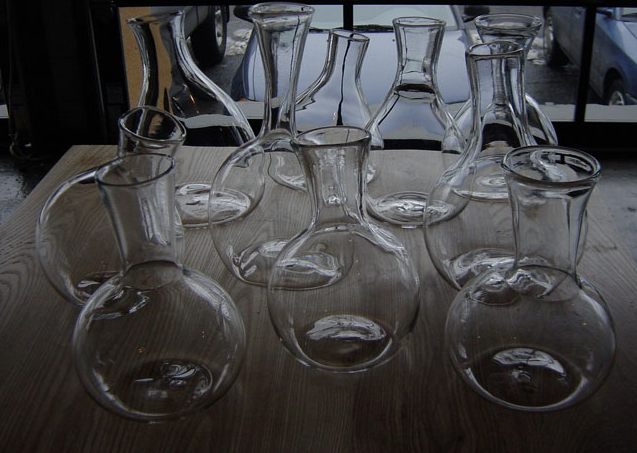
ESQUE’s tabletop pieces and barware show the studio’s sense of humor and its interest in ritual. Decanters, pitchers, oil and vinegar bottles, glass sets, and serving objects turn eating and drinking into a more tactile experience. These are not throwaway accessories. They are conversation starters that also know how to pour.
The studio’s more playful works, including sculptural decanters and unusual vessel forms, prove that fine design does not have to be overly serious. Sometimes the best object in the room is the one that makes guests lean in and ask, “Wait, what is that?”
Custom Glass and Architectural Projects
ESQUE Studio also works on custom glass pieces for collectors, designers, and architectural projects. This custom capability is important because glass behaves differently from wood, metal, stone, or ceramic. It requires collaboration, technical knowledge, and an understanding of how the material responds to heat, motion, scale, and gravity.
For designers working on hotels, restaurants, tasting rooms, residential interiors, or art-forward commercial spaces, ESQUE’s custom glass can help create a signature visual moment. A cluster of pendants, a sculptural installation, or a one-of-a-kind vessel can make a space feel designed rather than simply decorated.
The Craft: Why Hand-Blown Glass Feels Different
Hand-blown glass is physical, fast, and collaborative. A piece begins as molten glass gathered from a furnace. The artist shapes it through blowing, turning, reheating, tooling, stretching, and sometimes adding color or sculptural details. Every second matters. Glass cools quickly, and once it drops below a workable temperature, the material stops cooperating. It is a little like negotiating with lava, except the lava is expensive and everyone is holding metal tools.
This is one reason ESQUE Studio’s work feels so different from factory-made décor. The finished piece preserves evidence of movement. Curves, lips, thickness, and subtle variations show that a human being made decisions in real time. That energy is hard to fake.
Handmade glass also interacts beautifully with light. Edges glow. Thick areas deepen. Transparent sections create shadows. Color shifts depending on the room. A mass-produced item may look the same every time you walk past it; a hand-blown ESQUE piece can feel slightly different throughout the day.
How to Style Esque Studio Pieces at Home
Use One Piece as a Focal Point
If you own a bold ESQUE vase, bowl, or lamp, let it breathe. Place it where it has enough negative space around it: a console table, open shelf, dining table, sideboard, or pedestal. Crowding a sculptural glass object with too many competing accessories is like hiring a jazz band and then playing vacuum-cleaner sounds over it. Give the star room to perform.
Pair Glass With Natural Materials
ESQUE glass works beautifully with wood, stone, linen, leather, concrete, and matte ceramics. The contrast between glossy glass and tactile natural surfaces creates balance. A luminous pendant above a wood table, for example, can feel warm rather than cold. A colorful vase on a stone countertop can add softness to a modern kitchen.
Cluster Lighting for Impact
For pendants, consider grouping several pieces at different heights. This works especially well over dining tables, kitchen islands, bars, stairwells, and tasting rooms. The goal is not perfect symmetry. The goal is movement, depth, and visual rhythm.
Let Color Lead the Room
If your interior is neutral, a colorful ESQUE piece can become the anchor for smaller accents. Pull one shade from the glass and echo it in artwork, pillows, books, or flowers. This keeps the space cohesive without making it look like a showroom display assembled by a nervous robot.
Esque Studio for Interior Designers and Collectors
Interior designers often look for objects that solve more than one problem. A piece should fit the concept, support the mood, offer quality, and give the client something memorable. Esque Studio pieces check those boxes because they function as lighting, tabletop ware, or décor while also carrying artistic presence.
Collectors, meanwhile, may be drawn to ESQUE because the studio sits at the intersection of design and art. The pieces are usable, but they are not disposable. They reflect a specific maker, place, technique, and design philosophy. That gives them more long-term appeal than trend-based accessories.
Care Tips for Esque Studio Glass
Hand-blown glass deserves gentle care. Use mild soap, soft cloths, and careful handling. Avoid harsh chemicals, abrasive pads, and sudden temperature changes. Do not move a delicate glass object from extreme cold to hot water unless you enjoy living dangerously and apologizing to your wallet.
For lighting, follow installation guidelines carefully and hire a qualified electrician when needed. For tabletop pieces, hand washing is usually the safest choice unless the maker specifically says otherwise. For display pieces, regular dusting with a soft cloth will help maintain clarity and shine.
Buying Esque Studio: What to Consider
Before buying an ESQUE Studio piece, think about scale, use, placement, and light. Glass can look different depending on the environment, so consider where it will live. A large pendant needs ceiling height and visual space. A sculptural vase may need a stable surface. A colorful bowl may look best where daylight can pass across it.
Also consider whether you want a daily-use object or a collectible statement piece. ESQUE makes both worlds overlap, but your lifestyle matters. If you have toddlers, giant dogs, or a cat with the personality of a tiny chaos consultant, placement becomes especially important.
Experience: Living With Esque Studio-Inspired Glass Design
The first thing people often notice about Esque Studio-style glass is not simply the shape. It is the presence. A hand-blown glass object changes a room in a quieter way than oversized furniture or loud wall art. It catches light, reflects movement, and invites people to come closer. You may place it on a shelf thinking it is “just décor,” and three days later you realize the whole corner of the room now feels more intentional.
In a real home setting, a piece inspired by ESQUE’s approach works best when it is allowed to participate in daily life. A sculptural pitcher on a dining table makes water service feel elevated without becoming fussy. A glass pendant over a breakfast nook turns morning coffee into something warmer and more atmospheric. A vase with an organic shape can make even grocery-store flowers look like they arrived with a design degree.
One of the most enjoyable experiences is watching how hand-blown glass changes throughout the day. In the morning, sunlight may bring out transparent edges and soft color shifts. At night, the same piece may appear moodier, deeper, and more reflective. This is especially true with lighting. A pendant or lamp made from expressive glass does not just brighten a space; it creates a mood. It can make a dining room feel intimate, a hallway feel curated, or a bedroom feel softer without adding clutter.
There is also a tactile pleasure to handmade glass. Even when you are careful with it, you sense the weight, thickness, polish, and irregularity. Those details remind you that the object was formed by skill rather than stamped from a mold by the thousands. The small variations are part of the charm. They keep the piece from feeling sterile.
For designers, the experience is slightly different but equally valuable. ESQUE-style glass can become the “memory point” of a project. Clients may forget the exact paint color in the hallway, but they remember the pendant cluster above the bar or the luminous vessel on the entry console. In hospitality spaces, that matters. A memorable object can become part of the brand experience, the photo moment, and the emotional tone of the room.
For collectors, the pleasure comes from knowing that the piece reflects a larger movement in contemporary American glass. ESQUE Studio’s work is not merely pretty. It carries ideas about craft, function, experimentation, and the future of handmade design. Owning a piece like that feels different from buying a generic accessory. It feels connected to a studio, a maker, and a process.
The only real challenge is restraint. Once you start noticing what hand-blown glass does for a space, ordinary décor can begin to look a little sleepy. Suddenly, the plain lamp seems underdressed. The basic vase looks like it has no weekend plans. That is the quiet danger of good design: it raises your standards, then leaves you rearranging the living room at midnight.
Conclusion
Esque Studio has earned its place in contemporary glass design by refusing to separate beauty from function or craft from imagination. Founded in Portland and shaped by the vision of Andi Kovel and Justin Parker, the studio helped redefine what hand-blown glass can be: lighting, décor, tabletop ware, sculpture, conversation piece, and design statement all at once.
For anyone interested in modern glass, collectible home décor, or handcrafted American design, ESQUE Studio offers more than objects. It offers an attitude. The work is bold but refined, functional but artistic, luxurious but alive with experimentation. In other words, it is very much Esque Studio: glass with heat, humor, elegance, and a little well-behaved rebellion.
Note: This HTML article is written for web publishing in standard American English, with SEO tags placed at the end in JSON format as requested.