There are home upgrades that require a contractor, a spreadsheet, a stiff drink, and possibly a temporary relocation. Then there are lighting upgrades: small swaps with suspiciously large results. Replace one tired builder-basic fixture with a better-looking pendant, chandelier, vanity light, or wall sconce, and suddenly the room looks as if it learned how to stand up straight.
That is the appeal behind Easy Upgrades: Good-Looking, Affordable Fixtures to Swap In, From Linea Lighting. Linea Lighting, also known through the Linea di Liara brand, focuses on modern, affordable residential lighting: pendants, chandeliers, bath and vanity lights, ceiling lights, wall sconces, and table lamps designed to work in real homes, not just showroom fantasies where nobody owns a toaster. The best pieces are practical, stylish, and approachable enough for kitchen islands, hallways, bathrooms, dining rooms, and entryways.
This guide breaks down how to choose affordable light fixtures that look intentional, where to use Linea Lighting styles, and how to make a quick fixture swap feel like a genuine design upgrade. The goal is not to turn your house into a lighting catalog. The goal is to make your home look warmer, more finished, and more “yes, I meant to do that.”
Why Lighting Is the Easiest Upgrade With the Biggest Visual Payoff
Lighting has an unfair advantage over many other home upgrades: it changes both how a room looks and how it feels. Paint changes color. Furniture changes layout. Lighting changes the mood, the shadows, the shine on hardware, the warmth of wood, the sparkle of glass, and whether your kitchen feels like a cozy gathering spot or a mildly judgmental office break room.
A basic flush mount may technically illuminate a room, but it rarely adds personality. A pendant over a kitchen island can define a work zone. A wall sconce in a hallway can make a pass-through area feel designed. A vanity light can make a bathroom feel cleaner, brighter, and more flattering. A chandelier can help a dining table feel anchored instead of lonely. In other words, lighting is not just decoration. It is structure, function, atmosphere, and jewelry for the ceiling.
The most successful lighting upgrades usually follow three rules: choose the right scale, match the fixture to the job, and use bulbs that support the mood of the room. Affordable fixtures can look high-end when they are properly sized and installed at the correct height. Expensive fixtures can look awkward if they are too small, too low, too bright, or paired with bulbs that make everyone look like they are waiting in a hospital lobby.
What Makes Linea Lighting a Smart Choice for Budget-Friendly Swaps?
Linea Lighting offers a useful mix of styles for homeowners who want an upgrade without treating one light fixture like a luxury vacation. The brand’s collections include mid-century modern globe lights, industrial glass pendants, streamlined bath bars, exposed-bulb chandeliers, wall sconces, ceiling lights, and fixtures in finishes such as black, brushed nickel, chrome, antique brass, satin brass, and copper.
The practical advantage is variety. A homeowner can choose a small pendant for a breakfast nook, a multi-light fixture over a dining table, or a two-, three-, or four-light vanity fixture for a bathroom without jumping between wildly different design languages. Linea’s Effimero collection, for example, includes pendants, wall lights, vanity lights, and chandeliers, which makes it easier to repeat a shape or finish across nearby spaces. That kind of coordination can make an affordable project look planned rather than pieced together during three separate late-night shopping moods.
Several Linea fixtures also include useful real-world features: adjustable hanging heights, glass shades, compatibility with common E26-base bulbs, dimmability when paired with compatible bulbs and switches, and sloped-ceiling compatibility on selected pendants. These details matter because a good-looking fixture is only truly good-looking when it actually fits your ceiling height, your table, your dimmer, and your life.
Best Rooms for Easy Lighting Upgrades
Kitchen Islands: Swap in Pendants That Do More Than Hang Around
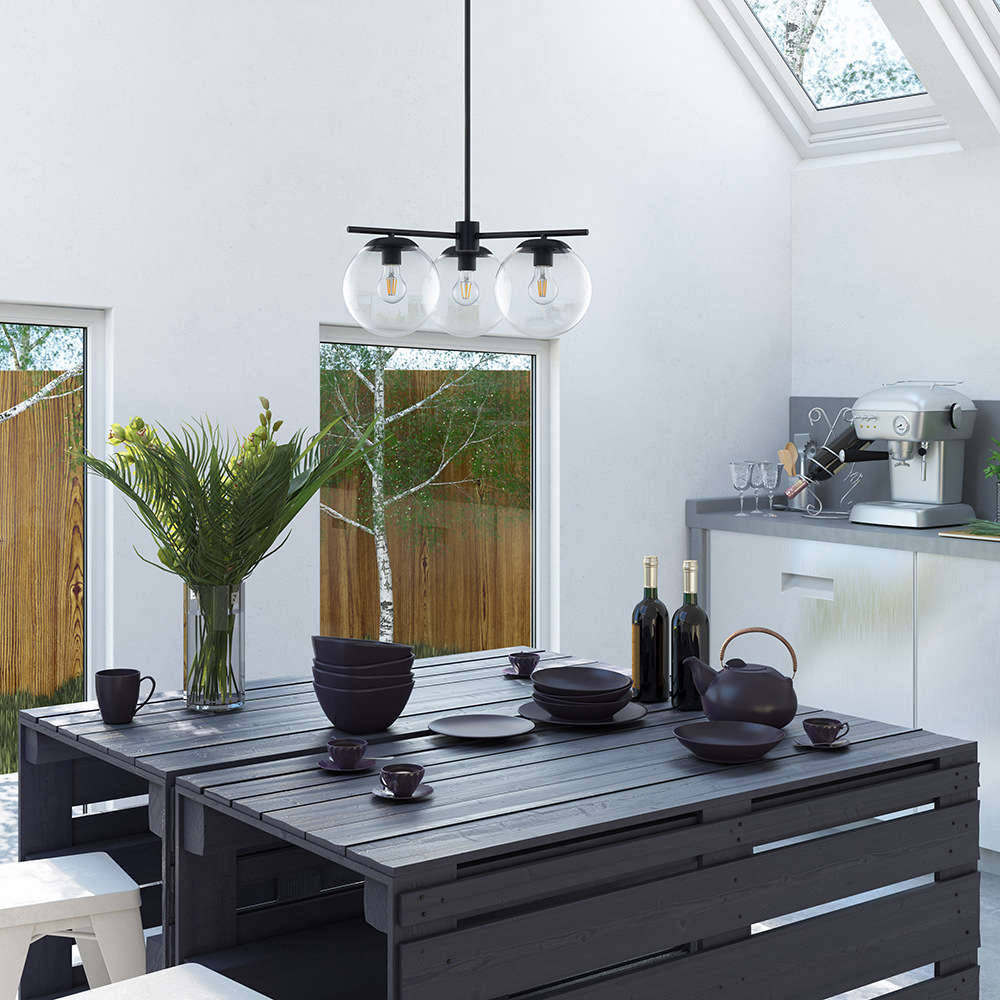
The kitchen island is the red carpet of home lighting. It is visible, practical, and usually begging for something better than a lonely ceiling light trying to do twelve jobs at once. Linea’s glass pendant styles, including industrial and modern options like the Fiorentino and Effimero families, work especially well here because they combine task lighting with visual interest.
For most kitchen islands, the bottom of the pendant should sit roughly 30 to 36 inches above the countertop. This keeps the fixture low enough to light the surface but high enough that nobody has to duck during taco night. If you are using multiple pendants, spacing them evenly is more important than blindly following a trend. Two medium pendants can look calm and balanced over a smaller island, while three mini pendants can add rhythm to a longer counter.
Clear glass shades are excellent for keeping sightlines open, especially in smaller kitchens. Frosted or milk glass softens glare. Black finishes create contrast against white cabinets, while satin brass or antique brass adds warmth to wood tones, marble, quartz, and creamy neutrals. If your kitchen already has strong black hardware, a black pendant can feel crisp and architectural. If the room feels a little cold, brass may be the friendly handshake it needs.
Dining Rooms: Use a Chandelier to Anchor the Table
A dining room without a centered fixture can feel unfinished, even if the furniture is beautiful. A chandelier or linear fixture gives the table a clear focal point. Linea’s Caserti mid-century modern chandeliers and Sonoro rectangular or round chandeliers are useful examples of how shape can reinforce layout. A rectangular fixture works naturally over a rectangular table, while a round chandelier tends to feel balanced above a round or square table.
As a general design rule, the fixture should be proportional to the table. Too small, and it looks apologetic. Too large, and it feels like the chandelier is interviewing everyone at dinner. A practical starting point is to choose a chandelier that is narrower than the table and visually centered. For height, many designers begin around 30 to 36 inches above the tabletop, then adjust for ceiling height, fixture shape, and sightlines.
Dimmers are especially valuable in dining areas. Bright light is helpful when setting the table, cleaning up, or searching for the fork that somehow vanished. Softer light is better when you want dinner to feel relaxed and flattering. Nobody has ever said, “This pasta is wonderful, but I wish the lighting were more aggressive.”
Bathrooms: Upgrade the Vanity Light First
If you can upgrade only one fixture in a bathroom, start with the vanity light. It has the most direct effect on daily routines: shaving, skincare, makeup, hair, and the morning mirror check where you decide whether you look “refreshed” or “artistically tired.”
Linea’s Effimero wall sconces and multi-light vanity fixtures fit well in bathrooms because they use simple glass cylinder shapes that can lean modern, transitional, or lightly industrial depending on the finish. A three-light vanity fixture is often a strong minimum for a standard mirror, while two-light options can suit smaller powder rooms. For larger double vanities, separate fixtures over each mirror or sconces at the sides can create more even illumination.
Placement matters as much as style. Vanity lights should generally be centered over the mirror and plumbing. A common centerline height is around 72 inches from the floor, with adjustments for ceiling height and user comfort. Side sconces can reduce shadows on the face better than a single overhead fixture, especially when paired with ambient bathroom lighting.
Bulb temperature also matters. Warm white light around 2700K feels cozy and flattering. A slightly brighter 3000K can feel cleaner and more modern. Extremely cool daylight bulbs may be useful for certain tasks, but in a bathroom they can also turn a peaceful morning into a fluorescent interrogation. Choose carefully.
Hallways and Entryways: Make the “In-Between” Spaces Count
Hallways are often ignored because they are not destination rooms. But they are exactly where affordable lighting upgrades can look surprisingly polished. A pair of simple wall sconces or a compact ceiling fixture can make a narrow hallway feel warmer and more intentional.
Linea wall sconces with clear or frosted glass shades can add light without eating up floor space. In an entryway, a small chandelier, globe pendant, or semi-flush ceiling light can introduce the design language of the home right away. Think of it as your house saying hello before anyone notices the pile of shoes by the door.
For sconces, eye-level placement is a useful guide. Many installations fall around 60 to 70 inches from the floor, depending on ceiling height and fixture size. In tight spaces, choose slim profiles and avoid shades that stick out too far. The goal is glow, not obstacle course.
How to Choose the Right Fixture Without Overthinking It
Start With the Job
Before picking a fixture, ask what the light needs to do. Is it providing general ambient light for a room? Focused task light for cooking or grooming? Accent light for a hallway, artwork, or architectural detail? Decorative light that adds style even when switched off? Most successful rooms use layered lighting: ambient, task, and accent light working together. A single ceiling fixture can brighten a room, but layers make it livable.
Match the Finish to Something Else in the Room
A fixture does not have to match every metal finish perfectly, but it should relate to something. Black pendants can echo black cabinet pulls, window frames, appliances, or chair legs. Brass fixtures can connect with cabinet hardware, picture frames, faucets, or warm wood tones. Chrome and brushed nickel feel clean in bathrooms and kitchens with stainless steel, gray tile, or cool stone.
Mixing metals is fine when it looks deliberate. A good rule is to repeat each metal at least twice in a space. One lonely brass chandelier in a room full of chrome may look accidental. Brass chandelier plus brass frames or cabinet knobs? Now it has friends.
Pay Attention to Shade Material
Glass shades are popular because they feel light and versatile. Clear glass shows off decorative bulbs and works well when you want maximum brightness. Frosted glass diffuses glare and creates a softer glow. Smoked glass adds drama. Metal shades direct light downward and can be excellent for task lighting, but they may create stronger contrast and shadows.
If the fixture is near eye level, glare control becomes more important. A beautiful exposed bulb can become annoying if it shines directly into your face while you are chopping onions, reading a menu, or pretending not to check your phone during dinner.
Choose Better Bulbs
A fixture is only half the upgrade. The bulb is the other half, and sometimes it is the half that ruins everything. LEDs are the practical choice for most modern homes because quality LED bulbs use far less energy and last much longer than incandescent bulbs. Look at lumens for brightness, not just watts. Check the color temperature. Make sure the bulb is dimmable if the fixture is on a dimmer. If color accuracy matters, such as in bathrooms, kitchens, closets, or art-filled rooms, consider bulbs with a higher CRI rating.
For most living spaces, 2700K to 3000K is a safe, comfortable range. Kitchens and bathrooms may benefit from the cleaner look of 3000K. Bedrooms and dining rooms often feel better at 2700K. If you want one sentence to remember: warm light relaxes, cool light energizes, and the wrong bulb can make even a gorgeous fixture look guilty.
Specific Linea Lighting Fixture Ideas by Style
Mid-Century Modern
Look at globe chandeliers and stem-style fixtures such as the Caserti collection. These work beautifully in dining rooms, living rooms, bedrooms, and entryways. Their round forms soften angular furniture and add a little retro confidence without turning the room into a 1960s television set.
Industrial and Farmhouse
Linea’s Fiorentino pendant has the classic factory-inspired formula: exposed hardware, clear glass, and metal finishes. It works over kitchen islands, breakfast tables, laundry rooms, and mudrooms. Use antique brass for warmth, brushed nickel for a cleaner transitional look, or chrome for a brighter, more polished feel.
Modern Minimal
Effimero fixtures are strong candidates for homeowners who want clean lines without coldness. The glass cylinder shade is simple, flexible, and easy to repeat. Use an Effimero pendant over a sink, a wall sconce in a hallway, and a vanity light in a bathroom to create quiet continuity throughout the home.
Statement Dining
For a bolder dining or open-plan space, the Sonoro chandeliers offer more presence. Linear and round multi-light fixtures can help define a dining zone, especially in homes where the kitchen, dining area, and living room share one large room. A strong fixture above the table says, “This is the dining area,” without building a wall or buying a rug large enough to have its own zip code.
Safety and Installation: The Part That Keeps the Pretty Light From Becoming a Problem
Many fixture swaps are straightforward for a qualified electrician, but hardwired lighting is still electrical work. If a fixture requires wiring, ceiling-box support, dimmer compatibility, or installation in a bathroom or damp area, hire a licensed electrician. It is not the most glamorous line item in the budget, but neither is repairing a ceiling after a “how hard could it be?” moment.
Check whether the fixture is UL listed or carries another recognized safety certification. Confirm the maximum wattage, bulb base, and whether the fixture is rated for the location where you plan to install it. Bathrooms, covered porches, laundry rooms, and other moisture-prone areas require extra attention. When in doubt, read the product specifications and ask a professional.
Also consider ceiling height and support. A lightweight pendant over a kitchen island is different from a larger chandelier above a table. Some fixtures include adjustable rods or cords, but the electrical box and mounting hardware still need to support the fixture properly. Good installation is invisible when done well, which is exactly the point.
Affordable Does Not Have to Look Cheap
The secret to making affordable lighting look expensive is restraint. Choose a fixture with a clean shape, a finish that relates to the room, and the correct scale. Avoid overly ornate designs if the surrounding space is simple. Avoid tiny fixtures in large rooms. Avoid bulbs that are too cool or too bright. And avoid buying only because something is trendy. A fixture should make sense in your home, not just in a shopping cart at midnight.
Linea Lighting works well for this kind of upgrade because many of its designs are recognizable but not fussy. Glass pendants, globe chandeliers, black linear fixtures, and simple vanity lights have staying power. They can shift between modern farmhouse, transitional, mid-century, industrial, and contemporary interiors depending on what surrounds them.
That flexibility matters when you are upgrading on a budget. You want a fixture that can survive new paint, new hardware, new stools, or a future decision to finally replace the backsplash you have been politely ignoring since 2017.
500-Word Experience Section: What It Feels Like to Live With a Better Fixture
The best lighting upgrade experience usually starts with annoyance. You notice that the old kitchen light buzzes, casts weird shadows, or makes the island look like a checkout counter. You notice that the hallway is dark even during the day. You notice that the bathroom mirror light somehow highlights every under-eye shadow while ignoring the rest of your face. Eventually, the fixture stops being “fine” and becomes the tiny design problem you can no longer unsee.
Swapping in a better fixture from a brand like Linea Lighting can feel surprisingly satisfying because the change is immediate. In a kitchen, replacing a plain flush mount with two or three glass pendants can make the island feel like the center of the room. The counter becomes more useful for meal prep, homework, coffee, and late-night snacks that are definitely “just a small bite.” The room also gains height and rhythm. Instead of one flat pool of light, the pendants create a visual line that guides the eye across the space.
In a bathroom, the difference can feel even more personal. A dated vanity bar with harsh bulbs can make every morning feel like backstage lighting at a school play. A cleaner fixture with warm, balanced LED bulbs softens the mirror area and makes the room feel calmer. The upgrade is not only about looks; it changes the way the room functions. Better light helps with grooming, reduces shadows, and makes tile, faucets, and mirrors look fresher without replacing them.
Hallway and entry upgrades are often the most underrated. A sconce or small ceiling light may not seem dramatic online, but in daily life it changes how the house welcomes you. Coming home to a warm entry light feels different from walking into a dim corridor. It adds a sense of care. Guests may not say, “What a perfectly proportioned wall sconce,” but they will feel that the space is finished.
The most common lesson from easy lighting upgrades is that scale matters more than people expect. Homeowners often buy fixtures too small because they are afraid of making a bold choice. Then the new light disappears. A slightly larger pendant or chandelier, properly placed, often looks more expensive and intentional. The second lesson is that bulbs deserve attention. The same fixture can look warm and elegant with 2700K dimmable LEDs or cold and awkward with overly bright daylight bulbs.
Finally, the experience teaches patience. Measure first. Check ceiling height. Confirm bulb type. Think about the finish. Hire an electrician when needed. Then enjoy the oddly thrilling moment when the switch flips and the room looks upgraded before anyone has moved a chair, painted a wall, or assembled anything with a tiny Allen wrench. That is the beauty of good lighting: it does not just brighten the room. It makes the room make sense.
Conclusion
Good lighting is one of the easiest ways to make a home feel more polished, comfortable, and personal. With affordable fixtures from Linea Lighting, homeowners can upgrade key spaces without committing to a full remodel. A pendant over the kitchen island, a chandelier above the dining table, a better vanity light in the bathroom, or a sconce in the hallway can shift the entire mood of a room.
The smartest approach is simple: choose the fixture for the job, get the scale right, coordinate the finish, use quality LED bulbs, and install hardwired fixtures safely. Do that, and an affordable lighting swap can look far more expensive than it is. Your home gets better light, better style, and better atmosphere. Your ceiling, at long last, gets something nicer to wear.