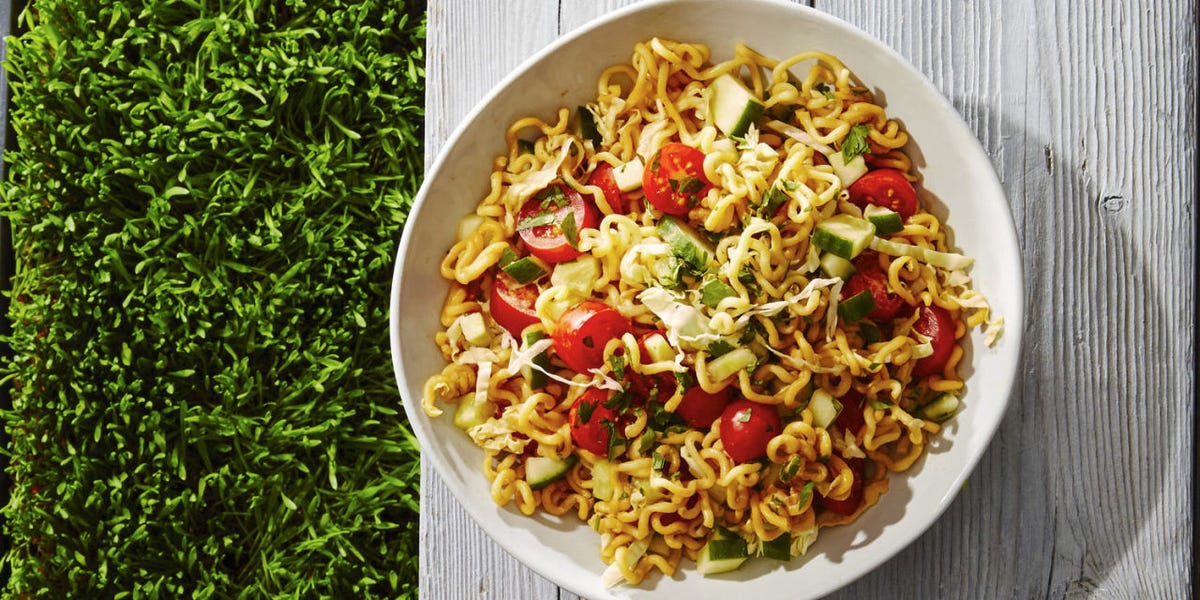
If instant ramen has spent years living rent-free in your pantry, this is its glow-up moment. A good honey-lime ramen salad takes a humble noodle brick and turns it into something bright, crunchy, refreshing, and dangerously easy to keep eating straight from the bowl while pretending you are “just taste-testing.” This version is inspired by the flavor profile associated with the popular Good Housekeeping idea: chewy noodles, fresh vegetables, and a sweet-savory dressing built around honey, lime, soy, garlic, and tahini.
The result is the kind of salad that works overtime. It can sit proudly beside grilled chicken at a backyard cookout, rescue a weekday lunch from sadness, or show up at a potluck and quietly become the dish everyone asks about before dessert even lands on the table. It has crunch from cabbage and toasted almonds, freshness from cucumber, tomatoes, and cilantro, and a creamy-silky dressing that clings to the noodles without turning the whole thing into a heavy noodle swamp. That, frankly, is the dream.
Below, you will find the best honey-lime ramen salad recipe, plus the ingredient logic behind it, smart swaps, serving ideas, common mistakes to avoid, and a longer reflection on the experience of making and sharing a salad like this. Because a great recipe is not just a list of instructions. It is also the thing people remember when the table is crowded, the drinks are cold, and someone says, “Wait, who made this?”
Why This Honey-Lime Ramen Salad Works So Well
The magic of this salad is contrast. The noodles are tender but springy. The cabbage is crisp. The cucumber feels cool and juicy. The tomatoes bring sweetness and acidity. Then the dressing steps in with that honey-lime combo: sweet enough to feel friendly, tart enough to stay lively, and savory enough to keep the whole bowl grounded.
Tahini is the quiet overachiever here. It gives the dressing body, a subtle nuttiness, and a creamy texture without relying on mayonnaise. Soy sauce adds salt and depth, garlic gives it backbone, and lime keeps everything from tasting flat. In other words, the dressing knows how to multitask. Love that for it.
This recipe also wins because it is flexible. Want more crunch? Add extra cabbage or almonds. Want more protein? Toss in shredded chicken, baked tofu, shrimp, or shelled edamame. Want more heat? Add red pepper flakes or a little sriracha. The base is sturdy, but it is not bossy.
And perhaps most importantly, honey-lime ramen salad tastes like real effort while actually being pretty manageable. You boil noodles, chop vegetables, whisk dressing, and toss. No advanced culinary gymnastics. No need to summon your inner celebrity chef. Just solid ingredients doing their jobs very well.
Best Honey-Lime Ramen Salad Recipe
Ingredients
- 8 ounces Chinese curly egg noodles or ramen noodles
- 1/4 cup tahini
- 3 tablespoons low-sodium soy sauce
- 3 tablespoons fresh lime juice
- 1 tablespoon honey
- 2 garlic cloves, finely grated or pressed
- 2 to 4 tablespoons warm water, as needed to loosen the dressing
- 1 teaspoon toasted sesame oil
- 1 large English cucumber, chopped
- 1 pint grape tomatoes, halved
- 3 cups thinly sliced napa cabbage or savoy cabbage
- 1/4 cup finely chopped cilantro
- 3 scallions, thinly sliced
- 1/2 cup sliced almonds, toasted
- 1 tablespoon toasted sesame seeds
- Freshly ground black pepper, to taste
- Optional: red pepper flakes, shredded rotisserie chicken, edamame, or avocado
Directions
- Cook the noodles. Bring a pot of water to a boil and cook the noodles according to package directions until just tender. Drain, rinse under cold water, and toss lightly so they cool quickly and stop cooking.
- Make the dressing. In a medium bowl, whisk together the tahini, soy sauce, lime juice, honey, garlic, and sesame oil. Add warm water, 1 tablespoon at a time, until the dressing is silky and pourable but still creamy. Season with black pepper and a pinch of red pepper flakes if you want a little heat.
- Prep the vegetables. In a large mixing bowl, combine the cucumber, grape tomatoes, cabbage, cilantro, and scallions.
- Assemble the salad. Add the cooled noodles to the vegetables. Pour in most of the dressing and toss thoroughly so the noodles and vegetables are evenly coated.
- Finish with crunch. Sprinkle the toasted almonds and sesame seeds over the top. Toss once more or leave them on top for a prettier serving bowl. Serve immediately, with the remaining dressing on the side.
Serves: 4 to 6 as a side, or 3 to 4 as a light main dish.
Ingredient Notes and Easy Swaps
The Noodles
Curly egg noodles give you a slightly more substantial bite, while instant ramen keeps things affordable and wonderfully nostalgic. Either works. If you use packaged ramen, discard the seasoning packet unless you want a salt bomb to crash the party. This salad is already flavorful without it.
The Dressing
The tahini-honey-lime combination is what makes this version feel a little more polished than the old-school sugar-and-vinegar ramen salads many people grew up with. If tahini is not your thing, smooth peanut butter or almond butter can work in a pinch. The flavor will shift slightly, but the creamy texture will still be there.
The Vegetables
Napa cabbage is ideal because it is crisp without being aggressive. English cucumber keeps the salad juicy without flooding it, and grape tomatoes add sweetness in little bursts instead of giant, soggy tomato drama. You can also add shredded carrots, sugar snap peas, bell pepper, or even arugula if you want a peppery edge.
The Crunch
Toasted almonds and sesame seeds make the salad feel finished. They also add the kind of texture that makes people keep coming back for “one more little scoop,” which is often a lie, but a charming one. Cashews or roasted peanuts also work beautifully.
The Protein Add-Ins
For a fuller meal, add shredded chicken, grilled shrimp, cubed baked tofu, or shelled edamame. Grilled salmon is also excellent here. The salad’s sweet-savory-citrusy flavor profile is versatile enough to play nicely with all of them.
How to Make It Taste Even Better
First, do not overcook the noodles. This salad is at its best when the noodles still have a little bounce. Mushy noodles will make the whole bowl feel tired.
Second, rinse the noodles well after cooking. This cools them down fast and helps prevent clumping. Nobody wants a noodle salad that arrives in one giant tangled opinion.
Third, toast your almonds. It takes only a few minutes, and the flavor payoff is huge. The difference between raw sliced almonds and toasted ones is the difference between “nice” and “whoa, that’s good.”
Fourth, taste the dressing before you toss it with the salad. Want more brightness? Add another squeeze of lime. Want it sweeter? A touch more honey. Want it saltier? A small splash of soy sauce. The best salads are balanced, not rigid.
Finally, keep a little extra dressing on the side. Noodles absorb flavor as they sit, and a quick drizzle right before serving can wake the whole bowl back up.
What to Serve With Honey-Lime Ramen Salad
This salad is a side dish with main-character energy, which makes it useful in all kinds of meals. Serve it with grilled chicken thighs, teriyaki salmon, sticky wings, burgers, barbecue ribs, or simple skewered shrimp. It also works with sandwiches, especially grilled chicken sandwiches or pulled pork sliders.
For lunch, pair it with chilled rotisserie chicken or tofu and call it a day. For a picnic, pack the dressing separately and toss right before eating. For a summer dinner, add extra vegetables and protein so the salad becomes the meal instead of politely waiting beside it.
If you are building a potluck menu, this salad sits especially well next to grilled corn, fruit salad, baked beans, or a platter of watermelon. It brings crunch and acidity to a table that often leans soft, rich, or creamy. Balance matters, especially when macaroni salad is already somewhere nearby trying to dominate the room.
Common Mistakes to Avoid
1. Dressing It Too Early
If you toss everything too far ahead, the cabbage softens, the noodles drink up the dressing, and the salad loses some of its sparkle. You can prep the components ahead of time, but combine them close to serving.
2. Using Too Much Dressing at Once
Start with most, not all, of the dressing. Noodles are sneaky and absorb more than you expect. You can always add more, but you cannot un-drench a salad once it has crossed into soggy territory.
3. Forgetting Texture
This is not the kind of dish that wants to be soft all over. Keep the cabbage crisp, the almonds toasted, and the cucumber fresh. Texture is not a side note here; it is half the point.
4. Skipping the Acid Balance
Honey and tahini can make the dressing richer and rounder, which is lovely, but only if the lime keeps it lifted. If the finished salad tastes flat, it probably needs another squeeze of citrus.
Make-Ahead and Storage Tips
You can absolutely prep this honey-lime ramen salad in stages. Cook and cool the noodles, chop the vegetables, toast the almonds, and whisk the dressing a few hours ahead. Store everything separately in the refrigerator, then toss just before serving.
If you have leftovers, they are still good the next day, though the salad will be softer and less crunchy. That is not a tragedy. It is simply a different phase of the salad’s life. Add a squeeze of fresh lime and a sprinkle of extra almonds or sesame seeds before serving leftovers, and it perks right back up.
For meal prep, keep the dressing in a jar and the crunchy toppings separate until the last minute. This is the move if you want a lunch that still feels fresh instead of sad and waterlogged by noon.
My Experience With a Recipe Like This
The first time I made a honey-lime ramen salad, I expected it to be “pretty good” in the way many fast noodle salads are pretty good. You know the type: decent side dish, nice crunch, everyone eats it, nobody writes poetry about it. But this one surprised me. The dressing was the first clue. The tahini gave it body, the lime made it snap, and the honey softened the edges just enough to make the whole thing feel complete. It did not taste like a quick compromise. It tasted intentional.
Then there was the texture. That is the part people remember. At a summer table full of softer foods, this salad feels alive. The cabbage stays crisp. The cucumber cools everything down. The tomatoes pop. The almonds keep showing up with that toasty little crunch that makes every bite feel slightly different from the last. Even the noodles, when cooked properly and rinsed cold, have a springy chew that keeps them from fading into the background. It is a salad, yes, but it has enough personality to flirt with being a noodle bowl.
I have found that this is one of those rare dishes that works equally well in very different settings. It is great at a backyard cookout, where it can sit next to grilled meats and add something fresh and sharp to the plate. It is just as good as a weekday lunch, especially when topped with leftover chicken or tofu. I have even made it on hot evenings when turning on the oven felt emotionally unreasonable. In those moments, chilled noodle salad feels less like a recipe and more like a coping strategy.
Another reason I keep coming back to it is that it is friendly to improvisation. Some days I add shredded carrots and sugar snap peas for extra color. Some days I throw in edamame to make it more filling. If the cilantro is looking questionable in the fridge, I swap in mint or just lean harder on scallions. The core idea survives. That is the sign of a strong recipe. It gives you structure without behaving like a diva.
From a hosting perspective, this salad is also weirdly useful. It looks bright and appealing in a bowl, it does not require last-second stove drama, and people actually eat vegetables when they are tangled with noodles and coated in a sweet-savory dressing. That may not be a miracle, exactly, but it is at least miracle-adjacent. I have watched people who claim they are “not salad people” go back for seconds. Ramen is persuasive like that.
The only real challenge is self-control while assembling it. Once the noodles are cooled and the dressing is whisked, you start “testing” pieces of cabbage, then a tomato, then a noodle, then suddenly you have eaten an unofficial appetizer standing at the counter. I am not judging. I am simply reporting from the field.
What I like most, though, is the balance this salad brings to a meal. It is not heavy, but it is satisfying. It is colorful without feeling fussy. It is familiar enough to be comforting, yet bright enough to feel fresh. And in a world full of side dishes that either wilt into obscurity or scream for attention, honey-lime ramen salad lands in the sweet spot. It is memorable without being exhausting. Honestly, more things should aspire to that.
Final Thoughts
If you want a salad that is easy, flavorful, and just a little more exciting than the usual lettuce situation, this honey-lime ramen salad recipe is a smart one to keep in your rotation. It is crunchy, creamy, tangy, and flexible enough for cookouts, lunches, potlucks, or those random weeknights when dinner needs to come together without a dramatic monologue.
Best of all, it proves that ramen noodles can do a lot more than show up in a dorm mug at midnight. With the right dressing and a pile of crisp vegetables, they become the backbone of a genuinely craveable dish. That is a pretty strong career pivot for a pantry staple.