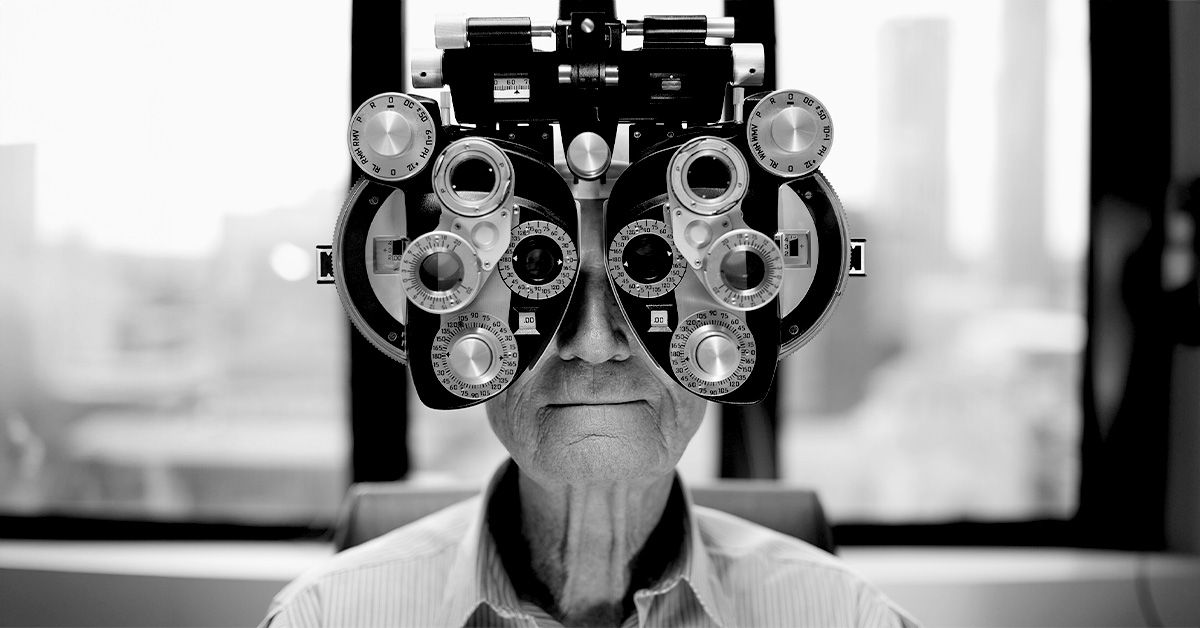
Eye exams seem straightforward until Medicare enters the room carrying several rulebooks, a deductible, and a magnifying glass. The basic answer is that Original Medicare generally does not cover routine eye exams performed solely to update a prescription for glasses or contact lenses. However, Medicare Part B may cover eye examinations, diagnostic testing, and treatment when they are connected to diabetes, glaucoma risk, cataracts, macular degeneration, an eye injury, or another medically necessary condition.
The deciding factor is usually not whether someone looks at your eyes. It is why the examination is being performed. A refraction to determine whether you need stronger reading glasses is normally considered routine vision care. An examination prompted by sudden blurred vision, eye pain, diabetic retinopathy risk, or a suspected eye disease may be billed as medical care and qualify for Part B coverage.
The Quick Answer: When Does Medicare Cover Eye Exams?
| Eye service | Original Medicare coverage | Typical patient responsibility |
|---|---|---|
| Routine exam for a glasses or contact lens prescription | Usually not covered | You generally pay the full cost |
| Annual diabetic retinopathy exam | Covered by Part B for people with diabetes | Part B deductible and usually 20% coinsurance |
| Glaucoma screening | Covered every 12 months for qualifying high-risk patients | Part B deductible and usually 20% coinsurance |
| Testing or treatment for macular degeneration | May be covered when medically necessary | Part B deductible and usually 20% coinsurance |
| Cataract evaluation and surgery | May be covered when medically necessary | Deductible, coinsurance, and possible facility charges |
| Standard glasses after qualifying cataract surgery | One pair of standard-frame glasses or one set of contacts | Usually 20% after the Part B deductible |
| Routine exam through Medicare Advantage | Often included as an extra benefit, depending on the plan | Plan copay, network rules, and benefit limits may apply |
Why Original Medicare Does Not Cover Most Routine Eye Exams
Original Medicare consists primarily of Part A for hospital coverage and Part B for outpatient medical services. It is designed to cover medically necessary care rather than every type of preventive maintenance a person may want. Routine dental care, hearing aids, and ordinary vision correction are among its best-known gaps.
Medicare specifically excludes routine eye refractions performed to prescribe eyeglasses or contact lenses. Therefore, if your only goal is to read the restaurant menu without holding it in the next ZIP code, Original Medicare will generally expect you to pay for the exam yourself. It also normally excludes the cost of everyday glasses and contact lenses.
Routine vision care versus medical eye care
The difference between routine and medical eye care is extremely important:
- Routine vision care checks visual sharpness and determines whether you need glasses or contacts.
- Medical eye care investigates symptoms, monitors a diagnosed disease, treats an injury, or evaluates a condition that could threaten your sight.
A single appointment may contain both types of services. For example, an ophthalmologist may evaluate your glaucoma and also perform a refraction to update your glasses. Medicare may cover the glaucoma-related portion while leaving you responsible for the refraction fee. Ask the office to explain which services will be billed to Medicare and which will be considered routine.
Eye Exams Medicare Part B May Cover
1. Annual eye exams for people with diabetes
Medicare Part B covers an eye exam for diabetic retinopathy once a year if you have diabetes. The examination must be performed by an eye doctor who is legally authorized to conduct it in your state.
Diabetic retinopathy can damage retinal blood vessels before a person notices obvious vision changes. Diabetes also raises the risk of other eye problems, including cataracts and open-angle glaucoma. Detecting changes early gives patients and doctors more opportunity to protect vision rather than waiting until the eye starts sending emergency memos.
After the Part B deductible is met, you normally pay 20% of the Medicare-approved amount for the doctor’s service. A separate copayment may apply when the exam takes place in a hospital outpatient department.
2. Glaucoma screenings for high-risk beneficiaries
Part B covers a glaucoma screening once every 12 months for beneficiaries considered at high risk. You qualify when at least one of the following applies:
- You have diabetes.
- You have a family history of glaucoma.
- You are African American and age 50 or older.
- You are Hispanic and age 65 or older.
An authorized eye doctor must perform or supervise the screening. The Part B deductible and 20% coinsurance generally apply, even though Medicare classifies the service as preventive. In other words, “preventive” does not always translate into “free,” a charming little piece of insurance vocabulary worth remembering.
3. Exams for new or concerning vision problems
Medicare may cover an eye examination when you report symptoms that could indicate a medical problem. Examples include sudden vision loss, persistent double vision, eye pain, flashes of light, new floaters, inflammation, or unexplained blurred vision.
The examination can still qualify as medically necessary even if testing eventually shows that you do not have a serious eye disease. Coverage is based on whether your symptoms reasonably justified a diagnostic evaluation, not on whether the doctor discovers something dramatic.
Do not postpone urgent care while trying to decode coverage. Sudden loss of vision, a curtain-like shadow, severe eye pain, chemical exposure, or an eye injury may require immediate medical attention.
4. Macular degeneration testing and treatment
Part B may cover certain diagnostic tests and treatments for age-related macular degeneration, including some injectable medications administered by a physician. Macular degeneration affects central vision, which is essential for reading, driving, recognizing faces, and locating the tiny “off” button on an alarm clock.
In most cases, the beneficiary pays 20% of the Medicare-approved amount for the covered drug and physician services after meeting the Part B deductible. Hospital outpatient care may generate a separate facility copayment.
5. Cataract evaluations, surgery, and follow-up care
Medicare Part B may cover medically necessary cataract examinations and surgery involving a conventional intraocular lens. Cataract surgery removes the cloudy natural lens and usually replaces it with a clear artificial lens.
After qualifying cataract surgery that implants an intraocular lens, Part B covers one pair of eyeglasses with standard frames or one set of contact lenses. This benefit applies after each qualifying cataract surgery, which matters when the two eyes are treated on different dates. The glasses or contacts must come from a Medicare-enrolled supplier, and you are responsible for additional charges associated with upgraded frames or noncovered features.
Premium lenses designed to correct presbyopia or astigmatism may create extra out-of-pocket expenses. Before surgery, request a written explanation that separates Medicare-covered conventional services from optional upgrades.
How Much Does a Medicare-Covered Eye Exam Cost?
For 2026, the annual Medicare Part B deductible is $283. Once you meet that deductible, you generally pay 20% of the Medicare-approved amount for covered eye examinations, tests, physician-administered drugs, and treatments. Hospital outpatient services may also include a facility copayment.
Consider a simplified example. Suppose a medically necessary eye exam has a Medicare-approved amount of $150, and you have already met your Part B deductible. Your coinsurance would typically be $30, while Medicare would pay its share of the approved amount. This is only an illustration; actual charges depend on the service, provider, location, supplemental coverage, and whether the provider accepts Medicare assignment.
Why Medicare assignment matters
A provider who accepts assignment agrees to accept the Medicare-approved amount as full payment for a covered service, apart from your deductible and coinsurance. Before scheduling an appointment, ask both of these questions:
- Do you accept Medicare?
- Do you accept Medicare assignment for this specific service?
Those questions sound nearly identical, but in billing they can be distant cousins rather than twins.
Does Medicare Advantage Cover Routine Eye Exams?
Many Medicare Advantage plans provide routine vision benefits that Original Medicare does not offer. Depending on the plan, benefits may include periodic eye exams, prescription glasses, contact lenses, discounts on lens upgrades, or an eyewear allowance. Medicare Advantage plans must cover medically necessary services covered by Original Medicare, but their additional routine vision benefits are determined by the individual insurer and plan.
Never assume that “vision included” means every eye doctor, test, frame, and lens is covered. Review these details:
- How often the plan covers a routine eye exam
- The copayment for the examination
- Whether you must use an in-network optometrist or ophthalmologist
- The annual or biennial allowance for frames, lenses, or contacts
- Whether retinal imaging or refraction carries a separate charge
- Restrictions on designer frames and premium lens coatings
- Whether medical eye care and routine vision care use different provider networks
That final point can cause expensive confusion. An optical office may participate in a plan’s routine vision network but not its medical network. A routine prescription check might be covered there, while glaucoma testing at the same office could be out of network. Confirm coverage for the exact service, not merely the name of the clinic.
Does Medigap Cover Eye Exams?
Medigap policies primarily help pay deductibles, coinsurance, and copayments for services that Original Medicare covers. A Medigap plan may therefore reduce your share of a Medicare-covered diabetic eye exam, glaucoma screening, cataract procedure, or medically necessary evaluation.
However, Medigap generally does not transform an excluded routine eye exam into a covered service. When Original Medicare pays nothing because the service is routine vision care, a standard Medigap policy will usually pay nothing as well. Some insurers offer separate discount programs, but those are not the same as standardized Medigap benefits.
How to Avoid Surprise Eye-Care Bills
Ask why the appointment is being scheduled
Tell the office whether you need a routine prescription update, monitoring for a diagnosed condition, or evaluation of new symptoms. The same eye chart can appear in several types of appointments, but the billing category may be very different.
Request an estimated cost
Ask the provider for the expected Medicare-approved amount, your estimated coinsurance, and the price of any noncovered refraction or imaging. Estimates are not guarantees, but they are considerably more useful than meeting a surprise bill in your mailbox.
Ask about an Advance Beneficiary Notice
If a provider believes Medicare may deny a service, the office may give you an Advance Beneficiary Notice of Noncoverage. Read it before signing. The notice should identify the potentially noncovered service and its estimated cost so you can decide whether to proceed.
Check your plan documents every year
Medicare Advantage vision allowances, copays, networks, and frequency limits can change from one year to the next. Do not rely on last year’s benefit booklet or on what a friend’s plan covers. Insurance benefits have a habit of changing outfits without sending everyone a photograph.
Real-World Experiences: What Medicare Eye Coverage Feels Like in Practice
The following composite experiences illustrate common situations beneficiaries encounter. They are not stories about specific patients, and actual coverage depends on medical necessity, billing codes, provider participation, and plan rules.
Experience 1: The “annual exam” that was not covered
Linda has Original Medicare and schedules what she calls her annual eye exam. She has no symptoms or diagnosed eye disease; she simply wants to know whether her glasses prescription has changed. At check-in, she hands over her Medicare card and assumes the visit will be covered because the office accepts Medicare.
The appointment includes visual-acuity testing, an eye-health evaluation, and refraction. Linda later receives a bill because the visit was primarily routine vision care. Her biggest lesson is that accepting Medicare does not mean Medicare covers every service the office provides. The next year, she asks for the cash price before scheduling and compares it with a separate vision discount plan.
Experience 2: A diabetic eye exam with coinsurance
Robert has type 2 diabetes and visits a state-authorized eye doctor for his annual diabetic retinopathy examination. Part B covers the eligible exam, but Robert has not yet met his yearly deductible. He initially expects the visit to be free because it is preventive and is surprised when he receives a bill.
After calling the office, he learns that the Part B deductible and coinsurance apply to diabetic eye exams. At his next appointment, he asks for an estimate and checks how much of his deductible remains. The coverage did not change; his understanding of the cost-sharing rules did.
Experience 3: One appointment, two different charges
Maria has glaucoma and also needs a new glasses prescription. During one visit, her ophthalmologist evaluates eye pressure, examines her optic nerves, and performs a refraction. Medicare covers the medically necessary glaucoma care, subject to Part B cost sharing, but it does not pay for the refraction.
Maria sees separate amounts on her statement and initially thinks she has been charged twice for the same exam. The billing office explains that medical testing and prescription measurement are distinct services. She now asks providers to identify noncovered routine charges before the appointment begins.
Experience 4: Medicare Advantage network confusion
James chooses a Medicare Advantage plan advertising a routine eye exam and an eyewear allowance. He checks the insurer’s vision directory and finds a nearby optical center. His routine exam goes smoothly, but several months later he needs medical testing for persistent flashes and floaters.
He discovers that the optical center participates in the routine vision network but not the plan’s medical network. James must choose another ophthalmologist for covered diagnostic care. From then on, he asks whether a provider is in network for both routine vision services and medical ophthalmology rather than asking only, “Do you take my plan?”
Experience 5: Cataract glasses and the upgrade trap
After cataract surgery, Elaine is pleased to learn that Part B covers one pair of glasses with standard frames. At the optical shop, she selects premium frames, progressive lenses, anti-reflective coating, photochromic treatment, and several other upgrades. The final bill is much higher than she expected.
Medicare contributed toward the covered standard benefit, but Elaine remained responsible for noncovered upgrades and applicable cost sharing. She was not billed incorrectly; she simply selected features beyond the basic Medicare allowance. For her second cataract procedure, she requests two estimates: one for the standard covered option and another showing every upgrade separately.
These experiences share one theme: the most useful question is not merely, “Does Medicare cover eye exams?” A better question is, “Will my specific plan cover this exact service, from this provider, on this date, for this medical reason?” It is not elegant dinner conversation, but it is an excellent way to protect both your eyesight and your wallet.
Conclusion
Original Medicare does not ordinarily cover routine eye exams used only to prescribe glasses or contact lenses. Part B does, however, cover several important forms of medical eye care, including annual diabetic retinopathy exams, glaucoma screenings for eligible high-risk beneficiaries, medically necessary diagnostic evaluations, certain macular degeneration services, and cataract-related care.
Medicare Advantage may add routine vision benefits, but copays, provider networks, frequency limits, and eyewear allowances vary. Before an appointment, verify the reason for the exam, the provider’s Medicare or plan participation, and any services that will be billed separately. Clear vision is wonderful; a clear estimate is a close second.
Note: Medicare benefits, deductibles, insurer networks, and plan-specific vision allowances can change. This article reflects information available in 2026 and synthesizes guidance from Medicare.gov, CMS, the National Eye Institute, the American Optometric Association, AARP, the Medicare Rights Center, Aetna, UnitedHealthcare, VSP, the National Council on Aging, Prevent Blindness, the Social Security Administration, Mayo Clinic, Mutual of Omaha, and other reputable U.S. health and insurance resources. Confirm current coverage with Medicare, your insurer, and your eye-care provider before receiving services.