History has a funny habit of introducing ancient people as dates, bones, and pottery fragments. “Here lies an individual from 7,000 B.C.” is scientifically useful, yesbut emotionally, it lands with all the warmth of a tax form. Then a forensic archaeologist or reconstruction artist steps in, studies the skull, adds tissue, skin, expression, hair, and context, and suddenly the past blinks back at us.
That is the magic behind ancient facial reconstruction: it turns “human remains” into human beings. People who lived thousands of years before us stop feeling like distant textbook characters and start looking like neighbors, grandparents, teenagers, leaders, workers, and, occasionally, someone who appears ready to complain about Wi-Fi even though agriculture was still the hot new technology.
One of the best-known specialists in this field is Oscar Nilsson, a Swedish archaeologist and sculptor whose reconstructions of Stone Age women, Viking Age figures, Neanderthals, mummies, and medieval individuals have fascinated museums and online audiences around the world. His work, along with that of forensic anthropologists, museum researchers, geneticists, and digital artists, shows how science and art can meet in the most human place of all: the face.
What Is Ancient Facial Reconstruction?
Ancient facial reconstruction is the process of recreating a likely appearance of a person from the past using skeletal remains, archaeological evidence, forensic anthropology, anatomy, and sometimes DNA analysis. It is not a time machine, sadly. No one is pressing a button labeled “show me what this Bronze Age guy looked like.” The work is more like an informed conversation between bone, biology, and history.
The skull provides the foundation. Its shape can reveal the width of the face, the angle of the jaw, the projection of the brow, the structure of the cheekbones, the size of the eye sockets, and clues about the nose and mouth. From there, experts use average tissue-depth data, muscle anatomy, age estimates, sex estimation, health markers, and cultural context to build a face layer by layer.
In museum-quality reconstructions, the process may involve CT scans, 3D-printed skull replicas, clay or silicone modeling, digital sculpting, and careful research into clothing, hairstyles, ornaments, and burial customs. The goal is not to create a perfect passport photo. The goal is to produce a scientifically grounded, respectful, and emotionally powerful approximation of a real person.
How Archaeologists Rebuild a Face From a Skull
Step 1: Study the Bones Without Damaging Them
Original remains are fragile and irreplaceable, so researchers rarely sculpt directly on ancient skulls. Instead, they scan the skull using CT imaging, laser scanning, or photogrammetry, then create a digital model or 3D-printed replica. This allows artists to work hands-on while keeping the original safe. The skull becomes a blueprint, but not a blank canvas. It already contains instructions, if you know how to read them.
Step 2: Add Tissue-Depth Markers
Forensic reconstruction often begins with tissue-depth markers placed at standard points across the skull. These markers represent average soft-tissue thickness for a person of similar biological profile. They act like tiny guideposts saying, “Build the cheek out to here,” or “The forehead probably had this much soft tissue.” It is not glamorous, but then again, neither is mixing concrete before building a cathedral.
Step 3: Rebuild Muscles and Facial Structure
Next comes anatomy. The artist reconstructs the major facial muscles, paying attention to where muscles attach to the bone. The jaw can suggest the shape of the lower face. The cheekbones influence fullness. The nasal opening helps estimate the nose, although noses remain one of the trickier features because cartilage does not usually survive. Teeth and jaw alignment can shape the mouth. Eye sockets guide the placement of the eyes, though eye color usually requires DNA evidence or educated caution.
Step 4: Use DNA When It Is Available
Ancient DNA has changed the game. When well-preserved genetic material is available, researchers may identify traits such as probable skin pigmentation, hair color, eye color, ancestry, and biological sex. This is especially important because old assumptions about ancient Europeans, for example, often imagined them as uniformly pale. DNA studies have shown a much more complex picture, with prehistoric populations showing different combinations of dark skin, light eyes, dark hair, and later-changing pigmentation patterns.
Step 5: Add Culture, Clothing, and Personality
A face without context is only half the story. Archaeologists look at burial goods, textiles, tools, jewelry, injury marks, diet, social status, and the environment the person lived in. A noblewoman buried with weaving tools, for example, should not be styled the same way as a warrior, a child, or a laborer with signs of chronic disease. Clothing and hair are often the most speculative parts, but good reconstructions base these choices on archaeological evidence from the right place and period.
Oscar Nilsson and the Art of Making the Past Look Alive
Oscar Nilsson’s reconstructions stand out because they are deeply physical. While modern technology helps create skull replicas and provide data, much of his process is sculptural and hands-on. He has described the human face as endlessly fascinating because every skull contains individual variation. That is why his reconstructions do not look like generic museum mannequins who all shop at the same ancient mall. They look specific.
His subjects have included Mesolithic individuals, Viking Age people, medieval figures, Neanderthals, and famous mummies. Many of the reconstructions require hundreds of hours. Each wrinkle, eyelid, scar, expression, and hairstyle must balance scientific evidence with artistic judgment. Too much imagination, and the result becomes fantasy. Too little, and the person looks like a medical diagram wearing a wig.
The best reconstructions live in the middle: accurate enough to teach, detailed enough to move us, and humble enough to admit uncertainty.
Famous Ancient Faces Brought Back to Life
Avgi: A Teenager From 9,000 Years Ago
One of the most striking reconstructions associated with Oscar Nilsson is Avgi, an 18-year-old young woman whose remains were found in Theopetra Cave in Greece. She lived around 9,000 years ago, during a period when human communities were shifting from hunting and gathering toward farming. Her name means “Dawn,” which is almost too poeticbut archaeologists are allowed a little drama now and then.
Avgi’s reconstructed face is powerful because she does not look like a vague “prehistoric person.” She looks young, serious, and startlingly present. Her heavy brow and strong jaw reflect her skeletal structure, while her expression seems to carry the weight of a world in transition. Looking at her, we are reminded that the agricultural revolution was not just a chapter heading. It was a lived experience for real people.
The Huarmey Queen: A Wari Noblewoman of Peru
The so-called Huarmey Queen was discovered in a rich Wari burial in Peru. Her tomb contained luxury objects, fine textiles, and tools associated with weaving. In the Wari world, textiles were not casual household items; they were valuable, labor-intensive, and socially meaningful. The reconstruction of this woman does more than show facial features. It suggests status, skill, and identity.
Her face helps modern viewers understand that power in the ancient world did not always look like a sword or crown. Sometimes it looked like expertise, craftsmanship, and cultural importance. Also, let us be honest: anyone buried with that much textile prestige probably knew quality fabric when she saw it.
A Neanderthal Woman From Gibraltar
Reconstructions of Neanderthals have changed dramatically over time. Older images often portrayed them as brutish, hunched, and dim. Modern research paints a more complex picture: Neanderthals made tools, used fire, likely cared for injured group members, created symbolic objects, and interbred with Homo sapiens. Many people today carry a small percentage of Neanderthal DNA.
A reconstructed Neanderthal woman from Gibraltar challenges the old stereotype. Her face is robust, with a strong brow and broad features, yet unmistakably human in emotional effect. She is not a monster from a cave poster. She is a close evolutionary cousin. If she sat across from us at a café, the main problem would not be recognizing her humanity; it would be explaining the menu.
The Inca Ice Maiden “Juanita”
The Inca Ice Maiden, often called Juanita, was a teenage girl sacrificed more than 500 years ago in the Andes. Because her body was preserved by cold conditions, researchers had unusual access to both biological and cultural information. A modern reconstruction used scans, skull measurements, DNA studies, and ethnological research to create a lifelike bust.
Juanita’s reconstructed face is deeply affecting because it restores individuality to someone often discussed through the lens of ritual. She was part of a major religious and political system, but she was also a young person. That dual truth is what makes facial reconstruction so powerful: it can hold history and humanity in the same gaze.
Viking Age and Medieval Faces
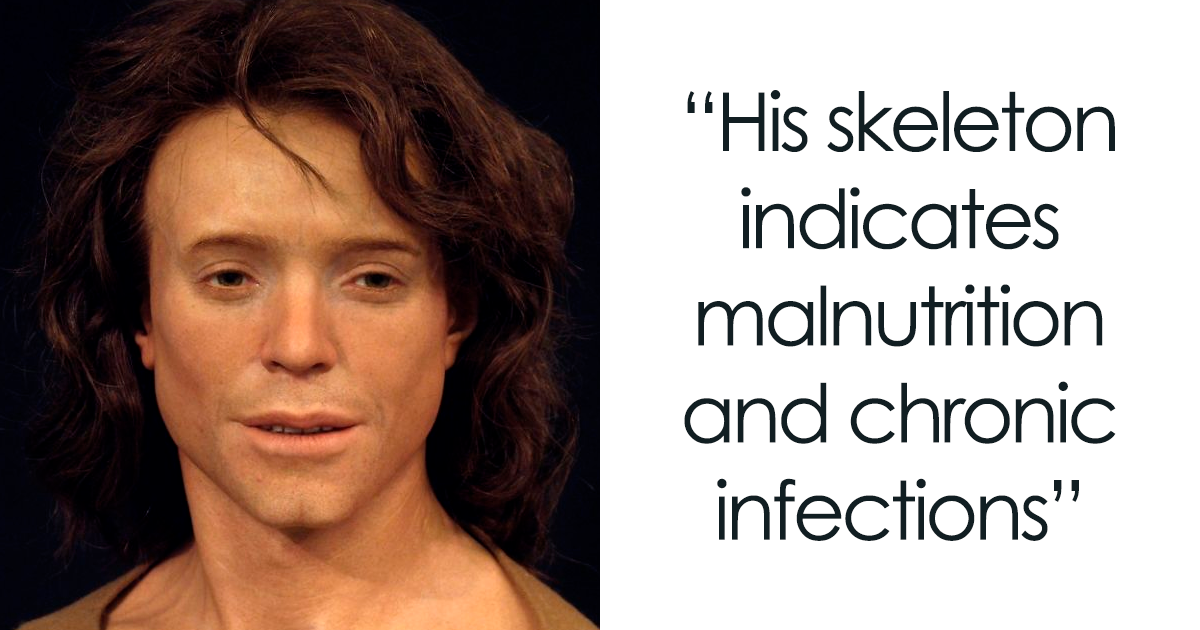
Reconstructions of Viking Age and medieval individuals often surprise viewers because they look so ordinaryin the best possible way. A Viking man with red hair and blue eyes, a wealthy elderly woman remembered by runestones, or a medieval man with dental disease and injuries may look like people you have passed on the street. These reconstructions puncture the costume-drama version of history. Ancient people did not spend all day posing heroically against fog. They aged, worked, laughed, got infections, lost teeth, loved their families, and probably had opinions about the neighbors.
Why These Reconstructions Feel So Amazing
Ancient facial reconstruction works because humans are face-reading creatures. We are wired to notice eyes, expressions, and tiny variations in features. A skeleton can interest us. A face can stop us in our tracks.
When we see the reconstructed face of someone who lived 5,000 or 9,000 years ago, the distance collapses. The past is no longer “back then.” It is right here, looking at us. That emotional reaction is not a distraction from science. It is one reason science matters. Data tells us what happened; faces help us care.
These reconstructions also challenge lazy assumptions. People in the ancient world were not all the same. They varied in skin tone, hair texture, facial structure, health, social class, occupation, and cultural identity. The more evidence researchers gather, the less simple the past becomes. That is good. Simple history is usually history with the interesting parts removed.
The Science Is Impressive, But It Has Limits
Facial reconstruction is powerful, but it is not magic. Some features are more reliable than others. Bone structure can strongly guide face shape, but soft details such as hairstyle, facial expression, skin texture, eyebrow shape, and exact nose tip are harder to know. DNA can help with pigmentation, but it is not always preserved. Cultural evidence can guide clothing and ornaments, but it may not reveal everyday style.
That is why responsible reconstructions are best understood as evidence-based approximations. They are not exact portraits unless supported by unusually rich evidence, such as mummified tissue, death masks, portraits, or strong genetic and archaeological data. A good reconstruction says, “This is a plausible face based on what we know,” not “Behold, the official driver’s license photo of 7,000 B.C.”
Ethics matter, too. Human remains are not props. Museums and researchers must consider descendant communities, cultural beliefs, consent, repatriation laws, and the dignity of the dead. Reconstructing a face can educate and inspire, but it should never reduce a person to a curiosity. The best projects treat ancient individuals as people first and specimens second.
What Ancient Faces Teach Us About Ourselves
Looking at reconstructed ancient faces teaches us that humanity has always been diverse, adaptive, and personal. It reminds us that prehistoric people were not “less human” because they lacked smartphones, supermarkets, or the ability to complain in comment sections. They solved problems with the tools they had. They migrated, buried loved ones, made art, built communities, survived disease, endured climate shifts, and passed knowledge across generations.
In some ways, ancient faces make history feel smaller. A woman from the Stone Age may have cheekbones, tired eyes, or a determined expression that feels familiar. A Neanderthal may look less alien than expected. A Bronze Age man’s dental problems may inspire immediate sympathy from anyone who has ever feared a dentist bill.
In other ways, these faces make history feel larger. They remind us that every era was full of individuals whose names are gone but whose lives mattered. Archaeology cannot recover every voice, but sometimes it can recover a gaze. That is astonishing.
Experiences Related to Seeing Ancient Faces Reconstructed
There is a special kind of silence that happens when visitors stand in front of a reconstructed ancient face. It is not the bored museum silence of people pretending to read every label because they paid for admission. It is a quieter, more thoughtful pause. The face looks back, and suddenly everyone becomes aware that the glass case is not separating “us” from “objects.” It is separating one human moment from another.
Imagine walking into a human origins exhibit and expecting bones, stone tools, and maybe a diagram showing migration arrows. Then you turn a corner and meet a reconstructed woman who lived thousands of years ago. She has skin, eyes, hair, posture, and an expression. She does not look like an abstract ancestor. She looks like someone who had mornings. Someone who knew hunger, weather, family, danger, and comfort. Someone who may have worried about a child, prepared food, repaired clothing, or watched the sky for signs of rain.
That experience changes how people understand archaeology. A tool becomes more than a tool when you can imagine the hand that held it. A burial becomes more than a site plan when you can imagine the face of the person mourned there. Even small details become emotional: worn teeth suggest diet and age; healed injuries suggest survival; jewelry suggests identity; weaving tools suggest skill; pigments and ornaments suggest beauty, ritual, or belonging.
Teachers often use reconstructions to help students connect with the past because faces are immediate. A paragraph about the Mesolithic period may not excite every student. A reconstructed teenager from 9,000 years ago usually does. Suddenly the questions begin: What did she eat? Did she have friends? Why did she die so young? What language did she speak? Did she know her world was changing? Those questions are the doorway into real historical thinking.
For adults, the effect can be just as strong. Ancient faces push back against the comfortable idea that modern people are the grand finale of human cleverness. We are not the first to be stylish, anxious, inventive, spiritual, social, or stubborn. The people before us had their own technologies, traditions, and problems. They may not have had email, which frankly sounds peaceful, but they had survival challenges most of us can barely imagine.
The most memorable experience is the moment of recognition. You look at a reconstructed face and think, “They were different from me,” and then almost immediately, “They were not so different.” That double reaction is the heart of archaeology. It respects distance while revealing connection. The result is amazing not because the face is perfect, but because it makes the ancient world feel populated again.
Conclusion
Ancient facial reconstruction is one of the most compelling bridges between science and emotion. By combining skull analysis, forensic anatomy, DNA research, archaeology, sculpture, and cultural context, experts can give form to people who lived centuries or millennia before photography. The results are not exact portraits, and they should be viewed with scientific humility, but they are still extraordinary.
Whether it is Avgi from Stone Age Greece, a Wari noblewoman from Peru, a Neanderthal woman from Gibraltar, or a Viking Age figure from Scandinavia, each reconstructed face reminds us that the past was not empty. It was crowded with individualsworkers, leaders, children, artists, parents, travelers, survivors. Archaeology gives them evidence. Reconstruction gives them presence.
Note: This article is based on real archaeological practices, forensic facial reconstruction methods, museum research, and documented examples of ancient face reconstructions. It is written as original web content and does not include source-link placeholders or unnecessary reference tags.