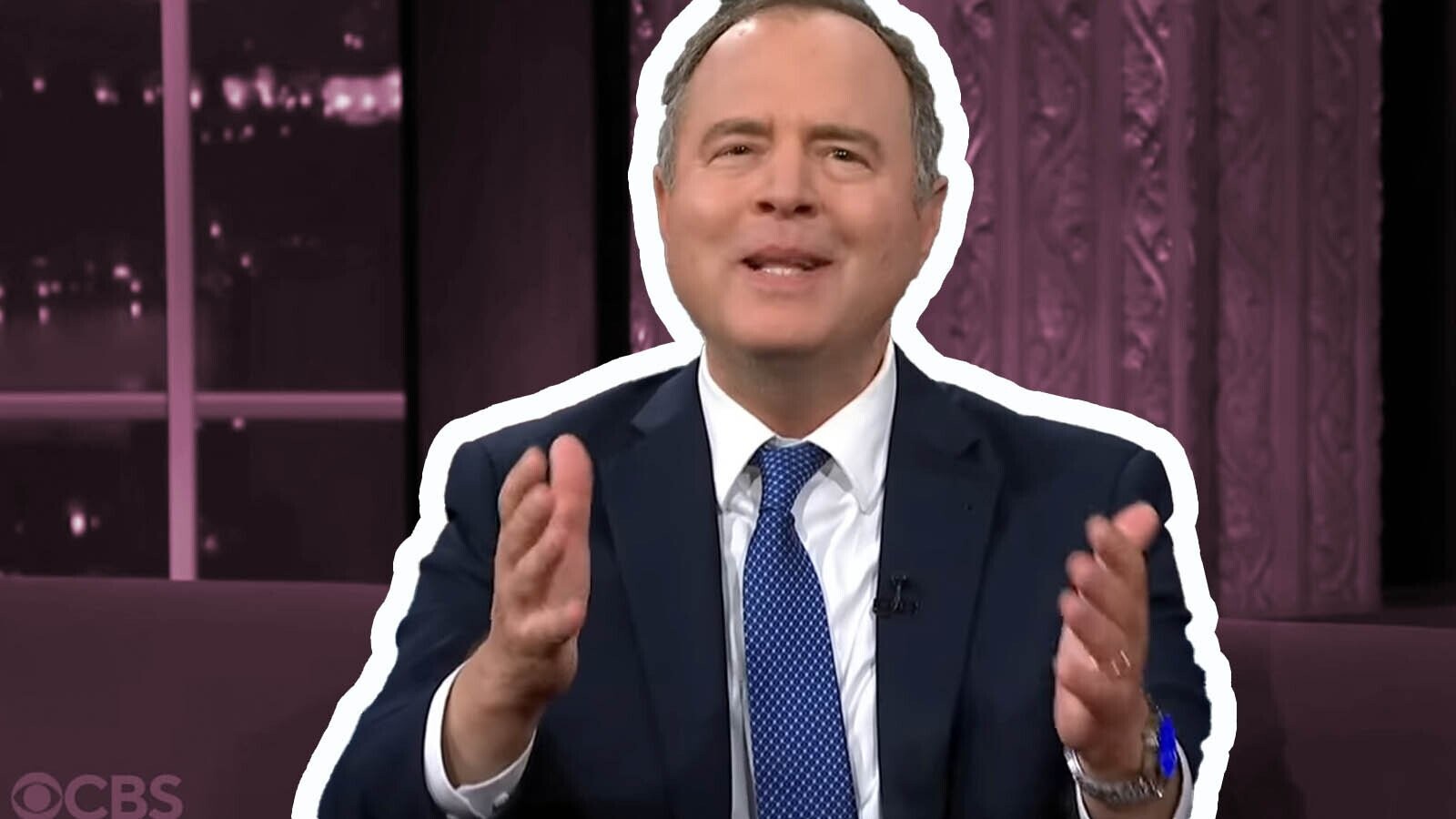
When a late-night host loses his desk, it is usually a television-business story. When that host is Stephen Colbert, his network is CBS, the parent company is pursuing a multibillion-dollar merger, and the Federal Communications Commission is involved, the story gets a much larger deskand several senators want to sit behind it.
Sen. Adam Schiff’s questions about the cancellation of The Late Show with Stephen Colbert turned an entertainment-industry surprise into a broader debate over media independence, regulatory power, political pressure, and whether corporate decision-making can truly be separated from Washington politics. The phrase “Adam Schiff grills FCC over Colbert cancellation” may sound like the title of a particularly tense cable-news segment, but the underlying issue is serious: what happens when a company that owns a major broadcaster makes controversial programming decisions while seeking federal approval for a major deal?
CBS said the decision to end Colbert’s show was purely financial and unrelated to content, performance, or other developments involving Paramount. Critics, including Schiff, did not accept the timing as a reason to stop asking questions. Timing is not proof, but in politics and media, timing can be the equivalent of a giant blinking arrow pointing toward a committee hearing.
What Happened Before Adam Schiff Questioned the FCC?
In July 2025, CBS announced that The Late Show with Stephen Colbert would end in May 2026. The network said Colbert would not be replaced and that the long-running Late Show franchise itself would be retired. The series later aired its finale in May 2026, closing a chapter that had included both David Letterman and Colbert at the historic Ed Sullivan Theater.
On its face, CBS’s explanation reflected the difficult economics of modern late-night television. Broadcast audiences have become more fragmented, advertising money has moved toward digital platforms, and viewers increasingly watch monologues, interviews, and comedy clips on phones instead of sitting through an entire network broadcast. Late night is no longer the only place for a political joke; it now competes with podcasts, livestreams, social media feeds, short videos, and your cousin’s aggressively confident group-chat opinions.
Still, the announcement arrived during a particularly sensitive stretch for Paramount, the parent company of CBS. Paramount had recently agreed to pay $16 million to settle President Donald Trump’s lawsuit involving CBS News and a 60 Minutes interview with Kamala Harris. Around the same time, Paramount was seeking FCC approval for its merger with Skydance Media.
Colbert had sharply criticized the settlement during his monologue, calling it a “big fat bribe.” Soon afterward, CBS announced the end of his show. CBS insisted there was no connection between the show’s cancellation, Colbert’s commentary, the settlement, or the pending merger. But critics saw a chain of events that looked, at minimum, politically awkward enough to make a public-relations department reach for a stress ball.
A Timeline That Raised Eyebrows
- Paramount reached a $16 million settlement involving Trump’s lawsuit over the 60 Minutes interview.
- Colbert publicly criticized the settlement on his CBS show.
- CBS announced that The Late Show with Stephen Colbert would end in 2026.
- The FCC approved the Paramount-Skydance transaction days later.
- FCC Chair Brendan Carr highlighted commitments by the incoming company involving viewpoint diversity, local journalism, and an ombudsman role.
None of those events alone establishes political interference. Schiff’s point was more precise: the sequence created a public-interest problem that demanded direct answers from the agency responsible for approving the broadcast-license transfer.
Why Adam Schiff Put the FCC in the Hot Seat
In August 2025, Schiff sent FCC Chair Brendan Carr a letter seeking information about the agency’s handling of the Paramount-Skydance merger. Schiff argued that the FCC’s merger approval process deserved congressional scrutiny because the agency is meant to operate independently and because broadcast regulation has serious First Amendment implications.
Schiff did not claim that he had uncovered conclusive evidence showing the FCC ordered CBS to cancel Colbert’s show. Instead, he asked whether the FCC, its staff, the White House, Paramount, or Skydance had discussed specific programming decisions during the merger review. That distinction matters. An oversight inquiry is not a verdict; it is an attempt to determine whether the facts support concern.
The senator’s letter focused on whether the FCC had communications concerning The Late Show, editorial commitments, programming oversight, potential content changes, or political pressure connected to the merger. He also asked what legal authority the FCC relied upon when it accepted commitments related to editorial balance and viewpoint diversity.
The Questions Schiff Wanted Answered
Schiff’s inquiry centered on several big issues:
- Whether FCC officials discussed Colbert’s show or other specific programming with Paramount or Skydance.
- Whether the White House or Trump associates communicated with the FCC about merger conditions, programming, or media coverage.
- Whether the FCC had a legal basis for accepting commitments related to editorial practices and perceived viewpoint balance.
- Whether the agency knew about any advertising, public-service announcement, or media commitments associated with the settlement or merger process.
- What protections exist to prevent political pressure from influencing future FCC reviews.
That last question may be the most important. Public confidence in a regulator depends not only on whether the regulator followed the rules, but also on whether ordinary people can reasonably believe the rules were applied without favoritism, retaliation, or political muscle-flexing.
The FCC’s Response: Standard Process, Not Political Pressure
Chair Brendan Carr responded that the FCC conducted a standard review process and rejected the idea that the agency’s actions were improper. Carr said the review lasted 251 days and followed the FCC’s ordinary public-interest framework for reviewing broadcast-license transfers. He also emphasized that the commitments made by Skydance were public and reflected in the agency’s transaction record.
According to the FCC’s explanation, the agency evaluated whether transferring Paramount’s broadcast licenses to Skydance served the public interest. The commission approved the deal by a 2–1 vote. As part of the review, Skydance committed to maintaining an ombudsman for at least two years to receive and evaluate concerns about bias involving CBS. The ombudsman would report to the president of New Paramount.
Carr also defended the broader commitments concerning fair, fact-based reporting, local journalism, employment practices, and viewpoint diversity. His position was that such commitments were part of an ordinary transaction review, not an attempt to dictate individual editorial decisions or punish a particular television host.
That response answered the FCC’s institutional defense: the process was regular, the commitments were public, and the review was conducted under established authority. But it did not end the political argument. Schiff and other critics remained concerned that a regulator’s public discussion of programming “balance” could create pressure on newsrooms and entertainment divisions, even when no official instruction tells a producer what to air.
Was the Colbert Cancellation About Money, Politics, or Both?
This is the question at the center of the controversy, and the honest answer is that the public record does not prove a single motive. CBS maintained that the cancellation was a financial decision made against a difficult late-night backdrop. That explanation is not inherently implausible. Broadcast television has been dealing with declining traditional viewership, changing ad markets, rising production costs, and a younger audience that is more likely to watch a three-minute clip than a 60-minute program.
At the same time, the financial explanation was difficult for some observers to accept without skepticism because Colbert’s show remained a major late-night brand and regularly led broadcast late-night ratings. Being first in a shrinking category is still a complicated victory. It is like winning a race on a treadmill: technically impressive, but you may still be standing in the same room.
The Writers Guild of America criticized the cancellation and called for an investigation, arguing that the sequence of events created concerns about whether Paramount was trying to avoid conflict with the Trump administration while pursuing merger approval. Democratic lawmakers, including Schiff, Elizabeth Warren, and others, also questioned whether the company’s decisions reflected political pressure.
Meanwhile, Paramount, CBS, Skydance, and the FCC denied that Colbert’s political commentary played a role in the cancellation. Skydance said it was not involved in the decision to end the show. CBS repeatedly said the move was not related to the program’s content, performance, or events occurring at Paramount.
The key takeaway is not that every corporate decision involving a controversial host is automatically censorship. Companies cancel shows for business reasons every year. The concern arises when a company’s financial incentives, pending regulatory approval, litigation with a political figure, and programming choices all collide in one very short period. In that setting, transparency becomes more than good public relations. It becomes a test of institutional credibility.
Why the FCC’s Role Matters in a Late-Night TV Story
The FCC does not generally choose which comedians stay on television. It does not schedule monologues, pick celebrity guests, or hand out cue cards with instructions such as “make this joke 12 percent less spicy.” But the commission does play an important role when major media companies seek approval to transfer broadcast licenses.
That authority comes with limits. The Communications Act includes protections against FCC censorship and interference with free speech over broadcast communications. Critics of the Paramount-Skydance approval argued that federal pressure involving editorial “balance” could chill speech, especially when a broadcaster is dealing with a politically powerful administration.
Supporters of the FCC’s approach argued that public-interest review can include commitments designed to improve transparency, accountability, local news coverage, and trust in broadcast journalism. The disagreement, therefore, is not simply about one host or one monologue. It is about where legitimate regulatory oversight ends and improper influence over editorial judgment begins.
That boundary can be difficult to see in real time. A written condition may look harmless to one observer and intimidating to another. A corporate decision may be financially sensible while also occurring under political conditions that make the public suspicious. The law does not become simpler just because comedians are involved, although comedians do make it more likely that the argument will include a joke about lawyers billing by the sigh.
Why Stephen Colbert’s Exit Became a Bigger Cultural Flashpoint
Late-night television has long been more than entertainment. It is a space where political leaders, candidates, actors, musicians, authors, activists, and ordinary news events are filtered through humor. For many viewers, Colbert was not merely a host. He was a nightly commentator whose monologues mixed satire, criticism, interviews, absurdity, and enough fake outrage to power a small city.
Because Colbert was one of Trump’s most prominent late-night critics, the show’s cancellation naturally attracted political interpretation. Trump publicly celebrated the news, which added fuel to an already volatile story. Critics saw the cancellation as a warning sign for political satire. Defenders of CBS’s explanation saw it as another example of a legacy media business making a tough call in a declining format.
Both realities can coexist. Late-night television faces genuine financial headwinds. It is also reasonable to ask whether political pressure can affect corporate decisions without appearing in a formal memo labeled “Please Cancel the Comedian.” That is why Schiff’s request for disclosure mattered: it focused attention on the process, the communications, and the safeguards surrounding a powerful regulator.
What the Adam Schiff FCC Inquiry Means for Media Freedom
The Adam Schiff FCC Colbert cancellation controversy is ultimately a story about trust. Trust in broadcasters to make programming decisions independently. Trust in regulators to review mergers without political favoritism. Trust in companies to explain controversial decisions with more than a carefully polished sentence about “challenging market conditions.”
For journalists, writers, comedians, and viewers, the incident highlights how vulnerable media institutions can feel during major ownership changes. A merger can reshape not only budgets and leadership teams, but also the incentives that influence what executives consider safe, valuable, or worth defending.
For policymakers, the lesson is equally clear. Media mergers require rigorous public oversight, transparent records, and safeguards that protect editorial independence. The goal should not be to shield corporations from criticism. It should be to ensure that criticismwhether it comes from a senator, a comedian, a journalist, or a vieweris not quietly priced into the cost of doing business.
Experiences and Lessons From the Colbert Cancellation Debate
The controversy surrounding Stephen Colbert’s cancellation offers several practical lessons for anyone who works in media, follows politics, creates online content, or simply wonders why a television decision became a national debate. The first lesson is that audiences notice context. A company may issue a short statement explaining a programming decision, but viewers will compare that statement with the timing of recent events, public comments, lawsuits, regulatory actions, executive meetings, and political celebrations. In the internet era, nobody needs a press badge to build a timeline. They just need a search bar, a cup of coffee, and a deeply unhealthy willingness to open 14 browser tabs.
The second lesson is that transparency is not the same as spin. Saying a decision is financial may be accurate, but audiences often want more context. Was the show losing money? Was advertising declining? Were production costs increasing? Was the network considering a cheaper format? Did management explore alternatives before retiring an entire franchise? Companies do not have to disclose every internal spreadsheet, but vague explanations can make a reasonable business decision look suspicious when the surrounding circumstances are politically charged.
A third lesson involves creative workers. Writers, producers, performers, researchers, editors, and crew members are often affected by high-level corporate decisions they did not make. When a show ends, the public tends to focus on the famous host, but a late-night program supports a large ecosystem of employees and freelancers. The Colbert story reminded many people that media consolidation is not only about logos and executive titles. It is about the jobs, voices, opportunities, and institutional memory that can disappear when a flagship program is removed from the schedule.
There is also a lesson for independent creators. Traditional broadcast television is no longer the only gatekeeper for political comedy, commentary, interviews, or cultural criticism. Podcasts, newsletters, streaming channels, social platforms, and direct-to-audience memberships have given creators more ways to reach viewers. That does not mean independence is easy; algorithms, platform policies, sponsorship demands, and online harassment create their own pressures. Still, the decline of one television format does not mean the end of satire or dissent. It means the stage may move, the budget may shrink, and the lighting may become suspiciously dependent on a ring lamp.
Finally, the episode offers a civic lesson: public institutions work best when people are willing to ask uncomfortable questions without pretending they already know every answer. Schiff’s inquiry did not prove that political interference occurred. CBS’s financial explanation did not erase public concerns. The value of oversight lies in forcing powerful institutions to explain themselves clearly enough that citizens can evaluate the evidence. That is a useful standard whether the subject is a media merger, a government agency, a newsroom, a streaming platform, or a late-night host trying to explain why his desk suddenly has an expiration date.
Conclusion: More Than a Late-Night Cancellation
Adam Schiff’s challenge to the FCC over the Colbert cancellation was not just about one comedian, one network, or one controversial monologue. It was about whether political power, corporate interests, and regulatory authority can become entangled in ways that weaken public confidence in a free press.
CBS said The Late Show with Stephen Colbert ended for financial reasons. The FCC said its review of the Paramount-Skydance merger followed standard procedure. Schiff and other critics argued that the timeline and the merger conditions required deeper scrutiny. The public record does not establish that Colbert was removed for political reasons, but it does show why transparency and independent oversight matter when media companies face enormous political and regulatory pressure.
Late night may be changing, but the bigger question remains stubbornly awake: can media institutions protect editorial independence when business, politics, and government power all want a seat at the same table?
Note: This article distinguishes documented events and public statements from allegations. CBS maintained that the cancellation was a financial decision, while Schiff and other critics sought further disclosure about the merger-review process and possible political influence.