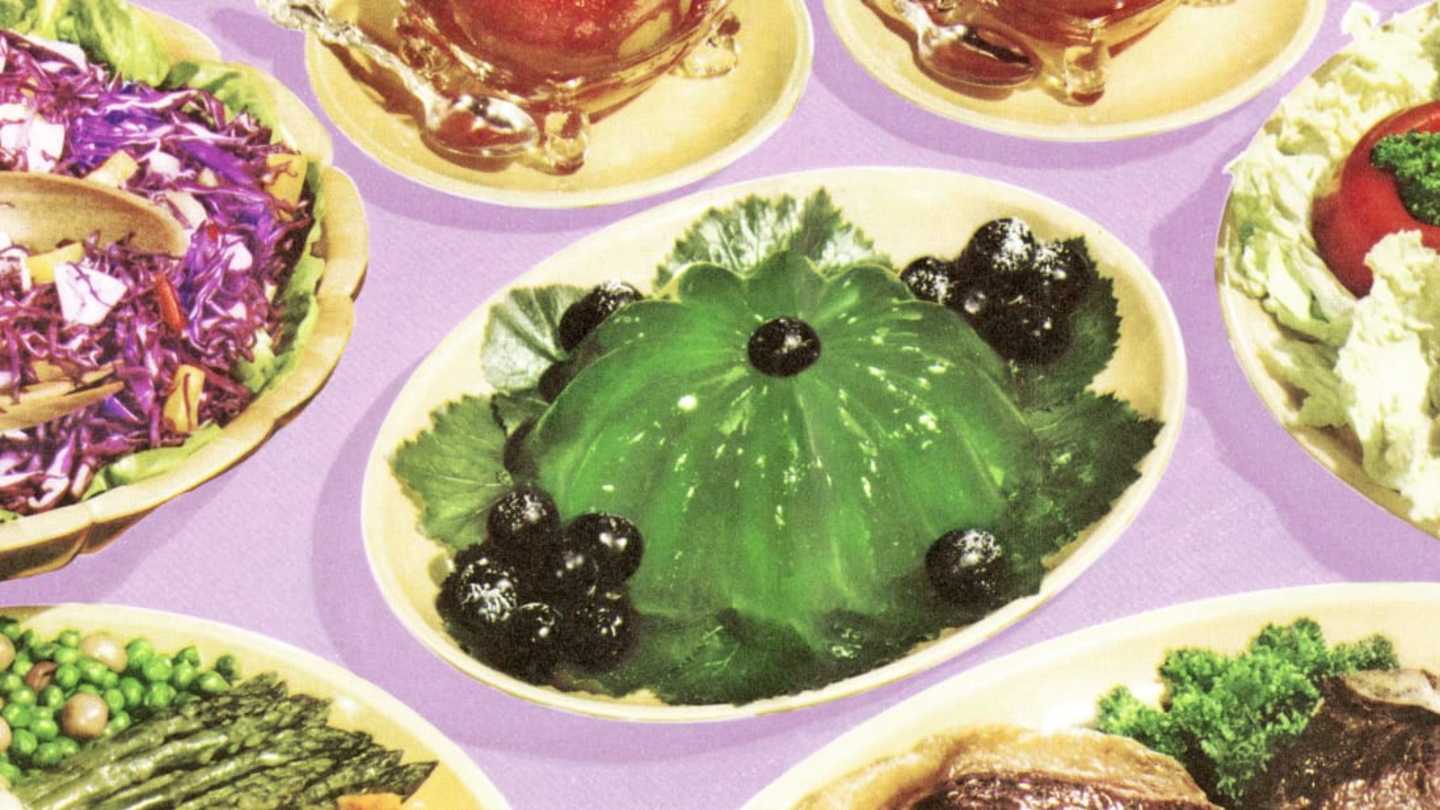
There are foods you eat because you are hungry, foods you eat because they are delicious, and foods you eat because your aunt set them on the holiday table and everyone agreed not to ask too many questions. Jell-O salad belongs proudly to that third category. It jiggles. It gleams. It may contain fruit, vegetables, whipped topping, marshmallows, cottage cheese, pretzels, or all of the above in one gloriously confusing square. And yet, for all the jokes people make about it now, Jell-O salad is not just kitsch with a wobble. It is a surprisingly revealing piece of American food history.
The story of Jell-O salad is really the story of how America changed: how industrial food became modern, how home economics reshaped the kitchen, how advertising taught people what counted as “good homemaking,” and how a dish could move from elegant to ordinary to retro without ever fully disappearing. In other words, Jell-O salad is not just a side dish. It is a tiny, trembling time capsule.
Before Jell-O: When Gelatin Was Fancy, Fussy, and a Little Show-Offy
Long before boxed gelatin arrived in American kitchens, molded jelly dishes already had serious social status. Their ancestors were aspics and savory jellies made by simmering animal bones, extracting collagen, clarifying the liquid, and letting it set into a glossy form. This was not quick weeknight cooking. It was labor-intensive, slow, and best suited to wealthy households with staff, spare time, and cool storage. In other words, if you served molded jelly in earlier centuries, you were not just feeding people. You were flexing.
That old prestige matters because Jell-O salad inherited some of it. Even after instant gelatin made the process dramatically easier, molded foods still carried an air of polish and control. A ring mold on the table looked organized, tidy, and deliberate. Nothing slouched. Nothing spilled. Nothing had the audacity to behave like actual lettuce. Compared with a loose, leafy salad, gelatin looked almost architectural.
So while modern diners may see Jell-O salad as comic relief, its deeper roots were surprisingly grand. Before it was a church-basement curiosity, it was linked to banquet culture, elite dining, and the age-old human urge to impress dinner guests with foods that say, “Yes, I absolutely meant to make something this complicated.”
How Jell-O Turned Gelatin Into an American Household Name
The real turning point came at the end of the 19th century, when packaged gelatin transformed an old culinary technique into an easy consumer product. The brand name Jell-O was introduced in 1897, and Orator Frank Woodward bought the business in 1899. At first, sales were slow. Americans were not yet entirely sure what to do with brightly flavored boxed gelatin. Fair enough. A raspberry wobble in powdered form does ask for a leap of faith.
What changed everything was advertising. Jell-O was not just sold as food. It was sold as possibility. The company distributed recipes, samples, and promotional booklets, and those booklets helped ordinary home cooks imagine what gelatin could be: dessert, salad, centerpiece, party trick, and proof that you were keeping up with the times. Some years, millions of recipe pamphlets circulated. That matters because Jell-O did not simply enter American kitchens on taste alone. It arrived with instructions, branding, and a very clear pitch about the kind of modern home it belonged in.
Early flavors such as lemon, orange, raspberry, and strawberry made gelatin approachable, colorful, and fun. Then lime arrived and changed the game. Lime gelatin became one of the all-time stars of the savory-and-sweet borderlands where Jell-O salad lived its best and weirdest life. Suddenly, chopped cabbage, celery, olives, pineapple, or cream cheese could all find themselves suspended in a green jewel that looked halfway between a side dish and a science experiment.
Why Was It Called a “Salad”?
This is the question that haunts modern readers flipping through old cookbooks: why call something a salad when it contains marshmallows, canned fruit, whipped topping, and exactly zero leaves? The short answer is that the word salad used to be a lot more flexible than it is now. In early- and mid-20th-century America, “salad” could mean a molded cold dish, a composed luncheon plate, or a sweet-savory side served alongside dinner. It did not have to be green. It just had to arrive chilled and reasonably convinced of its own respectability.
Jell-O salad thrived during the rise of domestic science, also known as home economics. This movement treated cooking and housekeeping as systems that could be improved through order, efficiency, hygiene, measurement, and science. Gelatin fit that worldview beautifully. It was clean. It was neat. It held ingredients in place. It looked modern. It turned scraps and canned goods into something that seemed stylish and intentional.
In that era, a molded salad was more than food. It was visual proof of discipline. You had planned ahead. You had followed directions. You had mastered timing, texture, and presentation. A tossed salad looked casual. A Jell-O salad looked like it had passed an exam.
The Domestic Science Era Gave Jell-O Salad a Huge Boost
Jell-O salad became especially meaningful in the early 20th century, when middle-class women were being told to modernize the home with the same seriousness that factories used to modernize work. Reformers and educators promoted scientific housekeeping, and figures associated with home economics helped legitimize chemistry in the kitchen. That cultural backdrop made gelatin feel wonderfully up-to-date. It was efficient, measured, and visually controlled. If Victorian food had loved formality, Jell-O salad brought that formality into a box you could buy for a few cents.
There was also a strong aspirational angle. Food historians have noted that gelatin salads offered a way for families to imitate upper-class elegance without upper-class labor. What once required bones, stock, time, and household help could now be made by stirring powder into hot water. Jell-O was democratized glamour. It was culinary fancy dress at a bargain price.
And because the product was marketed heavily to women, it became tangled up with changing expectations around femininity and homemaking. Jell-O ads promised grace, ease, thrift, and refinement all at once. That is quite a résumé for one dessert powder, but America bought it.
Depression, War, and the Great Age of the Mold
Jell-O salad really flourished when thrift mattered most. During the Great Depression and later during wartime rationing, gelatin recipes helped cooks stretch ingredients, dress up leftovers, and create dishes that looked festive even when budgets were tight. A little canned fruit, a little shredded vegetable, a little mayonnaise, and one packet of gelatin could become something that looked far more elaborate than its ingredient list suggested.
This practical usefulness made Jell-O salad feel economical without seeming grim. It could camouflage scarcity behind color and shape. It made “making do” look almost glamorous, which is no small feat. If there were an Olympic event for cheerful resourcefulness, mid-century molded salads would at least medal.
Then came the postwar years, and Jell-O salad entered its most iconic phase. The 1950s and 1960s loved convenience, bright colors, molded presentation, and foods that seemed futuristic. Corporate test kitchens churned out endless recipe ideas, while promotional cookbooks taught home cooks how to build layered molds, salads in rings, salads in loaves, and salads that probably should have involved a family meeting before being served. This was the era when recipes like Perfection Salad and Under-the-Sea Salad became part of the national imagination.
Why did those combinations get so strange? Partly because test kitchens were built to create novelty. They were not always guided by normal human impulses like, “Would anyone voluntarily eat tuna inside lime gelatin?” They were guided by the demands of marketing, visual appeal, and the belief that newer automatically meant better. Mid-century America adored innovation, and Jell-O salad became one of its wobblier mascots.
Peak Popularity: Potlucks, Church Basements, and Holiday Tables
For several decades, Jell-O salad was not niche. It was everywhere. It appeared at luncheons, picnics, church suppers, neighborhood potlucks, bridge clubs, family holidays, and funeral receptions. It worked because it could be made ahead, transported easily, served cold, and stretched to feed a crowd. In a world before takeout apps and gourmet deli counters, that kind of practicality mattered.
Regional traditions helped it spread and evolve. In the South and Midwest, layered or creamy “salads” became fixtures on celebration tables. Strawberry pretzel salad, for example, survived long after many older gelatin molds faded away, thanks to its sweet-salty contrast and crowd-pleasing layers. In Utah and surrounding areas, gelatin culture stuck especially hard, with dishes like frog eye salad and other church-potluck favorites carrying the tradition into modern times.
That is one reason Jell-O salad has lasted in public memory. It was never just one recipe. It was a whole category of social food: part dessert, part side dish, part performance, part tradition. Every family had a version. Every church cookbook seemed to have three. And every version came with a story, usually beginning with, “I know it sounds odd, but just try it.”
Why Jell-O Salad Fell Out of Fashion
By the 1970s and 1980s, the cultural winds had shifted. Fresh ingredients gained prestige. Restaurant culture changed. New ideas about health and “natural” eating made fluorescent molded foods look less modern and more artificial. At the same time, women’s roles outside the home were changing rapidly, which altered the kind of labor people expected from home cooking. The elaborate gelatin centerpiece no longer symbolized progress. More often, it symbolized a past era.
Jell-O itself never disappeared, of course. The brand remained strong as dessert, snack food, and lunchbox nostalgia. But savory Jell-O salads lost ground fast. Their image slid from fashionable to old-fashioned, and then from old-fashioned to camp. Today, many people know them first as internet punchlines and only second as actual food.
Still, mockery tells only part of the story. Foods become jokes when they outlast the worldview that created them. Jell-O salad was built for an age that prized molded beauty, domestic precision, thrift, and packaged innovation. Once those values shifted, the food looked odd. But odd does not mean meaningless. Usually, it means history is still sitting on the plate.
Why Jell-O Salad Still Matters
Jell-O salad endures because it captures something essential about American cooking: the collision of aspiration, convenience, industry, and optimism. It reflects a country that trusted food technology, loved novelty, and believed the modern kitchen could solve nearly everything with enough branding and a proper mold. It also reveals how gender shaped food culture, how corporate recipes influenced daily life, and how communities turned packaged products into local tradition.
And honestly, it is hard not to admire the commitment. Jell-O salad is many things, but timid is not one of them. It does not whisper. It arrives. It glistens. It claims a central square on the buffet and dares the sweet potatoes to challenge it.
That is why a brief history of Jell-O salad is really a brief history of American taste itself: ambitious, contradictory, inventive, convenience-loving, occasionally baffling, and much more revealing than it first appears. The dish may wobble, but the history behind it is solid.
What the Experience of Jell-O Salad Feels Like
To understand Jell-O salad, you have to move beyond the recipe card and into the room where it is served. The experience is part of the history. You do not really meet Jell-O salad in a vacuum; you meet it at Thanksgiving beside the ham, at Easter next to deviled eggs, at a church potluck under fluorescent lights, or in a grandmother’s refrigerator waiting in a glass dish like a jewel-toned secret. It is a social food before it is a personal one.
For many Americans, the first experience is visual. Jell-O salad does not blend in. It shines. It catches light. It has edges. It can be pink, orange, ruby red, or that unmistakable lime green that seems invented by equal parts chemistry and optimism. If ordinary salad says, “I am here to be sensible,” Jell-O salad says, “I was molded for this moment.” Even people who never eat it usually remember seeing it.
Then comes the emotional experience, which is where things get interesting. For some people, Jell-O salad means comfort, family, and ritual. It is the taste of holidays, hand-me-down recipes, and relatives who did not need written instructions because they had made the dish fifty times already. For others, it means confusion. Was it dessert? Was it a side? Why are there pecans in this? Why is there cream cheese under the strawberries? Why is it called salad when it is clearly auditioning for a dessert table? That confusion is part of the fun. Jell-O salad asks diners to suspend disbelief as well as fruit.
Texture is another huge part of the experience. Modern eaters are used to crisp, creamy, crunchy, chewy, or airy. Jell-O salad offers wobble, glide, and chill. It can be smooth one second and studded with pineapple, marshmallows, shredded carrots, or chopped nuts the next. That contrast is exactly why some people adore it and others respond as if they have been personally challenged by a casserole dish. Jell-O salad is not passive. It demands a reaction.
There is also the experience of memory. Even when people laugh at retro molds, they often do it fondly. The dish carries family fingerprints. Someone always claims, “My grandma made the good one.” Someone else says, “I used to hate it, and now I weirdly miss it.” That is the power of food traditions that survive by repetition rather than prestige. They become part of the emotional furniture of American life.
In that sense, Jell-O salad is less about perfect flavor logic and more about belonging. It represents gatherings, generosity, and the old potluck rule that people show up with what they know how to make. Maybe that is the real reason it has survived. Not because every version is brilliant, but because every version means someone cared enough to chill it overnight, carry it carefully, and put it on the table with confidence. Wobble all you want; that is still a kind of culinary dignity.