Some beach houses dream of infinity pools, imported marble, and a driveway long enough to make the neighbors suspicious. Then there is the portable beach cabin with sleds included: small, clever, sun-soaked, and ready to be moved when the shoreline starts acting like it owns the place. It is the kind of design that makes you look twice, then grin, then wonder why more coastal homes do not come with an escape plan.
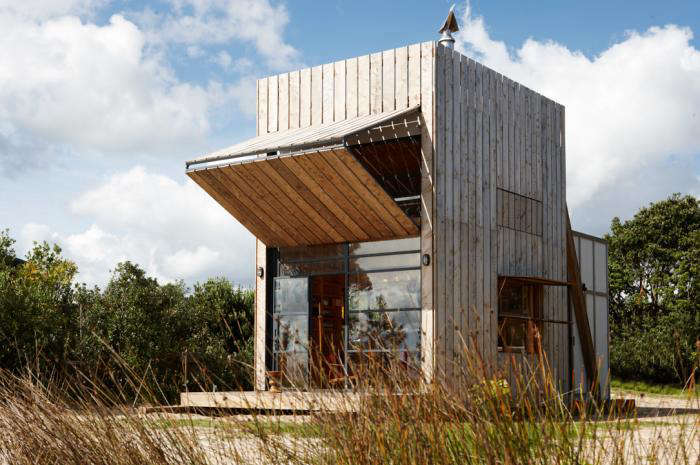
The best-known example is the Hut on Sleds in Whangapoua, on New Zealand’s Coromandel Peninsula. Designed by Crosson Architects, this compact coastal retreat was created for a site where buildings must be removable because of erosion risk. Instead of treating that requirement as a bureaucratic headache, the architects turned it into the entire personality of the house. The result is a tiny beach cabin resting on two thick wooden sleds, capable of being pulled inland or moved across the beach if needed.
That single idea changes everything. A beach house is usually imagined as a permanent claim on paradise. This one is more polite. It arrives, opens up, enjoys the view, and understands that the coast is not a frozen postcard. Sand shifts. Storms arrive. Sea levels rise. Dunes migrate. The cabin does not pretend otherwise. It simply says, “Fine, I’ll bring runners.”
What Is a Portable Beach Cabin?
A portable beach cabin is a small coastal dwelling designed to be moved, removed, or repositioned rather than permanently fixed in place. It may sit on skids, sleds, wheels, piers, or a modular foundation system. Unlike a typical vacation home, its design begins with mobility, compactness, and resilience.
The Hut on Sleds takes that concept literally. It is not just “portable” in the way a folding chair is portable after three people argue about how to collapse it. It sits on large timber runners, giving the structure a physical and visual connection to old farm sleds, boats, lifeguard towers, and weathered seaside sheds. It looks rugged, but not bulky; simple, but not boring.
At around 40 square meters, this portable beach cabin proves that luxury is not always about having more space. Sometimes luxury is waking up close to the water, opening a giant shutter, feeling the sea breeze roll through the room, and not having to vacuum 4,000 square feet of “coastal casual” décor.
The Genius of the Sled Design
The most memorable feature of the cabin is, of course, the sled base. The wooden runners allow the house to be shifted back from the water or moved across the beach. In practical terms, this responds to coastal erosion rules. In design terms, it gives the cabin a sense of adventure. It feels less like a mini mansion and more like a well-built vessel that happens to sleep a family.
Why Sleds Make Sense on a Beach
Beaches are dynamic landscapes. Wind, tides, storms, and changing water levels constantly reshape them. A conventional foundation can be vulnerable in places where the shoreline is retreating or where building rules require removability. A sled-based cabin offers a flexible alternative: it reduces the need for heavy permanent construction and makes relocation part of the design strategy.
That does not mean anyone should drag a house around the sand every weekend like a cooler with a roof. The point is not daily movement. The point is preparedness. If the site becomes unsafe, the cabin has a built-in response. It is architecture with a backup plan, which is more than can be said for many of us when a beach umbrella turns inside out.
A Cabin That Closes Like a Shell
The Hut on Sleds is designed to open beautifully when occupied and close tightly when empty. Its large front shutter winches upward to create shade and shelter, almost like a giant awning. Behind it, tall steel-framed glass doors open the living space to the beach view. When the family leaves, the cabin closes against weather, wind, and salt air.
This open-and-shut behavior is one of the smartest lessons for any portable beach house. A coastal cabin should not be delicate. It should be able to enjoy a sunny weekend and then button up like a sailor before a storm. The shutter is not merely decorative; it is part of the home’s climate control, security, and character.
Small Space, Big Personality
Inside, the portable beach cabin uses space with the ruthless efficiency of a submarine, minus the torpedoes and questionable cafeteria lighting. The layout includes a kitchen, dining area, living area, bathroom, and sleeping zones for a family of five. Children’s bunks include hidden cubbies, and a ladder leads to a mezzanine sleeping area. Every inch works hard.
This is the secret to good tiny beach house design: the cabin must not feel like a storage unit with pillows. It needs volume, light, views, and flexible furniture. The Hut on Sleds achieves that with a double-height opening, built-in storage, timber interiors, and a strong relationship between indoor and outdoor living.
Storage That Disappears Into the Architecture
In a small coastal cabin, storage cannot be an afterthought. Beach life comes with towels, hats, sunscreen, fishing gear, sandals, wet clothes, and at least one mysterious bag of shells that nobody is allowed to throw away. Built-in storage keeps clutter from swallowing the room.
The best small-space strategies include under-bunk drawers, toe-kick storage, wall-mounted shelves, foldaway tables, hooks near doors, and multi-purpose benches. In the Hut on Sleds, secret cubbies in the bunk area add a playful element. For kids, that is magical. For adults, it is the difference between calm minimalism and stepping on goggles before coffee.
Outdoor Living as Extra Square Footage
A portable beach cabin does not need to be huge if the outdoors becomes part of the floor plan. The deck, awning, sand, and view all act as extensions of the living room. Cooking, eating, reading, and rinsing off can happen partly outside, which reduces pressure on the interior.
This is especially important in warm coastal climates, where natural ventilation can make a small space feel larger and more comfortable. Large operable openings, cross-breezes, and shaded glass help reduce heat buildup while keeping the cabin connected to its setting.
Materials That Belong Near the Sea
Beach buildings live a harder life than they admit on vacation brochures. Salt spray, wind, sand, moisture, and intense sun can punish weak materials. A portable beach cabin needs finishes that age gracefully, resist corrosion, and can be maintained without requiring a team of specialists in matching linen outfits.
The Hut on Sleds uses rough timber cladding that blends with the dune landscape. Timber is not only warm and tactile; it also fits the tradition of simple seaside structures. The cabin’s weathered exterior helps it sit quietly in the environment rather than shouting, “Look at me, I have a design award!” even though, frankly, it does.
Timber, Steel, and Practical Coastal Details
Timber cladding, exposed structure, steel-framed doors, and industrial hardware give the cabin a robust personality. These materials also tell the truth about the building. You can see how it opens. You can understand how it stands. You can imagine how it might be moved.
For coastal cabins in general, smart detailing matters. Fasteners should resist corrosion. Openings should manage wind-driven rain. Roof edges, flashing, and shutters should be designed to shed water. Materials below potential flood levels should be selected carefully. In a beach environment, beauty and durability are not enemies; they are beach buddies who forgot to bring matching towels.
Sustainability Without the Lecture
The most refreshing thing about this portable beach cabin is that its sustainability is not loud. It does not need a neon sign announcing “Eco-Friendly Lifestyle Experience.” It is sustainable because it is small, efficient, timber-rich, manually operated, and designed to tread lightly on a sensitive dune environment.
The cabin uses rainwater collection, separate potable and gray-water systems, and waste-management strategies suited to its remote setting. Its modest footprint reduces material use. Its natural ventilation and shading reduce dependence on mechanical cooling. Its mobility acknowledges that the site may change over time.
Less House, More Holiday
One of the strongest ideas behind the design is that a holiday home does not need to recreate everyday suburban life at the beach. It can strip life back to the essentials: cooking, eating, sleeping, showering, talking, swimming, and watching the water until everyone forgets where they put their phone.
That simplicity is not deprivation. It is focus. A small beach cabin encourages people to go outside, share space, and use fewer things. It asks the family to live with the rhythm of the coast rather than hiding from it behind oversized rooms and climate-controlled perfection.
Why Portable Coastal Homes Feel More Relevant Than Ever
Portable beach cabins are no longer just quirky design experiments. They speak to real challenges facing coastal communities around the world, including erosion, flooding, storm exposure, and rising seas. In the United States, coastal planners and homeowners increasingly think about setbacks, elevation, flood-resistant materials, nature-based solutions, and managed adaptation.
A house on sleds is not the answer for every shoreline. Some sites require elevation. Others require relocation, restoration of dunes, stricter setbacks, or no building at all. But the idea behind the sled cabin is powerful: buildings should respond to place, risk, and time. They should not assume the coast will politely stay where it was when the permit was approved.
Designing With Nature Instead of Wrestling It
Many coastal mistakes begin with the belief that nature can be defeated if the wall is tall enough. But beaches are systems, not furniture. Hard barriers may protect one property while causing problems elsewhere. Dunes, wetlands, setbacks, and flexible building strategies can offer more adaptive approaches.
The portable beach cabin belongs to this more humble way of thinking. It does not dominate the beach. It perches. It opens. It closes. If necessary, it moves. That attitude may be the cabin’s greatest design feature.
How to Design a Portable Beach Cabin Inspired by This Idea
If you are dreaming of a portable beach cabin, the Hut on Sleds offers plenty of inspiration. However, copying the form without understanding the conditions would miss the point. The real lesson is not “put your house on giant wooden skis and call it architecture.” The lesson is to let the site, climate, regulations, and lifestyle shape the design.
1. Start With Local Rules and Coastal Risk
Before sketching the perfect deck, study local building codes, flood maps, erosion rates, zoning rules, and environmental restrictions. Some beach areas require elevated structures. Others limit permanent foundations. Some discourage development in high-risk zones altogether. A portable cabin must be legal, safe, and appropriate for the site.
2. Keep the Footprint Modest
A smaller building is easier to move, cheaper to maintain, and less demanding on the site. It also encourages better design. When space is limited, every window, shelf, bench, and stair must earn its place. A compact cabin can feel generous when it has tall ceilings, good daylight, and strong outdoor connections.
3. Make the Building Close Securely
A beach cabin may sit empty for days or weeks. It needs shutters, durable doors, secure windows, and weather-resistant details. The best designs feel open and carefree when occupied but tough and protective when closed.
4. Use Built-In Furniture
Portable cabins benefit from built-in beds, benches, tables, cabinets, and storage walls. Loose furniture can make a small space feel chaotic. Built-ins also help the structure behave more like a boat cabin: compact, ordered, and ready for movement.
5. Design for Sand, Salt, and Wet Feet
Beach life is beautiful, but it is not tidy. Durable flooring, outdoor showers, easy-clean surfaces, ventilated storage, and shaded entrances make daily use more comfortable. A great beach cabin should welcome sandy feet without having a nervous breakdown.
Specific Example: A Weekend in a Sled-Based Beach Cabin
Imagine arriving on a Friday afternoon. The cabin is closed, quiet, and weathered into the dunes. At first it looks almost asleep. Then the front shutter lifts, the glass doors swing open, and the small interior suddenly feels twice as large. The deck becomes the dining room. The breeze becomes the air conditioner. The horizon becomes the television, only with better programming and fewer subscription fees.
Inside, the children claim the bunks immediately, because children are excellent at identifying prime real estate. Adults unpack into built-in cubbies. Wet towels go on hooks. Shoes stay near the door. Dinner happens with one pan, one cutting board, and a view that makes even a slightly burned grilled cheese feel poetic.
At night, the cabin becomes cozy. The small footprint keeps everyone close, which can be charming until someone asks where the flashlight went. The mezzanine feels like a perch above the living area. The sound of waves fills the gaps where city noise usually lives. In the morning, the cabin opens again, and the day begins not with traffic, but with light.
The Emotional Appeal of a Movable Beach House
There is something deeply appealing about a beach house that does not pretend to be permanent. It feels more honest. Most vacations are temporary anyway. The best moments at the shore are fleeting: a swim before breakfast, a perfect breeze, a sunset that lasts five minutes longer than expected. A portable cabin fits that mood.
It also makes ownership feel lighter. Instead of building a fortress against the future, the cabin accepts change. That mindset can make a home feel less like a possession and more like a companion. It is there to support a way of living, not to win a staring contest with the ocean.
Experience Section: Living With the Idea of “A Portable Beach Cabin, Sleds Included”
The first thing you notice about a portable beach cabin is that it changes your sense of what a vacation home should do. In a conventional beach house, people often bring too much: too many clothes, too many gadgets, too many decorative bowls filled with objects that look like sea glass but were almost certainly purchased in bulk. A cabin like this quietly edits the guest list. It invites the essentials and leaves the rest behind.
That kind of experience can be surprisingly freeing. When space is limited, routines become simpler. Breakfast is not a production. It is coffee, fruit, toast, and someone standing barefoot at the door saying the water looks perfect. Cleaning takes minutes instead of hours. Packing becomes a small ritual instead of a military campaign. The house encourages people to spend more time outside because outside is not separate from the home; it is part of the home.
A portable cabin also makes you more aware of weather. In a large insulated house, weather can become background information. In a small coastal cabin, the wind direction matters. The angle of the sun matters. The sound of rain on the roof matters. You open shutters for shade, close doors against gusts, move chairs to follow the view, and learn which corner catches the best afternoon breeze. The house teaches attention.
There is also a practical pleasure in seeing how everything has a place. A bunk is not just a bed; it is also storage, privacy, and childhood headquarters. A ladder is not just a way up; it is part of the room’s rhythm. A shutter is not just a wall; it becomes an awning, a shade device, and a theatrical curtain. When a cabin is designed well, small details feel delightful because they solve real problems.
For families, the experience can be especially memorable. A compact beach cabin creates shared time almost by default. There are fewer rooms to disappear into and fewer screens competing with the view. Kids turn bunks into forts. Adults rediscover the strange joy of doing nothing for ten uninterrupted minutes. Meals stretch longer because nobody is rushing to another part of the house. The cabin becomes a stage for simple rituals: rinsing sand off feet, hanging swimsuits, making tea after a cold swim, reading under the awning, counting stars from the deck.
The mobility of the cabin adds another emotional layer. Even if the building rarely moves, knowing it can move changes how it feels. It seems less stubborn, less entitled, and more in conversation with the landscape. That matters near the ocean, where permanence is often an illusion wearing cedar siding. A movable beach cabin reminds its owners that the shoreline is alive. It asks them to enjoy the place without pretending to control it forever.
In the end, the experience of a portable beach cabin is not about novelty. The sleds may grab attention, but the deeper value is restraint. It is about building only what is needed, placing it carefully, and allowing the landscape to remain the main event. The best beach cabin does not compete with the beach. It frames it, shelters you from it when necessary, opens you to it when possible, and knows when to step back.
Conclusion
A portable beach cabin with sleds included is more than a clever architectural trick. It is a thoughtful answer to coastal living in a changing world. The Hut on Sleds shows how a small structure can be beautiful, efficient, resilient, and deeply connected to its site. It uses mobility not as a gimmick, but as a practical response to erosion and environmental sensitivity.
For anyone interested in tiny beach houses, movable cabins, sustainable coastal homes, or smart vacation architecture, this project offers a clear lesson: the future of beach living may not be bigger, heavier, or more permanent. It may be lighter, smaller, more flexible, and much more honest about the power of the sea. Also, if your dream house can be moved by a tractor, you automatically win the neighborhood conversation.