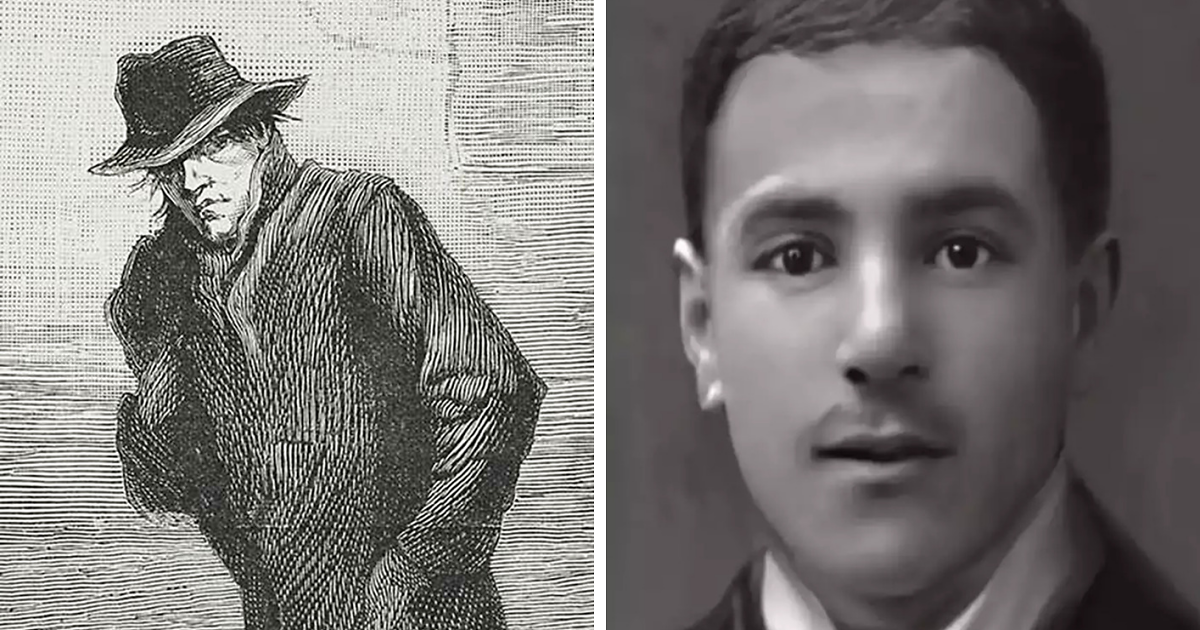
Some stories never really leave the public imagination. They just lurk in the fog, waiting for a fresh headline, a dramatic quote, and a crowd of online detectives ready to declare the case closed before their coffee gets cold. That is exactly what happened when the long-running claim that Jack the Ripper was actually Aaron Kosminski roared back into public view. Supporters treated it like the final scene of a true-crime blockbuster. Skeptics, meanwhile, responded with the historical equivalent of, “Not so fast.”
The latest wave of interest did not appear out of nowhere. It resurfaced after renewed media attention to DNA testing on a shawl allegedly linked to one of the Ripper murders, along with new calls from descendants connected to the case for a legal inquest. Add in a punchy line like “My search is over,” and the internet did what the internet does best: split into two camps, type furiously, and act as if a Victorian murder mystery can be settled between lunch and doomscrolling.
But beneath the viral excitement is a more interesting story, and frankly, a more useful one. This is not just about whether Aaron Kosminski was Jack the Ripper. It is about what happens when modern DNA language collides with historical uncertainty, questionable provenance, media hype, and the internet’s endless appetite for closure. If you want the short version, here it is: the Kosminski theory remains one of the most famous modern attempts to name Jack the Ripper, but it has not ended the debate. Not even close.
Why This Story Is Everywhere Again
The case surged back into headlines because the DNA-based claim that pointed to Kosminski was presented once more as if the mystery had finally been solved. That framing is irresistible. Few unsolved crimes carry the cultural weight of Jack the Ripper. The name itself has become shorthand for the unknown serial killer, the shadowy monster, the case that refuses to die. So when a resurfaced report suggests that science may have identified the killer, readers click first and argue later.
There is also a second emotional engine behind the renewed attention: descendants of victims have supported calls for formal recognition of the alleged killer. That gives the story a more serious tone than ordinary cold-case content. It stops being just a dark historical puzzle and becomes a question of justice, memory, and whether the victims’ families can ever get an answer that feels official. Suddenly, the debate is not just academic. It becomes deeply human.
That emotional layer matters. It helps explain why some readers are ready to embrace the DNA claim even with major caveats. If a case has remained unresolved for more than a century, even imperfect evidence can feel like a lifeline. Closure is a powerful drug, and the internet has a habit of taking a sip and calling it a cure.
The Theory in Plain English: Why Aaron Kosminski Keeps Coming Up
Aaron Kosminski was not a random name pulled from a hat. He has long appeared in discussions of Jack the Ripper suspects. Historically, he was known as a Polish immigrant living in Whitechapel, the area tied to the murders, and his name has circulated for decades among researchers, police memoranda readers, historians, and the particularly committed corner of humanity known as Ripperologists.
The modern case against him centers on a shawl said to have been found near the body of Catherine Eddowes, one of the canonical victims. According to the theory’s supporters, forensic testing detected biological material on the shawl and matched mitochondrial DNA from those samples to descendants connected to Eddowes and Kosminski. That is the foundation of the “case solved” argument.
For supporters, it sounds compelling. Kosminski was already a historical suspect. The shawl supposedly links the killer to the victim. DNA testing appears to connect that evidence to modern descendants. Put those pieces together, and the conclusion feels cinematic: history’s most infamous unidentified murderer finally has a name.
And yet the key word there is feels. Because in historical investigations, especially ones involving evidence that is more than a century old, feeling compelling and being conclusive are not remotely the same thing.
What Supporters Say the DNA Evidence Proves
A suspect with historical ties to the case
Supporters point out that Kosminski was not invented by modern sensationalism. He had already been mentioned in historical police discussions, which makes him more plausible than some of the case’s flashier suspects. That alone gives the theory a sturdier skeleton than many speculative claims attached to the Ripper story over the years.
A physical object tied to a victim
The shawl is the star witness of the entire theory. Believers argue that because it was allegedly recovered from the Eddowes crime scene and preserved for generations, it offers a rare bridge between a Victorian murder and modern forensic analysis. In a case filled with rumors, forged letters, and theatrical suspect lists, a physical artifact carries a lot of dramatic weight.
The magic word: DNA
Let’s be honest: once the letters D, N, and A appear in a headline, many readers assume the conversation is over. DNA sounds final. It sounds modern, objective, scientific, and shiny. For supporters of the Kosminski theory, the genetic match is the breakthrough that takes the argument out of the realm of folklore and into the realm of evidence.
That explains why the resurfaced claim spread so widely. It hit the perfect true-crime formula: famous unsolved case, physical evidence, science language, old suspect, modern descendants, and one investigator willing to say the quiet part loudly: “My search is over.” It is a headline with a built-in drumroll.
Why Critics Say the Case Is Still Wide Open
Here is where the story gets less cinematic and much more important. Critics of the Kosminski conclusion do not necessarily argue that he could not have been Jack the Ripper. Their main point is narrower and stronger: the available evidence does not prove that he was.
The shawl’s provenance is shaky
This is one of the biggest problems. Critics have questioned whether the shawl can be reliably tied to the Eddowes crime scene at all. If the object’s chain of custody is uncertain, then every grand conclusion built on top of it starts wobbling. In historical investigations, provenance is not a footnote. It is the floor. And if the floor is unstable, the whole house starts making alarming noises.
Contamination is a serious concern
The shawl was not sealed in a perfect forensic time capsule. It was allegedly handled by numerous people over many years. That raises the obvious problem of contamination. Ancient and historical DNA work is hard even under careful laboratory conditions. Add generations of handling, public interest, and the natural messiness of old objects, and the phrase “clean sample” begins to sound more like wishful thinking than certainty.
Mitochondrial DNA is not a fingerprint
This is a major point that gets flattened in viral retellings. The testing at the center of the debate relied on mitochondrial DNA, which traces maternal lineage. That can be useful, but it is not the same as a uniquely identifying nuclear DNA profile. In plain English, mitochondrial DNA can point toward a family line, but it cannot by itself deliver the kind of one-person-only certainty that popular media often implies. When people online read “DNA match” and mentally translate it to “case closed forever,” they are skipping the most important scientific nuance in the room.
The paper itself faced later scrutiny
Another uncomfortable wrinkle for the “mystery solved” crowd is that the 2019 paper associated with the shawl evidence later became the subject of an official expression of concern. That does not automatically erase the research, but it absolutely means the findings were not received as untouchable truth. Critics also emphasized missing raw data and methodological concerns, which is the scholarly version of a very raised eyebrow.
So no, the skepticism is not coming only from internet contrarians who enjoy ruining the fun. A substantial portion of the doubt comes from historians, forensic commentators, and science-minded reviewers who think the evidence has been oversold.
Why the Internet Is So Divided
The online divide is not just about the facts. It is about what people want from the facts. One side wants resolution. The other side wants rigor. One group hears “DNA” and thinks, “Finally.” The other hears “mtDNA from a controversial shawl with disputed provenance” and thinks, “Please put the champagne back in the fridge.”
There is also a deeper cultural issue at play. The internet loves mystery, but it loves solved mystery even more. Uncertainty is intellectually honest, but certainty gets better engagement. A headline saying “Claim Remains Heavily Disputed After New Round of Historical Scrutiny” is accurate and respectable. A headline saying “Jack the Ripper Finally Identified” is catnip for algorithms, commenters, and podcast producers with dramatic theme music.
That tension explains the fury of the debate. For some readers, questioning the Kosminski theory feels like protecting an outdated mystery just because it is famous. For others, accepting the theory too quickly feels like turning historical scholarship into a costume party for premature conclusions.
What This Debate Really Teaches Us About DNA and History
The biggest lesson here is simple: forensic language becomes trickier, not easier, when it is applied to old cases. In contemporary criminal investigations, DNA can be incredibly powerful because the evidence is collected under controlled conditions, tested with modern documentation, and judged against known standards. In 19th-century cases, the evidence may be poorly documented, heavily handled, contaminated, or tied to stories that evolved over decades.
That does not mean historical DNA work is useless. Far from it. It can be fascinating and meaningful. But it does mean that every finding has to be interpreted inside a much wider context of provenance, chain of custody, historical records, and methodological transparency. Science does not float above the evidence; it depends on the evidence. If the underlying object is contested, the conclusion will be contested too.
This is also why the Jack the Ripper identity debate remains such a useful case study. It shows how easily public conversation can confuse “scientifically interesting” with “scientifically settled.” Those are not twins. They are barely cousins.
The Victims Deserve Better Than a Myth Machine
Another reason the story resonates so strongly is that it sits at the intersection of history, crime, gender, and media spectacle. For more than a century, the killer’s nickname has overshadowed the women whose lives were cut short. Modern historians have also challenged some of the oldest assumptions repeated about the victims, reminding readers that sensational narratives often flatten real people into props.
That is why any article about Jack the Ripper should do more than chase the name of the suspect. It should ask a better question: what kind of truth are we actually looking for? A marketable answer? A legally sustainable conclusion? A historically responsible account? Those are not always the same thing.
If the renewed attention leads people to remember Catherine Eddowes and the other victims more clearly, that is one of the few unambiguously good outcomes. If it only leads to another round of triumphal headlines, conspiracy threads, and amateur certainty in all caps, then history is being turned into entertainment again, just with slightly better graphics.
So, Was Aaron Kosminski Really Jack the Ripper?
The most honest answer is this: maybe, but not proven. He remains a significant suspect. The DNA-based argument is one reason his name keeps resurfacing. But the evidence attached to that claim is still surrounded by major objections involving provenance, contamination, methodology, and interpretation.
That means the internet’s divide is not a sign that people are confused. In a strange way, it is a sign that the story is being read correctly. This is not a tidy conclusion. It is a contested historical claim wrapped in modern forensic language and pushed through the high-speed blender of online culture.
In other words, the mystery did not vanish. It just got a fresh press cycle and a new round of people insisting they have definitely, absolutely, no-really-this-time solved it.
Final Thoughts
The resurfaced “DNA breakthrough” has done what the best cold-case headlines always do: it revived an old obsession, stirred public argument, and gave millions of readers a reason to revisit one of history’s most notorious unsolved crimes. But the lasting takeaway is not that the case is closed. It is that modern audiences still crave certainty even when the evidence refuses to cooperate.
Aaron Kosminski may remain central to the Jack the Ripper conversation for years to come. Yet unless stronger, more transparent, and more broadly accepted evidence emerges, the debate will continue. That may frustrate readers who want a final answer, but it is also the price of intellectual honesty. Some cases are famous because they are horrifying. Others are famous because they are mysterious. Jack the Ripper is both, which is exactly why every “breakthrough” arrives with fireworks, footnotes, and a very large argument attached.
Experiences Related to the Topic: What It Feels Like When a Cold Case Goes Viral Again
There is a very modern experience attached to stories like this, and it has almost become a ritual. First, you see the headline and feel that little jolt of curiosity. Then you click and think, “Wait, did they really solve this?” A few paragraphs later, you are halfway between amazement and suspicion. By the time you reach the comments, you realize the internet has already formed two armies: Team Finally Solved and Team Please Learn How Evidence Works.
That experience says a lot about how people consume historical mysteries now. Most readers do not approach a story like Jack the Ripper with a blank slate. They bring years of cultural baggage with them: movies, documentaries, podcasts, schoolbook references, late-night Wikipedia wandering, and a general sense that this is one of the “great unsolved mysteries.” So when a DNA claim resurfaces, it does not land as just another news item. It lands like someone just knocked over a glass case in a museum and shouted, “We found it!”
For true-crime readers, the reaction can be especially intense. There is a familiar emotional mix of excitement and caution. Excitement, because closure is satisfying. Caution, because anyone who has followed enough cold cases knows that grand declarations tend to age like milk left on a windowsill in July. The internet has seen too many “definitive breakthroughs” collapse under closer scrutiny. That shared memory makes people more skeptical, but not always more patient.
There is also the social experience of watching a nuanced issue get compressed into a meme-sized argument. One post says, “DNA proves it was Aaron Kosminski.” Another says, “The whole thing is junk science.” And somewhere in the middle is the boring but valuable truth: the evidence is intriguing, contested, and not strong enough to end the debate. Unfortunately, “intriguing, contested, and not strong enough” is not exactly the kind of phrase people rush to turn into a viral caption.
For historians, researchers, and science-literate readers, the experience can be even stranger. You watch the public treat the word “DNA” like a magic wand, while all the difficult questions about sampling, contamination, chain of custody, and data transparency get shoved into the trunk like inconvenient luggage. It can feel like standing in a room full of people applauding the final answer while you are still trying to confirm whether the exam paper belongs to the right class.
And then there is the emotional side that gets lost in the noise. Stories like this are not just intellectual puzzles. They involve real victims whose names are too often buried under the killer’s myth. For some readers, that changes the experience entirely. The debate becomes less about whether the internet found a satisfying villain and more about whether history can still offer dignity, context, and truth to people who were turned into symbols.
In that sense, following the Jack the Ripper identity debate today feels like watching three stories unfold at once. One is a historical mystery. One is a media spectacle. One is a lesson in how badly people want certainty. That combination is fascinating, frustrating, and weirdly familiar. It is the digital-age cold-case experience in a nutshell: a burst of excitement, a flood of certainty, a backlash of skepticism, and the lingering realization that the real answer is usually messier than the headline promised.