Older students have an impressive talent for pretending they understand everything while their notebooks quietly host a small festival of confusion. By middle school, high school, and even college, many learners have mastered the academic poker face: nodding thoughtfully, highlighting random sentences, and writing “I get it” with the confidence of someone who absolutely does not get it.
That is why a collaborative approach to mistake analysis with older students can be so powerful. Instead of treating mistakes as tiny academic disasters, teachers can turn them into evidence, conversation starters, and problem-solving tools. When students analyze errors together, they begin to see mistakes not as proof of failure, but as clues that point toward deeper understanding.
This approach works especially well with older students because they are ready for more sophisticated thinking. They can compare strategies, challenge assumptions, explain reasoning, and identify patterns in their own learning. In other words, they are capable of doing much more than waiting for the teacher to circle the wrong answer in red and move on like a detective who refuses to share the case file.
What Is Collaborative Mistake Analysis?
Collaborative mistake analysis is a classroom strategy in which students examine incorrect or incomplete work together, discuss what went wrong, identify the thinking behind the error, and revise the work using evidence and reasoning. It can be used in math, science, English language arts, social studies, world languages, career courses, and almost any subject where students produce answers, arguments, explanations, or projects.
The key word is collaborative. Students are not simply told, “This is wrong; fix it.” Instead, they work in pairs, small groups, or structured class discussions to ask questions such as:
- Where did the reasoning first go off track?
- What assumption led to this mistake?
- What part of the process was correct?
- What would a stronger answer include?
- How can we explain the correction clearly?
This turns error correction into active learning. Students do not just receive feedback; they use it. They do not just look at a grade; they investigate the learning behind the grade.
Why Older Students Need Mistake Analysis
Older students often carry years of emotional baggage around mistakes. Some have learned to see wrong answers as embarrassing. Others rush past feedback because they are focused only on the final score. A few may treat mistakes like mysterious weather events: unfortunate, unpredictable, and best ignored.
Collaborative mistake analysis changes that pattern. It gives students a safe structure for looking closely at errors without turning the classroom into a public trial. When handled well, the process builds academic confidence, critical thinking, communication skills, and metacognitionthe ability to think about one’s own thinking.
It Moves Students Beyond “Right or Wrong”
Traditional grading often trains students to ask one question: “Did I get it right?” Mistake analysis encourages a better question: “What does this show about my thinking?” That shift matters. A wrong answer may come from a calculation slip, a misunderstood concept, a weak piece of evidence, a skipped step, or a confusing direction. Those are very different problems, and they require different solutions.
It Makes Feedback More Useful
Feedback only helps when students understand it and do something with it. A comment like “needs more detail” may be technically true, but it can feel as helpful as a GPS saying, “Try being somewhere else.” Collaborative analysis gives students the chance to unpack feedback, compare examples, and practice revision immediately.
It Builds Academic Risk-Taking
When mistakes are discussed respectfully and regularly, students become more willing to attempt challenging work. They learn that confusion is not a personal flaw. It is part of the learning process. The classroom message becomes: “We do not hide errors here. We study them like scientists in hoodies.”
The Research-Based Thinking Behind Mistake Analysis
Collaborative mistake analysis connects with several well-established principles of effective learning. First, students learn more deeply when they actively process information rather than passively receive answers. Second, formative assessment works best when it helps teachers and students identify current understanding and adjust instruction. Third, metacognitive strategies help learners monitor their progress and choose better approaches.
In plain English: students improve when they know what they were trying to do, where the attempt broke down, and how to try again more effectively. That may sound obvious, but schools often skip the middle part. We assign work, grade work, return work, and then sprint to the next unit like the curriculum map is chasing us with a clipboard.
Mistake analysis slows the process just enough for learning to catch up.
How to Set Up a Mistake-Friendly Classroom
Before asking older students to analyze mistakes together, teachers need to create the right classroom culture. Without trust, students may shut down, joke defensively, or avoid honest discussion. With trust, mistake analysis becomes normal, practical, and even enjoyable.
Use Anonymous or Teacher-Created Examples First
Start with anonymous samples or examples created by the teacher. This removes the emotional pressure of having a student’s work examined by classmates. For example, in algebra, a teacher might show a problem where the student correctly distributes but forgets to combine like terms. In English, the teacher might present a paragraph with a strong claim but weak evidence. In history, students might review a response that includes facts but fails to explain cause and effect.
The goal is to teach the process before using real student work. Once students understand the routine and norms, they can eventually analyze their own work or volunteer samples.
Separate the Mistake From the Person
Language matters. Instead of saying, “The student messed up here,” use phrases like “The reasoning changes here,” “This step creates confusion,” or “This evidence does not fully support the claim.” Older students are more likely to participate when the focus stays on the work, not the person.
Celebrate Useful Errors
Some mistakes are especially valuable because they reveal a common misconception. Teachers can call these “productive errors,” “high-value mistakes,” or “learning clues.” This helps students understand that an error can be useful even when it is not correct. The mistake becomes a flashlight, not a label.
A Step-by-Step Collaborative Mistake Analysis Routine
The following routine works well with older students because it gives them structure without treating them like tiny robots wearing backpacks.
Step 1: Choose a Meaningful Error
Select an error connected to an important learning goal. Avoid tiny mistakes that do not reveal much thinking. A missing comma may matter, but it may not deserve a 20-minute group investigation unless that comma has somehow become the villain of the semester.
Good examples include:
- A math solution with a common misconception
- A science explanation that confuses correlation and causation
- An essay paragraph with evidence but weak analysis
- A history response that lists events without explaining significance
- A language assignment with repeated grammar or word-choice errors
Step 2: Ask Students to Notice Before Correcting
Students often want to jump straight to the answer. Instead, ask them to observe first. What is correct? What is confusing? Where does the work seem strong? Where does it start to wobble like a cafeteria table with one short leg?
This step helps students avoid oversimplifying the mistake. It also reminds them that incorrect work often contains partial understanding.
Step 3: Identify the Type of Mistake
Have students classify the error. This can be done with categories such as:
- Conceptual error: misunderstanding the main idea
- Procedural error: using the wrong process or steps
- Careless error: knowing what to do but rushing or skipping details
- Communication error: having the idea but explaining it unclearly
- Evidence error: making a claim without enough support
Classification helps students become more precise. “I got it wrong” becomes “I understood the concept but used weak evidence” or “I followed the steps but misunderstood the purpose of the formula.” That kind of clarity is academic gold.
Step 4: Discuss the Thinking Behind the Error
Ask students to explain why someone might make this mistake. This is not about making excuses. It is about building empathy and insight. When students can explain the misconception, they are closer to avoiding it themselves.
Useful prompts include:
- What might the student have been thinking?
- Which part of the task may have been misunderstood?
- What earlier skill or concept is connected to this mistake?
- What clue in the problem or prompt could help prevent the error?
Step 5: Create a Corrected Version
After discussion, students revise the work. The correction should include more than the right answer. It should include reasoning. In math, students can show each step. In writing, they can rewrite the paragraph and explain the revision. In science, they can correct the explanation and name the concept involved.
Step 6: Write a “Next Time” Rule
This is the step that keeps mistake analysis from becoming a one-day activity with no lasting impact. Students write a short rule, reminder, or strategy they can use in the future.
Examples:
- “Before solving, identify what the question is actually asking.”
- “When using evidence, explain how it proves the claim.”
- “Check whether the answer makes sense in context.”
- “Do not just name the cause; explain the effect.”
These reminders help students transfer learning to the next assignment, quiz, discussion, or project.
Subject-Specific Examples for Older Students
Math: Analyzing a Wrong Solution
In an Algebra I class, students might examine a solution to a linear equation where the student applies inverse operations correctly at first but makes a sign error halfway through. Groups identify the correct steps, locate the first incorrect move, explain why the sign error changes the answer, and rewrite the solution with a check at the end.
This is more powerful than simply saying, “Remember your negatives.” Students see how one small decision affects the entire solution. The minus sign finally gets the respect it has been demanding for years.
English Language Arts: Revising Weak Analysis
In an English class, students might review a paragraph that includes a quote from a novel but does not explain its meaning. The group identifies the claim, evaluates the evidence, and adds analysis that connects the quote to the argument. Students then write a “next time” rule: “Never let a quote sit alone; introduce it, explain it, and connect it.”
Science: Correcting a Misconception
In biology, students might analyze an explanation that says plants get their food from soil. Groups discuss why this misconception is common, review photosynthesis, and rewrite the explanation to show that plants use light energy, carbon dioxide, and water to produce glucose.
Social Studies: Strengthening Cause-and-Effect Reasoning
In a U.S. history class, students might examine a response that lists events leading to a historical conflict but does not explain relationships among them. Students revise the answer by adding transition language such as “as a result,” “this increased tension because,” and “this contributed to.”
Group Roles That Keep Collaboration Productive
Older students can collaborate beautifully, but they can also spend 12 minutes deciding who gets the good marker. Clear roles help.
The Detective
This student identifies where the error begins and what clues reveal the problem.
The Explainer
This student explains the reasoning behind both the error and the correction.
The Skeptic
This student asks, “How do we know?” and checks whether the group’s correction is accurate.
The Connector
This student connects the mistake to a larger concept, previous lesson, or future strategy.
Roles should rotate so students practice different thinking skills. Otherwise, the same confident student becomes the permanent Explainer while everyone else becomes the Department of Nodding.
How Teachers Can Guide Without Taking Over
The teacher’s role in collaborative mistake analysis is not to rescue students too quickly. When students struggle, it is tempting to jump in with the answer. But productive struggle is where much of the learning happens.
Instead of saying, “No, that is wrong,” teachers can ask:
- “What evidence supports that idea?”
- “Where do you see the first change in reasoning?”
- “Can you compare this with the success criteria?”
- “What would happen if we tested that answer?”
- “Which part of the work is still reliable?”
These questions keep ownership with students. The teacher becomes a coach, not a human answer vending machine.
Common Challenges and Smart Fixes
Challenge: Students Feel Embarrassed
Fix: Use anonymous examples, establish discussion norms, and remind students that everyone makes mistakes. Teachers can also model their own harmless errors and think aloud through the correction process.
Challenge: Groups Rush to the Correct Answer
Fix: Require students to complete an error-analysis organizer before writing the final correction. Include sections for “What was correct,” “Where the error began,” “Why it happened,” and “How to prevent it.”
Challenge: One Student Does All the Work
Fix: Assign rotating roles and require each student to contribute one observation, question, or revision. Collaboration should not mean one student drives while everyone else sits in the academic backseat eating imaginary snacks.
Challenge: Students Do Not Transfer the Lesson
Fix: Use reflection. Ask students to write a next-step goal and revisit it before the next assessment. Teachers can also include similar error types in warm-ups, exit tickets, and review activities.
Using Mistake Analysis Before and After Assessments
Mistake analysis is useful both before and after tests, essays, labs, and projects.
Before Assessment
Before a quiz or major assignment, teachers can show students common mistakes from previous years or teacher-created examples. Students analyze the errors, revise them, and create a checklist for their own work. This helps them prepare strategically instead of simply rereading notes and hoping knowledge enters through eye contact.
After Assessment
After an assessment, students can review selected mistakes, categorize their own errors, and choose one or two areas for revision. The goal is not to punish them with extra work. The goal is to make the assessment part of learning, not the closing ceremony for a unit.
Technology Tools for Collaborative Error Analysis
Digital tools can make mistake analysis easier, especially with older students. Shared documents, slides, discussion boards, polling tools, and learning management systems allow students to annotate work, comment on reasoning, and compare revisions. Teachers can also display anonymous student samples and ask groups to respond using digital sticky notes or collaborative charts.
However, technology should support thinking, not replace it. A fancy digital board full of shallow comments is still shallow. The real power comes from the questions students ask, the evidence they use, and the revisions they make.
How Mistake Analysis Supports Student Independence
The long-term goal is for students to internalize the process. Eventually, they should be able to look at their own work and ask: What was I trying to do? Where did my thinking break down? What strategy can I use next time?
That kind of independence matters beyond the classroom. Older students are preparing for college, careers, civic life, and adult responsibilities. In every one of those settings, the ability to analyze mistakes calmly and improve from them is valuable. Nobody gets through life without errors. The trick is learning not to build a vacation home inside the same mistake.
Practical Experience: What This Looks Like in Real Classrooms
In practice, a collaborative approach to mistake analysis with older students works best when it feels routine rather than dramatic. The first few times, students may be cautious. Some will wait for the teacher to confirm every idea. Others will treat the activity like a guessing game: “Is the mistake here? No? Here? Still no? Wonderful, I live here now.” That is normal. Students need time to learn how to analyze thinking instead of hunting for the teacher-approved answer.
One effective experience is to begin with a “my favorite wrong answer” warm-up. The teacher posts a flawed solution, paragraph, or explanation and tells students, “This answer is wrong in a really useful way.” That phrase changes the mood. Students are not looking at failure; they are looking at something valuable. In small groups, they mark one part that works, one part that breaks down, and one revision that would improve it. The discussion usually becomes more energetic because students are allowed to critique without feeling cruel.
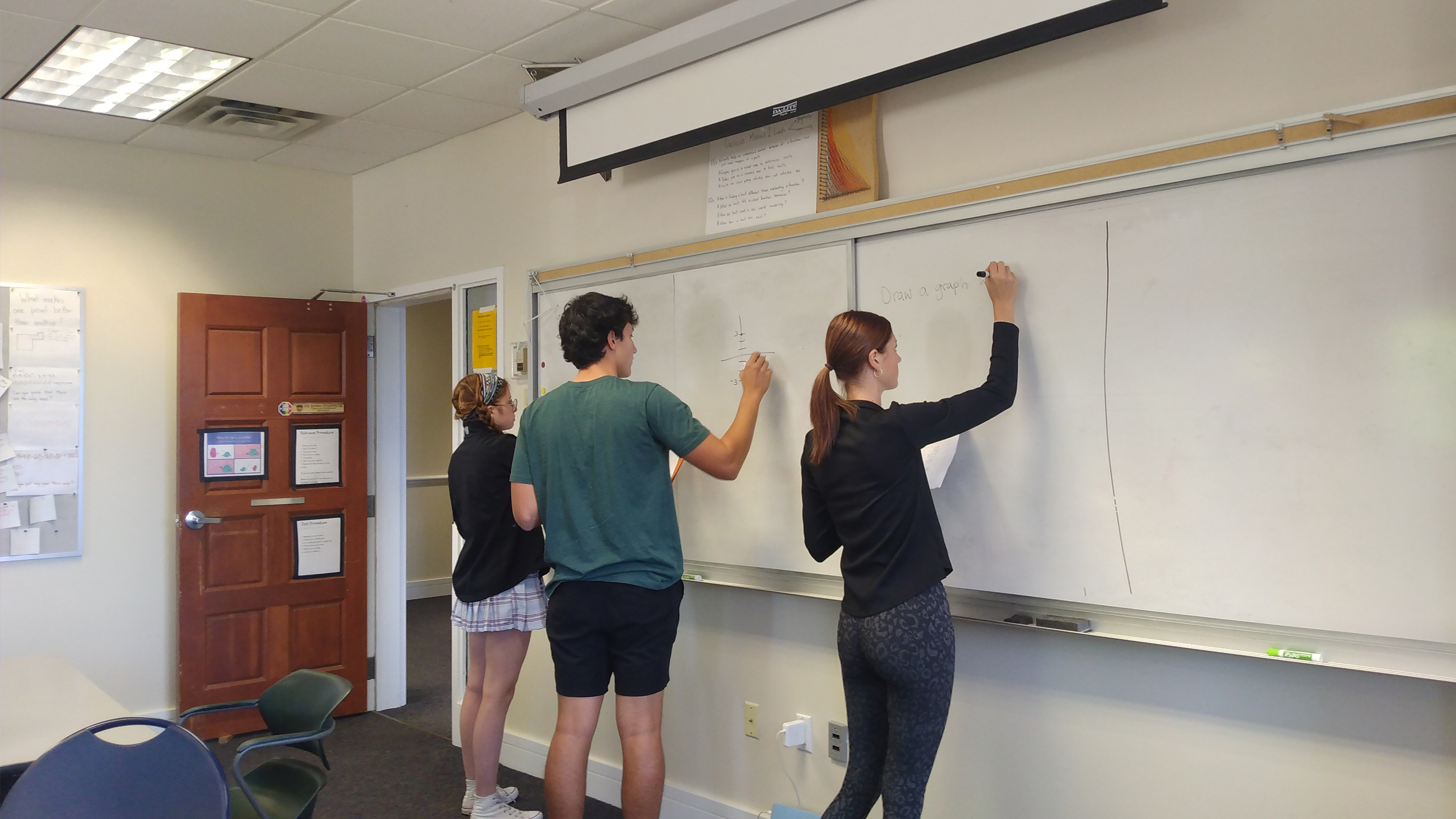
Another strong classroom experience is the “error gallery walk.” The teacher places several anonymous examples around the room. Each group carries sticky notes or a response sheet. At each station, students identify the error type, add a correction, and leave a prevention tip. By the end, the room looks like a detective agency opened inside a school hallway. Students move, talk, compare, disagree, and refine their thinking. For older students who dislike sitting through long review lectures, this format feels more active and mature.
Teachers often notice that students who are quiet during whole-class instruction participate more during small-group mistake analysis. There is less pressure than speaking in front of the entire class, but more accountability than working alone. A student who might never raise a hand may point to a line in a paragraph and say, “The evidence is good, but it does not prove the claim yet.” That is a serious academic move, even if the student says it while doodling a tiny dragon in the margin.
The biggest lesson from using mistake analysis is that students become better at naming their needs. Instead of saying, “I am bad at this,” they begin saying, “I keep skipping the explanation,” “I understand the concept but mix up the procedure,” or “I need to check the prompt before answering.” This language is powerful because it gives students a path forward. A vague problem feels permanent. A specific problem feels fixable.
Another useful experience is connecting mistake analysis to reassessment. After students analyze their errors, they complete a short revision task before earning a chance to improve a score. This keeps reassessment from becoming “same test, second episode.” Students must show what changed in their thinking. They might write a correction note, solve a parallel problem, revise a paragraph, or explain the rule they missed. The message is clear: improvement is welcome, but learning has to come with it.
Over time, collaborative mistake analysis can change classroom culture. Students laugh more comfortably at harmless errors, ask better questions, and become less afraid of difficult tasks. They also learn that intelligence is not proven by never being wrong. More often, it is shown by noticing what went wrong and choosing a better strategy. That is a lesson older students can carry far beyond the next quiz.
Conclusion: Mistakes Are Not the Enemy of Learning
A collaborative approach to mistake analysis with older students helps transform errors from sources of embarrassment into tools for growth. When students examine mistakes together, they practice critical thinking, communication, self-reflection, and revision. They learn to look beyond the final answer and understand the reasoning behind it.
For teachers, mistake analysis provides valuable information about student understanding. For students, it builds confidence and independence. For the classroom as a whole, it creates a culture where learning is not about appearing perfect, but about becoming more precise, thoughtful, and resilient.
In the end, mistakes are not academic villains. They are more like slightly annoying tour guides. They point out where students got lost, which path needs attention, and how to reach the destination with a little more wisdom next time.