Some childhood memories should stay safely behind the glass of a television screen. Saturday morning cartoons, cereal dust, pajamas until noonbeautiful. But what happens when those flat, colorful cartoon icons are dragged into the real world with pores, wrinkles, human teeth, uneven skin, tired eyes, and the general energy of someone who has seen the inside of a DMV at 4:58 p.m.? That is where 3D artist Miguel Vasquez enters the chat, carrying a stylus in one hand and our collective innocence in the other.
In his unsettling series of realistic cartoon characters, Vasquez reimagines familiar animated faces as if they were living, breathing peopleor at least creatures that might stand behind you in line at a gas station and whisper, “Nice weather.” The result is scary, disturbing, technically impressive, and weirdly impossible to stop looking at. It is fan art with the lights turned off. It is nostalgia after drinking three espressos. It is the uncanny valley wearing SpongeBob’s tie.
Who Is Miguel Vasquez?
Miguel Vasquez is a 3D character artist known online for turning famous cartoon characters into hyper-realistic figures. His work gained attention because it does not simply “make cartoons human.” It keeps the most recognizable traits of the original charactersthe huge heads, strange eyes, tiny noses, impossible mouths, and odd body proportionsthen adds realistic skin, muscle, texture, wrinkles, and lighting. That combination is exactly why the images feel both familiar and deeply wrong.
In professional 3D art, realism is not just about making something look pretty. It involves modeling, sculpting, texturing, lighting, rendering, and making dozens of visual decisions that tell the viewer, “This could exist.” Vasquez pushes that idea into a bizarre corner: What if the character should not exist, but the artwork is good enough to make you briefly believe it does?
Why Realistic Cartoon Characters Feel So Creepy
The biggest reason these images hit so hard is the uncanny valley. This term describes the uncomfortable feeling people often get when something looks almost human, but not quite. A cute cartoon with two dots for eyes? Fine. A realistic person? Also fine. A cartoon with damp human skin, realistic gums, enormous eyes, and a head shaped like a cereal mascot’s fever dream? Please escort it away from the premises.
Cartoons are designed to simplify reality. Big eyes show emotion. Exaggerated noses create personality. Odd proportions make characters memorable. In animation, these choices feel charming because the whole world follows the same rules. But when those features are translated into human realism, the brain starts complaining. It recognizes the character, but it also recognizes that the anatomy is doing illegal gymnastics.
The 14 New Pics: From Funny to “Please Turn the Lights Back On”
The series includes a lineup of pop-culture legends from shows, comics, games, and children’s entertainment. On paper, names like Charlie Brown, Bugs Bunny, Elmo, Snoopy, Rick, Morty, and characters from SpongeBob SquarePants sound wholesome. In Vasquez’s hands, they become something else entirely: part portrait study, part horror concept art, part internet dare.
Handsome Squidward: Beauty Has Entered the Nightmare
Handsome Squidward is already a joke about exaggerated beauty, so turning him into a realistic figure makes perfect sense and no sense at all. The long face, dramatic cheekbones, and intense stare are recognizable immediately. But with realistic shading and skin texture, the character shifts from absurd cartoon gag to someone who might model luxury cologne called “Existential Ocean.”
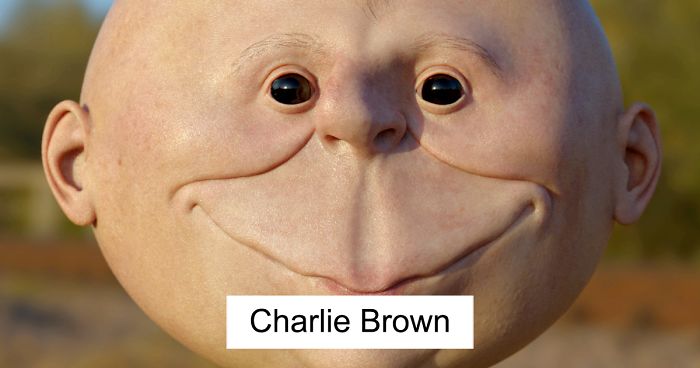
Charlie Brown: Good Grief, Indeed
Charlie Brown is usually the poster child for gentle sadness. He is round-headed, simple, and lovable. In a realistic version, however, that famous round head becomes much harder to process. The charm of the original design comes from minimalism. Add real skin, realistic facial structure, and human imperfection, and suddenly Charlie Brown looks less like a sweet kid with bad luck and more like a man who has been emotionally audited by life.
Rick and Morty: Chaos With Pores
Rick and Morty are already strange characters, so their realistic versions do not need much help entering nightmare territory. Rick’s wild hair, sunken expression, and mad-scientist energy translate naturally into unsettling realism. Morty, meanwhile, becomes uncomfortable because his nervous cartoon simplicity is replaced with a human face that still carries those exaggerated proportions. It is funny, but it is also the kind of funny where you laugh and then check the hallway.
Toad and the Mushroom Problem
Toad from Super Mario is one of the best examples of why cartoon logic should not always receive a realistic passport. In a game, a mushroom cap head is adorable. In real life, it raises medical questions, architectural questions, and possibly agricultural questions. Vasquez’s realistic approach forces viewers to think about what Toad’s design would mean anatomically, and the answer is: let us not think too deeply while eating dinner.
SpongeBob Characters: Bikini Bottom After Dark
Characters from SpongeBob SquarePants are especially effective in this style because their original designs are so elastic, colorful, and impossible. Squidward, Plankton, Gary, and Pinhead Larry are built for cartoon timing, not biological plausibility. When they are given realistic texture and volume, the comedy becomes body horror. Plankton’s single eye and tiny form become deeply strange. Gary’s snail-cat identity becomes harder to explain to anyone with a straight face. Pinhead Larry, already a joke character, becomes the visual equivalent of hearing a banjo in an abandoned basement.
Snoopy and Bugs Bunny: When Animal Icons Become Too Human
Snoopy and Bugs Bunny are beloved because they exist in the flexible middle ground between animal and human behavior. They can dance, scheme, write novels, wear accessories, and look adorable doing it. But when realistic features enter the picture, that balance gets shaky. A realistic Snoopy must answer the question, “Is he a dog, a person, or a third thing that knows my Wi-Fi password?” Bugs Bunny faces a similar challenge: his charm depends on exaggeration, but realism makes those iconic rabbit features feel suddenly intense.
Elmo: The Tickle Monster Becomes the Sleep Paralysis Monster
Elmo is designed to be soft, simple, and safe. That is exactly why a realistic Elmo feels so alarming. The original character is all bright color and innocent enthusiasm. A realistic version introduces texture, depth, and anatomy where the brain expects plush fabric and Muppet magic. The result is a reminder that some childhood icons work because they are not trying to look alive in the human sense. They are alive in the performance sense, and that is more than enough.
The Simpsons: Yellow Becomes Human, and Human Becomes Weird
Bart, Marge, and Maggie Simpson are particularly fascinating because The Simpsons has one of the most recognizable visual languages in television history. The yellow skin, overbites, round eyes, and spiky silhouettes are iconic precisely because they are not realistic. Translate them into humanlike 3D figures, and the design logic starts to wobble. Bart’s spiky hair becomes aggressive. Marge’s towering hair turns from cartoon elegance into a structural challenge. Maggie, normally cute and silent, becomes the kind of image that makes you wonder whether the pacifier is protecting us from her or her from us.
Why the Art Works So Well
The genius of Vasquez’s realistic cartoon characters is that he does not abandon the original designs. A safer artist might smooth everything out and create attractive, normal-looking humans “inspired by” the characters. Vasquez does the opposite. He keeps the weird parts. He preserves the head shapes, the eye placement, the mouths, the colors, and the silhouettes. That faithfulness is what makes the images both accurate and disturbing.
Great fan art often succeeds when it reveals something hidden in the original. In this case, the hidden truth is that many cartoon characters are adorable only because they live in a world where everyone is equally impossible. Bring just one of them into our world, under realistic lighting, and suddenly the design becomes less “cute mascot” and more “local legend reported near the highway.”
The Internet Loves Being Horrified
One reason these images travel so well online is that they create an instant reaction. You do not need an art degree to understand the joke. You see the character, recognize the source, feel your childhood file a complaint, and immediately want to send it to a friend with the message, “Look at this. Sorry.”
That shareability is part of modern internet art culture. Disturbing cartoon realism sits at the intersection of nostalgia, memes, horror, technical skill, and curiosity. People click because they know the characters. They stay because the craftsmanship is strong. They comment because the emotional response is too loud to keep private.
Realism Is Not Always the Goaland That Is the Lesson
Vasquez’s work also reminds us why animation is such a powerful art form. Cartoons are not failed attempts at realism. They are their own language. A simple line can communicate joy. A giant head can make a character lovable. A yellow family can become one of the most famous households in television history. A sea sponge can work at a fast-food restaurant and somehow feel more emotionally believable than many live-action characters.
When artists turn cartoons into realistic figures, they expose the clever shortcuts animation uses. Those shortcuts are not flaws. They are design choices. They allow characters to move, emote, and live in worlds where impossible things feel normal. Realism can add detail, but detail is not the same as charm. Sometimes charm needs flat colors, elastic bodies, and absolutely no visible pores.
Why “Scary and Disturbing” Does Not Mean Bad
Calling these images scary or disturbing is not an insult. In fact, it may be the point. Horror and humor are close neighbors. Both rely on surprise, timing, and breaking expectations. Vasquez’s art makes viewers laugh because it is shocking, and it shocks because it is skillfully made. A poorly rendered realistic cartoon would be easy to ignore. These images work because they are convincing enough to be uncomfortable.
There is also a playful cruelty to the concept. We know these characters. We trust them. Then the artist asks, “But what if they had realistic gums?” That question should probably be illegal in at least three states, but here we are, scrolling anyway.
Experience: What It Feels Like to View These Realistic Cartoon Characters
Looking through a gallery like this is a strange little journey. At first, you think you are prepared. You have seen memes. You have survived bad movie CGI. You once watched a commercial where a talking baby gave financial advice. Surely, you can handle a few realistic cartoon characters. Then the first image appears, and your confidence quietly leaves through the emergency exit.
The experience usually begins with recognition. Your brain says, “Oh, that is Charlie Brown,” or “That is Bugs Bunny,” and for a split second everything is normal. Then the realism arrives. The skin texture, the shadows, the moist-looking eyes, the human proportions that are not quite human enough. Suddenly, the character is no longer a drawing. It is a visitor. It has entered the room. It may have opinions about your furniture.
What makes the experience memorable is the conflict between affection and alarm. These are not random monsters. They are characters tied to comfort, humor, childhood, and pop culture. Seeing them transformed into realistic figures feels like finding an old toy in the attic and discovering it has been paying taxes. The familiar becomes unfamiliar, and the funny becomes slightly threatening.
There is also genuine admiration involved. Even when an image is unsettling, the technical craft is obvious. The artist has to understand anatomy, lighting, character design, and visual storytelling. He has to know which features must remain exaggerated so the character stays recognizable, and which features can be made realistic without losing the identity. That balance is difficult. Too realistic, and the character becomes generic. Too cartoonish, and the scary effect disappears. The best pieces sit right in the uncomfortable middle, waving politely from the uncanny valley.
Sharing the images with other people adds another layer to the experience. Someone will laugh. Someone will say, “Why would you show me this?” Someone else will zoom in, which is brave but not always wise. The comments often become part of the entertainment because everyone tries to describe the same impossible feeling: impressed, amused, horrified, and mildly betrayed by art.
For artists, designers, and animation fans, the gallery is also a useful creative exercise. It shows how much personality is carried by shape language. It proves that small design choiceseye size, mouth width, head shape, surface texturecan completely change emotional meaning. A character can go from adorable to alarming with a few realistic details. That lesson matters not only in fan art, but in games, movies, advertising, toy design, and any creative field where characters need to connect with an audience.
By the end, the experience is oddly satisfying. You may not want these versions printed on your bedroom wall, unless your decorating style is “haunted orthodontist office,” but you remember them. They stick. They make you think about why cartoons work, why realism can be dangerous, and why the internet will always reward art that makes people shout, “Absolutely not,” while clicking the next picture.
Conclusion
Miguel Vasquez’s realistic cartoon character series is creepy, clever, and technically impressive. It takes beloved icons and removes the safety net of animation, revealing how strange their designs become when treated as physical beings. The result is not just nightmare fuel; it is a smart visual experiment about nostalgia, character design, and the thin line between cute and cursed.
These 14 new pics prove that some characters should probably stay in 2D, where their giant eyes, mushroom heads, yellow skin, and impossible bodies can live peacefully. But they also prove that disturbing art can be deeply entertaining when it is made with skill, humor, and a fearless willingness to ask questions no one requested. Such as: “What if Elmo had realistic texture?” Thank you, art. Also, how dare you.
Note: This article is a fully rewritten synthesis based on publicly available information about Miguel Vasquez’s realistic cartoon character artwork, 3D fan art culture, animation design, and the uncanny valley. Source links are intentionally not embedded in the article body.