Note: This article is written as publish-ready web content and synthesizes real electronics guidance from capacitor manufacturers, component distributors, and test-equipment references without inserting source links into the copy.
Introduction: When a 470uF Capacitor Acts Like It Forgot Its Job
You pull a 470uF electrolytic capacitor from a drawer, solder it into a circuit, or test it with a meter, and the display says something deeply rude: 20uF. That is not a small rounding error. That is not “within tolerance.” That is your capacitor showing up to a power-supply job with the emotional energy of a button cell.
A 470uF electrolytic capacitor should not normally measure anywhere near 20uF when tested correctly under reasonable conditions. Most aluminum electrolytic capacitors have a capacitance tolerance around ±20%, which means a healthy 470uF part might measure roughly from 376uF to 564uF depending on the datasheet, temperature, test frequency, and meter accuracy. A reading of 20uF is about 4% of the labeled value. In plain workshop English: something is wrong.
The cause may be a bad capacitor, but it may also be a bad measurement method. Electrolytic capacitors are not ideal little buckets of charge. They contain electrolyte, foil, oxide dielectric, equivalent series resistance, leakage current, inductance, temperature effects, and enough personality quirks to make them the drama majors of passive components. Before you throw the part into the “shame bin,” it is worth understanding why a 470uF electrolytic cap can appear much smaller than expected.
What a 470uF Electrolytic Capacitor Is Supposed to Do
A 470uF electrolytic capacitor is commonly used for bulk energy storage, power-supply smoothing, decoupling, audio coupling, motor-control circuits, LED drivers, and general ripple reduction. Its job is to store charge and release it when the circuit voltage dips. In a rectifier supply, it smooths the pulsing DC. In a regulator circuit, it helps stabilize voltage. In an amplifier, it may pass AC while blocking DC.
The “470uF” printed on the sleeve is the nominal capacitance, not an exact promise written in stone by the capacitor gods. Aluminum electrolytic capacitors are usually measured at a standard test condition, commonly around 120Hz and 20°C. That matters because capacitance, impedance, and loss behavior change with frequency and temperature. Test the same capacitor at a different frequency, with a different meter model, at a cold temperature, or while it is still connected to a circuit, and the result may not match the label.
Reason 1: You Are Measuring It the Wrong Way
The first suspect is not the capacitor. It is the test setup. A basic digital multimeter often measures capacitance by charging the capacitor with a known current, watching the voltage rise, and calculating capacitance from that charging behavior. This works well enough for many hobby checks, but it can be fooled by leakage current, parallel resistance, poor contact, auto-ranging confusion, or a capacitor that has not fully discharged.
Multimeter vs. LCR Meter
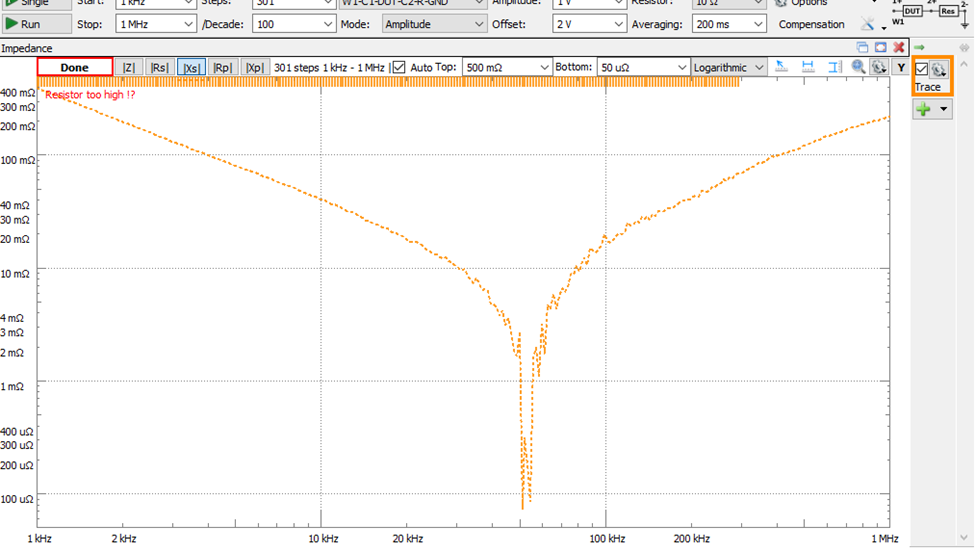
A proper LCR meter measures capacitance using an AC signal and can often report parameters such as equivalent series resistance, dissipation factor, and impedance. For electrolytic capacitors, test frequency is critical. Many datasheets specify capacitance at 120Hz. If your meter tests at 1kHz, 10kHz, or 100kHz, the number may shift. A large electrolytic capacitor may look smaller at higher frequency because the electrolyte and internal structure do not behave like a perfect capacitor at all frequencies.
However, measurement frequency alone usually does not turn a healthy 470uF capacitor into a 20uF reading. It can explain a moderate difference. It does not usually explain a catastrophic collapse unless the meter is unsuitable, the part is damaged, or the circuit around the capacitor is interfering.
Reason 2: You Measured the Capacitor In-Circuit
Measuring capacitance while the capacitor is still soldered into a board is like trying to weigh one person while they are still holding hands with a marching band. Other components can create alternate paths that confuse the meter.
In-circuit capacitance readings may be distorted by resistors, semiconductors, transformer windings, inductors, other capacitors in parallel, protection diodes, IC input structures, or leakage paths across a dirty PCB. Sometimes in-circuit testing makes a capacitor appear larger. Sometimes it makes it appear smaller. Sometimes the meter simply gives a number with the confidence of a weather forecast from a fortune cookie.
For a reliable measurement, discharge the capacitor safely, remove at least one lead from the circuit, and test it out of circuit. If the reading jumps from 20uF back toward 470uF, congratulations: the capacitor may be innocent. The board was the accomplice.
Reason 3: The Capacitor Is Dried Out
Aluminum electrolytic capacitors use a liquid or gel electrolyte. Over time, especially under heat, the electrolyte can evaporate or degrade. When that happens, capacitance falls, ESR rises, ripple-current handling gets worse, and the capacitor becomes increasingly useless in power filtering applications.
A dried-out electrolytic capacitor may still look physically normal. Not every failed capacitor bulges, leaks, or vents. Many quietly lose capacitance while maintaining a perfectly respectable outside appearance, like a car with a shiny paint job and no engine oil.
If a 470uF capacitor measures 20uF out of circuit on a reliable meter, drying is one of the strongest possibilities. This is especially likely if the part came from an old power supply, a hot appliance, an LED driver, a monitor, a router, an audio amplifier, or any board that lived near heat sinks, transformers, or power resistors.
Reason 4: ESR Is High, So the Capacitor Cannot Work Properly
Capacitance is only part of the story. Electrolytic capacitors also have equivalent series resistance, usually called ESR. ESR is the small internal resistance that appears in series with the ideal capacitor. In power supplies, high ESR is often more damaging than a modest capacitance drop because it prevents the capacitor from handling ripple current effectively.
A capacitor can measure somewhat close to its rated capacitance and still be bad if ESR is too high. But the opposite can also happen: very high ESR can confuse some testers, especially simple meters, making the capacitance reading unreliable. If your 470uF capacitor reads 20uF and also shows high ESR, the verdict is simple: replace it.
For power-supply troubleshooting, an ESR meter or LCR meter is far more useful than a capacitance-only check. A capacitor that has become resistive is no longer doing its job, even if it still has some charge-storage ability left.
Reason 5: Leakage Current Is Fooling the Meter
Electrolytic capacitors are polarized devices with an oxide dielectric. They naturally have leakage current when DC voltage is applied. A healthy capacitor has leakage within the datasheet limit after a specified time, often after one or two minutes at rated voltage. An unhealthy capacitor may leak heavily.
Leakage current can confuse capacitance measurements because many meters assume that the charging current goes into building voltage across the capacitor. If some of that current leaks through the dielectric instead, the meter may calculate the wrong capacitance. The meter is not “seeing” a neat capacitor. It is seeing a capacitor plus a hidden resistor wearing a fake mustache.
Leakage is especially common in old electrolytics, long-stored capacitors, overheated capacitors, reverse-biased capacitors, or parts that have been operated near or above their voltage rating. In some cases, reforming can reduce leakage in long-stored capacitors, but a capacitor that has physically dried out or been damaged should not be trusted in a serious circuit.
Reason 6: Long Storage Changed the Capacitor’s Behavior
Electrolytic capacitors can age even while sitting unused. During long storage, the oxide layer can partially degrade, and leakage current may be high when voltage is first applied again. Manufacturers commonly recommend controlled storage conditions and may advise reconditioning or reforming after extended storage, especially for large aluminum electrolytic capacitors.
Reforming means applying voltage gradually through a current-limited supply so the oxide dielectric can rebuild without excessive heat or current. This can improve leakage behavior, but it is not magic. Reforming cannot replace missing electrolyte. If the capacitor has dried out, the capacitance will not politely return to 470uF just because you asked nicely.
Reason 7: The Capacitor Was Damaged by Reverse Polarity
Polarized electrolytic capacitors do not enjoy reverse voltage. Install one backward and it may heat, leak, vent, lose capacitance, or fail short. Sometimes it fails immediately with theatrical smoke. Other times it survives long enough to become unreliable, which is more annoying because intermittent faults are the mosquitoes of electronics repair.
If the capacitor was installed backward, even briefly, do not trust it. A 470uF part that now measures 20uF after reverse polarity exposure should be replaced. The cost of a new capacitor is tiny compared with the cost of chasing unstable circuit behavior for three evenings while questioning your life choices.
Reason 8: It Is Not Actually a 470uF Capacitor
Before diving into advanced failure analysis, check the markings. Electrolytic capacitor markings can be cramped, faded, partially hidden, or misunderstood. A part marked “47uF” may be mistaken for “470uF.” Some sleeves include voltage, series codes, date codes, temperature ratings, and tolerance letters that can make the label look like a tiny electrical crossword puzzle.
Also watch for counterfeit or mislabeled parts when buying from unknown sources. Reputable distributors are generally safer because component traceability matters. Bargain-bin capacitors from mystery marketplaces may be old stock, recycled parts, remarked parts, or components that were stored poorly. A capacitor that claims to be 470uF but behaves like 20uF may simply not be what the sleeve says it is.
Reason 9: Temperature Is Affecting the Reading
Electrolytic capacitors are temperature-sensitive. At low temperatures, capacitance can decrease and ESR can increase. At high temperatures, capacitance may appear higher in the short term, but long-term heat accelerates wear and electrolyte loss.
If you test a capacitor in a cold garage, inside equipment that has just been powered off, or after removing it from a hot board, results may vary. For comparison against datasheet values, measurements should be made near standard room temperature. Still, normal temperature effects should not turn 470uF into 20uF. If the reading is that low, temperature may be contributing, but it is unlikely to be the whole story.
Reason 10: The Meter Range or Contact Quality Is Bad
Poor test leads, oxidized capacitor legs, loose clips, breadboard contacts, and auto-ranging delays can all produce nonsense readings. Large electrolytics should be fully discharged before testing. The meter should be set to a range that supports hundreds of microfarads. If using an LCR meter, select the proper equivalent circuit mode, usually series mode for electrolytics, and use the recommended frequency.
Before declaring the capacitor dead, test a known-good 470uF capacitor with the same meter. If the known-good part also reads strangely, your meter or method is the problem. If the known-good part reads properly and the suspect part still reads 20uF, the suspect part has earned its retirement party.
How to Test a 470uF Electrolytic Capacitor Correctly
Step 1: Discharge It Safely
Never short a large charged capacitor with a screwdriver unless sparks are your preferred diagnostic language. Use a resistor suitable for the voltage and energy involved. Confirm with a voltmeter that the capacitor is discharged before touching or measuring it.
Step 2: Remove One Lead from the Circuit
For accurate capacitance testing, lift one lead or remove the capacitor entirely. This prevents the surrounding circuit from influencing the measurement.
Step 3: Use the Right Test Frequency
For aluminum electrolytic capacitors, 120Hz is a common datasheet capacitance test frequency. If your LCR meter allows frequency selection, use the datasheet condition when possible. If your meter only tests at another frequency, interpret the result carefully.
Step 4: Measure Capacitance and ESR
A capacitance reading alone does not reveal the full health of an electrolytic capacitor. Measure ESR as well. A capacitor used in a switching power supply may fail because ESR has risen too high, even before capacitance falls dramatically.
Step 5: Check Leakage If the Circuit Matters
For restoration, power supplies, vintage equipment, or high-reliability work, leakage testing is important. Apply rated voltage through a current-limited setup and compare leakage current with the datasheet. If leakage remains high, replace the capacitor.
Specific Example: A 470uF, 25V Capacitor Reads 20uF
Suppose you have a 470uF, 25V aluminum electrolytic capacitor removed from an old power adapter. Your multimeter says 20uF. You test a known-good capacitor and it reads 455uF. You retest the suspect capacitor on an LCR meter at 120Hz and it reads 24uF with high ESR. That capacitor is not misunderstood. It is dead.
Now suppose the same capacitor reads 20uF while still soldered into a board. You remove one leg and it reads 440uF. In that case, the capacitor is probably fine, and the board was affecting the reading. The lesson is simple: context matters. A number on a meter is not a diagnosis until you know how the measurement was made.
Should You Replace It?
If a 470uF electrolytic capacitor truly measures around 20uF out of circuit on a reliable meter, replace it. Do not use it in a power supply, amplifier, motor controller, LED driver, or any circuit where stability matters. The part has lost most of its capacitance and may also have high ESR or leakage.
When choosing a replacement, match the capacitance, use an equal or higher voltage rating, match or improve the temperature rating, observe polarity, and consider ESR and ripple-current specifications. In switching power supplies, use a low-ESR capacitor if the original design requires it. In vintage linear supplies, choose a quality part with suitable ripple rating and physical fit.
Experiences from the Bench: What This Problem Looks Like in Real Life
Anyone who repairs electronics long enough eventually develops a sixth sense for tired electrolytic capacitors. The symptoms are not always dramatic. Sometimes the device does not power on. Sometimes it starts only after warming up. Sometimes there is hum in an audio circuit, flicker in an LED lamp, random resets in a router, or a power supply that chirps like a confused cricket.
One common experience is testing a capacitor in an old wall adapter. The label says 470uF, the case looks normal, and there is no bulge. A beginner may assume it is fine because failed capacitors are “supposed” to puff up like tiny soda cans. But the meter says 18uF or 30uF, and the ESR reading is terrible. Replace it, and the adapter suddenly behaves. This is why visual inspection is useful but not enough.
Another familiar situation happens with old audio gear. A coupling or power-filter capacitor may lose capacitance gradually, causing weak bass, hum, or channel imbalance. The circuit may still pass signal, so the failure is not obvious. The capacitor is not dead in the dramatic sense; it is just no longer doing the job it was hired to do. Measuring it out of circuit often reveals the truth.
In switching power supplies, the experience is even more direct. A small electrolytic near a hot heat sink dries out, ESR rises, ripple increases, and the controller starts misbehaving. The capacitance meter may show a suspiciously low reading, but the ESR meter tells the bigger story. Many technicians replace these capacitors on sight if they are from known hot zones, especially when the device has operated for years.
There is also the “parts drawer surprise.” You find a bag of old electrolytics purchased years ago, maybe stored in a humid garage or a hot attic. Some measure fine. Others have high leakage or low capacitance. This is why serious builders date their stock, buy from reputable distributors, and avoid treating electrolytic capacitors like immortal screws and washers. They are chemical components, and chemistry has a calendar.
A practical bench habit is to test more than one parameter. Capacitance, ESR, leakage, temperature history, circuit location, and age all matter. A 470uF capacitor that reads 430uF with low ESR is probably healthy. A 470uF capacitor that reads 20uF is almost certainly bad if measured correctly. A 470uF capacitor that reads 470uF but has awful ESR may still be bad. Electronics repair is full of these little traps, which is why one meter reading should start the investigation, not end it.
The best experience-based advice is simple: trust the datasheet, trust controlled measurements, and distrust mystery capacitors. Use good brands, check polarity twice, keep electrolytics away from unnecessary heat, and do not be sentimental about failed parts. A capacitor that has fallen from 470uF to 20uF is not “vintage.” It is compost for the electronics recycling bin.
Conclusion
A 470uF electrolytic capacitor reading like 20uF is not behaving within normal tolerance. The most likely causes are incorrect measurement, in-circuit testing interference, dried electrolyte, high ESR, leakage current, long storage deterioration, reverse-polarity damage, wrong markings, or a poor-quality part. The correct response is to retest it properly: discharge it, isolate it from the circuit, measure at an appropriate frequency, check ESR, and consider leakage current.
If the capacitor still reads around 20uF after proper out-of-circuit testing, replace it. Electrolytic capacitors are affordable, but the problems caused by a bad one can be expensive, time-consuming, and mildly insulting to your sanity. When a 470uF capacitor acts like a 20uF capacitor, believe the evidence, not the label.