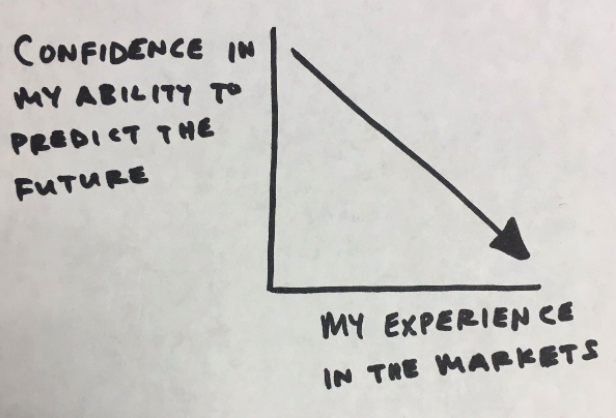
To be epistemologically arrogant is not simply to be confident, opinionated, or the proud owner of a very loud group chat personality. It is something more specificand more dangerous. It is the habit of treating your own knowledge as finished, superior, and basically immune to correction. In plain English: you act as if your brain has already completed the internet.
The phrase sounds like it escaped from a philosophy seminar wearing a tweed jacket, but the idea shows up everywhere: in politics, workplaces, social media arguments, family dinners, health debates, and that one friend who watched two documentaries and now speaks in the tone of a Supreme Court ruling. Epistemological arrogance is the opposite of intellectual humility, the ability to recognize that your beliefs may be incomplete, biased, outdated, or just plain wrong.
This article explores what epistemological arrogance means, why it happens, how it damages thinking and relationships, and how to replace it with a smarter, stronger form of confidence. Because the goal is not to become timid. The goal is to become accurate.
What Does “Epistemologically Arrogant” Mean?
The word epistemology refers to the study of knowledge: how we know what we know, what counts as evidence, and when belief becomes justified. So, being epistemologically arrogant means being arrogant about knowledge itself. It is not just “I think I am right.” It is “I am so right that your evidence barely deserves a chair in the room.”
An epistemologically arrogant person may dismiss experts, ignore counterexamples, cherry-pick facts, or confuse personal certainty with objective truth. They may be highly educated, barely informed, or somewhere in the danger zone between “read one article” and “ready to lecture the National Academy of Sciences.”
Epistemological Arrogance vs. Confidence
Confidence says, “I have good reasons for this belief.” Arrogance says, “My belief no longer needs reasons.” Confidence can explain itself. Arrogance gets offended when asked to.
Healthy confidence is flexible. It updates when new evidence appears. Epistemological arrogance is rigid. It treats changing your mind as humiliation instead of growth. That is why intellectually arrogant people often mistake revision for defeat. But in serious thinking, updating your belief is not losing the game. It is how the game is played.
Why People Become Epistemologically Arrogant
Nobody wakes up and says, “Today I shall become an overconfident fortress of questionable assumptions.” Usually, epistemological arrogance develops quietly through normal human psychology.
1. The Brain Likes Certainty
Uncertainty is uncomfortable. The brain prefers clean explanations, quick patterns, and tidy conclusions. Unfortunately, reality often arrives messy, late, and wearing mismatched socks. When people feel overwhelmed, certainty can feel emotionally safeeven when it is intellectually weak.
2. Identity Gets Attached to Belief
Beliefs are not always just ideas. Sometimes they become part of a person’s identity, group loyalty, career status, or moral self-image. Once that happens, questioning a belief can feel like questioning the person. The ego steps in like an unpaid security guard and starts blocking evidence at the door.
3. The Dunning-Kruger Problem
One classic pattern in psychology is that people with low skill in a domain may overestimate their ability because they lack the expertise needed to recognize their own mistakes. In other words, not knowing enough can make you feel weirdly sure that you know plenty. It is the intellectual version of assembling furniture without reading the manual and then blaming the table for “having attitude.”
4. Social Media Rewards Certainty
Nuance does not always go viral. “This is complicated, and several interpretations deserve careful attention” rarely beats “EVERYONE IS LYING TO YOU” in the attention economy. Online platforms often reward speed, outrage, and confidence more than accuracy. That environment can turn epistemological arrogance into a performance style.
Signs You May Be Epistemologically Arrogant
The tricky thing about intellectual arrogance is that it feels like clarity from the inside. Here are some signs that your certainty may need a tune-up.
You Rarely Say “I Could Be Wrong”
This phrase is not a decorative throw pillow for polite conversation. It is a mental safety device. If you never use it, your thinking may be operating without brakes.
You Confuse Strong Feelings With Strong Evidence
Feeling intensely about something does not automatically make it true. Passion can motivate inquiry, but it cannot replace proof. A belief can feel obvious and still be mistaken.
You Only Respect Sources That Agree With You
Everyone has trusted sources, but epistemological arrogance turns source selection into a fan club. If every “reliable” source happens to confirm what you already believe, it may be time to widen the reading list.
You Treat Questions as Attacks
A person who is secure in their reasoning can usually tolerate questions. A person who is defending ego instead of truth may react to curiosity as if it were an invading army.
Real-Life Examples of Epistemological Arrogance
Epistemological arrogance is not limited to philosophers, professors, or people who use the phrase “let me problematize that” at brunch. It appears in ordinary life.
At Work
A manager rejects feedback because “I’ve been doing this for twenty years.” Experience matters, but time served is not the same as truth discovered. Industries change. People change. Markets change. Even the office printer changes its error message every week just to keep everyone humble.
In Health Conversations
Someone reads a few wellness posts and begins dismissing medical consensus. Skepticism can be healthy, especially when paired with evidence. But skepticism without discipline becomes suspicion with better branding.
In Politics
Political beliefs often mix facts, values, identity, and emotion. Epistemological arrogance appears when people assume their side has pure reason while the other side has only ignorance, corruption, or villainy. That mindset makes democratic conversation almost impossible.
In Everyday Relationships
A partner says, “That’s not what happened,” and instead of listening, the other person replies, “I know exactly what happened.” Memory is useful, but it is not a courtroom transcript. Human memory edits, compresses, and occasionally adds dramatic lighting.
The Damage Caused by Epistemological Arrogance
Being epistemologically arrogant may feel powerful, but it often weakens judgment. It narrows attention, blocks learning, and makes people less responsive to reality.
It Stops Learning
Learning begins with the possibility that something is missing. If you already “know,” you stop looking. That is why arrogance can be more dangerous than ignorance. Ignorance can ask questions. Arrogance thinks questions are beneath it.
It Hurts Relationships
Nobody enjoys being treated like a poorly footnoted error. When people feel dismissed, they stop sharing openly. Over time, epistemological arrogance can turn conversations into debates, debates into battles, and family dinners into extremely tense potato salad events.
It Increases Susceptibility to Misinformation
The arrogant thinker may believe they are too smart to be fooled. Ironically, that belief itself can become a vulnerability. A person who never checks their own reasoning is easier to manipulate, especially by information that flatters their existing worldview.
It Weakens Leadership
Leaders who cannot admit uncertainty create teams that hide problems. A humble leader invites better information. An arrogant leader receives polished silence, delayed warnings, and PowerPoint slides that smell faintly of fear.
Intellectual Humility: The Antidote
The best alternative to epistemological arrogance is intellectual humility. This does not mean having low self-esteem. It does not mean treating every opinion as equally valid. It means matching confidence to evidence and staying aware of your limits.
Intellectual humility allows a person to say, “Here is what I believe, here is why I believe it, here is what could change my mind, and here is where I may be wrong.” That sentence has more strength than a thousand dramatic declarations of certainty.
Humility Is Not Weakness
Some people confuse humility with intellectual surrender. That is a mistake. You can be humble and still hold firm beliefs. You can reject bad arguments, oppose harmful ideas, and defend evidence-based conclusions. The difference is that intellectually humble people do not worship their own certainty.
Humility Makes Conviction Smarter
Good conviction has roots. Bad conviction has armor. When a belief is rooted in evidence, it can grow. When it is armored by ego, it can only defend itself.
How to Stop Being Epistemologically Arrogant
The cure is not to become endlessly doubtful. The cure is to become better calibrated. Here are practical ways to reduce epistemological arrogance without turning into a human question mark.
Ask, “What Would Change My Mind?”
If the answer is “nothing,” you are not holding a belief. You are guarding a shrine. Serious thinkers can usually name the kind of evidence that would make them reconsider.
Separate Ego From Accuracy
Being wrong does not make you stupid. Refusing correction makes you stuck. The goal is not to protect your old opinion. The goal is to get closer to what is true.
Practice Steel-Manning
Instead of attacking the weakest version of an opposing view, try to describe the strongest version of it. If you cannot explain why an intelligent person might disagree with you, you probably do not understand the issue yet.
Use Confidence Levels
Try saying, “I’m 70% confident,” or “I’m leaning this way, but I need more information.” This trains your mind to distinguish between certainty, probability, and vibes wearing a fake mustache.
Read Outside Your Comfort Zone
Do not only read people who make you clap. Read serious people who make you pause. The goal is not to collect enemies. The goal is to test your assumptions against the best available arguments.
Epistemological Arrogance in the Age of AI
Artificial intelligence has made knowledge feel instant. Ask a tool a question, and within seconds you receive an answer shaped like confidence. That convenience is powerful, but it can also tempt users into outsourcing judgment.
The risk is not simply that AI may be wrong. The deeper risk is that people may become more certain because an answer was delivered fluently. Smooth language can create the illusion of authority. A confident paragraph is not the same as verified truth.
The intellectually humble AI user checks sources, compares claims, asks follow-up questions, and treats generated answers as starting pointsnot stone tablets carried down from a silicon mountain.
Experience Section: Lessons From Everyday Epistemological Arrogance
One of the most common experiences related to being epistemologically arrogant happens in ordinary conversation. Imagine sitting with friends and discussing a topic you know moderately well. Maybe it is nutrition, finance, parenting, productivity, politics, or technology. You have read a few articles. You have watched a few videos. You have formed an opinion that feels strong because it is organized neatly in your head. Then someone challenges it.
At that moment, the body reacts before the mind does. Your shoulders tighten. Your voice gets sharper. You stop listening for meaning and start listening for openings. You are no longer trying to understand. You are trying to win. This is the emotional signature of epistemological arrogance: the conversation becomes a courtroom, and somehow you have appointed yourself judge, jury, and expert witness.
Many people have had the embarrassing experience of being completely certain and later discovering they were wrong. Maybe you confidently corrected someone’s pronunciation and then Googled it in secret. Maybe you dismissed a coworker’s warning, only to watch the exact problem arrive two weeks later wearing tap shoes. Maybe you argued about a historical fact, a medical claim, or a technical issue and later realized your information was outdated. These moments sting, but they are also useful. They are little invoices from reality.
A powerful lesson is that arrogance often hides insecurity. When people feel unsure deep down, they may speak more loudly on the surface. Certainty becomes a costume. The more fragile the belief, the more aggressively it may be defended. This is why intellectual humility requires emotional maturity. You have to tolerate the discomfort of not knowing. You have to survive the tiny ego bruise of saying, “I need to check that.”
In workplaces, epistemological arrogance can be especially expensive. A team member may notice a flaw in a plan, but the senior person in the room dismisses it too quickly. The project moves forward, the flaw becomes real, and suddenly everyone is having an emergency meeting with bad coffee. The issue was not a lack of intelligence. It was a lack of listening.
In personal relationships, the experience is more intimate. Saying “I know what you meant” can shut down someone who is trying to explain themselves. Assuming you understand another person’s motives is one of the sneakiest forms of epistemological arrogance. People are complex. Sometimes the most intelligent sentence in a relationship is, “Tell me more.”
The good news is that humility can become a habit. The next time you feel defensive, pause. Ask one more question. Repeat the other person’s point before responding. Admit the limits of your knowledge. You may not win every argument, but you will gain something better: a mind that keeps growing after the ego has run out of speeches.
Conclusion: Better Thinking Starts With Better Doubt
To be epistemologically arrogant is to confuse certainty with knowledge and ego with evidence. It is a deeply human mistake, but it is still a mistake. The world is too complex, information moves too quickly, and human perception is too limited for anyone to operate as if their beliefs are permanently complete.
Intellectual humility does not ask us to abandon conviction. It asks us to earn it. The strongest thinkers are not those who never change their minds. They are the ones who know when to stand firm, when to listen harder, and when to say, with dignity and maybe a little comedic timing, “Well, I may have been loudly incorrect.”
Note: This article is written for educational and editorial purposes, synthesizing established ideas from philosophy, psychology, leadership research, cognitive science, and public discourse studies.