Note: This article is written in an oral-history-inspired editorial style based on publicly documented information, production history, and retrospective accounts. No interview quotes are invented.
The Saturday Morning Cabin Where John Candy Became a Cartoon
Before streaming queues, smart TVs, and kids asking the family tablet to “play the next one,” Saturday morning cartoons were a weekly ceremony. You woke up early, poured cereal with the confidence of a tiny architect, and waited for network television to deliver bright colors, theme songs, pratfalls, and life lessons wrapped in commercial breaks. Into that sugar-powered universe walked one of the warmest comedy stars of the late 1980s: John Candy.
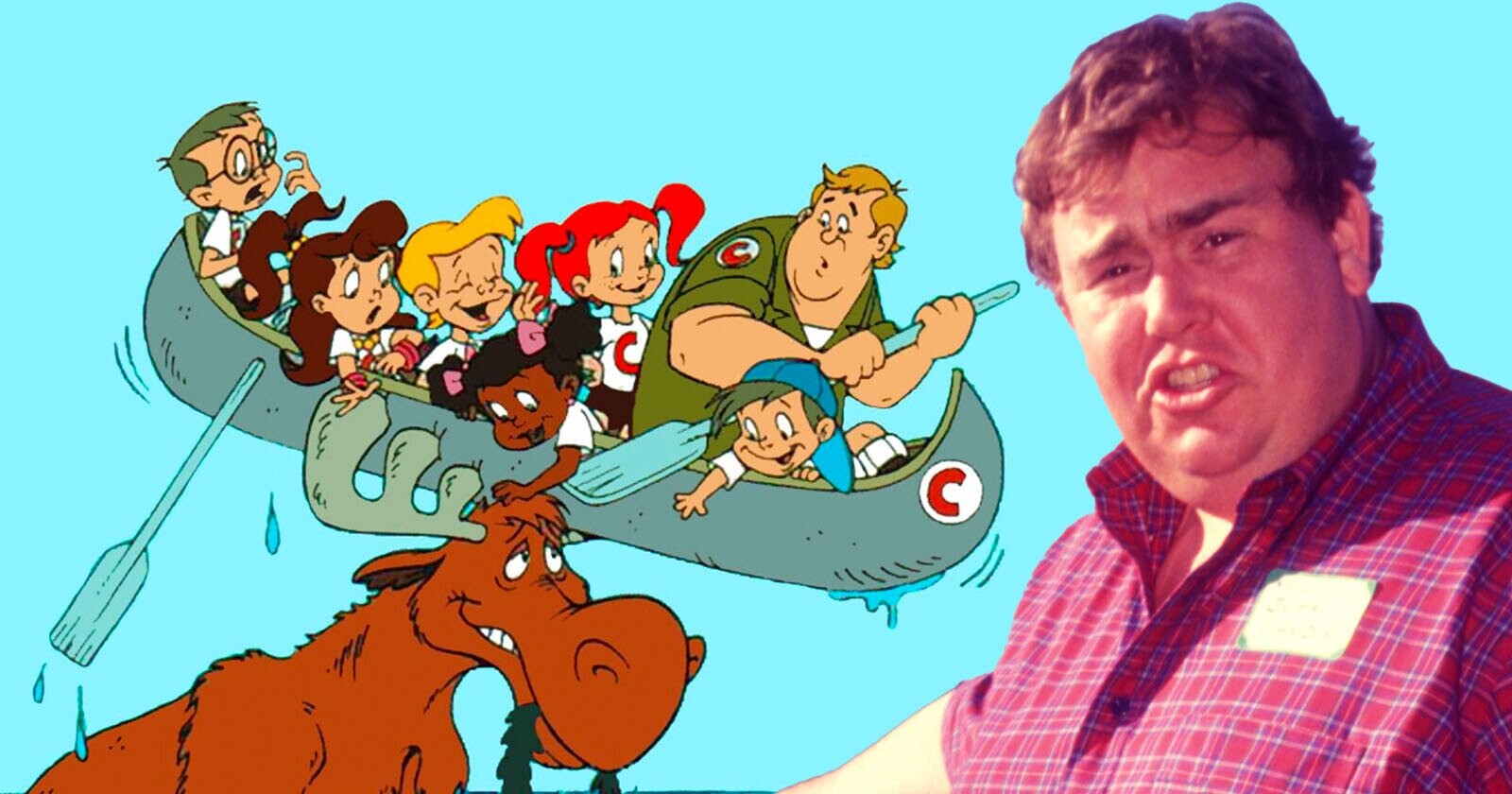
Camp Candy was exactly what its title promised and also slightly stranger than that. The animated series imagined Candy as the cheerful, clumsy, big-hearted leader of a summer camp full of kids, mishaps, nature lessons, and villains who looked at a forest and thought, “You know what this needs? Real estate development.” The show ran during a fascinating moment in children’s television, when celebrity-driven cartoons were common, Saturday morning lineups were still powerful, and networks were trying to turn familiar stars into kid-friendly brands before kids even knew what a brand was.
At first glance, a John Candy cartoon sounds like a punchline from a lost NBC promo. But the idea made a certain kind of perfect sense. Candy had built his career on characters who were funny because they were human first: awkward, generous, overwhelmed, and almost always trying to do the right thing. Whether audiences knew him from SCTV, Planes, Trains and Automobiles, Uncle Buck, Spaceballs, The Great Outdoors, or Home Alone, the essential Candy quality remained the same. He could make chaos feel safe. That is a rare superpower, especially in children’s television.
How ‘Camp Candy’ Got Pitched Around the Campfire
The origin of Camp Candy begins with a simple, durable premise: a summer camp is a perfect cartoon setting. It gives writers cabins, forests, lakes, rival camps, spooky trails, campfire stories, contests, disasters, and at least one canoe that exists only to tip over. In a cartoon economy, summer camp is basically a theme park with mosquitoes.
The concept was developed by people working in the children’s television orbit around DIC Entertainment and Saban. Retrospective accounts have connected the show’s creation to Joel Andryc, Ellen Levy, and Phil Harnage, with additional development from animation veterans including Jack Mendelsohn and Scott Shaw. The early idea reportedly leaned on the timeless comic tension of camp life: kids far from home, counselors trying to maintain order, and nature refusing to behave like a brochure.
The crucial twist was John Candy himself. Instead of creating a random counselor who merely resembled him, the series used Candy as an animated version of himself. That choice changed the flavor of the whole show. Without Candy, it could have been a standard late-1980s kids’ cartoon about cabins and capers. With Candy, it became part sitcom, part celebrity vehicle, part gentle conservation fable, and part “What if your favorite movie uncle ran a summer camp and somehow survived every episode?”
The show premiered on NBC in 1989, during a Saturday morning lineup that also included other high-recognition properties. This was the era when networks wanted children’s shows to feel instantly familiar. Toys, movies, comedians, video games, and mascots all fought for the same bowl-of-cereal attention span. Camp Candy fit neatly into that ecosystem, but it also stood apart because its star was not a superhero, robot, alien, or toy line. He was a comedian whose appeal was kindness.
John Candy’s Persona Was the Whole Tent Pole
The animated John Candy was portrayed as counselor, handyman, storyteller, problem-solver, and accident magnet. He was not a flawless authority figure. He stumbled, crashed, misunderstood things, overcommitted, and occasionally looked like a man who had been defeated by camping equipment. That was the joke. More importantly, that was the charm.
Candy’s screen persona worked because he rarely seemed above the joke. He could be the source of the chaos, the victim of the chaos, and the person trying to clean up the chaos, sometimes in the same scene. Camp Candy translated that rhythm into animation. A typical episode could begin with a camping lesson or outdoor activity, then slide into a story about the campers facing a problem. Along the way, there would be slapstick, misunderstandings, a moral, and a reminder that the woods should not be treated like a disposable backdrop.
That environmental message mattered. The recurring conflict with Rex DeForest, a greedy developer who wanted to sabotage or seize the camp’s land, gave the show a built-in conservation theme. Yes, his name was about as subtle as a billboard that says “I Am the Bad Guy,” but subtlety was not the house style of Saturday morning animation. DeForest’s schemes made the forest worth defending, and Candy’s camp became a place where kids learned that friendship and nature were connected.
The show also benefited from Candy’s real voice. In an era when many celebrity cartoons used soundalikes or carefully managed celebrity involvement, Camp Candy had the actual star at the center. His voice gave the character an instant warmth that animation alone could not manufacture. You could hear the same approachable, slightly frazzled humanity that made him unforgettable in live-action comedy.
The Campers, the Villains, and the Very 1989 Energy
The campers of Camp Candy were built from familiar cartoon ingredients: the nervous kid, the confident kid, the stylish kid, the troublemaker, the younger sidekick, and the practical voice of reason. The lineup included characters such as Robin, Alex, Vanessa, Iggy, Binky, and Rick. They were designed to bounce off Candy and off one another, creating a group dynamic that could support adventure plots, moral lessons, and comedy set pieces.
Like many cartoons of its time, the series used personality types in broad strokes. Vanessa could be snobbish, Rick could be arrogant, Iggy could be anxious, and the younger campers often created problems simply by being enthusiastic. In modern terms, the character writing was not exactly quiet realism. It was more like a bag of jelly beans in which every flavor had to announce itself from across the room.
But broad characterization had a purpose. Saturday morning cartoons were often watched in pieces: while a sibling argued over the remote, while cereal got soggy, while someone yelled that soccer practice started in twenty minutes. Viewers needed to understand everyone quickly. Camp Candy delivered that instant readability. You knew who would panic, who would brag, who would learn a lesson, and who would probably fall into a lake.
The villains completed the formula. Rex DeForest and his henchman Chester provided a recurring outside threat. DeForest wanted land, control, and development; Chester supplied bumbling muscle and comic incompetence. The conflict was easy for kids to grasp: the camp represents community and nature, while DeForest represents greed with a bulldozer-shaped imagination.
Why the Theme Song Still Lives Rent-Free in Cartoon Memory
No discussion of Camp Candy is complete without the theme song. The opening theme has become one of the most remembered parts of the show, partly because it was performed by John Candy and Harry Nilsson. That combination is charming on paper and wonderfully odd in practice. Nilsson, a respected singer-songwriter with a distinct pop sensibility, brought musical credibility to a show about a cartoon camp where everything seemed one bad knot away from disaster.
Theme songs were crucial to Saturday morning identity. A good one could do the work of a trailer, a jingle, and a tiny anthem. It told you the premise, introduced the energy, and glued itself to your brain for several decades without paying rent. Camp Candy understood that assignment. The song was bright, bouncy, and built for repetition. For some viewers, the tune is clearer in memory than entire episode plots.
The show also leaned into camp-song culture, using familiar musical patterns and parody-like closing-credit songs that matched the setting. That was clever because summer camp already has its own musical language: sing-alongs, call-and-response chants, silly lyrics, and songs designed to be shouted by children who have eaten too many marshmallows. Camp Candy folded that tradition into its identity.
The NBC Run, Syndication, and a Changing Kids-TV Landscape
Camp Candy aired across three seasons, beginning on NBC and later continuing in syndication. The first phase belonged to the traditional network Saturday morning world. By the early 1990s, however, that world was shifting. Cable channels, weekday syndicated cartoons, home video, and changing network economics were reshaping how children watched television. NBC would eventually move away from conventional Saturday morning cartoons, leaning into teen-oriented live-action programming instead.
That makes Camp Candy feel like a show sitting near the edge of an era. It arrived when Saturday mornings still mattered deeply, but it also lived long enough to feel the ground moving. The syndicated later episodes and live-action framing elements featuring Candy gave the series an unusual texture. The show was not simply a cartoon; it was a hybrid of celebrity presence, animated storytelling, and public-service-style friendliness.
In hindsight, that hybrid quality is one reason the show has remained a nostalgic curiosity. It was not the biggest cartoon of its time. It did not become a franchise machine on the level of toy-driven giants. But it carried a particular emotional fingerprint. It belonged to the world of network bumpers, preview specials, kids’ clubs, and cartoons that could disappear for years, only to be rediscovered by adults who suddenly wonder, “Wait, did John Candy really have a cartoon camp?” Yes. Yes, he did.
The Marvel Comics Tie-In and the Camp Beyond Television
Like many animated shows of the era, Camp Candy extended beyond television. Marvel Comics published a short comic-book series based on the cartoon. The comic tie-in is a perfect time capsule of late-1980s and early-1990s children’s media strategy. If a cartoon had recognizable characters, it could become a lunchbox, a comic, a VHS tape, a poster, or a piece of merchandise that somehow ended up under a car seat until 1997.
The comics gave the camp another life on the page. They also show that Camp Candy was more than a throwaway experiment. It had enough visibility to justify publishing support, and it operated within the broader entertainment machine that turned Saturday morning shows into collectible objects. For fans today, those comics are part of the appeal. They are artifacts from a moment when even a modest cartoon could generate a small paper trail of nostalgia.
There is something fitting about Camp Candy existing as both cartoon and comic. John Candy’s appeal was big and expressive, the kind of personality that naturally suited exaggerated drawings. The comics could stretch the slapstick even further, trapping the animated counselor in impossible situations without needing a production budget for broken canoes, collapsing cabins, or bears with suspiciously good comic timing.
Was ‘Camp Candy’ Actually Good?
This is the question every nostalgia article eventually has to face, preferably while wearing protective goggles. Was Camp Candy a great cartoon, or is it simply remembered because John Candy was beloved?
The honest answer is: both, but not equally. Camp Candy was not a revolutionary animated series. It did not redefine the medium, challenge narrative structure, or make rival studios fling storyboards into the sea. Its animation was typical of many television cartoons of its period: efficient, colorful, and designed to move quickly through production. Its plots were simple. Its morals were clear. Its jokes were built for young viewers, not graduate seminars.
But “not revolutionary” is not the same as “not worthwhile.” The show worked because it understood the emotional value of its star. Candy’s presence softened the formula. His character made the camp feel inviting rather than chaotic. Even when the writing was predictable, the tone was kind. That kindness is what separates Camp Candy from many celebrity cartoons that existed mostly because someone saw a famous name and a licensing opportunity standing in the same room.
The show also represents a gentler branch of late-1980s children’s animation. It was not built around combat, monsters, or toy battles. Its stakes were usually local: save the camp, help a friend, protect the woods, learn teamwork, overcome fear, or stop a greedy adult from doing something obviously terrible. In other words, it was Saturday morning comfort food. Maybe not a gourmet meal, but nobody goes to summer camp expecting fine dining. You go for toasted marshmallows, fresh air, and stories that sound better in the dark.
John Candy’s Legacy Makes the Cartoon Feel Warmer Now
John Candy died in 1994 at only 43 years old. That fact gives nearly everything in his filmography an extra layer of tenderness. Watching him now often feels like receiving a visit from someone who left too early but somehow stayed familiar. Camp Candy carries that same feeling, especially because it preserved a version of Candy aimed directly at children.
His broader legacy is built on film and sketch comedy, not Saturday morning animation. Yet the cartoon adds a meaningful footnote. It shows how flexible his persona was. He could be a sketch performer, a movie star, a scene-stealing supporting player, a dramatic presence, and, somehow, a cartoon camp counselor teaching kids not to bulldoze trees. That range was not accidental. It came from his ability to project sincerity even in ridiculous circumstances.
Many comedians can be loud. Many can be clever. Candy was warm. That warmth is difficult to fake, and it is why Camp Candy still invites affection even from viewers who admit the show is a little clunky. The cartoon may be minor Candy, but minor Candy still contains the essential ingredient: a sense that the person at the center genuinely likes people.
Why ‘Camp Candy’ Still Matters to Pop-Culture Memory
Camp Candy matters because forgotten television is never just forgotten television. It is a storage box for routines, rooms, snacks, commercials, family noise, and the strange emotional weather of childhood. A show can be technically modest and still become deeply memorable because of where it lived in a viewer’s life.
For some viewers, Camp Candy was an introduction to John Candy before they were old enough to understand his movie career. For others, it was a funny side quest from a star their parents loved. For animation fans, it is a snapshot of the celebrity-cartoon boom. For collectors, it is a trail of episodes, comics, theme songs, and scattered memories. For people who study television history, it is evidence of a changing Saturday morning economy.
The show also reflects a time when children’s entertainment often assumed that moral lessons could arrive wearing hiking boots. Teamwork, courage, honesty, environmental care, and friendship were not hidden themes; they were the map. Modern children’s shows can be more sophisticated, but there is something appealing about Camp Candy’s directness. It points at greed and says, “Bad.” It points at nature and says, “Protect this.” It points at John Candy falling down and says, “Also, please laugh.”
Personal Viewing Experiences: Revisiting ‘Camp Candy’ as a Modern Viewer
Watching Camp Candy today feels less like discovering a lost masterpiece and more like opening an old cabin trunk. There is dust, a weird smell, a flashlight that may or may not work, and then suddenly you find something that makes you grin. The experience is not purely about plot. It is about texture: the theme song, the chunky animation, the cheerful moralizing, the very specific late-1980s sound of a cartoon trying to be fun, wholesome, and marketable all at once.
The first thing that stands out is how naturally John Candy fits the format. Some live-action stars become awkward when translated into animation because the cartoon exaggerates the wrong qualities. Camp Candy exaggerates the right ones. Animated Candy is rounder, clumsier, and more elastic, but the heart of the character remains recognizable. He is the adult who tries hard, messes up, apologizes, and keeps helping. That is why the show is easy to watch even when the jokes are simple.
The second thing that stands out is the pacing. Modern kids’ animation often moves with fast edits, layered jokes, and emotional arcs designed for binge viewing. Camp Candy belongs to another rhythm. It resets itself quickly. It explains itself clearly. It assumes the viewer may have missed the first five minutes because someone was arguing over toaster waffles. There is comfort in that. You can drop into an episode and understand the conflict almost immediately: the camp is in trouble, a camper needs confidence, Rex DeForest is being greedy, or John has accidentally turned a normal activity into a full-body emergency.
There is also a genuine pleasure in seeing a children’s show built around camping rather than gadgets or battles. The woods in Camp Candy are not realistic, of course; they are cartoon woods, where every tree looks like it has an agent. But the setting creates a mood that still works. Cabins, trails, lakes, campfires, and outdoor skills give the show a wholesome adventure quality. Even when the story is silly, the environment feels inviting. It reminds viewers of a childhood fantasy version of camp, where homesickness lasts seven minutes and every disaster ends before lunch.
The humor is gentle, sometimes corny, and occasionally so obvious it practically arrives wearing a name tag. But that is not a fatal flaw. In fact, it is part of the show’s charm. Camp Candy is not trying to be sarcastic or cool. It is trying to be cheerful. That sincerity can feel refreshing now, especially in a media culture where even children’s entertainment often winks at adult viewers. This cartoon does not wink. It waves with both hands, trips over a log, and then teaches a lesson about respecting wildlife.
Revisiting the show also creates a deeper appreciation for Candy himself. His voice gives the cartoon more emotional weight than the scripts alone might have carried. You can sense the same generous comic timing that made his movie characters lovable. He turns a stock animated counselor into someone you want to follow into the woods, even if you strongly suspect he packed the tent poles in the cooler.
The best way to enjoy Camp Candy now is not to demand that it compete with the greatest animated shows ever made. It should be watched as a pop-culture campfire story: a small, strange, sincere artifact from a time when a beloved comedian could become a Saturday morning cartoon and somehow make the idea feel perfectly reasonable. That may be the real magic of the series. It is not great because it is flawless. It is memorable because John Candy made even a fictional summer camp feel like a place where everyone was welcome.
Conclusion: The Sweet Aftertaste of ‘Camp Candy’
Camp Candy remains one of the more unusual branches on John Candy’s career tree, but it deserves more than a trivia-night shrug. It captured a beloved comedian at the height of his family-friendly appeal, placed him in a setting that matched his warmth, and turned Saturday morning into a cheerful campground of lessons, pratfalls, and environmental good intentions.
The series may not have become an all-time animation landmark, but it did something more modest and, in its own way, more touching. It preserved John Candy as the kind of adult kids hoped to meet: funny, patient, imperfect, protective, and always ready with a story. That is why the cartoon still has a glow around it. It is not just nostalgia for a show. It is nostalgia for a voice, a mood, and an era when Saturday morning felt like a weekly vacation.