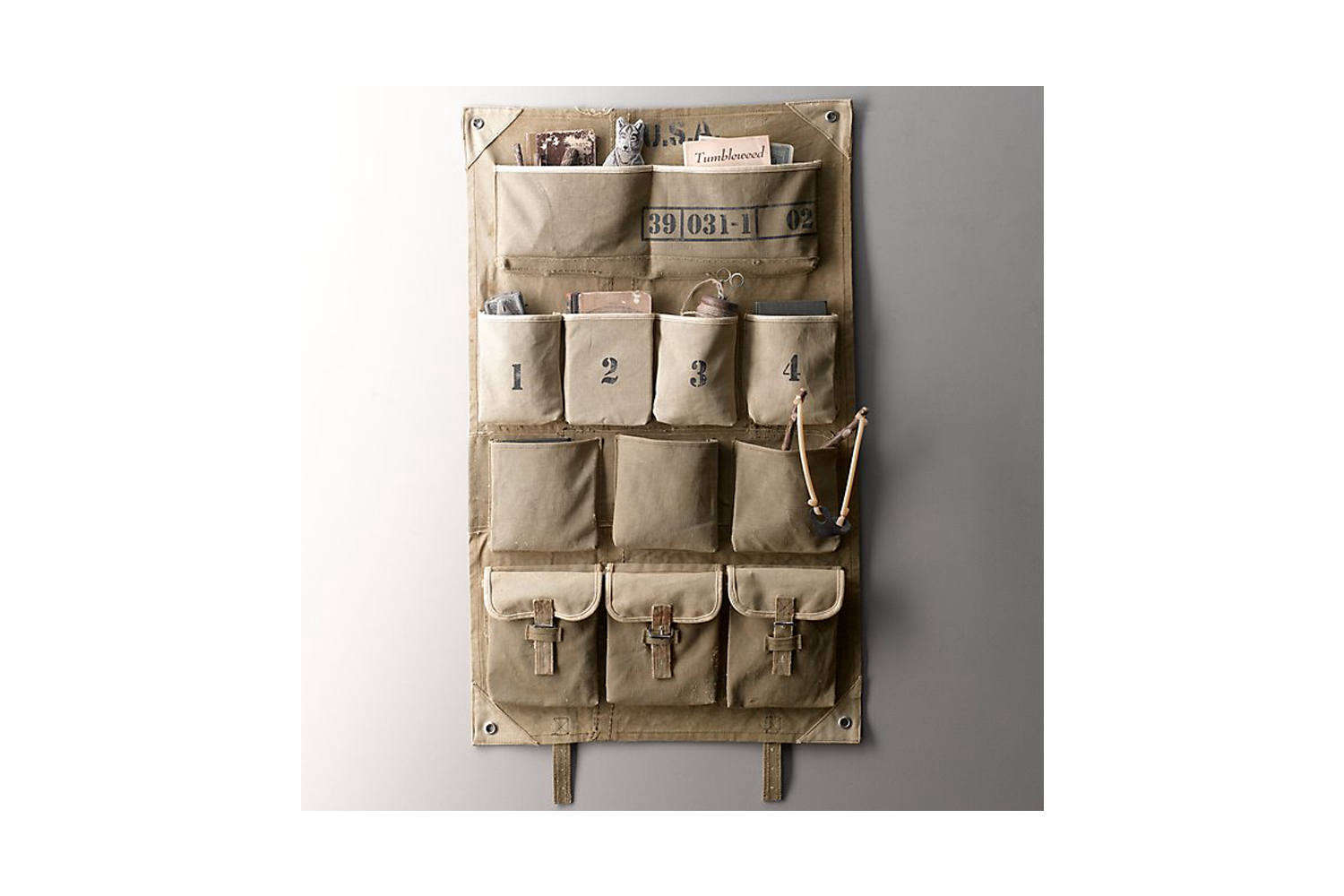
Distressed canvas wall storage is what happens when utility meets charm and decides to hang out on your wall instead of hiding in a closet. It looks relaxed, slightly rugged, and wonderfully usefulthe kind of home organizer that says, “Yes, I have a place for everything,” while also whispering, “I may have once belonged in a vintage field camp.”
At its core, a distressed canvas wall storage piece is a hanging fabric organizer made with durable canvas, multiple pockets, and a worn-in finish. Some versions are inspired by military gear, tool rolls, old workshop aprons, or vintage travel accessories. The best-known version of this style was a pocketed wall unit from RH Baby & Child, designed with a rugged canvas look, stencil-style details, metal grommets, and multiple compartments for small items. Though that specific product is no longer widely available, the idea behind it remains highly relevant: turn empty vertical space into practical storage without sacrificing style.
In modern homes, storage has to work harder than ever. Entryways collect keys, sunglasses, dog leashes, mail, and the mysterious single glove that appears every winter. Kids’ rooms attract tiny toys like magnets. Home offices drown in cords, notebooks, and pens that vanish exactly when needed. A distressed canvas wall organizer helps tame the chaos by using the wallone of the most underused storage zones in the house.
What Is Distressed Canvas Wall Storage?
Distressed canvas wall storage is a wall-mounted organizer made from canvas fabric that has been treated, washed, faded, printed, or sewn to create an aged appearance. The “distressed” look may come from muted colors, raw edges, visible stitching, weathered hardware, stencil lettering, patch-style pockets, or a washed finish that feels lived-in rather than factory-perfect.
Unlike shiny plastic bins or sleek metal cabinets, canvas wall storage has texture. It softens a room while adding structure. It is flexible enough for casual homes, farmhouse interiors, rustic nurseries, craft spaces, dorm rooms, mudrooms, and creative studios. Think of it as a vertical catchall with personality. It is not trying to be invisible. It is storage that has the audacity to look good while doing its job.
Common Features
- Multiple fabric pockets in different sizes
- Heavy cotton canvas, duck canvas, linen-blend canvas, or reinforced fabric
- Metal grommets, wooden dowels, hooks, or hanging straps
- Neutral tones such as beige, khaki, olive, gray, cream, or faded brown
- Decorative stencil details, patchwork, labels, or vintage-inspired typography
- Foldable, lightweight construction compared with wood or metal storage units
The magic is in the balance: it is tough enough to hold everyday items, soft enough for a bedroom or nursery, and attractive enough to leave in plain sight.
Why Distressed Canvas Wall Storage Works So Well
The biggest advantage of distressed canvas wall storage is that it uses vertical space. In small homes and apartments, floor space is precious. A basket on the floor may be useful, but it can also become one more thing to step around. Wall storage lifts everyday clutter up and out of the way while keeping essentials visible.
Another benefit is accessibility. Drawers hide things. Cabinets swallow things. Deep bins turn into archaeological dig sites. A wall organizer keeps items easy to see and grab. That makes it especially helpful in busy areas where people are constantly coming and going.
Canvas also has a softer visual presence than hard shelving. A distressed canvas organizer can hold toys in a child’s room without looking too formal. It can organize mail in an entryway without feeling like office furniture. It can store craft tools without making your studio look like a hardware aisle. In short, it brings order without killing the cozy mood.
Best Places to Use Distressed Canvas Wall Storage
1. Entryway or Mudroom
The entryway is where good organization goes to fight for its life. Shoes pile up. Keys disappear. Mail lands on the nearest surface and starts a paper rebellion. A distressed canvas wall organizer can create a simple landing zone for daily essentials.
Use the top pockets for sunglasses, wallets, lip balm, and small notebooks. Reserve larger pockets for mail, gloves, dog waste bags, reusable shopping bags, or slim umbrellas. Add labels if multiple people use the same organizer. You can even assign each family member a pocket, which is slightly less dramatic than yelling, “Where are your keys?” every morning.
2. Kids’ Rooms and Nurseries
Canvas wall storage is excellent for children’s spaces because it is lightweight, soft-edged, and playful. A distressed style works especially well in adventure-themed rooms, woodland nurseries, vintage airplane themes, camp-inspired bedrooms, or rustic modern kids’ spaces.
Use pockets for board books, stuffed animals, socks, small toys, action figures, hair accessories, diapers, wipes, and bedtime items. For safety, avoid hanging heavy objects above a crib or bed, and always mount the organizer securely. The goal is charming storagenot a surprise midnight avalanche.
3. Home Office
A home office needs storage that is functional but not depressing. Distressed canvas wall storage can hold notebooks, envelopes, chargers, sticky notes, scissors, pens, markers, receipts, and planner supplies. It works particularly well near a desk where drawer space is limited.
For a cleaner setup, divide pockets by task: one for incoming papers, one for outgoing mail, one for tech accessories, one for stationery, and one for items you use daily. This keeps the desktop clear, which can make the whole room feel more productiveeven if your browser tabs suggest otherwise.
4. Craft Room or Sewing Area
Canvas storage has a natural connection to creative spaces. It feels handmade, tactile, and flexible. Use a wall organizer to hold scissors, measuring tape, fabric markers, thread cards, patterns, glue sticks, brushes, yarn tools, and small rulers.
Because canvas pockets are forgiving, they are useful for irregularly shaped supplies that do not fit neatly in drawers. If you love visible storage, a distressed canvas organizer can become part of the room’s creative atmosphere.
5. Bathroom or Vanity Area
A canvas wall organizer can work in a bathroom, but choose carefully. Bathrooms are humid, and untreated cotton canvas may absorb moisture. Use this storage idea in a well-ventilated powder room or vanity nook rather than directly beside a shower.
Good items to store include hair ties, combs, washcloths, travel-size toiletries, cotton rounds in pouches, or skincare tools. Avoid storing damp items, leaky products, or anything that could stain the fabric permanently.
6. Kitchen and Pantry Corners
In the kitchen, distressed canvas wall storage can hold lightweight items such as recipe cards, spice packets, tea bags, reusable produce bags, small towels, grocery lists, and kitchen scissors. It looks especially good in farmhouse, cottage, industrial, or rustic kitchens.
Do not use canvas storage too close to the stove or sink. Heat, grease, and water are not canvas’s best friends. Give it a safer wall near the pantry, breakfast nook, or command center.
How to Choose the Right Canvas Wall Organizer
Before buying or making distressed canvas wall storage, think about what you actually need it to hold. Storage fails when it is chosen for fantasy life instead of real life. If your problem is mail, buy pockets wide enough for envelopes. If your problem is toys, choose deeper pockets. If your problem is chargers, look for smaller compartments that prevent cords from tangling into one electronic spaghetti monster.
Check the Size
Measure the wall before you shop. A tall canvas organizer can look great on a narrow wall, but it may overwhelm a tiny corner. A wide organizer can balance a desk or console table, but it needs breathing room. For entryways, leave enough clearance so the organizer does not interfere with doors, coat hooks, light switches, or people carrying grocery bags.
Study the Pocket Layout
Not all pockets are equally useful. Shallow pockets are good for mail, postcards, brushes, or slim tools. Deep pockets are better for toys, gloves, notebooks, and rolled fabric. A mix of sizes is ideal because real life rarely comes in one standard dimension.
Look for Reinforced Stitching
Canvas is strong, but pockets still need reinforcement. Check for double stitching, bar tacks, reinforced corners, and sturdy seams. The pocket corners take the most stress, especially when people stuff items in quickly. A pretty organizer with weak seams is just a future sewing project wearing a disguise.
Consider Hardware
Metal grommets, wooden dowels, hanging loops, and rod pockets can all work well. Grommets offer a rugged look and make installation simple. A dowel distributes weight more evenly. Hanging straps add a casual handmade feel. Choose the hardware based on the weight you plan to store and the surface where it will hang.
How to Style Distressed Canvas Wall Storage
Distressed canvas is versatile because it plays well with several design styles. In a farmhouse room, pair it with reclaimed wood, woven baskets, black metal hooks, and warm neutrals. In an industrial space, combine it with metal shelving, leather details, exposed bulbs, and matte finishes. In a coastal room, choose lighter canvas with rope accents and weathered wood. In a kids’ room, use it with maps, adventure art, or camp-inspired bedding.
The key is to repeat the texture somewhere else in the room. A canvas laundry hamper, linen curtains, cotton throw pillows, or a woven rug can make the organizer feel intentional rather than random. Distressed canvas looks best when it appears to belong to a larger design story.
Color Pairing Ideas
- Khaki canvas: Works with olive, navy, cream, black, and aged brass.
- Natural canvas: Pairs beautifully with white walls, oak wood, rattan, and soft gray.
- Olive canvas: Adds vintage military character with leather, walnut, and charcoal.
- Gray canvas: Feels modern with black metal, concrete, and pale wood.
- Brown distressed canvas: Looks warm with farmhouse, cabin, and rustic interiors.
Installation Tips for Safe Wall Storage
Even lightweight storage needs proper installation. Before hanging a canvas wall organizer, estimate the total weight it will carry when full. A fabric piece may weigh very little empty, but mail, books, toys, tools, and accessories add up quickly.
If possible, mount hardware into wall studs. Studs provide stronger support than drywall alone. If studs are not available, use drywall anchors rated for the expected load. Choose anchors based on the wall type, item weight, and mounting hardware. For heavier use, toggle bolts or hollow-wall anchors may be more reliable than basic plastic anchors.
For renters, removable adhesive hooks can be tempting, but use them only for lightweight storage. Adhesive products can fail because of humidity, wall texture, temperature changes, or too much weight. They are fine for a nearly empty organizer holding fabric accessories, but they are not ideal for loaded pockets full of books, tools, or keepsakes.
Care and Cleaning
Canvas is durable, but it is still fabric. Dust it regularly with a soft brush, lint roller, or handheld vacuum. For small stains, spot clean with mild soap and water, then blot rather than scrub aggressively. Always test cleaning methods on a hidden area first, especially if the canvas has printing, stenciling, or a dyed distressed finish.
Avoid soaking the organizer unless the care instructions clearly allow it. Heavy washing can change the distressed finish, shrink the fabric, weaken stitching, or cause colors to bleed. Let the organizer air dry completely before rehanging it. Damp canvas stored against a wall can invite mildew, and nobody wants their storage solution to develop its own ecosystem.
To keep pockets from stretching, avoid overloading them. Store heavier items in lower pockets and lighter items at the top. If the organizer starts sagging, empty it and redistribute the weight.
DIY Distressed Canvas Wall Storage Ideas
If you enjoy hands-on projects, distressed canvas wall storage is a satisfying DIY. Start with heavy cotton canvas or a canvas drop cloth. Cut a backing panel, then sew pocket panels across the front. Use different pocket sizes for visual interest and practical storage. Add metal grommets to the top corners or sew a rod pocket for a wooden dowel.
To create a distressed look, wash the canvas, wrinkle it, lightly sand edges, or use fabric paint for faded stencil lettering. Keep distressing subtle. The goal is “vintage utility,” not “lost in a garage flood.”
You can customize the piece with labels, leather tabs, antique brass hardware, contrast stitching, or painted numbers. For a nursery, add softer details such as embroidered names or muted color blocks. For a workshop, add bold stencil letters and reinforced pockets. For an entryway, include one wide mail pocket and smaller compartments for keys and accessories.
Buying Tips: What to Look for Online
When shopping for canvas wall organizers, search for terms like “canvas wall organizer,” “hanging wall storage,” “fabric wall pockets,” “rustic wall organizer,” “vintage canvas storage,” and “distressed canvas wall pocket.” Product titles vary widely, so using several keyword variations helps.
Read dimensions carefully. Product photos can make small organizers look enormous and large organizers look modest. Check pocket depth, overall width, height, and hanging method. If you plan to store children’s books, measure the books first. If you plan to store mail, make sure standard envelopes fit without curling.
Also check whether the canvas is washable, water-resistant, lined, or reinforced. A decorative organizer may be perfect for light accessories but unsuitable for heavier daily use. Customer photos can be more useful than polished product images because they show scale, sagging, color accuracy, and real-life pocket capacity.
Common Mistakes to Avoid
Overloading the Pockets
Canvas wall storage is not a substitute for a cabinet. Use it for lightweight to medium-weight items. Too much weight can pull seams, stretch pockets, or stress the wall hardware.
Hanging It Too High
Storage should be easy to reach. If you need a step stool to grab your keys, the organizer has failed its one job.
Ignoring the Room’s Moisture Level
Canvas and humidity require caution. Avoid placing untreated canvas in damp bathrooms, laundry areas, or poorly ventilated spaces.
Choosing Style Over Function
A beautiful organizer with pockets too small for your items will become wall art with commitment issues. Measure first, admire second.
Experience Notes: Living With Distressed Canvas Wall Storage
The real beauty of distressed canvas wall storage shows up in daily life. It is not the kind of product that changes a room with one dramatic “before and after” moment. Instead, it quietly makes small routines smoother. You come home, drop your keys into the same pocket, slide the mail into a larger compartment, hang the dog leash nearby, and suddenly the entryway stops behaving like a clutter trap with a front door.
One of the best experiences with this type of storage is how forgiving it feels. A wooden cubby can look messy if every slot is not perfectly styled. A metal rack can feel harsh when overloaded. Canvas is more relaxed. It wrinkles a little. It softens. It accepts the reality that homes are lived in by actual humans, not catalog mannequins who own exactly three neutral-colored objects.
In a kid’s room, distressed canvas wall storage can become part toy organizer, part treasure map. Small pockets are perfect for toy cars, mini animals, action figures, crayons, hair clips, and bedtime books. Children can see what they own, which makes cleanup easier. It also helps them build the habit of returning items to a “home.” Does it magically make kids tidy? No. Nothing does. But it gives the cleanup routine a fighting chance.
In a home office, the experience is more about mental clarity. A wall organizer beside a desk can hold the things that usually create visual noise: charging cords, unopened mail, index cards, notebooks, sticky notes, glasses, receipts, and pens. When these items leave the desktop, the workspace feels calmer. The canvas texture also keeps the office from looking too corporate, which is helpful if your “office” is actually a corner of the bedroom next to a laundry basket pretending not to exist.
For renters, the best experience comes from choosing a lightweight version and installing it responsibly. A canvas organizer can add storage without bringing in bulky furniture. It is especially helpful in apartments with narrow entryways, small kitchens, or limited closet space. Pair it with a console table, bench, or row of hooks, and you have a compact command center that looks intentional rather than improvised.
Over time, distressed canvas also develops character. Minor wrinkles, softened edges, and gentle fading usually make it look better, not worse. That is the advantage of choosing a distressed finish: it does not demand perfection. A tiny mark is not a disaster; it is just another chapter in the fabric’s rugged little biography.
The best advice from experience is simple: give every pocket a purpose. Without a plan, wall pockets become vertical junk drawers. With a plan, they become one of the most useful storage tools in the home. Keep the top pockets for light, occasional items; keep the middle pockets for daily essentials; use lower pockets for slightly heavier pieces. Edit the contents once a month. Remove old receipts, broken crayons, expired coupons, and anything you forgot existed. Canvas storage works best when it stays active, not abandoned.
Distressed canvas wall storage is not just about organizing things. It is about making useful storage feel warm, casual, and human. It brings a bit of workshop practicality, a bit of vintage charm, and a lot of everyday convenience to the wall. For small homes, busy families, creative rooms, and anyone tired of losing keys in the same three places, that is a pretty handsome upgrade.
Conclusion
Distressed canvas wall storage is a smart, stylish, and flexible way to organize everyday clutter while adding texture to your home. It works because it solves a common problemtoo many small items and not enough convenient storagewithout requiring bulky furniture or a major renovation. Whether used in an entryway, nursery, office, craft room, or kitchen corner, a canvas wall organizer can make daily routines smoother and rooms feel more intentional.
The best version for your home depends on size, pocket layout, stitching quality, installation hardware, and the items you plan to store. Choose sturdy canvas, reinforce the mounting method, avoid overloading the pockets, and keep the organizer away from excessive moisture. With the right setup, distressed canvas wall storage becomes more than a decorative accessory. It becomes the quiet hero of the wallthe one holding your keys, mail, markers, tiny toys, and maybe your sanity.