Note: This article is written for web publication and is based on publicly available U.S. information from Burger King, Hidden Valley Ranch, nutrition databases, FDA calorie guidance, dietary guideline summaries, and reputable food and health reporting. Nutrition numbers are approximate because restaurant preparation, serving size, and regional menu updates can vary.
The Big Dip: When Ranch Stopped Being a Side Character
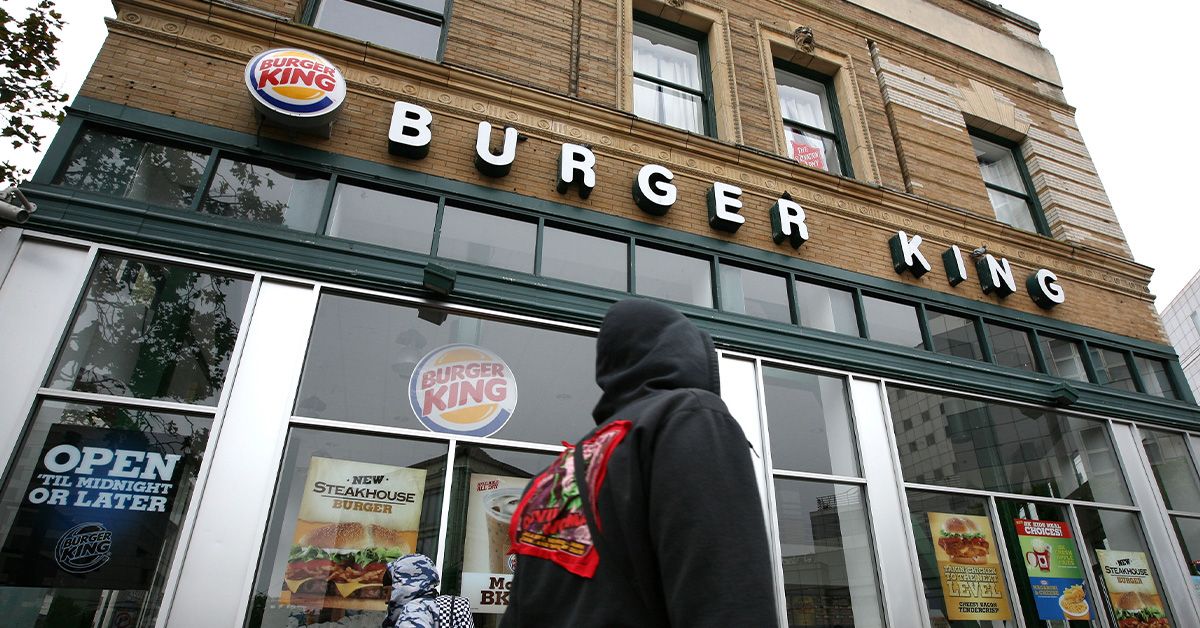
Burger King has never been shy about doing things with royal confidence. Flame-grilled patties? Crown on the logo. Purple Halloween burgers? Sure. A ranch cup large enough to make a Whopper look like it needs swimming lessons? Apparently, also yes.
The fast-food chain teamed up with Hidden Valley Ranch to introduce “The Big Dip,” an 8-ounce tub of ranch dressing designed for dipping full sandwiches, not just the occasional fry that wanders too close to the sauce zone. Compared with Burger King’s usual 1-ounce dipping cup, the Big Dip is eight times larger. That is not a sauce upgrade; that is a dairy-adjacent commitment ceremony.
The limited-time promotion launched in select U.S. markets including New York City, Los Angeles, Chicago, Miami, Dallas, Houston, and San Francisco. Customers in those areas could request the Big Dip with the purchase of a Burger King sandwich while supplies lasted. The concept was simple: buy a sandwich, receive a tub of Hidden Valley Ranch big enough to dunk it like a doughnut in coffee.
Fun? Absolutely. Viral? Naturally. Nutritionally tiny? Not even wearing a disguise. The real question is not whether ranch fans enjoyed the idea. The real question is: what happens to the calorie count when an already hefty fast-food sandwich meets a full 8 ounces of creamy dressing?
Why the 8oz Ranch Tub Became a Fast-Food Moment
Ranch dressing is one of America’s most reliable food obsessions. It goes on salads, fries, wings, pizza, chicken tenders, vegetables, burgers, and sometimes things that should probably file a complaint. Hidden Valley Ranch has become especially recognizable because it is not just a dressing; it is practically a personality type.
Burger King’s Big Dip works because it taps into three major fast-food trends at once: oversized novelty items, brand collaborations, and sauce culture. In today’s quick-service restaurant world, sauces are not afterthoughts. They drive social media reactions, app orders, limited-time hype, and “I need to try this once” behavior.
The Big Dip also arrived at a time when fast-food chains were leaning hard into playful, conversation-starting releases. A normal ranch packet is useful. An 8-ounce ranch tub is news. It turns lunch into content. It makes people take photos. It encourages the kind of over-the-top reaction that fast-food marketing departments dream about while staring lovingly at engagement charts.
But when the sauce becomes the event, the nutrition math changes quickly. A single dipping cup can feel harmless because it is small. An 8-ounce tub is different. That is a full cup of ranch dressing. If eaten completely, it can add more calories than many sandwiches on the menu.
Ranch Calories: The Math Behind the Creamy Chaos
To understand the Big Dip calorie comparison, start with a normal serving of ranch. A typical 2-tablespoon serving of Hidden Valley Original Ranch contains about 130 calories, 13 grams of fat, 2 grams of saturated fat, and around 260 milligrams of sodium. Two tablespoons equals about 1 fluid ounce.
Now multiply that by eight. An 8-ounce ranch tub contains roughly eight 2-tablespoon servings. If someone eats the entire Big Dip, the ranch alone may add approximately:
- 1,040 calories
- 104 grams of total fat
- 16 grams of saturated fat
- 2,080 milligrams of sodium
That is before counting the sandwich. In other words, the ranch tub is not merely a condiment at full consumption. It becomes the second main course, wearing a creamy white cape and pretending it was invited.
The FDA uses 2,000 calories per day as a general nutrition reference, although individual needs vary based on age, height, activity level, and other factors. On that reference scale, a full Big Dip could equal more than half of a day’s calories before the burger, fries, drink, or accidental onion ring tax are even considered.
Burger King Sandwich Calorie Comparison With the Big Dip
The following table uses approximate U.S. nutrition values for popular Burger King sandwiches and common Hidden Valley Ranch nutrition estimates. Actual values can vary, but the comparison shows how quickly the Big Dip changes the meal.
| Menu Item | Sandwich Alone | With 1oz Ranch | With 2oz Ranch | With Full 8oz Big Dip |
|---|---|---|---|---|
| Whopper Sandwich | About 670 calories | About 800 calories | About 930 calories | About 1,710 calories |
| Whopper with Cheese | About 770 calories | About 900 calories | About 1,030 calories | About 1,810 calories |
| Royal Crispy Chicken Sandwich | About 600 calories | About 730 calories | About 860 calories | About 1,640 calories |
| Original Chicken Sandwich | About 680–890 calories | About 810–1,020 calories | About 940–1,150 calories | About 1,720–1,930 calories |
The pattern is obvious: dipping lightly changes the meal. Finishing the entire tub transforms it. A Whopper with a normal 1-ounce ranch portion is still a big fast-food meal, but it stays in familiar territory. A Whopper with the entire 8-ounce Big Dip can approach the calorie level of a full day’s worth of food for some people.
This does not mean one promotional food item is automatically “bad.” Food is not a morality quiz, and nobody needs a lecture from a sandwich. But it does mean the portion size deserves attention. The difference between “a little ranch” and “the whole tub” is not small. It is roughly 910 calories of difference between 1 ounce and 8 ounces.
Why Sauce Calories Are Easy to Underestimate
Sauces are sneaky because they do not look like meals. A burger has obvious calories because it is physically substantial. A ranch cup feels like an accessory. Unfortunately, calories do not care whether something arrived in a wrapper, a bun, or a tiny plastic container.
Creamy dressings are usually calorie-dense because they contain oil, egg yolk, buttermilk, and other ingredients that create richness. Fat provides 9 calories per gram, more than double the 4 calories per gram found in carbohydrates or protein. That is why ranch can climb so quickly even in small amounts.
Sodium is another issue. A full 8-ounce portion of ranch could add around 2,080 milligrams of sodium. Dietary guidance commonly recommends limiting sodium to less than 2,300 milligrams per day for many people. Add a Whopper, which already contributes a significant amount of sodium, and the meal can move well past that guideline.
Again, the point is not panic. It is perspective. Most people are unlikely to eat the entire tub with one sandwich unless they are filming a challenge, recovering from heartbreak, or have mistaken ranch for a beverage. But the tub’s size makes overeating easier because it removes the normal portion boundary.
Full Tub vs. Realistic Dipping: A Better Way to Think About It
The most useful calorie comparison is not only “What if someone eats all 8 ounces?” It is also “What if someone uses it like a normal human with reasonable dipping enthusiasm?”
Scenario 1: Light Dipping
If you use about 1 ounce of ranch, you add roughly 130 calories. This is similar to a standard dipping cup and may be enough for a few bites, fries, or the corners of a chicken sandwich. The meal gets richer, but the math remains manageable.
Scenario 2: Heavy Dipping
If you use 2 ounces, you add about 260 calories. This is where the ranch starts acting less like a condiment and more like a co-star. A 600-calorie sandwich becomes about 860 calories. A Whopper becomes about 930 calories.
Scenario 3: The Full Big Dip
If you eat the entire 8-ounce tub, you add about 1,040 calories. This is the “ranch has taken the wheel” scenario. A sandwich that began around 600–770 calories may suddenly land between 1,640 and 1,810 calories.
For most people, the smartest way to enjoy the novelty would be to treat the Big Dip as a shareable sauce, not a personal swimming pool for one burger.
How the Big Dip Compares With Other Fast-Food Add-Ons
Fast-food calories often rise through add-ons: cheese, bacon, mayo, fries, milkshakes, sugary drinks, and sauces. The Big Dip stands out because it can add more calories than many traditional extras.
For example, adding cheese to a burger might add around 70–100 calories. Bacon might add another 60–120 calories depending on portion. A small fry can add several hundred calories. But a full 8-ounce ranch tub can add more than 1,000 calories. That is not a topping; that is a side quest with boss-level stats.
This is why the Big Dip is such an interesting calorie comparison topic. It looks like a condiment promotion, but nutritionally, it behaves more like adding a second meal. The visual humor of dunking a Whopper into a giant ranch cup is exactly what makes the campaign memorable. It is also what makes the nutrition conversation unavoidable.
Is the Big Dip a Good Deal?
From a marketing perspective, yes. Free ranch with a sandwich is fun, familiar, and easy to understand. From a value perspective, ranch lovers probably saw it as a creamy jackpot. From a calorie perspective, the answer depends entirely on how much you actually eat.
If you use a small portion and save or share the rest, the Big Dip can be a playful fast-food extra. If you finish the full tub in one sitting, the calorie, fat, and sodium totals rise dramatically. The Big Dip is not dangerous because it exists; it becomes nutritionally intense when treated as a single-serving dip.
The best comparison is popcorn at the movies. A huge tub is technically one container, but that does not automatically mean it is a sensible individual serving. The container size invites abundance. The eater still decides the portion.
Smart Ways to Enjoy Burger King Ranch Without Going Overboard
You do not have to swear off ranch and live a joyless life of dry lettuce and regret. Portion awareness is the practical middle ground. Here are a few simple ways to enjoy the flavor without letting the sauce hijack the whole meal:
- Use a normal dipping amount. Pour a small portion into the lid or another cup and stop there.
- Share the Big Dip. It makes more sense as a group condiment than a solo project.
- Skip another rich add-on. If you want ranch, consider avoiding extra mayo, bacon, or cheese.
- Pair it with a lighter drink. Water or unsweetened tea can keep the meal from becoming even heavier.
- Save the rest. If food safety allows and the ranch has been kept properly, treat it like leftovers rather than a challenge.
Fast food can fit into many eating patterns when approached with moderation and common sense. The Big Dip simply makes the moderation part more visible because the portion is hilariously huge.
The Experience: What It Feels Like to Dunk a Sandwich in an 8oz Ranch Tub
There is a very specific kind of excitement that happens when a fast-food order includes something absurd. A regular burger comes out and the brain says, “Lunch.” A burger plus an 8-ounce tub of ranch comes out and the brain says, “We appear to be part of an experiment.”
The first impression is the size. A normal dipping cup sits politely beside the fries like it knows its role. The Big Dip has presence. It looks less like a condiment and more like a tiny bucket that got lost on its way to a picnic. When placed next to a Whopper, it creates a strange sense of possibility. Could the sandwich fit? Should it fit? Is this how civilization peaks?
Dipping the first bite is undeniably fun. Ranch adds tang, creaminess, salt, and coolness against the warm beef or crispy chicken. With a Royal Crispy Chicken Sandwich, the pairing makes intuitive sense because ranch and fried chicken have been best friends for years. The crunchy coating, lettuce, tomato, and creamy sauce create a familiar comfort-food combination. With a Whopper, the result is more chaotic but still appealing if you like ranch on burgers. The flame-grilled flavor, pickles, ketchup, mayo, onions, and ranch all compete for attention like a family group chat during the holidays.
The second or third bite is where the experience becomes more about balance. Too much ranch can mute the sandwich. Instead of tasting beef, lettuce, tomato, pickles, and bun, everything begins to taste like ranch wearing a burger costume. A light dip can enhance the sandwich; a deep plunge can overwhelm it.
There is also the texture factor. A sandwich is not a chicken nugget. It has layers. Dip too aggressively and the bun can soften quickly. Sauce slides. Lettuce shifts. A tomato may attempt escape. Suddenly, lunch requires napkins, strategy, and perhaps a small emotional support team.
The Big Dip is best experienced as a novelty, not a mission. The fun is in trying the oversized concept, laughing at the scale, dipping a few bites, and realizing that a little ranch goes a long way. It is perfect for sharing with friends, especially if everyone wants to test different sandwiches. The Royal Crispy Chicken may be the most natural match. The Whopper is the headline-grabber. Fries are the obvious backup singers. Onion rings also perform surprisingly well.
From a practical standpoint, the experience teaches a useful lesson: portion size changes perception. When sauce is tiny, people ration it. When sauce is huge, people may keep dipping simply because it is there. The Big Dip turns that habit into a visible event. It is funny, memorable, and slightly ridiculous in the best fast-food way.
Would most people need 8 ounces of ranch for one sandwich? No. Would many people want to try it once because it feels like a food dare designed by someone with excellent Wi-Fi and questionable restraint? Absolutely. That is the charm. The Big Dip is less about everyday eating and more about spectacle. Enjoyed lightly, it is a quirky condiment upgrade. Finished completely, it is a calorie comparison chart begging for a nap.
Final Verdict: Big Flavor, Bigger Numbers
Burger King’s 8oz Hidden Valley Ranch Big Dip is a clever limited-time idea because it understands modern fast-food culture perfectly. People love sauces. People love oversized menu items. People love food that makes them say, “Wait, is that real?” The Big Dip checks all three boxes with a ranch-covered marker.
As a calorie comparison, however, the numbers are impossible to ignore. A full 8-ounce tub of ranch can add about 1,040 calories to a Burger King sandwich. That means a Whopper could move from about 670 calories to around 1,710 calories if the entire dip is consumed. A Royal Crispy Chicken Sandwich could jump from about 600 calories to roughly 1,640 calories.
The smartest takeaway is not “never eat ranch.” The smarter takeaway is “know the portion.” One or two ounces can add flavor without completely changing the meal. Eight ounces can turn a sandwich into a full-blown calorie event.
The Big Dip is fun, silly, photogenic, and very American in the way only a giant tub of ranch for a burger can be. Enjoy the joke, enjoy the flavor, and maybe do not treat the whole cup like a personal beverage. Your sandwich will survive with a light dip. So will your napkin supply.