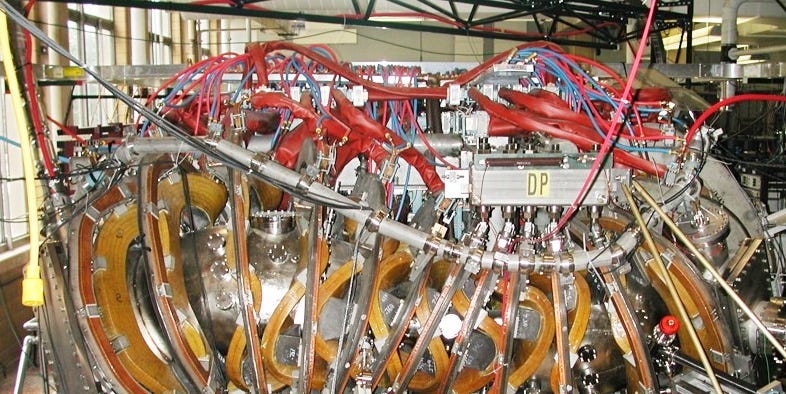
Nuclear fusion news has officially left the “maybe someday” corner of science and walked into the much louder room labeled “who is going to plug this thing into the grid first?” For decades, fusion was treated like the energy world’s favorite running joke: always 30 years away, always wearing a lab coat, and always asking for a bigger magnet. Today, the mood is different. Not easy. Not solved. But definitely different.
Across the United States, national laboratories, university teams, and private companies are reporting real progress. The National Ignition Facility has repeated ignition results. Commonwealth Fusion Systems is moving from prototype talk to grid-connection paperwork. Helion is testing ambitious pulsed-fusion hardware. Princeton Plasma Physics Laboratory is using artificial intelligence and diagnostics to solve stubborn plasma problems. MIT-linked research continues to push superconducting magnets, tritium breeding, and materials testing into practical territory.
That does not mean a fusion-powered coffee maker is arriving next Tuesday. Fusion energy still faces difficult engineering, fuel-cycle, materials, regulatory, and cost challenges. But the latest nuclear fusion news shows a field changing from pure research into a competitive clean-energy industry. The big question is no longer whether fusion is scientifically interesting. Everyone already agrees on that. The question is whether it can become reliable, affordable, grid-ready power before the world runs out of patience, money, or both.
What Is Nuclear Fusion, and Why Is Everyone Suddenly Talking About It?
Nuclear fusion is the process that powers the sun and stars. Instead of splitting heavy atoms, as nuclear fission does, fusion combines light atomic nuclei under extreme heat and pressure. The most common near-term fusion fuel mix is deuterium and tritium, two forms of hydrogen. When they fuse, they release energy, mainly through fast-moving particles and neutrons.
The attraction is enormous. Fusion could offer firm, carbon-free power with abundant fuel potential, no long-lived waste stream like conventional nuclear fission, and no planet-warming emissions during operation. In plain English: it is the kind of energy source that makes engineers lean forward and oil executives pretend they were always into plasma physics.
But fusion is brutally difficult. To make it work on Earth, scientists must heat plasma to temperatures hotter than the sun, keep it stable, protect reactor materials from intense particles, manage fuel supply, convert energy into electricity, and do all of that often enough to make economic sense. A single great experiment is not a power plant. A power plant must run, stop, restart, survive maintenance, meet safety rules, earn money, and not behave like a dragon in a pressure cooker.
The Biggest Nuclear Fusion News: Ignition Is No Longer a One-Time Headline
The most famous recent fusion breakthrough came from Lawrence Livermore National Laboratory’s National Ignition Facility, where researchers achieved fusion ignition in December 2022. Ignition means the fusion reaction produced more energy than the laser energy delivered to the fuel target. That event was historic because it proved a key physics milestone that had been pursued for decades.
Since then, the story has become more interesting: ignition has been repeated. In April 2025, NIF reported a record shot producing 8.6 megajoules of fusion energy from 2.08 megajoules of laser energy delivered to the target, a target gain greater than four. In the world of fusion, that is not just a good day at the office. That is the office standing up, applauding, and then immediately asking, “Can we do it again, faster, cheaper, and with better target manufacturing?”
Why NIF’s Progress Matters
NIF uses inertial confinement fusion. Instead of holding plasma in a magnetic bottle, powerful lasers compress a tiny fuel capsule until fusion reactions occur. This approach is different from the magnetic confinement path used by tokamaks and stellarators, but its results matter across the fusion ecosystem. Repeated ignition gives researchers better data about burning plasma, target design, laser precision, and energy gain.
Still, NIF is not a commercial power plant. It was built primarily for high-energy-density science and national security research, not for producing electricity at utility scale. Turning laser fusion into a power plant would require firing many targets repeatedly, manufacturing fuel capsules at industrial scale, capturing the energy efficiently, and doing it all at a cost that does not make accountants cry into their spreadsheets.
Commonwealth Fusion Systems Moves Toward the Grid
One of the most watched private fusion companies is Commonwealth Fusion Systems, an MIT spinout based in Massachusetts. Its first major machine, SPARC, is designed to demonstrate net fusion energy in a compact high-field tokamak. The company’s next planned step is ARC, a commercial fusion power plant concept intended to deliver electricity to the grid.
The latest headline is important because it sounds boring: CFS applied to connect its first ARC fusion power plant to PJM Interconnection, the largest U.S. competitive wholesale electricity market. In the energy world, boring paperwork can be thrilling. A grid-interconnection request means a company is no longer just making animated renderings of glowing plasma. It is beginning the long, technical process of fitting a future plant into real transmission infrastructure.
CFS says its first ARC plant is expected in Virginia in the early 2030s and is designed for about 400 megawatts of electricity. That would be enough to serve large industrial customers or a significant number of homes. The location also matters because Virginia is a major data-center region. Artificial intelligence, cloud computing, electrification, and manufacturing are all increasing demand for clean, reliable power. Fusion companies are not just chasing science headlines; they are chasing customers with very large electric bills.
Why SPARC and ARC Are Different
SPARC is the proof-of-concept machine. ARC is the power plant concept. SPARC’s job is to show that the core physics and magnet technology can work. ARC’s job would be to turn that success into useful electricity. That difference matters. A machine that produces fusion power is impressive; a machine that sells electricity reliably is a completely different beast.
The key technology behind CFS is high-temperature superconducting magnets. Stronger magnets can help confine plasma more tightly, allowing smaller tokamaks than earlier designs. MIT and CFS previously demonstrated a powerful 20-tesla-class magnet, which became one of the major reasons investors and engineers began taking compact tokamak designs more seriously.
Helion’s Polaris Milestone Adds Speedand Skepticism
Helion Energy is another major U.S. fusion company attracting attention. Its approach is very different from a traditional tokamak. Helion uses pulsed magnetic fusion and aims to convert fusion energy directly into electricity, rather than relying mainly on steam turbines. If that sounds ambitious, that is because it is. Fusion is already hard; Helion looked at it and said, “Let’s also reinvent the power-conversion step.” Bold? Absolutely. Easy? Not even close.
In 2026, Helion announced that its Polaris machine became the first privately funded fusion device to operate with deuterium-tritium fuel and reached plasma temperatures of 150 million degrees Celsius. The company has also been associated with an aggressive timeline for delivering power to Microsoft-linked demand in Washington state.
This is exciting nuclear fusion news, but it should be read carefully. Company milestones are not the same thing as independently verified commercial power. Helion’s schedule is among the most ambitious in the industry, and many experts remain cautious. The important takeaway is not that Helion has “solved fusion.” The better takeaway is that private companies are now building large hardware, testing real fuel cycles, signing commercial agreements, and forcing the industry to move faster.
Artificial Intelligence Is Becoming Fusion’s New Lab Assistant
Fusion research produces enormous amounts of data. Plasma is hot, turbulent, unstable, and deeply rude to anyone trying to model it perfectly. That is why artificial intelligence and advanced simulation are becoming major parts of the fusion story.
Princeton Plasma Physics Laboratory has reported work using AI tools and optimization techniques to accelerate the path toward fusion-generated electricity. Researchers are also improving simulations of laser-driven fusion plasmas, especially where unexpected magnetic fields can change heat flow. These are not flashy consumer-tech features. Nobody is asking a chatbot to hold plasma together with positive vibes. The real value is in faster modeling, better prediction, and smarter experiment design.
Commonwealth Fusion Systems has also announced collaborations involving Siemens and NVIDIA to develop AI-powered digital twins for SPARC. A digital twin is a detailed virtual model of a real machine. For a fusion device with powerful magnets, cryogenic systems, plasma-facing components, sensors, and control systems, a digital twin can help engineers test decisions before hardware pays the price.
The Unsexy Problems That Decide Fusion’s Future
The most important nuclear fusion news is not always the most dramatic. A record temperature makes headlines. A better tritium-accounting system does not. But commercial fusion will depend on the “boring” problems: fuel, materials, maintenance, magnets, heat exhaust, manufacturing, regulation, and cost.
Tritium Supply
Many near-term fusion designs depend on tritium, a radioactive hydrogen isotope that is rare and difficult to produce in large quantities. A commercial fusion plant using deuterium-tritium fuel would likely need to breed tritium inside the reactor using lithium-containing blankets. MIT-linked work on molten-salt tritium breeding and accountancy is an example of the kind of research needed before fusion can scale.
Materials and Neutron Damage
Fusion reactions can release high-energy neutrons that damage materials over time. Reactor walls, blankets, magnets, and structural components must survive extreme conditions. This is why materials testing is not a side quest; it is the main campaign. If a fusion plant needs constant repairs, the economics collapse faster than a cheap folding chair.
Heat Exhaust
In magnetic fusion, plasma-facing components must handle intense heat. Tokamaks and stellarators need smart divertor designs, advanced materials, and precise plasma control. Think of it as building a fireplace for a tiny artificial star, except the fireplace must also connect to the grid and pass inspection.
Private Investment Is Reshaping the Fusion Race
The Fusion Industry Association reported that fusion companies raised more than $2.5 billion in new funding in the 12 months leading to July 2025. That investment reflects growing confidence that fusion is moving from basic research toward commercial demonstration. It also reflects broader market pressure: AI data centers, industrial electrification, clean hydrogen, advanced manufacturing, and grid reliability all need massive amounts of clean firm power.
Investors are not funding fusion because it is cute. They are funding it because the potential market is enormous. If fusion works economically, it could become one of the most valuable energy technologies of the century. If it fails to scale, it will become one of the most expensive science lessons ever purchased by venture capital. Either way, the stakes are high.
What Nuclear Fusion News Means for Clean Energy
Fusion is not a replacement for solar, wind, batteries, geothermal, hydro, or fission in the near term. The clean-energy transition cannot sit around waiting for a perfect star-in-a-bottle solution. But fusion could become a powerful complement if it reaches commercial maturity. Its biggest advantage would be firm, dispatchable, carbon-free power that can run when the sun is not shining and the wind is taking a personal day.
That makes fusion especially attractive for heavy industry, data centers, desalination, synthetic fuels, and dense urban grids. These sectors need dependable power, not just cheap power during sunny afternoons. Fusion’s promise is not that it makes every other technology obsolete. Its promise is that it could fill one of the hardest gaps in a deeply electrified economy.
What to Watch Next in Nuclear Fusion News
The next few years will be crucial. Watch for SPARC’s first plasma and net-energy claims. Watch whether Helion can demonstrate meaningful electricity generation. Watch NIF’s continued ignition experiments and whether laser fusion can move toward higher repetition rates. Watch tritium-breeding research, materials-test facilities, regulatory progress, grid-interconnection studies, and customer agreements.
Also watch what companies do, not just what they announce. Fusion has always been rich in promises. The industry’s new credibility will depend on hardware milestones, independent verification, transparent performance data, realistic economics, and boring operational details. In fusion, the boring details are where hype goes to either mature or quietly evaporate.
Experience Notes: Following Nuclear Fusion News Without Getting Burned by Hype
One useful experience when tracking nuclear fusion news is learning to separate scientific milestones from commercial milestones. A laboratory record can be genuinely historic and still be far away from a power plant. A company can build impressive hardware and still face years of engineering work before selling electricity. That distinction helps readers stay excited without becoming gullible.
For example, when a fusion announcement says a machine reached 150 million degrees Celsius, that number sounds almost magical. It is impressive, but temperature alone does not equal commercial success. The next questions are: How long was the plasma sustained? How much energy went in? How much useful energy came out? Was the result independently measured? Can the machine repeat it? Can the design survive thousands or millions of cycles? Fusion progress is like baking bread in a hurricane: one good loaf is wonderful, but the bakery still needs a roof.
Another experience is noticing how many different fusion approaches exist. Tokamaks, stellarators, inertial confinement, magnetized target fusion, field-reversed configurations, pulsed systems, and aneutronic concepts all compete for attention. This variety can confuse casual readers, but it is healthy for innovation. The industry is not betting everything on one machine design. It is running a high-stakes tournament where physics, engineering, capital, and time all get a vote.
For content creators, journalists, students, and energy watchers, the best approach is to read nuclear fusion news with both curiosity and a checklist. Look for the fuel type, energy gain, repetition rate, power-conversion method, materials strategy, tritium plan, customer agreement, timeline, and whether the milestone was reported by an independent institution or only by the company itself. This does not ruin the excitement. It improves it. Real progress is more interesting than hype because it survives questions.
The emotional experience of following fusion is also unique. It combines wonder with impatience. On one hand, humans are trying to recreate the power source of stars on Earth. That is objectively cool. On the other hand, the grid needs clean power now, not in a beautifully rendered 2035 investor deck. This tension explains why fusion inspires both optimism and eye-rolling. The field has earned both.
Still, the latest news feels different from older fusion cycles. Companies are filing grid applications, labs are repeating ignition, investors are writing large checks, and engineers are talking about supply chains, maintenance, and customers. That practical language matters. Fusion is no longer only a physics dream. It is becoming an industrial race. Whether it reaches the finish line soon is uncertain, but the starting gun has clearly fired.
Conclusion: Fusion Is Getting Real, But Reality Has a Checklist
Nuclear fusion news in 2026 is exciting because the field is finally showing movement on multiple fronts at once. National laboratories are improving fusion science. Private companies are building serious machines. Universities are solving magnet, materials, and fuel-cycle problems. AI tools are speeding up design and simulation. Grid operators, customers, and investors are beginning to treat fusion as a possible future power source rather than a distant science fair project with excellent branding.
But the honest conclusion is balanced: fusion has made major progress, yet it is not commercially proven. The next phase will require repeated performance, durable materials, affordable fuel systems, realistic plant economics, regulatory clarity, and successful grid integration. Fusion does not need more hype. It needs hard proof, careful engineering, and machines that work on boring Tuesdays.
If those pieces come together, nuclear fusion could become one of the defining energy stories of the century. If not, it will still teach the world a tremendous amount about plasma physics, materials science, advanced manufacturing, and the limits of optimism. Either way, the latest nuclear fusion news is worth watching closelypreferably with excitement in one hand and a fact-checking flashlight in the other.