Editorial note: This article is based on real architectural and design information about Richard Meier’s modernist language, the documented Richard Meier-designed bath once featured as a complete custom bathroom package, and widely accepted bathroom design principles for materials, lighting, function, and maintenance.
Introduction: When a Bathroom Thinks It’s a Museum
A bath designed in the spirit of Richard Meier is not the kind of room that quietly apologizes for taking up space. It is crisp, bright, precise, and almost suspiciously calm. In a world where many bathrooms are packed with busy tile, loud hardware, and three different kinds of beige having an argument, a Richard Meier-inspired bath steps in wearing a white linen suit and says, “Let’s make this civilized.”
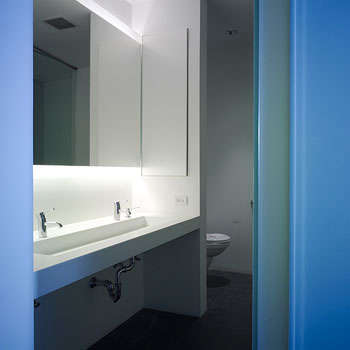
The phrase “Bath: Richard Meier Design” refers most directly to a rare custom bathroom designed by the Pritzker Prize-winning American architect Richard Meier and later noted in design media as a complete bath installation removed from a New York City model apartment. The package reportedly included a Corian sink, Dornbracht fixtures, a Corian vanity backsplash, a custom illuminated Meier vanity mirror, a Zuma bath, Duravit toilet, Vola controls, acid-etched glass doors, Corian wall paneling, and other highly considered details. In short, it was not a bathroom so much as a compact architectural manifesto with plumbing.
But the topic is bigger than one model-apartment bath. A Richard Meier bathroom represents a way of thinking: clean geometry, disciplined white surfaces, generous light, architectural clarity, and the belief that everyday rituals deserve thoughtful design. Whether you are studying luxury bathroom design, planning a minimalist bathroom remodel, or simply wondering why a white sink can suddenly feel philosophical, this guide breaks down what makes the Richard Meier design language so influentialand how it translates beautifully into the bath.
Who Is Richard Meier, and Why Does His Design Matter?
Richard Meier is one of the most recognizable figures in modern American architecture. Born in Newark, New Jersey, in 1934, he became known for buildings that refine modernist principles through pure geometry, open space, white surfaces, and a powerful relationship with natural light. He won the Pritzker Architecture Prize in 1984, an honor often described as architecture’s highest award. His major works include the Getty Center in Los Angeles, the High Museum of Art in Atlanta, the Barcelona Museum of Contemporary Art, and numerous private residences and civic buildings.
Meier’s architecture is easy to identify because it has a visual grammar. White is not merely a color in his work; it is a tool. It catches sunlight, reveals shadow, clarifies edges, and gives buildings a sense of order. Geometry is not decoration; it is structure. Light is not an afterthought; it is a material. This approach is why his designs often feel both rigorous and serene, like a perfectly drawn plan that somehow learned how to breathe.
When translated into bathroom design, these principles become especially compelling. A bathroom is already a room of reflection, cleansing, and routine. Add Meier’s preference for white planes, controlled transparency, and precise detailing, and the bath becomes more than a practical space. It becomes a daily reset button.
The Original “Bath: Richard Meier Design” Concept
The documented Richard Meier bath that sparked design interest was notable because it was offered as a complete custom installation, disassembled from a New York City model apartment. Its components formed a highly coordinated modern bathroom system. Rather than mixing random fixtures from a weekend shopping trip and hoping they become friends, the design used a unified palette and a disciplined architectural point of view.
Key Elements of the Bath
The reported package included a Corian sink and Corian vanity backsplash, which fit perfectly with Meier’s love of smooth, continuous, bright surfaces. Corian, a solid-surface material, is often valued in bathrooms because it can create seamless forms, resist moisture, and support a clean minimalist look. In a Meier-style bath, that matters because visual interruption is the enemy. The fewer seams, edges, and distractions, the more the room feels like a coherent architectural object.
The bath also included Dornbracht fixtures, known for sharp contemporary profiles and high-end engineering. In a minimalist bathroom, fixtures cannot hide behind ornament. Their proportions, finish, and placement have to work. A faucet becomes a small sculpture. A shower control becomes part of the wall composition. Even a handle has to behave itself.
Other notable elements included a custom illuminated vanity mirror, a Zuma bath, Duravit toilet, Vola control, acid-etched glass doors, Corian shower walls, a tub overlay, shower seat, and wall paneling. Together, these features show a bathroom designed as a total environment rather than a collection of products.
Richard Meier’s Signature Style in Bathroom Form
A Richard Meier-inspired bath is not about copying a famous architect’s look like a costume. It is about understanding the logic behind the look. The best version of this style is not cold, empty, or sterile. It is bright, composed, tactile, and deeply intentional.
1. White as a Design Instrument
Meier’s use of white is legendary. In bathroom design, white has practical and aesthetic advantages. It reflects light, makes small spaces feel larger, emphasizes cleanliness, and creates a flexible background for stone, glass, metal, and water. But the trick is to avoid making the room feel like a dental clinic where joy goes to rinse and spit.
The solution is texture and layering. White Corian, white lacquer, white ceramic, pale stone, frosted glass, and soft towels can all live in the same palette while offering different surfaces for light to touch. A Richard Meier bath may look simple at first glance, but the real sophistication is in how the whites differ subtly from one another.
2. Geometry That Organizes the Room
Meier’s architecture often relies on grids, planes, curves, and strong axial relationships. In a bathroom, this can translate into a vanity that aligns with wall panels, a mirror that matches the width of the sink, glass partitions that echo the room’s proportions, and lighting that reinforces the architecture instead of floating randomly on the ceiling.
Good minimalist bathroom design is not “less stuff” by accident. It is “less stuff” because the room has been organized so well that clutter has nowhere to audition. When geometry guides the design, even a compact bath can feel balanced and luxurious.
3. Light as the Quiet Luxury
Natural light is central to Meier’s work, and it is equally important in a bath. Large windows, skylights, clerestory openings, translucent glass, and layered artificial lighting can all support a brighter, calmer space. If privacy is a concernand in bathrooms it usually is, unless you are trying to become neighborhood folklorefrosted glass, high windows, or light-filtering shades can preserve daylight without oversharing.
The custom illuminated mirror in the documented Richard Meier bath is a smart example of architectural lighting. It makes the vanity functional while contributing to the room’s glow. Instead of relying on one harsh ceiling fixture, a Meier-style bath benefits from multiple layers: ambient light, task light, and subtle accent light.
Materials That Make the Meier Bath Work
The materials associated with the Richard Meier bath are not flashy in the traditional sense. They do not shout “luxury” with gold flourishes or dramatic veining. Their power comes from precision, durability, and visual restraint.
Corian and Solid Surfaces
Corian fits naturally into a minimalist bathroom because it can be shaped into smooth, integrated surfaces. Vanity tops, sinks, backsplashes, wall panels, shower seats, and tub surrounds can appear visually continuous. This is especially useful in a bath influenced by architecture, where every joint and transition matters.
Solid surfaces also support easy maintenance. In a bathroom, that is not a tiny detail. Steam, toothpaste, soap, cosmetics, and water spots all arrive with the enthusiasm of uninvited houseguests. A nonporous, easy-to-clean surface helps preserve the pristine look that a white modern bathroom demands.
Glass for Light and Privacy
Acid-etched glass doors are a clever choice because they soften visibility while allowing light to pass through. Clear glass can make a bathroom feel larger, but frosted or acid-etched glass adds privacy and atmosphere. In a Meier-style space, glass works as a boundary without becoming a visual wall.
High-Performance Fixtures
Dornbracht, Duravit, and Vola are names associated with refined modern bathroom design. Their inclusion in the original bath package matters because minimalist rooms expose everything. There is no ornate trim to distract from a poorly chosen faucet. The form, finish, and mechanical feel of each fixture become part of the overall experience.
How to Create a Richard Meier-Inspired Bathroom at Home
You do not need a Pritzker Prize budget to borrow lessons from Richard Meier. You do, however, need discipline. The style depends on editing, alignment, and consistency. A Meier-inspired bathroom is less about buying one expensive object and more about making every decision support the same design idea.
Start With a Clean Layout
Before choosing tile or fixtures, study the layout. Where does the eye go when you enter? Is the vanity centered? Does the mirror align with the sink? Can the shower glass line up with the ceiling or wall paneling? These questions sound small, but they are the difference between “minimalist” and “unfinished.”
Use strong horizontal and vertical lines. Keep the vanity simple. Avoid awkward half-walls if glass can do the job. Make storage disappear behind flat panels. The goal is to make the room feel like it was drawn with confidence, not assembled during a clearance sale panic.
Choose a Restrained Palette
A Richard Meier design does not require pure white everywhere, but it does favor clarity. Start with warm white, cool white, pale gray, soft stone, brushed metal, and glass. If you want contrast, use it sparingly. A black fixture, a charcoal floor, or a wood stool can add depth, but the main composition should remain calm.
For homeowners worried that an all-white bath will feel too stark, introduce warmth through texture: plush towels, honed stone, natural wood, woven baskets, or a soft bath mat. Even Meier-style minimalism deserves a little human softness. Nobody wants to towel off inside a spreadsheet.
Invest in Lighting
Lighting is where many bathrooms lose their dignity. A single overhead fixture can make even a beautiful room feel flat. Instead, layer lighting around the mirror, ceiling, shower, and architectural features. Backlit mirrors, recessed linear lights, wall sconces, and concealed LED strips can create a soft, even glow.
If your bathroom has a window, treat it as a design feature. Use privacy glass, shades, or architectural screens to control views while preserving daylight. The Richard Meier approach celebrates light, and the bath is one of the best rooms in the house to let light do its quiet magic.
Why This Style Still Feels Modern
The phrase “modern bathroom” can age quickly. What looked cutting-edge ten years ago can suddenly feel like a showroom that discovered rectangles for the first time. Richard Meier’s design language has lasted because it is rooted in fundamentals: proportion, light, geometry, material honesty, and spatial clarity.
A bath designed around these principles does not depend heavily on trends. It can adapt to new fixtures, new technologies, and new wellness features without losing its identity. Heated floors, smart mirrors, water-saving toilets, low-flow showerheads, and improved ventilation can all be integrated into a minimalist bathroom without disturbing the design.
That is the beauty of architectural thinking. When the concept is strong, updates become easier. You are not redecorating from scratch every few years. You are maintaining a clear design system.
Common Mistakes to Avoid
Mistake 1: Confusing Minimalism With Emptiness
A great minimalist bath is not bare; it is resolved. It has storage, comfort, lighting, ventilation, and practical surfaces. If you remove everything but forget function, the result is not Richard Meier. It is just a very expensive echo chamber.
Mistake 2: Using Too Many Whites Without Intention
White can be tricky. Some whites are warm, some are cool, and some look vaguely haunted under the wrong light. Test samples together before committing. Look at surfaces in daylight and at night. The goal is harmony, not a paint-chip family reunion gone wrong.
Mistake 3: Ignoring Storage
Minimalist bathrooms need excellent storage because daily life comes with bottles, brushes, chargers, razors, and products that promise “glow” in increasingly suspicious ways. Use recessed cabinets, hidden drawers, niches, and built-in shelves to keep essentials close but visually quiet.
Experiences Related to Bath: Richard Meier Design
Living with a Richard Meier-inspired bath is less about showing off and more about changing the rhythm of daily routines. The first experience people often notice is calm. A bright, organized bathroom can make mornings feel less frantic. Instead of stepping into visual clutter, you enter a room where everything has a place, every surface reflects light, and every line seems to know where it is going. That kind of order can be surprisingly emotional. It makes brushing your teeth feel slightly more like a curated life choice and slightly less like a race against your inbox.
The second experience is the pleasure of materials. Smooth Corian-style surfaces, glass doors, well-weighted fixtures, and a clean-lined vanity create a sense of quiet quality. You feel it when you turn on the faucet. You see it when water moves across the sink without visual chaos. You appreciate it when cleaning takes minutes rather than a weekend and a motivational podcast. A good minimalist bath does not ask for constant attention. It supports daily life and then politely steps back.
Another experience is how light changes the room throughout the day. In the morning, natural light can make white surfaces feel crisp and energizing. In the evening, warmer mirror lighting can soften the space and turn the bath into a small retreat. This is where the Meier philosophy becomes practical. Light is not merely there so you can find the toothpaste. It shapes mood, highlights form, and makes the room feel alive.
Guests tend to respond strongly to this kind of bathroom because it feels intentional. Even people who do not know Richard Meier’s work can sense the discipline. They notice the clean mirror, the floating vanity, the glass, the controlled palette, and the absence of unnecessary decoration. The room feels expensive not because it is loud, but because it is quiet in a way that clearly took effort.
There is also a learning curve. A white minimalist bath rewards tidiness. It does not love countertop clutter, mismatched towels, or ten shampoo bottles forming a tiny plastic skyline in the shower. To keep the design working, storage habits matter. Decanting products, choosing coordinated towels, and keeping surfaces clear help the room maintain its architectural character. The good news is that the design itself encourages better habits. When a room looks this composed, you become less willing to sabotage it with a neon bottle of bargain conditioner.
For homeowners, the biggest takeaway is that a Richard Meier-inspired bath is not just a look; it is a way of making decisions. Choose fewer materials, but choose them carefully. Make light a priority. Align fixtures and surfaces. Hide what does not need to be seen. Let the room breathe. The experience is not about pretending your bathroom is the Getty Center. It is about bringing a little of that architectural clarity into the most personal room in the house.
Conclusion: The Lasting Appeal of a Richard Meier Bath
Bath: Richard Meier Design is a reminder that even the most functional rooms can carry architectural meaning. A bathroom can be more than a sink, toilet, tub, and mirror lined up like obedient little soldiers. It can be a composed space shaped by light, proportion, material, and restraint.
The original Richard Meier-designed bath package showed how high-end fixtures, Corian surfaces, glass, custom lighting, and disciplined detailing could transform a bathroom into a complete design environment. More broadly, it demonstrated why Meier’s architectural language remains influential: it is clear, elegant, and built around experiences people actually feel.
For anyone planning a modern bathroom remodel, the lesson is simple but powerful. Use white with purpose. Let geometry organize the space. Make lighting central. Choose materials that are beautiful and practical. And above all, edit bravely. A Richard Meier-inspired bath does not need to shout. It just needs to glow.