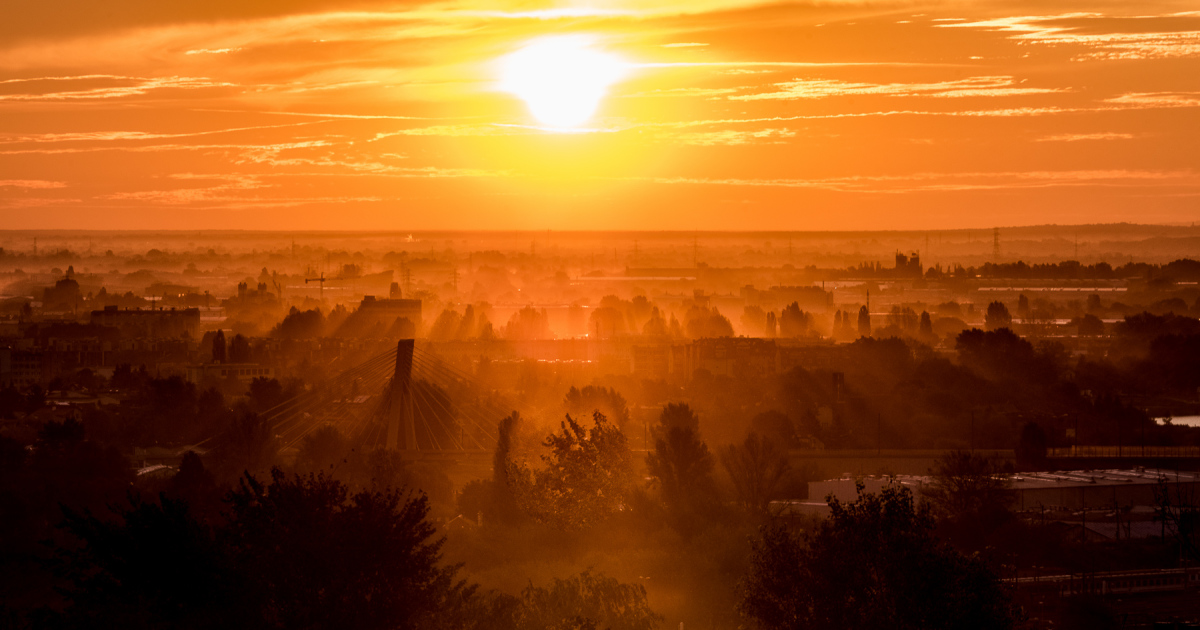
There are cities that look good at noon, and then there is Cracow, also known as Kraków, which seems to have signed a private contract with the sun. During the golden hours, when the light arrives at a low angle and suddenly every brick, tower, cobblestone, and sleepy pigeon gets a dramatic promotion, Cracow becomes less like a city and more like a living oil painting with better coffee.
I came to photograph Cracow during sunrise and sunset, but the city had other plans. It did not simply pose. It performed. The Main Market Square glowed like warm bread fresh from the oven. Wawel Castle rose above the Vistula River with the confidence of a royal portrait. Kazimierz offered textured walls, soft shadows, and quiet corners that felt like pages torn from a centuries-old diary. Even the tram lines looked poetic, which is not something I say lightly about public transportation.
Golden hour photography in Cracow is special because the city already has the essential ingredients: Gothic towers, Renaissance arcades, medieval streets, riverside views, parks, bridges, and neighborhoods layered with memory. Add warm directional light, and suddenly ordinary scenes become cinematic. A café chair casts a long shadow across the pavement. A cyclist passes through a beam of orange light. The towers of St. Mary’s Basilica cut into the morning sky like a pair of historic exclamation points.
Why Cracow Is Made For Golden Hour Photography
Cracow’s historic center is one of Europe’s most visually rewarding urban landscapes. Its Old Town is compact, walkable, and filled with architectural variety, from medieval lanes to grand public squares. For photographers, this means you do not need to sprint across the city like a caffeinated marathon runner. You can plan a slow route and still capture several different moods in a single golden hour.
The city’s layout helps. Rynek Główny, the Main Market Square, is open and spacious, allowing the low sun to stretch shadows across the stone pavement. The Cloth Hall, or Sukiennice, gives you rhythm through its arcades. St. Mary’s Basilica provides height, drama, and texture. Wawel Hill offers elevation, while the Vistula River adds reflections and soft movement. Planty Park wraps the Old Town in greenery, filtering sunlight through leaves and turning a simple walk into a photo study in layers.
Cracow also has something many polished destinations lose: character. The light does not fall on blank glass towers alone. It lands on weathered walls, uneven stones, old doorways, iron lamps, flower stalls, café umbrellas, church spires, and the faces of people starting or ending their day. That is where the magic lives. Golden hour does not just beautify Cracow; it reveals its personality.
Sunrise In The Main Market Square
My first serious golden hour session began in Rynek Główny before the city had fully opened its eyes. Arriving early is not glamorous. It involves alarms, questionable decision-making, and the quiet suspicion that your blanket is plotting to keep you forever. But the reward is worth it. Before the crowds arrive, the Main Market Square feels enormous, almost theatrical.
The Cloth Hall sits in the center like a grand stage set, its Renaissance arches catching the first warmth of the morning. At this hour, the shadows are long and generous. They create leading lines across the square, pulling the viewer’s eye toward the Town Hall Tower or the basilica. I photographed the square from low angles to emphasize the cobblestones, letting the texture of the ground guide the composition.
St. Mary’s Basilica is one of the great subjects of Cracow photography. Its uneven towers give it a recognizable silhouette, and during golden hour, the brickwork shifts from deep red to glowing copper. I waited for small human details to enter the frame: a person crossing the square, a vendor preparing a stall, a couple walking with coffee in hand. Architecture gives a photograph structure, but people give it breath.
Wawel Castle And The Vistula River At Sunset
If sunrise belongs to the Main Market Square, sunset belongs to Wawel Castle and the Vistula River. Wawel Hill is one of Cracow’s most important historic sites, but through a camera lens at golden hour, it becomes something even more immediate: shape, color, contrast, and reflection.
I found that the best approach was to walk along the Vistula Boulevards and watch how the castle changed with every few steps. From one angle, Wawel looked powerful and formal. From another, it softened into warm stone and red rooftops. The river helped by doing what rivers do best: pretending to be calm while secretly improving every composition.
Photographing Wawel at sunset is a lesson in patience. The most obvious shot is the castle against the sky, and yes, that can be beautiful. But the stronger images often appear when something interrupts the postcard view. A boat moving across the water. A runner in silhouette. A bird cutting through the light. A patch of clouds catching fire behind the towers. These small interruptions turn a famous landmark into a personal moment.
Kazimierz: Warm Light, Old Walls, And Street-Level Stories
Kazimierz, Cracow’s historic Jewish quarter, offers a different kind of golden hour beauty. It is less grand than the Main Market Square and less royal than Wawel, but it may be the most atmospheric area for street photography. Here, the light slides down narrow streets, catches on old facades, and settles into courtyards like it has nowhere else to be.
I walked through Szeroka Street, Józefa Street, and the surrounding lanes looking for texture. Kazimierz rewards photographers who slow down. A faded wall can become a backdrop. A bicycle leaning against a doorway can become a subject. A window with warm interior light can create a quiet contrast against the cooling evening outside.
During the golden hour, Kazimierz feels especially human. Restaurants begin to glow. Street art becomes richer in color. People gather outside bars and cafés. The neighborhood has a layered history, and it should be photographed with respect, not treated as a decorative backdrop. The best images are not just pretty; they acknowledge that beauty here comes with depth.
Planty Park And The Soft Edge Of The Old Town
Planty Park circles the Old Town where the medieval walls once stood, and it is one of my favorite places to photograph softer scenes. After the strong geometry of Rynek Główny, Planty feels like an exhale. Trees filter the sunlight, benches create simple foreground elements, and the paths curve gently enough to add movement without demanding attention.
Morning light in Planty is delicate. It catches leaves, outlines pedestrians, and creates a calm green frame around the city. In autumn, the park becomes especially photogenic, with warm foliage matching the low sun. In spring and summer, the fresh greenery gives Cracow a softer face. Even in winter, when branches are bare, the low sun can turn the park into a study of lines and shadows.
For composition, I used the paths as leading lines and waited for people to enter naturally. Someone walking a dog. A student with a backpack. An older couple moving slowly through the light. These are not dramatic subjects, but they are honest ones. Golden hour photography often works best when it makes daily life feel quietly extraordinary.
Best Golden Hour Photo Spots In Cracow
1. Rynek Główny
The Main Market Square is ideal for sunrise, especially when the crowds are thin and the light can stretch across the open space. Focus on the Cloth Hall, St. Mary’s Basilica, the Town Hall Tower, and the human movement between them.
2. Wawel Hill
Wawel Castle and Wawel Cathedral are beautiful from within the grounds, but they are especially photogenic from the riverside at sunset. Walk along the Vistula and experiment with reflections, silhouettes, and wide compositions.
3. Kanonicza Street
This historic street leading toward Wawel has elegant facades and a quieter mood. During golden hour, the walls pick up warm tones, and the perspective naturally guides the eye forward.
4. Kazimierz
Kazimierz is excellent for street photography, details, and evening atmosphere. Look for doorways, signs, street art, cafés, and layered compositions that combine people with architecture.
5. Vistula Boulevards
The riverbanks are perfect for relaxed sunset shooting. The water, bridges, boats, and castle views offer a strong variety of scenes without requiring complicated logistics.
6. Bernatka Footbridge
This pedestrian bridge connecting Kazimierz and Podgórze adds modern lines to the historic city. At golden hour, it works well for silhouettes, backlighting, and urban compositions.
How I Approached The Photography
Golden hour moves quickly, so planning matters. I checked sunrise and sunset times in advance, then chose one main subject for each session. That decision helped me avoid the classic photographer’s mistake: trying to capture everything and ending up with 47 images of nothing in particular. Cracow is generous, but the light still keeps a strict schedule.
For camera settings, I kept things flexible. In the early morning, I used a lower ISO whenever possible to preserve detail. Around sunrise and sunset, I adjusted exposure carefully because the sky could be much brighter than the streets. When shooting architecture, I tried to keep vertical lines straight. Cracow’s towers already have enough personality; they do not need help leaning like they have just heard surprising news.
I also used shadows as part of the story. Many beginners chase only the bright parts of golden hour, but the shadows are just as important. Long shadows create depth, mystery, and direction. In the Main Market Square, they turned empty space into design. In Kazimierz, they added mood to narrow lanes. Along the Vistula, they helped separate people and trees from the glowing background.
What Cracow Taught Me About Light
Photographing Cracow during the golden hours reminded me that light is not just decoration. It is interpretation. The same building can feel proud at sunrise, romantic at sunset, and mysterious during blue hour. The same street can look ordinary at noon and unforgettable when the sun slips low enough to skim across the walls.
Cracow also taught me to embrace timing without becoming a prisoner of it. Some of my favorite shots happened slightly before or after the textbook golden hour. The soft blue light after sunset made the warm lamps around the square glow beautifully. The early minutes before sunrise gave the city a calm, silvery mood. In travel photography, rules are useful, but curiosity is better.
The city rewards both wide views and small details. Yes, photograph Wawel Castle. Yes, capture St. Mary’s Basilica. But also photograph the hand of a street musician, the reflection of the Cloth Hall in a puddle, the steam rising from a cup of coffee, the glow on a tram window, or a pigeon standing proudly in the best light as if it paid for the location permit.
A Longer Personal Experience: Chasing Cracow’s Golden Glow
My most memorable experience began on a cold morning when the sky looked undecided. It was not dramatic yet, just pale and quiet, with the kind of chill that makes you question every life choice that led to standing outside before breakfast. I walked toward the Main Market Square with my camera ready and my hands tucked into my sleeves like a very committed amateur magician.
At first, nothing happened. The square was still gray, the buildings were flat, and I wondered whether the sunrise had taken a personal day. Then, slowly, the light began to gather behind the rooftops. It touched the upper parts of St. Mary’s Basilica first, then slid downward across the brick towers. Within minutes, the entire square changed. The Cloth Hall warmed, the windows flashed, and the cobblestones began reflecting tiny pieces of the sky.
I remember standing near the Adam Mickiewicz Monument, watching a man sweep outside a café. He was not performing for anyone. He was simply starting his day. But the light caught the dust in the air, and suddenly the scene looked cinematic. I took several frames, adjusting my position so the shadow of the monument led toward him. It was not the most famous subject in Cracow, but it felt like the city waking up in one small honest gesture.
Later that evening, I went to the Vistula River for sunset. The atmosphere was completely different. Morning in Cracow feels private, like the city has let you in before opening hours. Evening feels communal. People walked along the river, friends sat on the grass, cyclists passed in flashes, and Wawel Castle watched over everything with royal patience. The sun lowered behind the city, and the castle walls turned warm and soft.
I tried several compositions from the riverbank. Some were wide and classic, with Wawel above the water. Others were tighter, using tree branches as a natural frame. My favorite image from that evening included a small boat crossing the reflection just as the sky turned peach. Technically, it was not perfect. A corner was slightly darker than I wanted, and a bird appeared as a tiny suspicious dot. But the feeling was right. It captured the way Cracow holds history and daily life in the same frame.
Kazimierz gave me my quietest golden hour. I arrived near sunset with no strict plan, which is sometimes the best plan as long as you pretend it was intentional. The streets were beginning to glow, restaurant windows were lighting up, and conversations spilled onto the sidewalks. I photographed doorways, signs, and warm patches of light on old walls. One scene stayed with me: a bicycle leaning beneath a window, its shadow stretched twice its size across the pavement. There was no landmark, no grand monument, no dramatic skyline. Just light, texture, and stillness.
That is what I loved most about photographing Cracow. The city does not force beauty on you. It offers it in layers. Grand beauty at Wawel. Public beauty in the Main Market Square. Intimate beauty in Kazimierz. Natural beauty along the Vistula. Quiet beauty in Planty Park. During the golden hours, those layers become easier to see. The city slows down just enough for you to notice them.
By the end of my time photographing Cracow, I had memory cards full of towers, streets, reflections, silhouettes, and happy accidents. But more importantly, I had learned to watch the city differently. Golden hour is not only about warmer color. It is about attention. It asks you to arrive early, stay late, and look twice. In Cracow, that extra attention is always rewarded.
Conclusion
Photographing the beauty of Cracow during the golden hours felt like following sunlight through a city that knows exactly how to use it. From the grand openness of Rynek Główny to the riverside elegance of Wawel, from the textured streets of Kazimierz to the calm paths of Planty Park, Cracow offers photographers a rare mix of history, atmosphere, and visual rhythm.
The golden hours do not create Cracow’s beauty; they reveal it. They pull warmth from brick, depth from stone, softness from water, and stories from ordinary street scenes. Whether you are a professional photographer, a traveler with a camera, or someone using a phone while pretending not to take 300 versions of the same sunset, Cracow gives you more than enough reasons to keep shooting.
Note: This HTML body is written in standard American English, with publication-ready structure, natural SEO keyword use, and no placeholder citation artifacts.