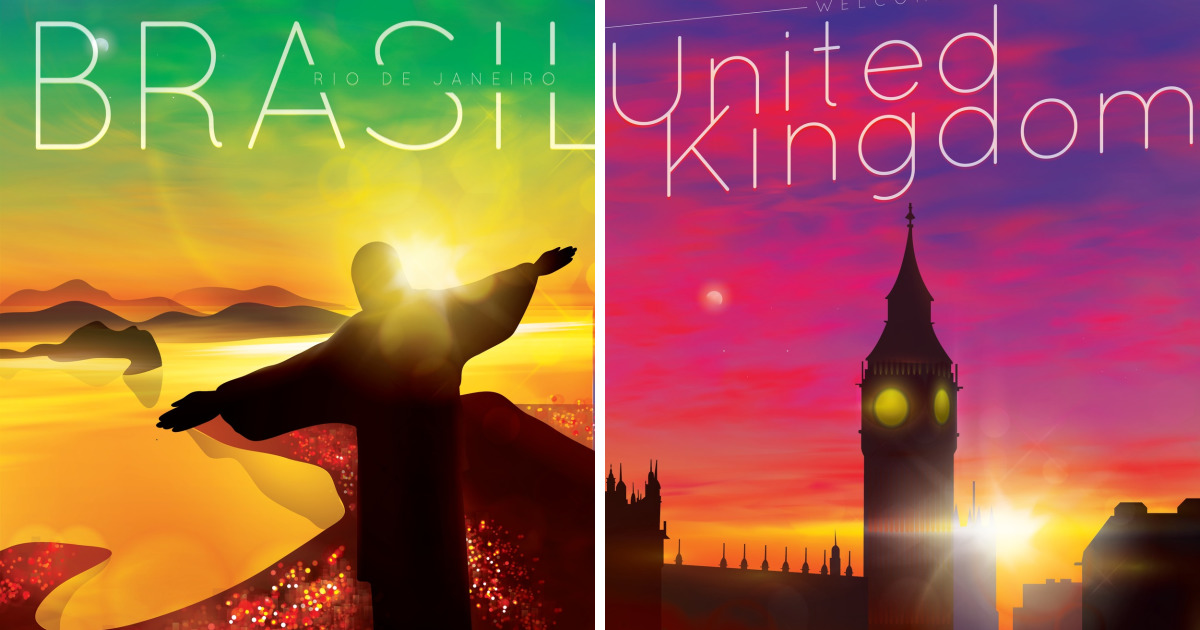
Some people need a flight deal to start dreaming about travel. Others need a dramatic movie montage, a new suitcase, or one suspiciously persuasive friend who says, “Trust me, this hostel is totally fine.” But sometimes, all it takes is a beautiful illustration of a famous landmark to make your brain quietly pack a bag before your body has even checked its passport.
Illustrations of famous landmarks have a special kind of magic. A photograph shows us what a place looks like. A travel illustration shows us what it feels like. The Eiffel Tower becomes more than iron and rivets; it becomes a late-night Paris walk with buttery pastries waiting somewhere nearby. The Colosseum is no longer just ancient stone; it becomes Rome humming with scooters, espresso, and history casually leaning against every wall. The Taj Mahal turns into moonlit marble, symmetry, devotion, and the sudden realization that your camera roll may never emotionally recover.
That is why artist illustrations of landmarks are so powerful for travel inspiration. They simplify the world just enough to make it feel possible. They remove the noise, highlight the wonder, and remind us that every iconic place was once somebody’s sketch, dream, blueprint, or impossible idea. In other words, travel begins exactly where art begins: with looking closely.
Why Illustrated Famous Landmarks Make Us Want to Travel
Famous landmark illustrations work because they blend recognition with imagination. You already know the outline of the Statue of Liberty, Big Ben, the Leaning Tower of Pisa, or the Sydney Opera House. Your brain sees the shape and says, “Ah, yes, that place.” But the artist’s style adds a second message: “Now look again.”
A landmark drawing can exaggerate color, soften harsh edges, add movement to the sky, or place tiny travelers at the base of enormous architecture. Suddenly, the landmark stops being a postcard cliché and becomes a personal invitation. It is not simply “Paris.” It is Paris through a blush-pink sunset. It is not merely “Machu Picchu.” It is a mountain mystery wrapped in green, stone, cloud, and altitude-induced humility.
Great travel art also gives viewers permission to dream without logistics. No airport lines. No currency conversion. No “your hotel room is ready at 3 p.m.” Just the emotional spark. That spark matters because most trips start long before booking. They begin when a place enters your imagination and refuses to leave.
The Landmarks Artists Love to Reimagine
Some landmarks are practically begging to be illustrated. They have strong silhouettes, deep histories, and instantly recognizable personalities. Yes, buildings can have personalities. The Eiffel Tower is elegant. The Colosseum is dramatic. The Statue of Liberty is dignified. The Leaning Tower of Pisa is the friend who insists, “No, no, I’m fine,” while clearly not standing straight.
The Eiffel Tower: Paris in One Perfect Shape
The Eiffel Tower may be one of the most illustrated landmarks in the world because it is visually simple yet emotionally loaded. Built for the 1889 World’s Fair, the tower was once controversial for its industrial look. Today, it is the ultimate symbol of Paris, romance, design, and the powerful human urge to photograph dinner with a tower in the background.
Artists often draw the Eiffel Tower with loose lines, watercolor skies, bicycles, café chairs, and tiny figures walking below. These details matter. They move the viewer from “I recognize this monument” to “I can imagine myself there.” That is the secret sauce of travel illustration: it turns a destination into a scene you want to step inside.
The Statue of Liberty: Freedom with a Skyline
The Statue of Liberty is more than a landmark; it is a symbol that has welcomed generations to New York Harbor. Dedicated in 1886, the statue was a gift from France and remains one of the most meaningful monuments in the United States. In illustrations, Lady Liberty often appears with bold lines, glowing skies, ferry boats, or the Manhattan skyline behind her.
For travelers, the image carries a double invitation: visit New York, yes, but also remember the emotional weight of arrival. Landmark art does not have to be loud to be powerful. Sometimes a simple drawing of the torch is enough to suggest courage, movement, and a very strong craving for a bagel afterward.
The Colosseum: Ancient Rome, Still Showing Off
The Colosseum in Rome is a dream subject for illustrators because it combines texture, shadow, broken symmetry, and pure theatrical drama. Built in the first century, this ancient amphitheater has survived earthquakes, stone reuse, time, tourists, and approximately seven billion vacation selfies.
In drawings, the Colosseum often feels warmer and more intimate than it does in a standard travel photo. Artists can emphasize the arches, golden Roman light, or the contrast between ancient stone and modern city life. One illustration may capture what a rushed tourist misses: the way Rome casually stacks centuries on top of each other like it forgot history was supposed to be organized.
The Taj Mahal: Symmetry, Marble, and Emotion
The Taj Mahal in Agra, India, is one of the world’s most beloved architectural masterpieces. Built in the 17th century by Mughal emperor Shah Jahan in memory of Mumtaz Mahal, it is admired for its white marble, symmetry, gardens, calligraphy, and emotional story.
Illustrators love the Taj Mahal because it changes with light. At sunrise, it can look soft and pale. At sunset, it can glow. Under moonlight, it becomes almost dreamlike. A good illustration can capture that shifting mood better than a literal snapshot. It can show the monument not just as a place to visit, but as a feeling: quiet, balanced, and unforgettable.
Machu Picchu: A Drawing Made of Mountains
Machu Picchu stands high in the Andes of Peru, surrounded by dramatic mountain scenery and cloud forest. Its terraces, stone walls, and pathways make it one of the most visually striking archaeological sites on Earth. Artists often illustrate it with mist curling around green peaks, llamas doing their best unpaid modeling work, and stonework that seems to grow from the mountain itself.
For travel inspiration, Machu Picchu illustrations do something especially useful: they make adventure feel poetic rather than intimidating. Yes, there are trains, trails, permits, altitude, and planning. But in art, the first impression is wonder. And wonder is often the thing that convinces people to start planning seriously.
How Landmark Illustrations Change the Way We See Travel
Travel photography often pushes us toward perfection: the perfect angle, perfect outfit, perfect weather, perfect moment where no stranger walks into the frame holding a giant bottle of water. Illustration is more forgiving. It says the memory is more important than the evidence.
An artist can remove the crowd from the Louvre Pyramid, brighten the rooftops of Santorini, or make the Golden Gate Bridge appear through dreamy fog. This is not deception; it is interpretation. Travel itself works the same way. Two people can visit the same landmark and come home with completely different stories. One remembers the architecture. One remembers the street musician. One remembers getting lost and discovering the best sandwich of their life. All are valid. Especially the sandwich.
Illustrations also help travelers slow down. When you draw or study a drawing, you notice shapes, patterns, and atmosphere. You see how the arches repeat, how shadows fall, how scale works, and how a landmark relates to the life around it. That deeper attention can make actual travel richer. Instead of racing from one attraction to another, you begin to observe.
From Art Print to Plane Ticket: Turning Inspiration Into a Real Trip
It is easy to admire landmark art and say, “Someday.” The problem is that “someday” has a suspicious habit of never appearing on the calendar. So, if an illustration makes you want to travel, use that momentum while it is fresh.
Start With the Feeling, Not the Destination
Ask what attracted you to the illustration. Was it the romance of Paris? The ancient mystery of Petra? The color of Lisbon tiles? The peaceful geometry of Japanese temples? The energy of Times Square? Your answer tells you what kind of trip you actually want.
For example, if you love an illustration of Venice because of its narrow canals and golden windows, you may be craving slow wandering, not a packed museum schedule. If a drawing of the Great Wall of China inspires you, perhaps you want scale, landscape, and history. If you keep staring at a sketch of Barcelona’s Sagrada Família, maybe you want architecture that makes your brain say, “I do not understand this, but I respect it.”
Build a Mini Itinerary Around Visual Moments
Instead of planning only around famous attractions, plan around scenes. Choose sunrise at one landmark, a neighborhood walk near another, a café with a view, a local market, a museum, and one unstructured afternoon. The best trips leave room for surprise. A vacation with every minute scheduled can start feeling less like travel and more like a spreadsheet wearing sunglasses.
Use illustrations as mood boards. If the artwork shows warm colors, historic streets, and relaxed people-watching, build your trip around that energy. If it shows bold architecture and dramatic skylines, look for observation decks, walking tours, river cruises, or design museums. Art can become a surprisingly practical travel planner when you pay attention to what it makes you want to experience.
Why Travel Sketching Is Worth Trying, Even If You “Can’t Draw”
Here is the good news: your travel sketchbook does not need to impress anyone. It is not applying to art school. It does not need dramatic shading, perfect perspective, or a cathedral that looks structurally legal. Travel sketching is valuable because it trains you to notice.
Draw the window of your hotel room. Sketch the coffee cup from breakfast. Capture the outline of a bridge, the shape of a market stall, or the funny little chair outside a bakery. These imperfect drawings can become stronger memories than polished photos because they contain time. You sat there. You looked. You tried. You probably erased something aggressively. That is part of the charm.
Many travelers now combine photography, journaling, and quick sketches. A page might include a ticket stub, a five-minute drawing, a note about the weather, and a quote from a tour guide. Years later, that messy page can bring back the day more vividly than a perfect image stored somewhere between 8,000 other phone photos and a screenshot of a parking receipt.
The Best Famous Landmarks for Illustration-Inspired Travel
If you want to plan a trip based on illustrated landmarks, start with places that offer strong visual identity and rich surrounding experiences. The landmark should be the spark, not the entire trip.
Paris, France
The Eiffel Tower, Notre-Dame, the Louvre, Montmartre, and the Seine make Paris a paradise for illustrated travel inspiration. The city rewards walkers, sketchers, café sitters, and anyone willing to consider bread a major cultural category.
Rome, Italy
Rome is ideal for travelers who love layers of history. The Colosseum, Roman Forum, Pantheon, Trevi Fountain, and Vatican City create a visual feast. Every corner seems to have ruins, churches, fountains, or someone gesturing passionately near a scooter.
New York City, United States
New York offers landmarks with personality: the Statue of Liberty, Empire State Building, Brooklyn Bridge, Central Park, Grand Central Terminal, and Times Square. Illustrations of New York often capture movement, ambition, and beautiful chaos. Basically, the city has main-character energy.
Agra, India
The Taj Mahal is the centerpiece, but Agra Fort, gardens, markets, and Mughal architecture make the city a deeper experience. For artists, Agra offers symmetry, marble, reflection pools, and intricate decorative details.
Cusco and Machu Picchu, Peru
A trip to Machu Picchu often begins with Cusco, a city full of Inca history, Spanish colonial architecture, markets, and mountain culture. The full journey offers more than one famous view; it offers a sense of movement through landscape and time.
What Artists Teach Travelers About Seeing the World
Artists do not merely look at landmarks; they study them. They notice negative space, rhythm, proportion, color temperature, and human scale. Travelers can borrow this mindset without carrying a professional sketch kit.
When you arrive at a famous place, pause before taking a photo. Look at the landmark for ten full seconds. Notice what surprises you. Is it bigger than expected? Smaller? More crowded? More peaceful? Does it smell like rain, street food, old stone, or sunscreen? These details are the difference between checking off a bucket-list item and actually experiencing a place.
Illustrations remind us that landmarks are not frozen objects. They live inside cities, cultures, weather, politics, memory, and everyday routines. The Eiffel Tower is also workers, elevators, maintenance, picnics, proposals, and locals trying to get across town. The Statue of Liberty is also ferry schedules, security lines, harbor wind, and school groups asking surprisingly intense questions. The Taj Mahal is also conservation, crowds, craft, and sunrise silence.
Experiences Inspired by Famous Landmark Illustrations
One of the most enjoyable ways to travel is to treat each destination as if you are stepping into an illustration. That does not mean forcing the trip to look perfect. It means approaching the place with curiosity, humor, and an eye for small scenes. A famous landmark may bring you there, but the surrounding moments often become the memories you keep.
Imagine arriving in Paris after seeing a delicate illustration of the Eiffel Tower surrounded by soft clouds and tiny rooftops. In real life, the first thing you may notice is not romance but traffic, ticket lines, and someone selling miniature towers with the confidence of a Wall Street executive. But then evening arrives. The sky deepens. The tower lights up. People gather on the grass with snacks, cameras, and that universal expression that says, “Okay, yes, this is famous for a reason.” Suddenly the illustration makes sense. It was never promising perfection. It was pointing you toward a feeling.
In Rome, an illustration of the Colosseum might inspire you to visit early in the morning. You stand near the ancient amphitheater while the city is still waking up. Delivery trucks pass. Tour guides organize groups. Sunlight hits the arches. The scene is not silent or cinematic in the way travel posters suggest, but it is better because it is alive. You realize the Colosseum is not just an ancient monument; it is part of a modern city that has learned to live beside its ghosts.
In New York, a bold graphic drawing of the Statue of Liberty can become the reason you take the ferry instead of only viewing the harbor from a distance. The wind is stronger than expected. The skyline keeps shifting behind you. The statue grows larger slowly, which feels more dramatic than it has any right to be. By the time you arrive, you understand why artists return to that silhouette again and again. It is simple, powerful, and emotionally direct.
In Agra, a watercolor-like image of the Taj Mahal may encourage you to arrive at sunrise. The early wake-up is rude, frankly. Your alarm becomes your enemy. But then the marble begins changing color with the light, and the entire morning feels worth it. You notice reflections, birds, carved details, and the quiet behavior of people who instinctively lower their voices in beautiful places.
At Machu Picchu, an illustrated travel poster might prepare you for grandeur, but the real experience includes breath, weather, stone steps, and mountains that seem to rearrange your sense of scale. You may take photos, of course. Everyone does. But if you sit for a moment and sketch even one rough terrace line or mountain curve, you will remember the place differently. You will remember not just how it looked, but how long you looked.
That is the gift of landmark illustrations. They do not replace travel. They awaken it. They give you a reason to look up from routine, choose a place, and imagine yourself there. Then, when you finally go, they teach you to see the real destination with more patience and playfulness.
Conclusion: Let the Drawing Become the Departure
Artist illustrations of famous landmarks are more than pretty travel content. They are tiny engines of curiosity. They compress history, architecture, atmosphere, and emotion into a single image powerful enough to make someone search flights, renew a passport, or finally open that folder labeled “Dream Trips” that has been emotionally neglected since 2019.
The world’s great landmarks became famous because they mean something. They represent ambition, memory, faith, freedom, beauty, engineering, survival, and imagination. When artists reinterpret them, they make those meanings feel fresh again. They remind us that travel is not only about reaching a destination. It is about learning how to notice, how to wonder, and how to return home with a bigger inner map.
So the next time a landmark illustration stops you mid-scroll, do not dismiss it as just another pretty picture. Save it. Study it. Ask why it caught your attention. Maybe it is pointing you toward your next journey. Maybe the Eiffel Tower, Machu Picchu, the Taj Mahal, or the Statue of Liberty is not merely sitting on your screen. Maybe it is politely, beautifully, and with excellent composition, telling you to start travelling now.
Note: This article is based on synthesized information from reputable travel, culture, art, architecture, and heritage references, rewritten in original wording for web publication.