Eggplant has a bit of a reputation problem. Some people think it turns mushy. Some think it tastes bitter. Others buy one with good intentions, let it sit in the fridge for four days, and then act surprised when it stares back like a wrinkly purple paperweight. But when you cook eggplant the right way, it becomes creamy, rich, silky, and deeply savorybasically the vegetable version of a plot twist.
If you’ve ever wondered how to cook eggplant without ending up with soggy slices or chewy disappointment, you’re in the right kitchen. This guide walks you through five simple methods that actually work: roasting, grilling, sautéing, broiling, and air frying. Along the way, we’ll also cover how to choose eggplant, whether you need to salt it, when to peel it, and which mistakes make this vegetable go from dinner hero to sponge with an attitude.
By the end, you’ll know exactly how to cook eggplant for quick weeknight sides, hearty vegetarian mains, pasta tosses, sandwiches, grain bowls, and yes, the occasional dramatic platter that makes everyone ask, “Wait, this is eggplant?”
Before You Cook Eggplant: A Few Things to Know
How to choose the best eggplant
Start at the store with a simple test: look for eggplant that feels heavy for its size with smooth, glossy skin. It should be firm, not shriveled, bruised, or suspiciously squishy. The stem cap should look fresh and green, not dry and sad. Smaller eggplants are often a little sweeter and less bitter, while large globe eggplants can be meatier and better for dishes like eggplant Parmesan, layered bakes, and dips.
Do you need to peel eggplant?
Not always. The skin is edible, and on smaller varieties such as Japanese or fairy tale eggplant, it’s usually tender enough to leave on. Larger globe eggplants have thicker skin, which can turn a bit chewy if the vegetable is older or undercooked. If you want a softer final texture, peel some or all of the skin. If you like a little structure, leave it on. This is one of those rare cooking decisions where both answers are correct, which is frankly refreshing.
Do you need to salt eggplant first?
Sometimes yes, sometimes no. Old-school recipes often insist that salting removes bitterness. Modern eggplant varieties are generally less bitter than they used to be, so that’s not the main reason anymore. These days, salting is most useful when texture mattersespecially if you’re frying, searing, stacking, or trying to get crisp, golden edges.
Here’s the basic rule: if you’re cooking eggplant quickly over high heat and want it to brown well, salting helps. If you’re roasting it low and slow until it collapses into creamy softness, you can usually skip that step. To salt it, slice the eggplant, sprinkle generously with kosher salt, let it sit for about 30 minutes, then pat it dry. Easy. Slightly dramatic. Worth it when crispness is the goal.
Why eggplant loves oil
Eggplant absorbs oil like it just got paid to do it. That doesn’t mean you should drown it, but it does mean you should not be stingy. A light, even coating of oil helps the flesh brown, keeps it from drying out, and gives you that luscious texture people are usually hoping for. Add oil gradually, especially in a skillet, so the eggplant gets golden instead of greasy.
Method 1: Roast Eggplant
Best for: cubes, slices, halves, meal prep, grain bowls, pasta, salads, and creamy dips
Roasting is probably the easiest way to cook eggplant, and for many people, it’s the gateway method. The oven gives the vegetable enough dry heat to caramelize the outside while softening the inside until it turns silky and rich. Roast it in cubes for bowls, in rounds for layering, or in halves if you want a dramatic presentation with minimal effort and maximum compliments.
How to do it
Cut the eggplant into cubes, rounds, or lengthwise halves. Brush or toss with olive oil, season with salt and pepper, and spread it out on a baking sheet in a single layer. Roast at 425°F to 450°F until the pieces are golden and tender, usually 20 to 25 minutes for cut pieces, flipping once halfway through.
If you’re roasting a whole eggplant for dip or spread, pierce it a few times with a fork and roast at about 400°F until very soft, usually 35 to 45 minutes. Then split it open and scoop out the flesh. This is the route to smoky spreads, mashed eggplant toast, and a very respectable baba ganoush situation.
Roasting tips
Do not crowd the pan. If the pieces are packed too tightly, they’ll steam instead of brown. Also, cut the pieces evenly so some aren’t mush while others are still auditioning for a crunchier role. Roasted eggplant pairs especially well with garlic, lemon, tahini, tomatoes, Parmesan, fresh herbs, chili crisp, and yogurt-based sauces.
Method 2: Grill Eggplant
Best for: smoky side dishes, sandwiches, platters, summer cookouts, and sturdy slices with char
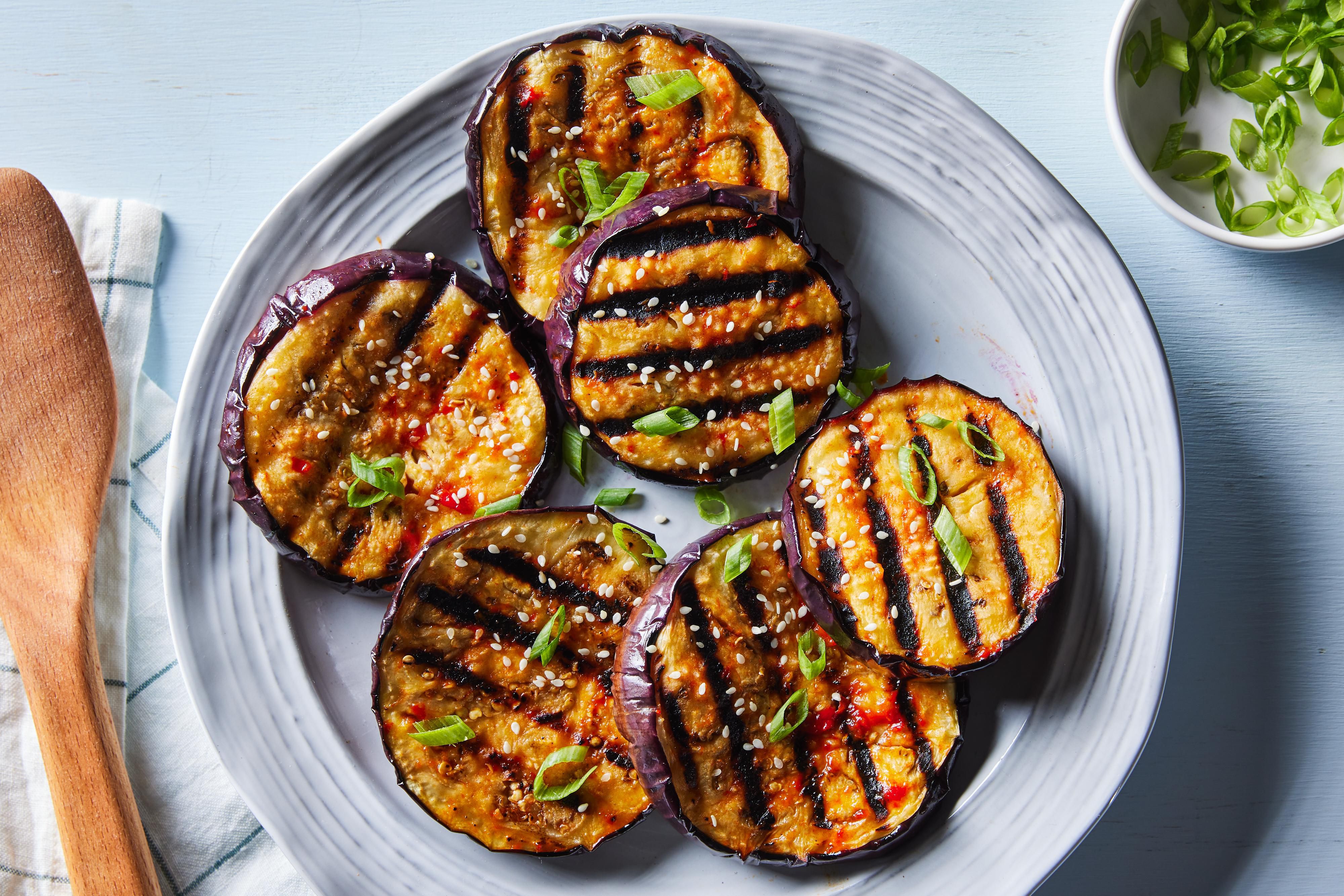
Grilled eggplant can be outrageously good when done right: smoky outside, creamy inside, and just structured enough to hold toppings like feta, yogurt sauce, herbs, or a punchy vinaigrette. When done wrong, it can be leathery, oily, or stuck to the grates like it’s filing a complaint. The fix is all about slice thickness, oil control, and patience.
How to do it
Slice eggplant lengthwise or into thick rounds, ideally about 1/2 inch thick. Brush lightly with oil, season with salt, and grill over medium-high heat for about 4 to 5 minutes per side, or until the slices are tender and well marked. Flip only when they release easily from the grates. If they cling for dear life, they’re not ready yet.
Grilling tips
Clean and oil your grill grates first. That step is not glamorous, but it matters. Also, use a light hand with oil before grilling, then add a little more after cooking if you want extra flavor. That second brush of oil, vinaigrette, or marinade sinks into the hot eggplant beautifully without making it greasy.
Grilled eggplant works wonderfully in sandwiches, antipasto platters, wraps, salads, and Mediterranean-style side dishes. Add tomatoes and basil for a classic combo, or go bold with sesame, soy, cilantro, and a squeeze of lime.
Method 3: Sauté Eggplant
Best for: quick dinners, stir-fries, skillet pastas, curries, and saucy dishes
Sautéing is the weeknight answer when you want eggplant fast. It cooks quickly, browns nicely, and slides into pasta sauce, curry, grain bowls, and stir-fries without much fuss. It’s especially great for cubed globe eggplant or slender Japanese eggplant, which cooks quickly and tends to stay tender without much bitterness.
How to do it
Cut the eggplant into cubes, coins, or thick strips. Heat oil in a large skillet over medium-high heat until shimmering, then add the eggplant in a single layer. Cook until browned and tender, usually about 4 to 5 minutes per side for slices or a bit longer for cubes, stirring occasionally. Work in batches if needed so the pan doesn’t get crowded.
Sautéing tips
Here’s the golden rule: don’t dump all the oil in at once. Eggplant absorbs it quickly, so add a little as needed while it cooks. That helps each side brown instead of turning the whole skillet into a slick purple sponge convention. Once browned, eggplant plays well with garlic, ginger, onions, tomato sauce, curry paste, soy sauce, basil, mint, and toasted sesame oil.
If you’re making a stir-fry, Japanese eggplant is especially useful because its thinner shape and smaller seeds help it cook quickly and evenly. It also brings a naturally mild, sweet flavor that makes weeknight cooking feel just a little fancier than it really is.
Method 4: Broil Eggplant
Best for: fast browning, toasty edges, sandwiches, open-faced melts, and finishing a dish quickly
Broiling is like roasting with a caffeine habit. It delivers intense top heat, which means eggplant can brown and soften quickly without a long oven session. This is perfect when you want slices for sandwiches, toast, or a speedy side dish and don’t feel like waiting around for a full roast.
How to do it
Slice the eggplant into rounds or planks, brush with oil, and place on a baking sheet or broiler pan about 6 inches from the heat source. Broil for about 5 to 10 minutes, flipping once if needed, until the eggplant is tender and nicely toasted.
Broiling tips
Watch it closely. Broilers go from “beautifully caramelized” to “charcoal with feelings” very quickly. Broiled eggplant is especially good topped with cheese, layered into sandwiches, or finished with garlic, herbs, and lemon juice. If you need a fast route to “wow, that looks impressive,” this is a strong contender.
Method 5: Air Fry Eggplant
Best for: crisp edges, lighter texture, snackable bites, and small-batch cooking
Air frying eggplant gives you a lovely combination of creamy interior and crisp exterior with less oil than pan frying. It’s ideal for cubes, rounds, or breaded slices, and it’s especially useful when you want texture without heating up the whole kitchen like it’s a tiny pizza furnace.
How to do it
Cut eggplant into evenly sized pieces, toss or brush with oil, and season well. Preheat the air fryer to 400°F to 425°F. Arrange the eggplant in a single layer and cook for about 12 to 15 minutes, flipping or shaking halfway through, until golden and tender.
Air-fryer tips
Do not overcrowd the basket. The air fryer works by circulating hot air, not by performing culinary magic in defiance of physics. If you pile in too much, the eggplant softens but won’t crisp. Cook in batches and season after cooking if it needs an extra hit of salt, Parmesan, chili flakes, or za’atar.
Common Eggplant Mistakes to Avoid
1. Cutting it too thin
Very thin slices tend to collapse, dry out, or cling to the grill like a bad ex. Thicker slices hold their shape better and develop a creamy center.
2. Under-seasoning it
Eggplant has a mild flavor, which is chef language for “please help me.” Salt, herbs, acid, garlic, and spices make a huge difference.
3. Crowding the pan
Whether roasting or sautéing, crowding causes steaming instead of browning. Give the pieces room. Eggplant likes personal space.
4. Using too little oil
Yes, eggplant absorbs oil. No, that doesn’t mean you should avoid it completely. A proper coating helps it cook evenly and taste rich rather than dry.
5. Not cooking it long enough
Properly cooked eggplant should be soft, creamy, and tendernot squeaky, spongy, or oddly firm in the middle. If it still tastes raw, keep going.
Easy Ways to Serve Cooked Eggplant
Once your eggplant is cooked, the fun starts. Roasted cubes can be tossed with pasta, marinara, and ricotta. Grilled slices can be layered into sandwiches with mozzarella and roasted peppers. Sautéed eggplant can anchor a curry, stir-fry, or tomato-based skillet dinner. Broiled eggplant works beautifully on crusty bread with feta and basil. Air-fried pieces make a great side with yogurt sauce or a crisp topping for bowls and salads.
If you’re trying to get more vegetables into your routine without eating sad, obligatory salads, eggplant is a strong ally. It’s hearty, versatile, deeply satisfying, and surprisingly adaptable once you stop expecting it to behave like zucchini.
Final Thoughts on How to Cook Eggplant
If you’ve been avoiding eggplant because of one unfortunate mushy encounter back in 2019, consider this your comeback tour. The secret is not some mysterious chef-only trick. It’s simply choosing the right method, using enough oil, salting when texture matters, and cooking it until it’s truly tender.
For all-around reliability, roast it. For smoky flavor, grill it. For speed, sauté it. For top-down browning, broil it. For crisp edges with minimal fuss, air fry it. Once you get the hang of these five simple methods, eggplant becomes much less intimidating and much more delicious. Which is really the dream for any vegetable, isn’t it?
Kitchen Experiences: What Cooking Eggplant Actually Teaches You
The funny thing about learning how to cook eggplant is that it usually starts with mild suspicion. You buy one because it looks pretty, or because a recipe photo convinced you that your dinner could be rustic and glamorous at the same time. Then you get home, slice into it, and realize it has the texture of a firm kitchen sponge. Confidence drops. Questions rise. Is this a vegetable, a science project, or a prank from the produce aisle?
But after cooking eggplant a few different ways, something changes. You begin to notice that it is less about strict rules and more about paying attention. Roast it long enough and the inside goes custardy in the best possible way. Grill it with enough patience and it turns smoky and silky. Sauté it with decent heat and a little oil, and it becomes the kind of ingredient that makes a quick dinner taste like you knew what you were doing all along.
One of the most useful real-life lessons is that eggplant rewards confidence. The first time many home cooks use it, they under-season it, undercook it, and then blame the eggplant. In reality, this vegetable likes bold flavors and proper heat. It wants garlic, herbs, chiles, lemon, soy sauce, tahini, tomato, cheese, yogurt, and olive oil. It does not want to be treated like a bland background ingredient. Eggplant is more like a great character actor: give it something strong to work with, and it steals the scene.
There’s also the surprisingly satisfying moment when you stop fearing oil. New cooks often think eggplant should be treated like a low-fat moral challenge. Then they taste properly cooked eggplant and realize a modest amount of oil is not the enemyit’s the bridge between dry and luscious. The goal is not greasy eggplant. The goal is glossy, tender, deeply browned eggplant that tastes rich and savory. That’s a completely different thing.
Another experience worth mentioning is how different the varieties can feel in the kitchen. Japanese eggplant is usually the overachiever: quick-cooking, tender-skinned, easy to love. Large globe eggplant is a little more work, but it pays you back with hearty texture and versatility. If you’ve only used one type, trying another can make it seem like you’ve unlocked a bonus level in vegetable cooking.
Most of all, cooking eggplant teaches patience with texture. Unlike vegetables that stay crisp and obvious, eggplant transforms gradually. It softens, browns, absorbs flavor, and gets better when you give it a little more time than you think it needs. That’s why people who learn how to cook eggplant well often become very loyal to it. It goes from confusing to comforting. From suspiciously spongy to incredibly silky. From “Why did I buy this?” to “Should I make more?”
And honestly, that might be the best kitchen experience of all: discovering that a vegetable you once overlooked can become one of the most satisfying things on your plate.