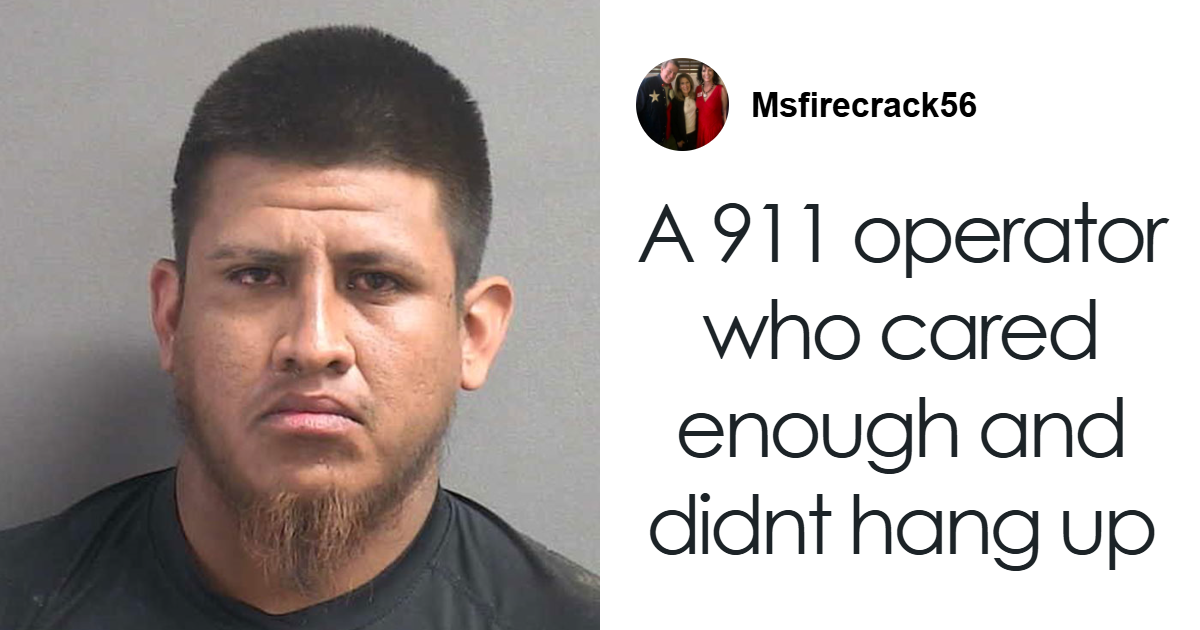
Some stories stop you cold. Not because they are loud, flashy, or designed for viral outrage, but because they reveal how survival actually works in real life: messy, fast, improvised, and frighteningly smart. That is exactly what happened in Florida when a woman, unable to safely explain what was happening, called 911 and pretended to order a pizza. On the other end of the line, a dispatcher understood what she was really saying. Deputies responded. A woman was rescued. A terrible night did not become even worse.
The headline sounds almost cinematic, like a thriller that got unusually good reviews. But the truth is much more sobering. This was not a clever internet stunt or a quirky misunderstanding. It was an emergency. It was a woman under pressure, trying to stay alive while sounding casual enough not to escalate the danger around her. And it was a dispatcher doing exactly what the public hopes emergency professionals will do: listen beyond the words.
For anyone searching for the full meaning behind this “pizza order” story, the real takeaway is bigger than one dramatic moment. It is about how emergency response works when victims cannot speak plainly, why a calm voice can hide a crisis, and what this case says about sexual assault, intimate partner violence, and the split-second intelligence survivors often have to summon when there is no time to think twice.
What Happened in the Florida “Pizza Order” Case
According to the Volusia Sheriff’s Office, the woman called close to 4 a.m. and pretended to place a pizza order while in serious danger. The dispatcher realized the call was not a prank and that the caller needed immediate help. Deputies coordinated with the communications center, tracked her down in a field in Pierson, and found the suspect on top of her while she was screaming for help. Authorities later said the defendant was charged with attempted sexual battery, battery by strangulation, and false imprisonment.
That timeline matters. The rescue did not happen because a code word magically unlocked a secret emergency protocol. It happened because the woman stayed composed enough to keep the call going and because the dispatcher stayed curious enough to recognize that something was very wrong. Reports on the call say she told the dispatcher things like, “I’m so stuck in here,” and continued the fake order while signaling that she was injured and unable to get home. That strange little performance was not random. It was strategy.
And honestly, that is the part people should sit with for a minute. Imagine being scared, hurt, unable to speak freely, and still having the presence of mind to choose a believable everyday script. No dramatic monologue. No neatly phrased plea for help. Just a pizza order standing in for the sentence she could not safely say out loud.
This is why the story hit such a nerve online. People praised the dispatcher, and rightly so, but they also responded to something deeper: the terrifying familiarity of danger hidden in ordinary conversation. A pizza order. A normal voice. An emergency unfolding in real time.
Why the Dispatcher’s Response Matters So Much
The dispatcher in this case deserves the praise because emergency calls are rarely as tidy as television makes them look. Real distress often arrives scrambled. People whisper. They freeze. They ramble. They pretend. Sometimes they sound calm because panic has gone underground. Sometimes they sound confused because trauma is already affecting how they think and speak.
That is why good dispatch work is not just about hearing words. It is about reading tone, pattern, hesitation, contradiction, and urgency. In this case, the dispatcher did not dismiss the call as a joke and move on. He slowed down, tested the situation, and kept the woman engaged long enough for deputies to locate her. That combination of patience and instinct may have saved her life.
There is another reason this moment stands out: experts have long warned that there is no universal “secret code” all 911 operators are trained to recognize. A fake pizza order can work, but it is not a guaranteed password to rescue. What works is a call-taker who listens carefully and a caller who conveys danger however they can. That distinction matters because viral stories often create the misleading idea that everyone should memorize one clever phrase and expect identical results.
Emergency communication is not one-size-fits-all. Sometimes a caller can whisper. Sometimes they can only answer yes-or-no questions. Sometimes texting is safer. Sometimes the most important thing is simply to get an address out before the line goes bad. The dispatcher in this case succeeded not because he had a magic decoder ring, but because he treated an odd call like it might be real. That mindset can change outcomes.
The Bigger Lesson: How to Reach 911 When You Cannot Speak Freely
The Florida rescue story has one huge public-service lesson tucked inside it: if you are in danger, the goal is not to sound clever. The goal is to help responders understand enough to find you fast.
Federal 911 guidance is pretty clear on the basics. If you can call, call. If you cannot safely talk, text if that option is available in your area. When possible, give your location first. Stay on the line unless the call-taker tells you to hang up. Answer questions as simply as you can. Even one useful detail can help responders move faster.
That may sound obvious, but emergencies are rude little chaos machines. They do not arrive with a checklist and soothing background music. Many people in danger are not choosing between “good” and “bad” decisions. They are choosing between “possible” and “barely possible.” In a violent situation, the safest communication may be incomplete, indirect, or disguised. That is not failure. That is adaptation.
For people who cannot safely describe what is happening, plain clues may work better than theatrical code. A location. A room number. A request that sounds wrong for 911 but includes an address. A yes-or-no response to a dispatcher’s questions. A whispered “he’s here.” A text that says “need police now” followed by where you are. In many cases, simple beats clever.
At the same time, the “pizza order” case shows that persistence matters. If the first attempt is not understood, keep signaling. Keep responding. Keep feeding the dispatcher anything useful: landmarks, apartment numbers, injuries, whether the assailant is still nearby, whether weapons are involved, whether children are present. The script does not need to be polished. It just needs to get help moving.
What this story does not mean
It does not mean every dispatcher everywhere will recognize a fake food order. It does not mean one viral trick can replace local emergency systems. It does not mean survivors are responsible for being brilliant under pressure. And it definitely does not mean people who freeze, stay silent, or cannot communicate clearly did anything wrong.
It means that improvisation can help. It means listening saves lives. And it means communities should keep improving text-to-911 awareness, dispatcher training, and public understanding of how emergency communication really works.
Why This Story Resonates Beyond One Night
The reason this incident traveled so quickly online is not just the unusual 911 call. It is the fact that the story fits a much larger national reality. Sexual violence remains a serious public-health and public-safety issue in the United States. CDC guidance notes that sexual violence affects every community and that perpetrators are often people the survivor knows. That matters because the old stranger-in-the-bushes stereotype misses a lot of real danger.
Intimate partner violence is also alarmingly common. The CDC says more than 1 in 3 women and more than 1 in 6 men have experienced contact sexual violence, physical violence, and/or stalking by an intimate partner during their lifetimes. RAINN’s data further underscores the scale of the problem, noting that nearly every minute someone in the United States is sexually assaulted and that many assaults happen at or near home. So while the Florida case feels shocking, the broader pattern is sadly familiar.
Another hard truth: reporting rates remain low. Bureau of Justice Statistics findings show that rape and sexual assault are reported to police far less often than many other violent crimes. That gap helps explain why stories like this provoke such strong reactions. People are not just relieved that one woman was rescued. They are reacting to how easily the outcome might have been different.
And even after rescue, the story does not simply fade to black with triumphant music. Survivors may face fear, shame, confusion, sleep disruption, distrust, paperwork, medical decisions, and the exhausting aftermath of being believed, questioned, examined, or asked to retell what happened. RAINN notes that sexual violence can have major mental-health effects, and that a large share of survivors experience moderate to severe emotional distress. Rescue is the beginning of safety, not the end of recovery.
What the Public Can Learn From This Story
First, take unusual distress seriously. If something sounds off, it may be off. That goes for dispatchers, friends, neighbors, coworkers, and even strangers who overhear fragments of fear in ordinary language.
Second, stop imagining abuse as something obvious and easy to escape. Advocacy groups such as The Hotline and NNEDV have long emphasized that abuse is about coercion and control, not just visible bruises or dramatic scenes. People stay, return, freeze, delay, minimize, or communicate indirectly for many reasons, including fear, retaliation, financial dependence, shame, children, threats, and survival strategy. That does not make them weak. It makes them human.
Third, praise the right things. Yes, the dispatcher deserves applause. Yes, the deputies deserve credit. But the woman’s thinking deserves equal respect. Too often, survivors are described only as victims in the passive voice, as though rescue drops from the sky. In this case, her improvisation was part of the rescue itself.
Finally, remember that support should extend beyond the headline. People in immediate danger can call 911. People dealing with abuse or sexual assault after the immediate emergency may need advocates, shelters, counseling, legal help, or confidential hotlines. Real support is not just dramatic intervention; it is sustained care after the cameras leave.
Experiences Related to the “Pizza Order” Story: What Situations Like This Often Feel Like
One reason this story landed so powerfully is that it reflects experiences many survivors and emergency workers recognize instantly, even when the details are different. The first is the experience of having to sound normal while everything inside you is screaming. That may be the most chilling part of disguised emergency calls. A person may speak in a calm, almost casual tone not because the situation is mild, but because sounding too frightened could make things worse. Survival sometimes wears the costume of politeness.
Another familiar experience is mental narrowing. In danger, people do not always think in full paragraphs. They think in fragments: stay quiet, keep him calm, say something ordinary, buy time. To outsiders, those fragments can sound strange. To someone under threat, they are a working survival plan. That is why a fake pizza order, a pretend call to Mom, or a random question about directions can become a lifeline. The brain grabs the nearest believable script and runs with it.
Dispatchers and first responders often describe a parallel experience: the sudden realization that a caller is saying one thing and meaning another. That moment depends on deep listening. It may be a pause that lasts a beat too long. A whisper hiding inside a “normal” sentence. A mismatch between the words and the emotional temperature. Professionals who handle these moments well are not just trained in protocol; they are trained to stay attentive when details do not fit.
There is also the experience many survivors describe after the danger passes: the delayed emotional crash. People often assume a rescued person will instantly shift into relief and gratitude. Sometimes that happens. Sometimes what comes first is shaking, numbness, embarrassment, confusion, anger, or the overwhelming need to repeat, “I’m okay,” even when they are absolutely not okay. Trauma does not follow tidy storytelling rules. It can arrive in waves, circle back unexpectedly, and turn a successful rescue into the beginning of a much longer emotional reckoning.
Friends, relatives, and neighbors have their own version of this experience too. Many live with the regret of not noticing sooner, not acting sooner, or second-guessing what they heard. Advocacy organizations repeatedly stress that support matters, but so does respecting the survivor’s agency. That balance can feel agonizing in real life. You want to help without taking over. You want to call the police without escalating risk. You want to say the perfect thing, and there usually is no perfect thing. Often the most valuable response is steady belief: “I’m here. I believe you. Let’s figure out what you need.”
And then there is the oddly practical experience this story captures better than most headlines do: survival is often embarrassingly unglamorous. It can look like repeating a fake food order, answering yes-or-no questions, clinging to a phone, remembering an address, or saying just enough to keep someone listening. No heroic soundtrack. No soaring speech. Just a person using whatever tool is available in the worst minute of their life. That is not small. That is courage in its most functional form.
If there is one emotional truth running through stories like this, it is that ordinary people often save themselves and each other through attention. A dispatcher listens. A victim adapts. A deputy arrives in time. A hotline counselor answers. A neighbor believes the noise through the wall is not “probably nothing.” The lesson is not that everyone needs a pizza code. It is that danger often hides inside normal-looking moments, and care begins when someone notices.
Conclusion
The woman in this story did not get rescued because a headline was destined to go viral. She got rescued because she found a way to communicate under pressure, and because a dispatcher understood that “I’d like to order a pizza” was not about dinner. It was about danger. That is what makes this case memorable, but also instructive.
So yes, kudos to that dispatcher. Absolutely. But kudos also to the woman whose quick thinking turned an ordinary phrase into an emergency flare. Her fake pizza order was not quirky. It was brave. And the broader lesson for the rest of us is clear: listen carefully, take strange signals seriously, and remember that behind many calm voices are situations far more urgent than they sound.