Some kitchens enter a room wearing sequins. A Shaker-inspired kitchen simply rolls up its sleeves, makes tea, and quietly becomes the most useful place in the house. That restrained confidence is particularly suited to London homes, where period architecture, limited space, changeable daylight, and modern appliances must somehow coexist without starting a family argument.
The finest examples do not copy a historic Shaker room. They borrow the movement’s principlessimplicity, utility, honest materials, and careful workmanshipand adapt them to city life. The result feels traditional without becoming fussy, contemporary without becoming cold, and elegant without requiring every toaster to be hidden in witness protection.
What Defines a Shaker-Inspired Kitchen?
Shaker furniture is admired for clarity of purpose. In a kitchen, that philosophy appears most visibly in framed cabinet doors with flat rails and stiles surrounding a recessed center panel. Ornament is limited, proportions are balanced, and construction is meant to be understood rather than disguised.
However, Shaker style is not merely a door profile. Storage should sit where it is useful. Handles should feel comfortable. Materials should age honestly. Everyday objects can remain visible when they serve a purpose. Even decorative details should earn their place.
Traditional Character, Modern Equipment
A London interpretation may pair painted inset cabinetry with an induction cooktop, integrated refrigerator, concealed dishwasher, and efficient ventilation. A substantial range, apron-front sink, bridge faucet, pantry cupboard, or freestanding worktable introduces a sense of age. The kitchen respects the house while allowing its owners to cook as though electricity has, in fact, been invented.
Why Shaker Style Works in London Homes
Victorian terraces, Edwardian houses, and city apartments rarely provide perfectly square, endlessly wide rooms. A kitchen may contain a chimney breast, shallow alcove, low rear extension, tall ceiling, awkward doorway, or precious few feet of uninterrupted wall. Shaker cabinetry brings visual order to these irregular conditions.
Because the doors are quiet, a full wall of storage feels less heavy than elaborate cabinetry. Custom or semi-custom units can transform narrow gaps into spice pullouts, broom cupboards, breakfast stations, tray storage, or slim pantries. Painted timber also relates naturally to old doors, paneling, and trim, helping the new kitchen feel connected to the architecture.
Cabinetry That Looks Simple but Works Hard
Proportion determines whether Shaker cabinets feel refined or generic. Wider frames appear sturdy and traditional; slimmer frames create a cleaner, more contemporary effect. Inset doors offer a furniture-like finish, although well-made overlay doors can achieve a similar mood at a lower cost.
Variation prevents the room from looking like a showroom. Combine framed doors with flat-front drawers, add one glass cupboard for dishes, or use a tall pantry to anchor the composition. A freestanding dresser or worktable can soften a run of fitted units and make the kitchen feel collected over time.
Plan Storage Around Real Habits
Deep drawers near the range should hold pots and pans. Oils and spices belong within easy reach of the cooking zone. Tray dividers work best near the oven. Recycling bins should sit beside the preparation area, not across the room where every onion peel becomes a small expedition.
In compact kitchens, ceiling-height cabinetry adds storage and creates a finished appearance. Reserve the upper cupboards for holiday platters, oversized bowls, and the mysterious appliance purchased during an ambitious bread-making phase.
Colors That Suit London Light
White is a natural partner for Shaker cabinets, but a brilliant white may look severe beneath gray skies. Warm white, chalk, putty, mushroom, and pale gray reflect light while preserving a soft, lived-in atmosphere.
Muted green is equally effective. Sage, olive, moss, and gray-green tones connect with a rear garden and complement timber, stone, brass, and cream tile. Deep blue or charcoal can ground a larger room, provided pale walls, reflective surfaces, and good task lighting keep the space from feeling gloomy.
Test Before Committing
Paint changes dramatically throughout the day. A shade that looks herbal at noon may resemble boiled spinach by late afternoon. Test large sample boards beside the actual floor, backsplash, and countertop, then view them during bright mornings, rainy afternoons, and evenings under artificial light.
Natural Materials With Practical Expectations
Stone, timber, ceramic, and aged metal give a Shaker kitchen warmth and credibility. Marble offers beautiful movement but develops etching and stains. Quartzite has natural variation with different maintenance needs. Engineered quartz is easier to manage and can provide a marble-like appearance without causing a household emergency whenever someone cuts a lemon.
Wood is especially attractive on an island or breakfast counter. It feels warm under the hand and develops character, though it needs protection from standing water and heat. Combining stone around the sink and cooktop with timber in a lower-impact area creates useful contrast.
Backsplashes and Floors
Subway tile, handmade-look ceramic, tongue-and-groove paneling, or a short stone upstand can all support the style. Slightly irregular glaze and visible grout add texture without competing with the cabinet doors.
Original floorboards are ideal when their condition allows it. Limestone, terracotta, encaustic tile, and polished concrete also work. Continuing one floor into an adjoining dining area or garden extension can make a compact room feel larger.
Hardware, Rails, and Useful Display
Round knobs, simple pulls, cup handles, latches, and small catches suit Shaker cabinetry. Unlacquered brass and aged bronze develop patina; nickel creates a brighter, more tailored effect. Metals do not need to match perfectly, but repeating each finish helps the room look intentional.
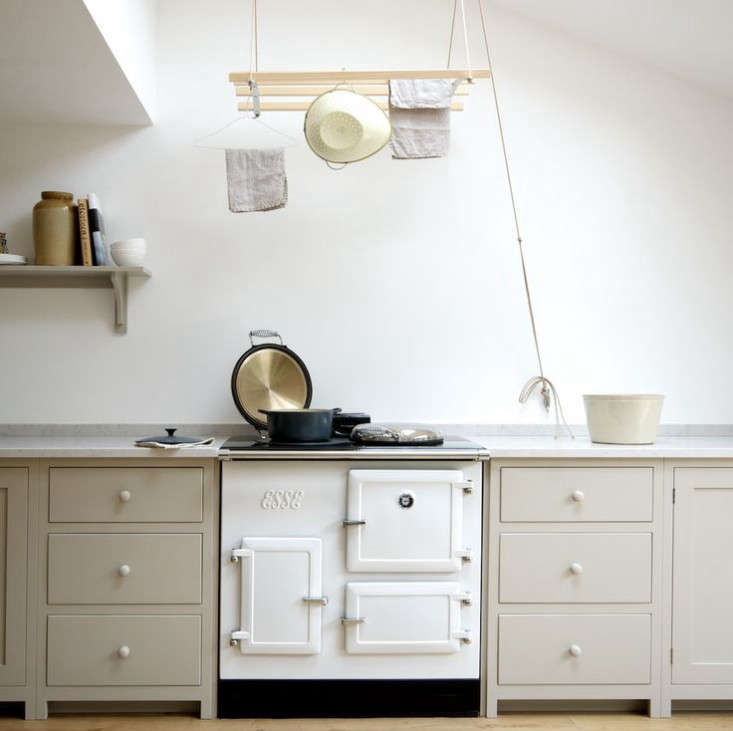
One memorable London design uses a suspended wooden laundry rack for brushes, utensils, and tea towels. It expresses the Shaker ideal perfectly: a practical household object becomes visual character. Any rack near a range must respect heat, grease, ventilation, fire safety, and appliance clearances. A safer alternative may be a rack above an island or a wall-mounted peg rail.
Open storage works best for items that are useful and attractivewooden spoons, linen towels, pans, brushes, mugs, and cutting boards. Plastic packaging and the avalanche-prone lid collection deserve closed cabinets.
Lighting for Dark Days and Late Dinners
A London kitchen needs layered lighting. Ambient fixtures illuminate the room, undercabinet lights brighten work surfaces, and pendants or sconces add atmosphere. Pendants should not be the only light source; otherwise, the cook may cast a shadow directly over the chopping board.
Dimmers help the kitchen shift from food preparation to evening dining. A small counter lamp can make the room surprisingly welcoming. The goal is to see a dropped olive clearly without making dinner guests feel as though they are being questioned at airport security.
Plan the Layout Before Choosing the Pretty Things
The refrigerator, sink, preparation surface, and cooktop should form an efficient sequence. The classic work triangle remains helpful, but modern households may also need zones for coffee, baking, packed lunches, and multiple cooks.
Keep landing space beside major appliances, allow room for open doors, and place the dishwasher near dish storage. In an open-plan kitchen, position messier work areas where they are not the first view from the sofa.
Make an Island Earn Its Space
An island is valuable only when circulation remains comfortable. In a narrow room, a peninsula, butcher-block table, or movable workbench may be better. When an island fits, give it a clear purpose such as preparation, seating, a sink, or deep drawers. Asking one island to handle cooking, washing, homework, pet feeding, and diplomatic negotiations usually creates an expensive obstacle.
How to Recreate the Look on a Realistic Budget
Begin with one authentic idea: well-proportioned painted cabinets, a peg rail, a vintage table, a substantial range, or a restrained green palette. Build around the room’s architecture and the household’s routines rather than buying a complete “heritage kitchen” package.
Spend first on cabinet construction, hinges, drawer runners, ventilation, plumbing, electrical work, and durable counters. Save on replaceable elements such as paint, stools, shelves, shades, and accessories. Stock Shaker doors can look custom when fillers, end panels, hardware, and transitions are handled carefully.
Avoid the Costume-Drama Effect
Simplicity should not become emptiness; timber, tile, pottery, linen, and aged metal prevent sterility. At the same time, too many heritage signals can overwhelm the room. A farmhouse sink, brass faucet, range, beadboard, plate rack, antique sign, and twelve copper pans may each be charming. Together, they can resemble a period drama with an unusually large appliance budget.
Finally, choose materials with their maintenance in mind. Dark paint shows dust, open shelves collect grease, marble marks, and brass changes color. These qualities can create beautiful patina, but they should be accepted before installation rather than discovered during a tense conversation six months later.
Real-World Experience: Living With a Shaker-Inspired Kitchen
The first thing people often notice is how a visually quiet kitchen changes everyday behavior. When cabinets align, counters remain mostly clear, and tools have obvious homes, cooking involves less searching. A pan sits beside the range, knives occupy the preparation drawer, and dishes move directly into a dishwasher near the sink. Nothing dramatic happens; dozens of tiny frustrations simply disappear.
Mornings reveal whether the layout truly works. In a successful kitchen, one person can make coffee while another prepares breakfast without negotiating access to the same drawer. A beverage cupboard keeps mugs, tea, coffee, filters, and the kettle together. Bowls sit near the table. The refrigerator opens without blocking the main passage. These details sound comically ordinary, yet they determine whether 7:15 a.m. feels calm or becomes a competitive obstacle course.
Hosting provides another test. Shaker kitchens tend to feel comfortable during gatherings because their restraint allows food, flowers, and people to become the decoration. Guests lean against a timber table or gather around an island. A painted dresser can hold glasses and serving pieces, keeping traffic away from the cooking area. The room feels established rather than precious, so nobody panics when a spoon touches the counter without a ceremonial coaster.
Maintenance shapes the long-term experience. Painted cabinets eventually gain small chips near handles. Wood may darken around frequently used areas. Brass develops fingerprints and patina. Owners who expect permanent showroom perfection may find this irritating. Those who appreciate gradual wear often discover that the kitchen looks better as it records ordinary life. Graceful aging still requires care: wipe water near sinks, use cutting boards, clean ventilation filters, and label the leftover touch-up paint.
Seasonal change is particularly noticeable in London. During bright months, muted cabinets look airy beside an open garden door. In winter, the same palette depends on warm lighting, reflective tile, and timber accents. A counter lamp switched on before dinner can transform the atmosphere, as can a bowl of citrus, folded linen towels, or a few pieces of pottery. The room does not need constant redesign; it responds to small adjustments.
Flexibility may become the most valuable feature. Peg rails can hold different tools as routines evolve. A freestanding table can move for a party. Cabinet interiors can be reorganized when children grow or a serious baking habit appears. Because the overall design is restrained, new objects are absorbed more easily and the kitchen develops in layers instead of becoming outdated all at once.
That is the deeper appeal of a Shaker-inspired kitchen in London. It is not a frozen style or a checklist of approved products. It is a practical framework for making a complicated room understandable. When storage, materials, light, and movement are handled thoughtfully, the kitchen becomes quieter in appearance and richer in experience. It supports the rushed breakfast, the long Sunday lunch, the rainy-afternoon cake, and the late-night tea without demanding applause.
Conclusion
A Shaker-inspired kitchen succeeds because it refuses to choose between beauty and usefulness. Clean cabinet lines organize awkward architecture, painted finishes soften limited daylight, and natural materials add warmth without clutter. Classic details create character, while integrated appliances and carefully planned storage keep the room ready for modern life.
The smartest approach is selective rather than literal. Borrow the principles of honesty, utility, proportion, and craftsmanship, then adapt them to the building, budget, and people using the room. Do that well, and the kitchen will not merely look timeless; it will remain useful enough to earn the description.
Note: This original article synthesizes established Shaker design history, contemporary kitchen-planning guidance, and documented London kitchen ideas. Installation clearances, ventilation, electrical work, and local building requirements should be verified with qualified professionals.