A Las Vegas wedding is practically an invitation for normal social rules to put on rhinestone sunglasses and take the day off. Elvise before noon, and a bride singing her heart out are all perfectly reasonable parts of the local ecosystem.
Still, one viral Vegas wedding video managed to make the internet pause, squint, and ask a very dramatic question: was this a romantic surprise, or had a groom accidentally wandered into a live-action musical he did not audition for?
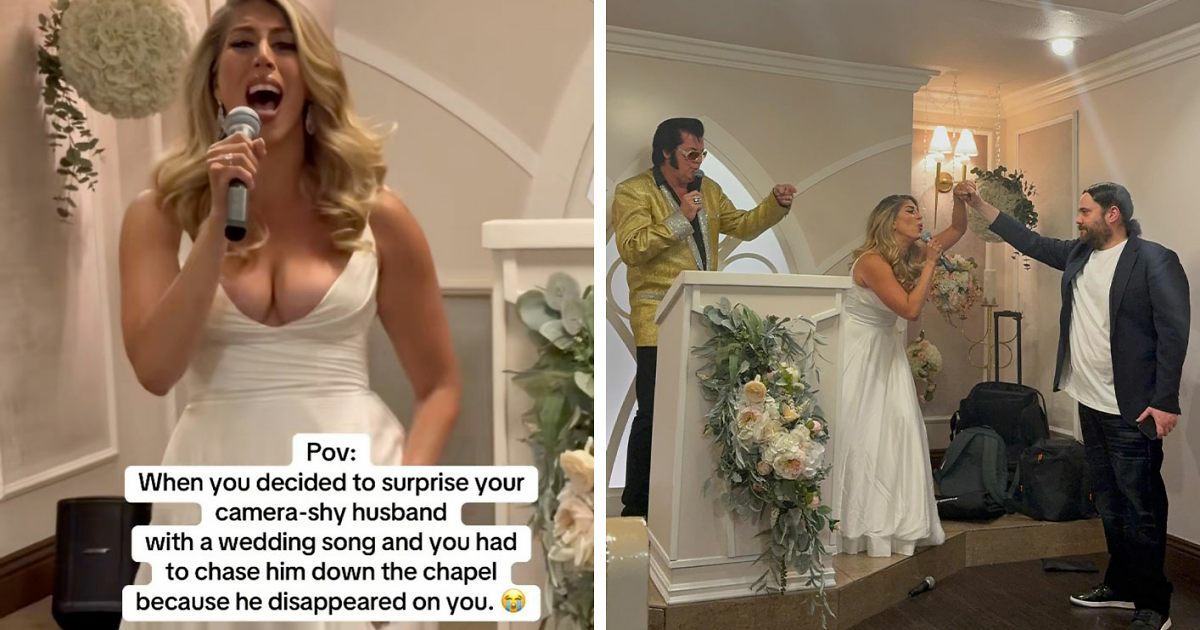
The clip showed singer-songwriter Ortal Edri serenading her husband, Shamir Fink, with Elvis Presley’s “Can’t Help Falling in Love” during their ceremony at the Graceland Wedding Chapel in Las Vegas. There was an Elvis officiant, a microphone, a bride in a show-stopping dress, and one very camera-shy groom who appeared to quietly retreat from the spotlight. Naturally, social media did what social media does best: it turned a few awkward seconds into a full courtroom drama.
Comments joked that the moment looked like a forced marriage, a kidnapping, or a man attempting to escape an emotional ambush disguised as a wedding song. But the real story was much less sinister and much more human. The couple had reportedly been together for 12 years, planned their Vegas wedding quickly, and later explained that the groom was shy, nervous, and had been drinking before the ceremony. In other words, the internet saw a dramatic clip; the couple saw a chaotic, funny memory from their wedding day.
What Actually Happened at the Viral Vegas Wedding?
Edri surprised Fink with not one but two performances during their intimate Las Vegas ceremony. The first was Elvis Presley’s classic love song, chosen partly because Fink’s late father was an Elvis fan. The second was Mariah Carey’s “My All,” a song Edri had dreamed of singing to her future spouse.
For Edri, who works in music and clearly enjoys a big performance, the gesture made perfect sense. For Fink, who is reportedly more reserved and camera-shy, the experience appeared to be a lot. The video showed him drifting toward the back of the chapel while his bride continued singing with the confidence of someone who had absolutely no intention of letting a missing groom interrupt the chorus.
At one point, Edri noticed he was no longer beside her and called out for him. She found him, brought him back toward the ceremony area, and finished the song. The combination of her full-volume commitment and his quiet escape route made the video irresistible to viewers.
It was not evidence of coercion. It was a highly edited glimpse of two people with very different comfort levels around public attention. That distinction matters, especially when a playful viral caption turns into thousands of strangers speculating about a couple’s relationship.
Why the Bride’s Elvis Serenade Went So Viral
The Video Had a Perfect Internet Plot Twist
Most wedding videos follow a predictable script: bride walks in, groom smiles, guests cry, someone drops a ring, everybody pretends the cake is not too expensive. This one took a detour.
The bride was having a full cinematic moment. She was singing an iconic Elvis song in a Las Vegas chapel while an Elvis impersonator stood nearby. Meanwhile, the groom looked like he had received an unexpected calendar invitation titled “Mandatory Emotional Performance Review.”
That contrast created the perfect viral tension. The internet loves a mismatch: one person is operating at Broadway intensity while the other is trying to become part of the wallpaper.
A One-Minute Clip Cannot Explain a Relationship
Viral videos are powerful because they make viewers feel as though they understand an entire story immediately. But a short clip rarely includes the years before it, the inside jokes, the shared plans, the nerves, or the personality differences that make a relationship work.
In this case, Edri later said her husband was shy and overwhelmed by the attention. Fink reportedly explained that he was nervous and had been drinking before the ceremony. He also said he is always moved when she sings, even if his facial expression does not look like he is about to burst into a Disney-style duet.
Some people smile when they are emotional. Some cry. Some freeze. Some quietly walk toward the nearest exit because their partner surprised them with a microphone, an Elvis impersonator, and a room full of people holding phones.
Vegas Weddings Are Built for Big, Strange, and Wonderful Moments
Las Vegas has never pretended to be the capital of understated romance. The city’s wedding culture thrives on quick ceremonies, themed chapels, costume changes, live entertainment, limousine arrivals, and photographs designed to make relatives ask, “Wait, you did what?”
The Graceland Wedding Chapel, where the couple married, is one of the city’s best-known Elvis-themed venues. It has offered traditional ceremonies as well as Elvis weddings, vow renewals, and non-legal commitment ceremonies for decades. In a setting like that, an Elvis serenade is not an interruption. It is practically venue-appropriate behavior.
Las Vegas also makes spontaneous weddings easier than many people expect. Nevada has no waiting period after a couple receives a marriage license, which helps explain why some couples can go from proposal to chapel faster than most people can choose wedding napkin colors.
That speed can create incredible memories. It can also create a little chaos. A four-day wedding plan leaves limited room for rehearsal, emotional preparation, or a committee meeting about whether the groom might prefer a private love song over being serenaded in front of Elvis.
The Real Lesson: Surprise Does Not Have to Mean Discomfort
There is nothing wrong with a surprise at a wedding. Surprise weddings, unexpected entrances, secret dances, unusual vows, and live music can be unforgettable. The best surprises are not the ones that create the biggest reaction online. They are the ones that make both partners feel seen.
Know Your Partner’s Spotlight Tolerance
Before planning a grand wedding gesture, it helps to understand how your partner handles attention. Does your future spouse enjoy being on stage, giving speeches, dancing in front of a crowd, or being filmed? Or would they rather negotiate with a vending machine than become the center of a room?
A shy partner is not unromantic. They may adore you deeply while still feeling uncomfortable when 40 people, three cameras, and a man in a sequined jumpsuit are waiting for a reaction.
Ask Permission Without Spoiling the Surprise
You do not need to reveal every detail. You can ask broad questions such as:
- “Would you enjoy a surprise performance at our wedding?”
- “Are there any public gestures that would make you uncomfortable?”
- “How much attention feels fun versus overwhelming?”
- “Would you rather have emotional moments privately or in front of guests?”
Those questions do not ruin romance. They make romance more accurate.
Choose a Gesture That Belongs to Both People
The strongest wedding moments are usually shared moments. A surprise song can work beautifully when it reflects a meaningful memory, a favorite artist, or a private joke both partners understand. A performance becomes less risky when it feels like a gift for the couple rather than a production built around one person.
That does not mean every wedding needs to be quiet, traditional, or carefully color-coded in beige. It simply means that individuality works best when it includes both individuals.
How to Plan a Fun Vegas Wedding Without Making Anyone Flee the Chapel
Keep the Ceremony Short and Clear
Vegas ceremonies can move quickly, which is part of their charm. A simple structure helps everyone stay emotionally present: entrance, vows, rings, kiss, photos, celebration. Add entertainment, but avoid turning a 20-minute ceremony into a three-act rock opera unless both partners actively requested one.
Give the Shy Partner a Job
If one person dislikes being watched, assigning them a role can reduce awkwardness. They might hold the bouquet, cue the music, share a short reading, take a few photos, or stand beside their partner rather than being expected to react dramatically on command.
Use a Safe Word or Signal
This sounds funny until it becomes incredibly useful. Couples can agree on a small hand squeeze, a phrase, or a glance that means, “I need a minute,” “Please wrap this up,” or “I am fine, but my social battery has entered airplane mode.”
Keep Alcohol From Becoming the Wedding Planner
A celebratory drink is one thing. Being so tipsy that a surprise performance feels like a scene from another dimension is another. Weddings are emotional enough without adding the confusion of trying to remember why Elvis is asking you to take someone’s hand.
Let Guests Know the Vibe
Guests can make a small ceremony feel huge when everyone films every second. Consider a phone-free ceremony, a designated content creator, or a friendly announcement asking guests to stay present. A sea of raised phones can make even a confident person feel like they are being interviewed after a minor scandal.
Social Media Loves an Awkward Moment, but Couples Deserve Context
The viral wedding video worked because it was funny, unexpected, and easy to interpret. But it also shows how quickly audiences can confuse visible discomfort with a complete story.
People watching from home did not see the couple’s 12-year relationship. They did not see the wedding planning, the personal significance of the song, the nerves before the ceremony, or the celebration afterward. They saw a bride singing passionately and a groom appearing to disappear.
That was enough for memes. It was not enough for a verdict.
There is a difference between laughing at a strange wedding moment and treating strangers’ relationships like a true-crime documentary. The comments were funny because the clip was funny. The couple’s explanation was worth hearing because real people were behind the joke.
Conclusion: Elvis Stayed, the Groom Came Back, and the Internet Got a Show
The bride’s Elvis serenade at a Vegas wedding became viral because it captured a universal relationship truth: two people can love each other completely while reacting to public attention in wildly different ways.
Edri brought the vocals, the confidence, and the full Las Vegas spectacle. Fink brought nervous energy, a brief disappearing act, and the facial expression of someone trying to process a lifetime of romance in real time. Together, they gave the internet a wedding moment it could not stop watching.
The takeaway is not that couples should avoid bold wedding ideas. It is that the best wedding surprises balance excitement with empathy. Plan the big moment. Make it personal. Leave room for nerves. And, when possible, make sure your groom knows he is about to be serenaded before Elvis starts warming up.
Related Experiences: What Couples Can Learn From a Surprise Wedding Performance
Wedding surprises can create the kind of stories couples tell for decades, but they work best when the surprise lands on the right emotional runway. One couple may love a flash mob in a hotel lobby. Another may consider a surprise toast from three cousins to be an extreme sport. The difference is not how much the couple loves each other. It is how they experience attention.
Consider the partner who spends months planning a live performance. They choose the song, coordinate with the venue, practice in the mirror, and imagine the big reveal. In their mind, the moment is romantic because it is vulnerable. Singing in public can feel like a giant declaration: “I love you enough to risk missing a note in front of everyone.” For a performer or expressive person, that is a deeply personal gift.
Now consider the partner receiving that gift. They may also feel emotional, but their body reacts differently. Their shoulders tighten. Their smile becomes tiny. Their brain suddenly develops a fascination with the floral arrangement near the exit. They are not rejecting the love behind the gesture. They are trying to survive a high-attention moment without accidentally becoming a meme.
That is why emotional compatibility is often less about identical personalities and more about mutual translation. The outgoing partner learns that quiet does not mean uncaring. The reserved partner learns that a public gesture may be an act of love rather than a demand for applause. Both people benefit when they discuss what romance looks like before the wedding day turns into a production meeting with cake.
One useful approach is the “surprise menu.” Before the wedding, each partner can name the kinds of surprises they enjoy and the kinds they would rather avoid. Someone may love a surprise getaway, handwritten vows, a private first dance, or a favorite song during dinner. They may dislike public singing, unexpected speeches, staged dances, or being pulled onstage by a DJ who believes embarrassment is a form of entertainment.
Couples can also build small escape hatches into the day. A private room, a quiet five-minute walk, a signal to the wedding party, or a trusted friend who knows when to redirect guests can make a huge difference. A wedding is joyful, but it is also loud, busy, emotional, and full of people asking where they should sit.
The Vegas bride and groom’s viral moment is memorable because it was imperfect. He looked overwhelmed. She looked determined. Elvis looked professionally unbothered. But imperfect moments are often the ones couples remember most fondly because they reveal real personalities instead of polished wedding-day versions.
The goal is not to eliminate awkwardness. A little awkwardness is often hilarious later. The goal is to ensure that both people feel loved while it happens. Whether your wedding includes a cathedral choir, a backyard guitarist, or Elvis in a white jumpsuit, the best performance is the one that leaves both partners smiling when the cameras are off.
Reporting context and factual verification: rticle>