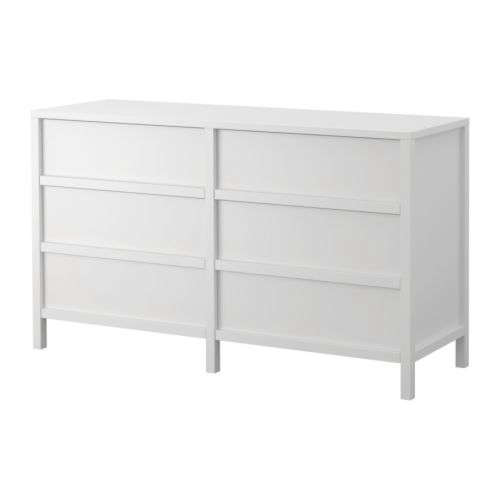
The Trondheim Six-Drawer Chest is one of those discontinued IKEA designs that makes people pause during an estate sale, secondhand-market scroll, or heroic expedition into a crowded garage. Its appeal is easy to understand: six generous drawers, a broad usable top, a simple white finish, and clean Scandinavian lines that quietly cooperate with almost any bedroom.
Designed by Magnus Elebäck, the Trondheim dresser originally sold for about $279 in the United States. It was practical rather than flashy, which may explain why examples still look surprisingly current. There are no dramatic carved flourishes, gold lions, or mysterious handles shaped like seashells. It is simply a wide, straightforward storage chest that lets clothing, linens, and everyday clutter disappear behind an orderly facade.
However, anyone considering a used Trondheim Six-Drawer Chest needs more than decorating inspiration. This is an older, discontinued model listed in IKEA’s U.S. dresser recall materials. Its recall status and wall attachment requirements should be investigated before it is purchased, moved into a bedroom, or put back into service.
What Is the Trondheim Six-Drawer Chest?
The Trondheim Six-Drawer Chest was part of an IKEA bedroom furniture collection that also included smaller chests and a nightstand. The six-drawer version used a low, wide configuration, giving owners more horizontal surface area than a narrow vertical chest.
Archived product information describes it as a white dresser with a painted finish, extra-roomy drawers, smooth-running drawer hardware, and pull-out stops. The restrained appearance made it suitable for minimalist rooms, coastal interiors, contemporary apartments, children’s bedrooms, and guest rooms.
Original Trondheim dresser specifications
| Designer | Magnus Elebäck |
|---|---|
| Drawer count | Six drawers |
| Approximate width | 63 3/4 inches |
| Approximate depth | 19 5/8 inches |
| Approximate height | 36 1/4 inches |
| Approximate drawer depth | 16 7/8 inches |
| Original U.S. price | About $279 |
| Finish | Painted white finish |
| Availability | Discontinued; generally found secondhand |
At nearly 64 inches wide, the Trondheim is not a tiny dresser pretending to be spacious. It occupies a meaningful stretch of wall and offers a top large enough for a mirror, lamp, jewelry box, framed art, or carefully arranged decorative objects. It can also hold the traditional bedroom collection known as “things I meant to put away yesterday.”
Why the Design Still Looks Modern
The Trondheim Six-Drawer Chest has aged well because it relies on proportion instead of ornament. Its rectangular form, white exterior, recessed drawer pulls, and uncomplicated base create a visual calm associated with Scandinavian furniture design.
A low profile that anchors the room
A wide dresser gives a bedroom a strong horizontal line. This can balance a tall headboard, large artwork, high ceilings, or long curtains. Unlike a towering chest, the Trondheim does not visually compete with the upper half of the room. It keeps storage closer to waist height and provides a broad decorating surface.
A neutral finish with decorating flexibility
White furniture reflects light and can make a room feel less crowded. The Trondheim can sit against warm beige, muted green, navy, charcoal, pale blue, or patterned wallpaper without starting an argument with the walls. It also works with wood beds, upholstered headboards, metal frames, and woven natural materials.
Simple enough to customize
The plain drawer fronts have made the Trondheim attractive to furniture hackers. Owners have updated examples with decorative overlays, geometric trim, contrasting paint, new pulls, and removable wallpaper. That broad white front is essentially a storage unit carrying six blank canvases.
Customization should remain cosmetic. Do not remove structural components, drawer stops, the back panel, or wall-anchoring hardware. A clever makeover is delightful; accidental furniture engineering is considerably less charming.
How Much Can Six Drawers Actually Store?
The dresser’s greatest strength is not mystery. It is volume. Six drawers allow clothing to be divided into useful categories instead of compressed into one fabric landslide.
A practical drawer-by-drawer plan
- Top left: Underwear, socks, sleep accessories, and small items stored in dividers.
- Top right: T-shirts, tanks, athletic tops, or frequently worn basics.
- Middle left: Pajamas, loungewear, and lightweight workout clothing.
- Middle right: Sweaters, cardigans, and folded seasonal layers.
- Bottom left: Jeans, casual pants, shorts, or heavier clothing.
- Bottom right: Spare sheets, pillowcases, towels, or off-season items.
Assigning one category to each drawer reduces searching and prevents the classic morning ritual of opening every drawer in sequence as though one of them might suddenly contain a clean shirt.
Use vertical folding where it makes sense
File-style vertical folding lets shirts and lightweight garments stand in rows. Instead of lifting a stack to reach an item at the bottom, you can see most of the drawer’s contents at once. Fold one garment to approximately the drawer’s usable height, then use it as a sizing guide for the rest.
Add organizers for smaller items
Adjustable dividers or small bins keep socks, scarves, belts, jewelry, and accessories from migrating into a single confusing ecosystem. Measure the interior dimensions before ordering organizers; “approximately should fit” is how people end up owning twelve plastic boxes that fit nowhere.
Best Places to Use a Trondheim Six-Drawer Dresser
Primary bedroom
The dresser can serve as the main folded-clothing station for one person or provide divided storage for a couple. Its generous top can support a large wall-mounted mirror, a lamp, a valet tray, and a few decorative objects without looking overcrowded.
Guest room
In a guest bedroom, reserve several drawers for visitors and use the remainder for spare bedding, towels, toiletries, and seasonal linens. A small tray on top can hold water, a charging cable, and local information.
Entryway or hallway
A wide six-drawer chest can organize gloves, scarves, reusable bags, pet supplies, mail, and household tools. Confirm that the hallway is deep enough to maintain a comfortable walking path, especially when drawers are open.
Craft room or home office
The six compartments are useful for paper, fabric, stationery, camera equipment, wrapping supplies, cables, and project materials. Avoid packing drawers beyond their intended capacity. Heavy contents increase stress on drawer bottoms, runners, fasteners, and the frame.
Nursery or child’s room
Although the broad surface may seem convenient, recall verification and secure wall anchoring are essential before placing an older Trondheim in any space used by children. Never encourage climbing by storing toys, remotes, or attractive objects on top.
How to Style the Top Without Creating a Clutter Museum
A dresser top looks best when it has a few purposeful groups rather than a continuous parade of unrelated objects. Start with one visual anchor, such as a mirror or framed artwork. Add a lamp on one side and a smaller grouping on the other.
Try the large-medium-small formula
Use one large object, one medium object, and one small accent. A round mirror can be the large element, a ceramic lamp the medium element, and a shallow jewelry dish the small element. Different heights create movement while leaving useful empty space.
Control daily essentials with a tray
A tray can collect perfume, watches, glasses, keys, and other frequently used items. Without one, these objects tend to spread across the surface like enthusiastic settlers claiming new territory.
Keep heavy electronics elsewhere
Do not treat the Trondheim as a default television stand, especially before its recall status has been resolved. Heavy objects placed on top can raise the furniture’s center of gravity. A wall-mounted television or a purpose-built low media unit is a safer solution.
Critical Safety and Recall Information
IKEA’s U.S. recall materials explicitly list the Trondheim 3-drawer, 4-drawer, and 6-drawer chests. Anyone who owns or encounters a Trondheim dresser should check the product label and contact IKEA for current recall identification and remedy instructions.
The available recall guide instructs consumers to look for a label inside the top or side frame and check the date code. Because remedies, refund amounts, identification rules, and customer-service procedures can change, owners should obtain current instructions directly from IKEA rather than relying on an old blog post, resale description, or a seller’s confident statement that “it has always been fine.”
Do not rely on weight alone
A dresser may feel solid and still tip when drawers are extended. Open drawers shift weight forward and can act like steps for a child. Clothing storage furniture should be secured to the wall with hardware appropriate for both the furniture and the wall material.
Follow basic tip-over prevention practices
- Verify the dresser’s recall status before use.
- Secure the unit to a wall stud or another approved structural point.
- Use hardware suitable for drywall, masonry, plaster, or other wall construction.
- Place heavier belongings in the lowest drawers.
- Open only one drawer at a time.
- Never allow children to stand, climb, or hang on drawers.
- Keep televisions and other heavy electronics off the top.
- Do not place toys or tempting objects where children may climb to reach them.
- Inspect straps, brackets, screws, and attachment points periodically.
Wall anchoring is an important safety measure, but it does not replace checking whether a recalled product qualifies for a refund, repair, replacement, or another official remedy.
What to Check Before Buying One Secondhand
A used Trondheim Six-Drawer Chest may appear on local marketplaces, estate-sale listings, thrift-store floors, or neighborhood resale groups. Treat the inspection as a safety and condition review, not merely a search for scratches.
Confirm the identity
Ask for a clear photograph of the product label inside the frame. Verify the model name, article number, and date code. A listing titled “IKEA white dresser” is not enough information.
Resolve the recall question first
Contact IKEA before paying, transporting, refinishing, or installing the dresser. The item’s recall status may affect whether it should be sold, returned, repaired, or removed from use.
Inspect structural condition
- Check the frame for wobbling or racking.
- Look for swollen panels caused by moisture.
- Inspect drawer bottoms for sagging or separation.
- Test whether every drawer moves evenly.
- Confirm that drawer stops and runners are present.
- Examine the back panel and fasteners.
- Look for stripped holes, missing screws, or improvised repairs.
- Reject units with severe cracking, water damage, or unstable joints.
Measure the route into your home
Measure doorways, stair turns, elevators, hallways, and the intended wall. The Trondheim is wide and cumbersome when assembled. Discovering that it cannot turn through the stairwell is an excellent way to meet every neighbor in the building, though perhaps not under ideal circumstances.
Assembly, Moving, Cleaning, and Maintenance
If a Trondheim has been disassembled, use the official assembly instructions rather than guessing from memory. Lay parts on a protected, level surface, inventory the hardware, and avoid power-driving screws so aggressively that the particle-based panels become damaged.
Moving the dresser
Empty all six drawers before moving it. Remove the drawers when practical and carry the frame with at least one capable helper. Do not lift the unit by its top panel, drawer fronts, or trim. After repositioning it, confirm that the frame remains square and reinstall an appropriate wall restraint.
Cleaning the painted finish
Dust with a soft microfiber cloth. For light grime, use a slightly damp cloth followed by a dry one. Avoid soaking edges, joints, drawer bottoms, or unfinished surfaces. Strong solvents and abrasive pads may dull or remove the painted finish.
Repairing cosmetic damage
Small chips can sometimes be improved with a carefully matched furniture touch-up product. Test any paint or cleaner in an inconspicuous location first. If refinishing the entire unit, remove the drawers, clean the surfaces thoroughly, sand only as appropriate for the existing finish, apply a compatible primer, and use thin, even coats.
Cosmetic repair should never conceal structural damage. A beautifully painted unstable dresser is still an unstable dresser, only now it photographs better.
Who Will Appreciate the Trondheimand Who Should Look Elsewhere?
The Trondheim suits people who like wide dressers, clean Scandinavian styling, six equal storage zones, and a generous display surface. It may also appeal to DIY decorators looking for a simple exterior that can accept reversible or cosmetic updates.
It is less suitable for very small rooms, narrow hallways, frequent movers, or anyone seeking furniture that meets the newest stability standards without the complications of a legacy recall. A current-production dresser may offer updated safety features, readily available replacement parts, a warranty, and easier delivery options.
For secondhand shoppers, the purchase decision should begin with recall verification, not price negotiation. A low price is not a bargain when the item comes with unresolved safety questions, missing hardware, and a drawer that opens with the enthusiasm of a runaway shopping cart.
Living With a Trondheim Six-Drawer Chest: A Practical Experience
The everyday appeal of the Trondheim becomes clearest after the excitement of acquiring it has worn off. On the first day, the wide white dresser looks like a major decorating event. After a few weeks, its real value is quieter: it reduces the number of decisions required during ordinary routines.
Six drawers create an easy mental map. Socks and small garments can live in the upper-left drawer. Shirts occupy the upper-right. Sleepwear and workout clothing settle into the middle row, while jeans and linens take the stronger visual territory below. Once that system becomes familiar, getting dressed no longer requires opening every drawer and conducting a small archaeological survey.
The top surface is equally useful, although it demands discipline. A mirror centered above the chest makes the arrangement feel intentional. A lamp at one end, a tray at the other, and a little breathing room in between are usually enough. The empty space matters. Without it, the dresser top gradually collects receipts, charging cables, unopened mail, spare buttons, water glasses, and one object nobody recognizes but everyone is afraid to throw away.
Its broad shape can visually settle a bedroom. A tall chest often feels like another vertical object competing with doors and windows, while the Trondheim runs calmly along the wall. In a room with natural textures, white bedding, pale wood, and woven baskets, it has a relaxed coastal character. Against darker paint and graphic artwork, it looks cleaner and more contemporary.
The experience becomes less delightful on moving day. Nearly 64 inches of dresser does not negotiate politely with narrow stairs. Emptying the unit and removing the drawers makes the job safer and more manageable, but two people are still preferable. Measuring the route before pickup can prevent the unforgettable experience of owning a dresser that lives permanently in the hallway because it refuses to enter the bedroom.
Daily maintenance is simple. The white top reveals dust, dark fibers, and coffee-ring experiments quickly, but it also wipes clean without much ceremony. Drawer runners may need inspection as the furniture ages, and fasteners can loosen after repeated moves. A periodic check is more useful than waiting for the frame to announce a problem through squeaks, gaps, or increasingly theatrical drawer behavior.
The most important part of the ownership experience is the least decorative: dealing with recall and anchoring requirements. A dresser can stand quietly for years and still present a tip-over hazard when drawers are opened or climbed. Contacting IKEA, confirming the label information, following the official recall remedy, and using appropriate wall attachment are not optional finishing touches. They are part of responsible ownership.
Once safety has been properly resolved, the Trondheim’s strengths are easy to enjoy. It offers abundant storage, straightforward organization, flexible styling, and a design that avoids looking trapped in the year it was sold. Its best quality is not that it attracts attention. It is that, on a busy morning, six drawers open smoothly, everything has a place, and the room feels a little less chaotic than the rest of the day.
Final Thoughts
The Trondheim Six-Drawer Chest remains an appealing example of practical Scandinavian storage furniture. Its generous dimensions, broad top, understated white finish, and six roomy drawers help explain why it continues to appear in decorating archives and secondhand listings.
Its age and recall history, however, must shape any buying or ownership decision. Verify the label, contact IKEA, follow the current recall remedy, and address wall anchoring before using the dresser. Once those responsibilities are handled, the Trondheim can be evaluated for what it does well: organizing a substantial wardrobe without turning the bedroom into a furniture showroom.