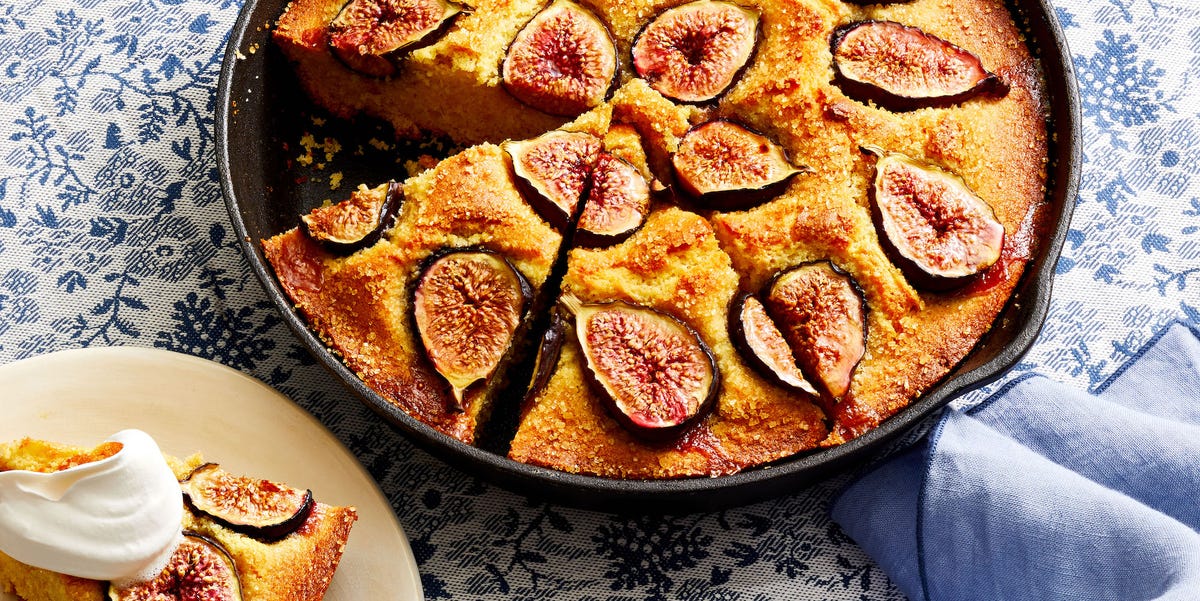
There are cakes that politely sit on a dessert table, and then there is fig cornmeal skillet cake: golden-edged, fruit-studded, rustic in the best possible way, and confident enough to arrive at brunch, dessert, or “I deserve something warm with coffee” hour. This cake does not require a frosting bag, a rotating stand, or the emotional strength to level layers. It asks for a skillet, fresh figs, cornmeal, and about an hour of your attention. In return, it gives you a tender crumb, crunchy edges, jammy fruit, and the kind of aroma that makes people wander into the kitchen pretending they “just needed water.”
This best fig cornmeal skillet cake recipe balances sweet, earthy figs with the sunny texture of cornmeal. It is not cornbread wearing a fake mustache, and it is not a fussy bakery cake either. Think of it as a buttery one-pan cake with a Southern-meets-Mediterranean personality: casual, fragrant, and deeply satisfying.
What Is Fig Cornmeal Skillet Cake?
Fig cornmeal skillet cake is a simple fruit cake baked in a cast-iron skillet or oven-safe pan. Cornmeal adds a subtle crunch and warm, toasty flavor, while fresh figs soften in the oven until their centers become sweet and jam-like. The skillet helps the edges brown beautifully, creating a lightly crisp crust that contrasts with the moist center.
The beauty of this cake is its flexibility. It can be served warm with whipped cream, cool with coffee, or dressed up with honey, Greek yogurt, mascarpone, or vanilla ice cream. It looks impressive without acting high-maintenance, which is exactly the energy we want from dessert.
Why This Is the Best Fig Cornmeal Skillet Cake Recipe
A great fig cornmeal cake needs three things: moisture, structure, and flavor balance. Too much cornmeal and the cake becomes dry. Too much fruit and the center turns soggy. Too much sugar and the delicate fig flavor disappears like socks in a dryer.
This recipe uses a smart ratio of all-purpose flour and yellow cornmeal, enough butter for richness, buttermilk for tenderness, and honey to echo the natural sweetness of figs. A little lemon zest brightens the batter, while vanilla rounds everything out. The result is a cake that tastes homemade in the best sense: warm, fragrant, golden, and completely unbothered by perfectionism.
Ingredients You’ll Need
For the Cake
- 1 cup all-purpose flour
- 1/2 cup medium-grind yellow cornmeal
- 1 1/2 teaspoons baking powder
- 1/4 teaspoon baking soda
- 1/2 teaspoon fine sea salt
- 1/2 cup unsalted butter, softened
- 2/3 cup granulated sugar
- 2 tablespoons honey
- 2 large eggs, at room temperature
- 1 teaspoon vanilla extract
- 1 teaspoon finely grated lemon zest
- 1/2 cup buttermilk, at room temperature
- 8 to 10 fresh figs, stemmed and halved or quartered
- 1 tablespoon coarse sugar, for topping
For Serving
- Extra honey
- Whipped cream
- Vanilla ice cream
- Greek yogurt or crème fraîche
- Toasted pistachios or almonds
Best Figs to Use for Cornmeal Skillet Cake
Fresh figs are the star here, so choose them with a little care. Look for figs that feel soft but not mushy, smell sweet rather than sour, and have smooth or slightly wrinkled skin. Black Mission figs bring deep berry-like sweetness, Brown Turkey figs are milder and honeyed, while Kadota and Calimyrna figs offer a lighter, nutty flavor.
If your figs are very large, cut them into quarters so they do not weigh down the batter. If they are small, halving is enough. The goal is to let the fruit sink slightly into the cake without turning it into fig pudding. Delicious? Yes. Cake? Questionable.
How to Make Fig Cornmeal Skillet Cake
Step 1: Prepare the Skillet
Preheat the oven to 350°F. Butter a 10-inch cast-iron skillet generously. You can also use a 9-inch skillet for a slightly taller cake, but the baking time may increase by a few minutes. If your skillet is very well seasoned, the cake should release easily. If your pan has trust issues, line the bottom with a round of parchment paper.
Step 2: Mix the Dry Ingredients
In a medium bowl, whisk together the flour, cornmeal, baking powder, baking soda, and salt. Whisking matters because it evenly distributes the leavening. Nobody wants one heroic bite of baking powder followed by regret.
Step 3: Cream the Butter, Sugar, and Honey
In a large bowl, beat the softened butter, granulated sugar, and honey until light and fluffy, about 2 to 3 minutes. This step helps create a tender cake with a softer crumb. Honey also adds moisture and a floral sweetness that pairs naturally with figs.
Step 4: Add Eggs, Vanilla, and Lemon Zest
Beat in the eggs one at a time, mixing well after each addition. Stir in the vanilla extract and lemon zest. The lemon does not make the cake taste sharply citrusy; it simply wakes everything up, like opening a window in a kitchen full of butter.
Step 5: Combine Wet and Dry Ingredients
Add the dry ingredients to the butter mixture in two additions, alternating with the buttermilk. Mix gently just until combined. Overmixing can make the cake dense, and while dense is fine for legal documents, it is not the goal for dessert.
Step 6: Add Batter and Arrange the Figs
Spread the batter evenly in the prepared skillet. Arrange the figs cut-side up over the top, pressing them lightly into the batter. Sprinkle with coarse sugar for a lightly crunchy finish.
Step 7: Bake Until Golden
Bake for 35 to 42 minutes, or until the top is golden and a toothpick inserted into the center comes out clean or with a few moist crumbs. Avoid stabbing directly through a fig when testing, unless you want the toothpick to lie dramatically about the cake being underdone.
Step 8: Cool and Serve
Let the cake cool in the skillet for at least 15 minutes before slicing. Serve warm, room temperature, or lightly reheated. A drizzle of honey and a spoonful of whipped cream make it feel restaurant-worthy with almost no extra effort.
Recipe Card: Fig Cornmeal Skillet Cake
Prep Time
20 minutes
Cook Time
35 to 42 minutes
Total Time
About 1 hour
Servings
8 slices
Equipment
10-inch cast-iron skillet, mixing bowls, whisk, hand mixer or stand mixer, spatula
Tips for the Perfect Fig Cornmeal Skillet Cake
Use Room Temperature Ingredients
Room temperature butter, eggs, and buttermilk blend more smoothly, creating a better texture. Cold ingredients can cause the batter to look curdled. The cake will usually survive, but it may give you a slightly uneven crumb.
Choose Medium-Grind Cornmeal
Medium-grind yellow cornmeal gives the cake a pleasant texture without becoming gritty. Fine cornmeal works too, but the cake will taste softer and less rustic. Coarse cornmeal can be too crunchy unless it is specifically meant for baking.
Do Not Overload the Top with Figs
Figs are juicy, and too many can make the center wet. Arrange them attractively but leave some batter visible. Think polka dots, not a fruit blanket.
Let the Cake Rest Before Slicing
Fresh from the oven, the cake is delicate. A short rest allows the crumb to set and makes cleaner slices. It also protects your mouth from molten fig lava, a dessert hazard rarely discussed but deeply real.
Can You Make This Cake Without a Cast-Iron Skillet?
Yes. A 9-inch round cake pan, 9-inch springform pan, or 8-inch square baking dish can work. However, a cast-iron skillet gives the cake its signature golden edges and rustic presentation. If you use a thinner metal pan, begin checking for doneness a few minutes early. If you use glass, the cake may need a little extra time.
Flavor Variations
Fig Almond Cornmeal Cake
Add 1/2 teaspoon almond extract and sprinkle sliced almonds over the top before baking. Almond and fig are old friends, the kind who finish each other’s sentences.
Fig Orange Cornmeal Cake
Swap lemon zest for orange zest and add a pinch of cardamom. This version tastes warmer and slightly more aromatic, perfect for late summer or early fall.
Fig and Berry Skillet Cake
Replace a few figs with blackberries or blueberries. Berries add tartness and color, making the cake look like it dressed up for a farmers market photoshoot.
Honey-Ricotta Fig Cake
Serve each slice with a spoonful of ricotta and a drizzle of honey. This turns the cake into a brunch centerpiece without requiring you to wake up at dawn and become a professional pastry chef.
How to Store Fig Cornmeal Skillet Cake
Store leftover cake covered at room temperature for up to 1 day, or refrigerate it in an airtight container for up to 4 days. Because figs are moist and delicate, refrigeration is best if your kitchen is warm. To reheat, warm slices in a 300°F oven for about 8 minutes or microwave briefly until just soft.
You can also freeze individual slices. Wrap them tightly, place them in a freezer-safe bag, and freeze for up to 2 months. Thaw overnight in the refrigerator and warm before serving. The texture may be slightly softer after freezing, but it will still taste like a very good decision.
What to Serve with Fig Cornmeal Skillet Cake
This cake is wonderfully versatile. For dessert, serve it with vanilla ice cream, lightly sweetened whipped cream, or mascarpone. For brunch, pair it with Greek yogurt, fresh berries, and hot coffee. For a dinner party, add a drizzle of warm honey and a sprinkle of toasted pistachios. If you want a savory contrast, serve small slices with a cheese board featuring goat cheese, brie, or aged cheddar.
Common Mistakes to Avoid
Using Underripe Figs
Underripe figs can taste flat and firm. Baking helps, but it cannot perform miracles. Use figs that are soft, fragrant, and naturally sweet.
Skipping the Salt
Salt sharpens the flavor of the butter, cornmeal, honey, and figs. Without it, the cake may taste sweet but dull, like a joke told without timing.
Overbaking the Cake
Cornmeal cakes can dry out if baked too long. Start checking around 35 minutes. The cake should be golden, set in the center, and slightly springy when touched.
Cutting Too Soon
Warm cake smells irresistible, but slicing immediately can cause it to crumble. Give it at least 15 minutes. Use that time to make coffee, whip cream, or stare proudly at your skillet like it just graduated.
Experience Notes: What I Learned Making Fig Cornmeal Skillet Cake
The first time I made fig cornmeal skillet cake, I treated it like a casual “throw fruit on batter and hope for glory” situation. The result was tasty, but not quite balanced. I used too many figs, pressed them too deeply, and learned that fruit can be both beautiful and bossy. The center turned softer than planned, while the edges were perfect. That test taught me the most important rule of this cake: figs should decorate the batter, not bury it.
On the second round, I paid closer attention to the cornmeal. Medium-grind cornmeal gave the cake the best personality. Fine cornmeal made it softer, almost like a regular butter cake, while coarse cornmeal had a texture that announced itself a little too loudly. Medium-grind cornmeal brought just enough crunch to remind you this is not an ordinary fruit cake. It gave every bite a warm, golden, slightly rustic character.
I also found that buttermilk makes a noticeable difference. It keeps the crumb tender and adds a subtle tang that balances the sweetness of the figs and honey. Regular milk works in a pinch, but buttermilk gives the cake more depth. If you do not have buttermilk, mix 1/2 cup milk with 1 1/2 teaspoons lemon juice or vinegar, let it sit for 5 minutes, and use it as a quick substitute.
The skillet itself matters, too. A cast-iron skillet creates a beautifully browned edge that a regular cake pan does not quite match. The edges become slightly crisp, almost caramelized, while the inside stays soft. However, cast iron holds heat, so the cake continues cooking after it comes out of the oven. That is why resting the cake is not just about patience; it is part of the recipe. Pulling it from the oven when a toothpick shows a few moist crumbs is better than waiting until it is bone dry.
One of the best serving experiments was a warm slice with Greek yogurt and honey. It tasted like dessert and breakfast had negotiated a peaceful treaty. Vanilla ice cream was richer and more dramatic, while whipped cream kept things light. My favorite dinner-party version included toasted pistachios, orange zest, and a tiny pinch of flaky salt over the top. The salt made the figs taste sweeter, the pistachios added crunch, and the whole thing looked far more sophisticated than the effort required.
The biggest lesson is that fig cornmeal skillet cake rewards restraint. Do not overmix. Do not overbake. Do not cover every inch with figs. Let the simple ingredients do their job. Cornmeal brings warmth, figs bring jammy sweetness, butter brings comfort, and the skillet brings those irresistible golden edges. It is the kind of cake that feels homemade, seasonal, and generous without trying too hard. In other words, it is exactly the cake to make when you want something impressive but refuse to spend the afternoon wrestling with frosting.
Final Thoughts
This fig cornmeal skillet cake recipe is proof that a great dessert does not need to be complicated. With fresh figs, yellow cornmeal, buttermilk, honey, and a trusty skillet, you can make a cake that is rustic, elegant, and deeply comforting. It is simple enough for a weekend bake and pretty enough for company. Serve it warm, add a drizzle of honey, and watch it disappear slice by slice.
If you love easy fruit desserts, this cake deserves a permanent spot in your baking rotation. It is golden around the edges, tender in the center, and full of sweet fig flavor. Basically, it is what happens when cornbread goes on vacation and comes back with excellent taste.
Note: This article is written in original American English for web publishing, with SEO tags included in JSON format at the end of the HTML body.