Some lattes arrive quietly, provide caffeine, and get on with their day. Others land on the table wearing a flawless swan, a sleepy cat, or an entire miniature garden made from milk foam. Suddenly, drinking your coffee feels less like breakfast and more like vandalizing a tiny museum exhibit.
Latte art has grown from simple white hearts into a worldwide creative craft involving free-poured patterns, etched illustrations, colorful ingredients, and three-dimensional foam sculptures. The most impressive designs may survive only a few minutes, but that temporary nature is part of their charm. A barista creates something beautiful, a customer photographs it from six angles, and then everyone agrees that the masterpiece must eventually be caffeinated.
Below are 50 memorable latte art styles that demonstrate just how inventive coffee can become when espresso, milk, patience, and a remarkably steady hand meet in one cup.
Why Great Latte Art Looks So Effortless
A traditional latte combines espresso with steamed milk and a relatively thin layer of microfoam. According to the National Coffee Association, lattes have become one of the most widely enjoyed espresso-based drinks among American coffee consumers, giving baristas an enormous daily canvas on which to practice.
The artwork depends on microfoam containing extremely small, evenly distributed bubbles. Milk proteins help stabilize those bubbles, while excessive aeration creates thick, dry foam that is difficult to pour into detailed shapes. Properly textured milk should appear glossy and fluid, often compared with wet paint rather than bubble-bath foam.
Pouring technique matters just as much. Baristas control the height, position, speed, and direction of the pitcher. A higher pour blends milk beneath the espresso crema, while bringing the spout close to the surface allows white foam to appear. Centering the stream helps preserve symmetry, and small changes in wrist movement can turn an ordinary circle into a heart, tulip, rosetta, or swan.
In other words, impressive latte art is not milk randomly falling into coffee and deciding to become a peacock. It is timing, texture, contrast, muscle memory, and considerable practice disguised as a casual pour.
Classic Free-Pour Latte Art Masterpieces
-
1. The Perfectly Symmetrical Heart
A basic heart may be the first pattern many baristas learn, but a perfectly centered version with sharp edges and balanced proportions remains deeply satisfying. Simple does not mean easy; it means there is nowhere for a wobbly pour to hide.
-
2. The Triple-Stacked Tulip
Three rounded layers appear to bloom from the espresso before a final stream slices cleanly through the center. Each layer must remain distinct rather than collapsing into what looks like a dairy-based traffic accident.
-
3. The Seven-Layer Tulip
This advanced tulip stacks one delicate bulb after another inside a single cup. The tight spacing and clean symmetry make the final design resemble an elegant flower, a feathered fan, and a barista résumé all at once.
-
4. The Classic Rosetta
Created with a controlled side-to-side motion, the rosetta forms rows of fine white leaves against the caramel-colored crema. A successful example looks natural and effortless, despite requiring enough wrist control to make a calligrapher nervous.
-
5. The Double Rosetta
Two matching rosettas curve across the cup without crowding one another. Their mirrored shapes create an elegant composition that proves negative space can be just as important as the milk itself.
-
6. The Rosetta Wrapped Around a Heart
A crisp heart sits in the middle while feathered leaves sweep around its edges. The pattern feels romantic without requiring syrup, sprinkles, or the phrase “live, laugh, latte” anywhere nearby.
-
7. The Winged Heart
Fine ripples extend from both sides of a central heart, creating the impression that it may fly out of the cup. Fortunately, espresso has yet to develop an escape plan.
-
8. The Free-Poured Swan
A long curved neck rises from a layered body of rosetta-like feathers. This design combines several foundational movements into one continuous pour and is widely treated as an important milestone for serious latte artists.
-
9. The Pair of Kissing Swans
Two white swans face each other, their necks forming a heart in the center. It is charming, technically demanding, and almost certainly more coordinated than most couples attempting a posed vacation photograph.
-
10. The Peacock Pour
Layers of fine lines fan outward like an ornamental tail. The design requires controlled rippling, precise placement, and enough confidence to keep pouring when the cup already looks suspiciously full.
Animal Latte Art With Serious Personality
-
11. The Sleepy Foam Cat
A rounded cat face rests on the surface with tiny ears, closed eyes, and whiskers drawn through the crema. It looks peaceful, adorable, and completely unaware that it is floating on two shots of espresso.
-
12. The Curious Kitten Peeking Over the Cup
Only the kitten’s eyes, ears, and paws appear above an imaginary edge. The composition turns the cup into a tiny scene and makes the drinker feel mildly judged for considering the first sip.
-
13. The Corgi With Oversized Ears
Foam, crema, and a few etched details create a cheerful corgi whose ears nearly touch the rim. This cup contains coffee, milk, and enough personality to qualify as a small pet.
-
14. The French Bulldog Portrait
The dog’s wrinkled forehead and round muzzle are carefully shaded using espresso. Capturing a recognizable breed in a moving liquid surface is impressive, particularly when that breed already looks permanently skeptical.
-
15. The Panda Face
Dark espresso accents form the panda’s ears, eyes, and nose against white foam. The high-contrast design is cute, immediately recognizable, and conveniently built from the same color palette already present in the cup.
-
16. The Koala Hugging a Foam Branch
A tiny koala appears wrapped around a narrow streak of white foam. Small etched claws and rounded ears transform an ordinary latte into a miniature wildlife illustration.
-
17. The Fox in a Forest
A reddish-brown crema fox rests between white milk-foam trees. Strategic use of the coffee’s natural colors creates depth without turning the drink into a cup of artificial food coloring.
-
18. The Owl With Feathered Wings
Rosetta-style lines become layered feathers while two round eyes stare upward. The result is half free-pour pattern, half character portrait, and entirely too alert for an owl working the morning shift.
-
19. The Hummingbird in Midflight
One narrow line creates the beak while sweeping milk forms wings and a delicate tail. The sense of movement is remarkable, especially considering the entire bird is trapped inside a ceramic cup.
-
20. The Flock of Tiny Birds
Several miniature birds emerge from abstract patches of foam, demonstrating how artists can transform accidental-looking shapes into intentional scenes. Bird-themed latte art has even inspired dedicated hobbyists who develop recognizable characters from imperfect pours.
Nature-Inspired Designs That Belong in a Gallery
-
21. The Blooming Rose
Concentric milk layers curl like individual petals, creating a rose that appears to open from the center. A dusting of cocoa may add shading, although the design is dramatic enough without accessorizing.
-
22. The Field of Daisies
Small white flowers spread across the crema with chocolate-dot centers. The pattern feels cheerful and springlike, even when served during a gray morning when the weather has clearly abandoned hope.
-
23. The Sunflower
Golden spices or cocoa tint the petals surrounding a textured center. This colorful style shows how carefully selected natural powders can expand the traditional espresso-and-milk palette.
-
24. The Cherry Blossom Branch
A slender chocolate branch crosses the cup beneath clusters of pale pink blossoms. The design uses open space beautifully, creating the quiet elegance of a Japanese ink painting.
-
25. The Succulent Garden
Layered green-tinted foam forms several tiny plants viewed from above. Each leaf is distinct, making the latte look like a terrarium designed for someone who routinely forgets to water actual houseplants.
-
26. The Monstera Leaf
Carefully etched gaps turn a broad milk shape into the instantly recognizable split leaf. It is an ideal design for coffee shops containing hanging plants, pale wood, and at least one person writing a screenplay.
-
27. The Mountain Sunrise
Dark crema becomes a mountain range while a small white sun rises behind the peaks. Gentle gradients create the illusion of distance on a surface only a few inches wide.
-
28. The Ocean Wave
Swirling milk curls over itself like a breaking wave. Blue coloring is sometimes added, but skilled artists can suggest water using nothing more than motion, contrast, and well-placed foam.
-
29. The Moonlit Pine Forest
Chocolate lines form dark evergreen trees beneath a pale milk moon. The result feels calm and wintry, although the caffeine underneath may have entirely different plans for your nervous system.
-
30. The Layered Desert Landscape
Natural bands of coffee and milk create dunes, distant hills, and a setting sun. Layered latte effects are not merely decorative; researchers have examined how differences in density and temperature help produce visible bands in coffee-and-milk mixtures.
Portraits, Characters, and Pop-Culture Cups
-
31. The Realistic Human Eye
A dark pupil, delicate iris, reflective highlight, and fine eyelashes create an eye that seems to follow the drinker. It is impressive, although perhaps not the relaxing breakfast companion everyone requested.
-
32. The Smiling Barista Self-Portrait
The artist recreates a simplified version of their own face in foam. Serving a self-portrait on every drink would be excessive, but as an occasional signature, it is delightfully confident.
-
33. The Famous Movie Wizard
Round glasses, a lightning-shaped mark, and messy dark hair turn the crema into a recognizable magical hero. The only spell involved is convincing milk to cooperate before the espresso surface breaks down.
-
34. The Masked Space Villain
Strong black-and-white geometry makes a famous science-fiction helmet surprisingly suitable for coffee. The dark side, it turns out, pairs nicely with medium-roast espresso.
-
35. The Friendly Green Alien
Green foam, enormous ears, and wide dark eyes produce a tiny character whose expression suggests that drink this latte, you must. Grammar complaints may be submitted after caffeine.
-
36. The Classic Cartoon Mouse
Three circles establish the famous silhouette before etched features complete the face. The design demonstrates how strong, familiar shapes can remain recognizable even with minimal detail.
-
37. The Anime Hero
Sharp hair, expressive eyes, and energetic crema lines recreate the dramatic intensity of an animated protagonist. The character looks prepared to save the universe immediately after finishing the latte.
-
38. The Video Game Plumber
A round nose, bold mustache, cap, and cheerful expression emerge through careful etching. This cup seems capable of improving both energy levels and success rates in imaginary plumbing emergencies.
-
39. The Comic-Book Superhero Emblem
Instead of attempting a full portrait, the artist uses a crisp symbol across the foam. Bold logos suit the limited canvas and remain visually powerful even as the edges begin to dissolve.
-
40. The Customer’s Pet Portrait
Some of the most meaningful latte art recreates a real dog, cat, rabbit, or bird from a photograph. Technical perfection matters, but personal recognition is what makes the customer immediately reach for a camera.
Three-Dimensional and Experimental Latte Art
-
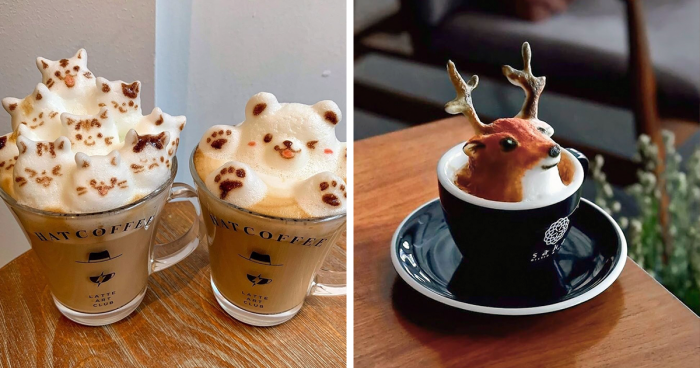
41. The 3D Bear Climbing Out of the Cup
Thick foam forms a head and paws that rise above the drink’s surface. The bear appears to be escaping, possibly because it has seen what happens to the other latte animals.
-
42. The Foam Cat Resting on the Rim
A sculpted cat stretches across the cup with one paw hanging over the edge. Maintaining the shape requires stable foam that can support detail without becoming dry, coarse, or unpleasant to drink.
-
43. The Bathing Polar Bear
Only the bear’s head and rounded belly rise from the latte while chocolate paws rest nearby. The coffee becomes a warm bath, which raises several questions about polar-bear workplace safety.
-
44. The Floating Foam Cloud
A soft cloud sits above the drink on a support or layer of dense foam. When coffee drips through it, the effect resembles a tiny rainstorm occurring directly over breakfast.
-
45. The Rainbow Latte
Several colored streams are poured into a symmetrical rosetta or tulip. The best versions remain crisp and controlled instead of blending into the shade commonly known as “regrettable brown.”
-
46. The Galaxy Cup
Deep blue, purple, and white swirls create stars, mist, and distant nebulae. Edible shimmer may add sparkle, turning the latte into a pocket-sized universe with a caffeine core.
-
47. The Stained-Glass Pattern
Dark chocolate lines separate jewel-colored sections of foam. The geometric arrangement resembles an illuminated window and demonstrates that latte art can borrow visual language from architecture as easily as illustration.
-
48. The Optical-Illusion Spiral
Alternating rings of crema and milk curve inward, making the surface appear to move. It is hypnotic enough to delay the first sip and strong enough to wake you once the staring contest ends.
-
49. The Design Spanning Two Cups
One half of an image appears in each latte, becoming complete only when the cups are placed together. Couples may receive matching swans, friends may get connecting landscapes, and siblings may argue over the better half.
-
50. The Miniature Coffee Garden
Foam flowers, matcha leaves, chocolate branches, and tiny three-dimensional animals turn the final cup into a complete scene. At this point, calling it a beverage feels technically accurate but emotionally inadequate.
What These Impressive Cups Reveal About Latte Art
The progression from hearts to portraits and foam sculptures shows how flexible the medium has become. Traditional free-pour artists generally rely on espresso and properly steamed milk, creating their patterns through pitcher movement alone. Etching adds tools such as fine picks, while colored latte art may introduce cocoa, matcha, beet powder, turmeric, or approved food coloring.
Dairy milk remains popular because it can produce creamy, stable microfoam, but barista-formulated oat and other plant-based milks have significantly expanded the possibilities for nondairy drinkers. Different products respond differently to heat and aeration, so baristas must adjust their technique instead of expecting every carton to behave like whole milk.
Modern equipment can make consistent milk texture more accessible, including automatic systems designed to adjust steaming for different milk types. Nevertheless, equipment cannot completely replace judgment. The artist still needs to recognize glossy texture, preserve the espresso crema, choose the correct pouring distance, and stop before the cup becomes a small dairy flood.
The craft also owes much to specialty-coffee communities that treated visual presentation as part of beverage quality. Seattle’s Espresso Vivace and cofounder David Schomer are frequently associated with the development and promotion of modern American latte-art culture. Competitions, training programs, and social media later carried those techniques far beyond individual cafés.
A Personal Latte Art Experience: When the Coffee Became the Main Event
The first time I received genuinely impressive latte art, I had ordered the drink for entirely practical reasons. I needed coffee, the café had coffee, and civilization appeared to be functioning as intended. Then the barista placed a wide ceramic cup in front of me, and there was a swan floating across the surface.
It was not a vague swan that required supportive interpretation. It had a curved neck, a small head, layered wings, and a clean line running through its body. The white milk stood sharply against the reddish-brown crema. I immediately understood why people photograph their coffee.
My normal approach to a latte is efficient. Pick it up, check that it is not hot enough to remove fingerprints, and drink. This cup created an unexpected ethical dilemma. The barista had spent perhaps seconds completing the final pour, but those seconds clearly rested on months or years of repetition. Destroying the design felt rude. Allowing the coffee to cool felt equally rude. I compromised by taking several unnecessary photographs and then drinking from the least artistically important side.
The experience also changed how I watched baristas work. What had previously looked like “pouring milk” became a sequence of deliberate decisions. The pitcher began high above the cup so the milk could sink beneath the crema. It then moved close to the surface, where white foam became visible. The barista adjusted the flow, moved the pitcher from side to side, and finished with a quick line through the center.
Naturally, observing this once gave me the confidence of someone who had learned absolutely nothing. I attempted latte art at home.
My first design was supposed to be a heart. It looked like a potato discovering sadness. The second resembled a cloud seen through a dirty windshield. On the third attempt, the foam remained in the pitcher while the liquid milk rushed into the cup, creating an abstract work titled “Expensive Ingredients Losing Their Purpose.”
Those failures taught me why experienced baristas emphasize milk texture. My foam contained visible bubbles and separated almost immediately. When I introduced less air and created a smoother whirlpool, the milk became glossier and easier to pour. My designs were still unlikely to receive gallery representation, but they began resembling intentional objects.
I also learned that latte art improves the entire drink-making routine. You pay closer attention to espresso freshness, cup shape, milk temperature, pitcher position, and pouring speed. Even an unsuccessful pattern provides immediate feedback. A blurry design may reveal thin foam. A stiff white blob may indicate too much air. A crooked heart may simply confirm that your hands have chosen chaos.
The best result eventually arrived when I stopped trying to produce something complicated. I poured a small, slightly uneven heart. It would not have won a competition, but it was recognizable without explanation or legal testimony. For a few seconds, the cup felt special because I understood the work behind it.
That may be the greatest appeal of impressive latte art. The image disappears, but the care remains part of the experience. You remember the swan, the cat, or the first imperfect heart long after the foam has dissolved.
Conclusion
Exceptional latte art transforms an everyday drink into a brief performance. Hearts and rosettas showcase precision, portraits demonstrate control, and three-dimensional animals prove that someone looked at milk foam and thought, “This needs paws.”
Yet the most impressive designs are not valuable only because they photograph well. They also signal careful milk preparation, attention to espresso, and pride in presentation. Whether the cup carries a simple heart or an elaborate foam garden, the best latte art gives customers a reason to pause before drinkingand then enjoy destroying the masterpiece one delicious sip at a time.