There is a sacred rule among readers: “The book is always better.” It is repeated at book clubs, shouted in comment sections, and whispered dramatically whenever Hollywood dares to cast someone with the wrong hair color. But every rule has exceptions, and some adaptations are not just different from the bookthey are better because they had the courage to leave certain scenes behind.
Books have room to wander. They can detour into family trees, side romances, questionable medical subplots, mysterious forest men, political satire, and one deeply unnecessary chapter about someone’s personal anatomy. Movies, however, have two hours, a budget, actors waiting in trailers, and audiences who will riot if the story spends 20 minutes explaining a subplot that goes nowhere. That is why deleted book scenes can be a gift.
This article looks at six famous deleted scenes from book-to-movie adaptations that prove the page is not always superior to the screen. These are not cases where filmmakers lazily ignored the source material. In many cases, the cuts made the adaptation sharper, funnier, scarier, more emotional, or simply less weird. And yes, “less weird” is sometimes an artistic achievement worthy of applause.
Why Deleted Book Scenes Can Improve Movie Adaptations
Before book lovers throw bookmarks at the wall, let’s be clear: books are wonderful. A novel can build a world with patience. It can live inside a character’s head for 40 pages. It can pause the plot to describe a family recipe, a prophecy, or the wallpaper of a doomed mansion. A movie cannot always do that without turning into homework with a soundtrack.
Great adaptation is not photocopying. It is translation. A filmmaker has to ask, “What is the heart of this story?” Then they have to protect that heart, even if it means cutting scenes fans remember fondly. Some deleted scenes from books are charming on the page but awkward on screen. Others are so tonally strange that including them would make the movie feel like it was assembled by a committee of raccoons in a trench coat.
The best adaptations understand rhythm. They know when to simplify a relationship, merge characters, delete a subplot, or turn a five-chapter detour into one unforgettable image. The result can be a movie that respects the spirit of the book while refusing to drag every single paragraph onto the screen by its ankles.
1. Tom Bombadil in The Lord of the Rings: The Fellowship of the Ring
The Deleted Book Scene
In J.R.R. Tolkien’s The Fellowship of the Ring, Frodo and the hobbits encounter Tom Bombadil, a merry, mysterious figure who sings, rescues them from danger, and appears strangely unaffected by the One Ring. He is beloved by many readers, baffling to others, and absolutely the kind of guy who would bring a lute to a crisis meeting.
Tom’s section includes the Old Forest, Old Man Willow, Goldberry, and the Barrow-downs. It adds mythic texture to Middle-earth and gives the early journey a fairy-tale flavor. On the page, it works as part of Tolkien’s vast world-building. In a movie already balancing hobbits, wizards, elves, dwarves, kings, rings, prophecies, and Sean Bean looking doomed from several angles, it would have been a serious pacing challenge.
Why the Movie Is Better Without It
Peter Jackson’s film needs urgency. The Ringwraiths are chasing Frodo. The Ring is dangerous. The road to Rivendell feels like a countdown clock. Then Tom Bombadil arrives and casually treats the Ring like a party trick. That may be fascinating in literary mythology, but in film language it risks deflating the central threat.
By deleting Tom, the movie keeps the story focused. The danger stays clean and immediate: Frodo must get the Ring away from the Shire before evil finds him. The film does not pause for a musical forest uncle whose powers cannot be explained without opening six new tabs in the viewer’s brain. The book gives us mystery; the movie gives us momentum. In this case, momentum wins.
2. The Ellen Brody and Matt Hooper Affair in Jaws
The Deleted Book Scene
Peter Benchley’s novel Jaws is darker, messier, and more psychologically tangled than Steven Spielberg’s film. One of the biggest deleted subplots involves Ellen Brody, the police chief’s wife, having an affair with Matt Hooper, the marine biologist who helps hunt the shark. The novel also includes extra social-class tension and a mayoral corruption thread with mob connections.
On paper, the affair gives Ellen inner conflict and adds adult melodrama. But it also shifts attention away from the shark and turns the central trioBrody, Hooper, and Quintinto a much less enjoyable group to be trapped with on a boat.
Why the Movie Is Better Without It
The movie Jaws succeeds because it becomes beautifully simple: a police chief, a scientist, and a shark hunter go after a killer great white. That is the cleanest possible version of the story. Add an affair between Brody’s wife and Hooper, and suddenly the Orca is not just a fishing boatit is a floating Thanksgiving dinner where everyone knows too much.
By cutting the affair, Spielberg protects the chemistry between the three men. Brody can be afraid but decent. Hooper can be smart, rich, and annoying without also being a homewrecker. Quint can remain the salty chaos goblin of the sea. The film’s emotional structure depends on these men clashing, bonding, and eventually facing terror together. The deleted subplot would have turned suspense into soap opera. The shark did not need competition from marital betrayal.
3. Forrest Goes to Space in Forrest Gump
The Deleted Book Scene
Winston Groom’s novel Forrest Gump is far stranger than Robert Zemeckis’s Oscar-winning film. The movie already follows Forrest through football, Vietnam, ping-pong diplomacy, shrimp boating, cross-country running, and accidental cultural history. That sounds like a lotuntil you read the book.
In the novel, Forrest also becomes involved with NASA, travels into space with an ape named Sue, crash-lands, and ends up in an adventure involving cannibals. He also takes on additional careers and episodes that push the story into full picaresque absurdity. It is less “life is like a box of chocolates” and more “life is like someone spilled every genre into a blender.”
Why the Movie Is Better Without It
The film version works because it finds emotional innocence inside an outrageous life. Forrest drifts through history, but the movie keeps returning to three simple emotional anchors: his mother, Jenny, and his own good heart. The story feels magical, but not completely untethered from human feeling.
If the movie had included space travel with an ape, the tone might have launched into orbit and never come back. The film is already sentimental, comic, historical, and tragic. Adding a NASA-cannibal detour would have made it feel less like a bittersweet American fable and more like a fever dream after eating gas-station sushi.
Cutting those scenes allowed the adaptation to soften Forrest, focus his journey, and turn the material into an emotional crowd-pleaser. The book may be wilder, but the film is more coherent. Sometimes the best adaptation decision is knowing when to leave the ape at home.
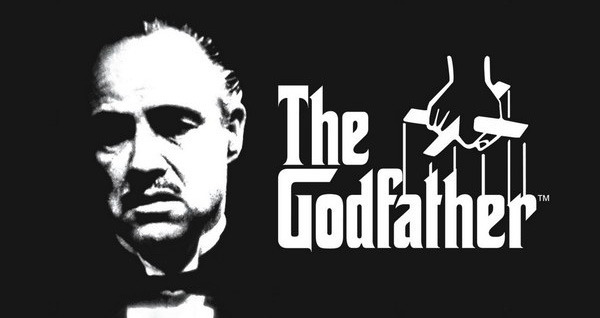
4. The Lucy Mancini Subplot in The Godfather
The Deleted Book Scene
Francis Ford Coppola’s The Godfather is one of the greatest examples of adaptation trimming. Mario Puzo’s novel contains the essential Corleone family saga, but it also includes side plots that the film wisely leaves behind. The most infamous is the Lucy Mancini subplot.
Lucy appears briefly in the film as Sonny Corleone’s lover during the wedding sequence. In the novel, however, she receives a much larger and much stranger storyline involving her sex life, her body, Las Vegas, and a medical solution that feels wildly out of place beside Michael Corleone’s descent into power. It is the kind of subplot that makes readers pause and ask, “Wait, did my copy switch books?”
Why the Movie Is Better Without It
The film version of The Godfather is elegant because it narrows its focus to family, loyalty, violence, immigration, capitalism, and the moral collapse of Michael Corleone. Nearly every scene tightens the noose. Every dinner, meeting, assassination, and glance across a room feeds the central tragedy.
The Lucy subplot would have shattered that control. It does not meaningfully deepen Michael, Vito, Kay, Sonny, or the larger Corleone power structure. Instead, it wanders into bodily melodrama at exactly the kind of length a movie cannot survive. Coppola’s adaptation turns Puzo’s sprawling bestseller into a controlled cinematic opera. Leaving Lucy’s extended story out was not disrespect. It was editing with a scalpel.
5. The Topiary Animals and Boiler Ending in The Shining
The Deleted Book Scene
Stephen King’s The Shining and Stanley Kubrick’s film adaptation are famously different creatures. In the novel, the Overlook Hotel has moving topiary animals that menace characters. The book also builds toward a boiler explosion, giving Jack Torrance a final moment of partial redemption as the hotel is destroyed.
Kubrick’s film removes the living hedge animals and replaces them with the iconic hedge maze. It also changes the ending: the hotel remains standing, Jack freezes to death, and the final image suggests a haunting cycle far more mysterious than a simple explosion.
Why the Movie Is Better Without It
The topiary animals may work in prose because readers can animate them with imagination. On screen in 1980, however, shrubbery attacks could easily have looked less like terror and more like landscaping with anger issues. The hedge maze is a brilliant replacement because it is physical, symbolic, and visually unforgettable. Danny’s escape through the snow becomes a battle of intelligence and survival rather than a special-effects gamble.
The boiler ending also gives the novel a clearer moral structure. Jack is destroyed, the hotel is destroyed, and the story closes with more finality. Kubrick’s version is colder, stranger, and more unsettling. The Overlook does not explode like a defeated monster. It simply remains, as if evil is not a machine you can forget to maintain. The film’s changes make the horror less explainable and therefore harder to shake.
6. The Zoo of Death in The Princess Bride
The Deleted Book Scene
William Goldman’s novel The Princess Bride is already a playful “good parts” version of a fictional older book. It is clever, funny, self-aware, and more elaborate than the movie. One of its biggest differences is Prince Humperdinck’s Zoo of Death, a multi-level underground collection of deadly animals and traps. In the film, this becomes the much simpler Pit of Despair, where Westley is tortured by Count Rugen’s machine.
The Zoo of Death is imaginative, but it is also darker, more complicated, and more expensive to visualize. It adds scale, but not necessarily charm.
Why the Movie Is Better Without It
Rob Reiner’s film adaptation is beloved because it is light on its feet. It moves like a bedtime story told by someone who knows exactly when a kid is about to interrupt. The Pit of Despair gives the story exactly what it needs: a memorable location, a sinister machine, and a clean setup for Miracle Max to bring Westley back as “mostly dead.”
The Zoo of Death might have turned the movie into a darker fantasy adventure with extra creature scenes and a heavier tone. The Pit of Despair keeps the focus on character and comedy. It is scary enough, but not so scary that the film loses its cozy, quotable magic. The movie proves that a smaller idea can sometimes be more iconic than a bigger one. Inconceivable? Not really.
What These Deleted Scenes Teach Us About Adaptation
All six examples reveal the same truth: adaptation is not about including everything. It is about choosing what belongs in a new form. A book can sprawl. A film must move. A novel can survive an odd chapter because the reader controls the pace. A movie has to earn every minute while hundreds of people sit in the dark wondering if they should have bought the larger popcorn.
Deleted scenes from books often fall into a few categories. Some are too slow, like Tom Bombadil’s enchanting but momentum-stopping detour. Some are too distracting, like the Jaws affair. Some are too absurd, like Forrest’s space adventure. Some are too tonally bizarre, like Lucy Mancini’s extended subplot. Some are too difficult to visualize convincingly, like The Shining’s topiary animals. Some are too large for the movie’s emotional temperature, like the Zoo of Death.
The best book-to-movie changes do not insult the source material. They understand it. They know that fidelity is not the same as quality. A completely faithful adaptation can still be dull, bloated, or unintentionally funny. A smartly edited adaptation can preserve the emotional core while reshaping the details for the screen.
Experience Notes: Watching Adaptations With Book Lovers
Anyone who has watched a movie adaptation with a devoted reader knows it can become a contact sport. The reader sits there like a courtroom stenographer, mentally recording every missing line. A character walks into a room and the reader whispers, “That didn’t happen there.” A subplot disappears and they grip the armrest like civilization has collapsed. By the end, they are not watching a film; they are auditing a betrayal.
But experience also teaches something surprising: the missing scene is not always missed by the room. When watching The Fellowship of the Ring with people who have never read Tolkien, nobody pauses halfway through and says, “You know what this urgent fantasy quest needs? A singing forest landlord.” They are usually too busy worrying about Ringwraiths, admiring Rivendell, or wondering why nobody just gives Aragorn a shower and a crown immediately.
The same happens with Jaws. Viewers remember the music, the beach panic, Quint’s speech, the broken boat, and the impossible size of the shark. Very few people finish the movie wishing Hooper had created an emotional disaster in Brody’s marriage. The film feels complete without it. In fact, it feels complete because it is not there.
That is the magic of strong editing. The audience does not feel what was removed; they feel the clarity that remains. A deleted book scene can be like a piece of furniture moved out of a room. At first, fans remember the chair. But then everyone notices the room is easier to walk through.
Reading the source material after seeing the movie can be its own adventure. Sometimes it deepens appreciation. Other times it feels like opening a secret drawer and finding the author’s strangest ideas folded in there. Discovering the space-ape sequence in Forrest Gump or the Lucy Mancini subplot in The Godfather can be both fascinating and alarming, like learning that your dignified grandfather once owned a leopard-print motorcycle.
These experiences remind us that books and movies are different pleasures. A book invites us to linger. A movie invites us to surrender to rhythm, image, music, performance, and pace. When an adaptation cuts a scene, the question should not be, “Was this in the book?” The better question is, “Does the movie need it?” If the answer is no, the cut may be the reason the movie works.
Conclusion: Sometimes the Best Scene Is the One We Never See
The phrase “the book is better” will never disappear, and honestly, it should not. Books often do offer richer inner lives, fuller worlds, and details that films cannot capture. But these six deleted scenes prove that “more faithful” does not always mean “more effective.” Great movies are built not only by what they include, but by what they refuse to carry.
Tom Bombadil, the Jaws affair, Forrest’s space adventure, Lucy Mancini’s subplot, the topiary animals, and the Zoo of Death all have their place in literary history. Some are beloved. Some are infamous. Some make readers blink twice and check the cover. But on screen, their absence helped create tighter, stronger, more memorable films.
So the next time someone says the book is always better, smile politely, offer them popcorn, and remind them that sometimes the editor is the real hero. No cape required. Just a sharp pencil and the courage to cut the singing forest man.