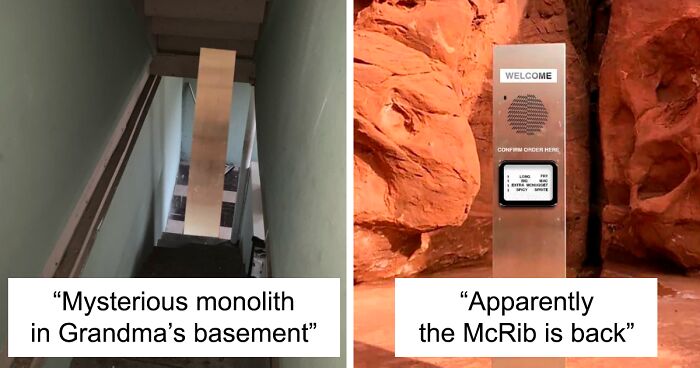
The internet has a special talent for turning a strange, shiny object in the middle of nowhere into a full-scale cultural event. That is exactly what happened again when the mysterious monolith reappeared in a new wave of sightings, echoing the original frenzy that began in Utah in 2020 and later spread to places like Romania, California, Wales, Nevada, and Colorado. By 2024, major outlets were already treating the monolith as a recurring pop-culture headline, not just a curiosity, while the meme machine kept doing what it does best: making the unexplained even funnier.
If the original monolith felt like a sci-fi prop accidentally dropped into real life, the newer appearances felt like a sequel nobody ordered but everybody watched anyway. News coverage from CBS, ABC, The Washington Post, The Guardian, Forbes, and People all showed the same pattern: people were fascinated, slightly suspicious, and absolutely ready to joke about aliens, pranks, and the possibility that the universe itself has a sense of humor. Meanwhile, meme coverage from Business Insider and FOX 13 showed how quickly the internet converts a strange object into a comedy category all its own.
Why the Monolith Story Keeps Coming Back
The monolith saga never really ended because it contains the three ingredients the internet loves most: mystery, repetition, and a visual that is impossible to ignore. A mirrored rectangular object standing alone in a remote landscape looks like a prop from a science-fiction movie, a modern art prank, or a very expensive dare. That ambiguity is the joke. Every time one appears, people get to project their own theory onto it, and every theory gets funnier when the next monolith shows up somewhere else.
The original 2020 wave was so loud that it became a template for internet absurdity. Business Insider collected monolith memes from across the web, while FOX 13 highlighted how quickly Twitter turned the object into a punchline factory. Newsweek also described the monoliths as a meme-worthy mystery, which is exactly the right framing: they are equal parts headline, scavenger hunt, and group chat inside joke.
The Meme Formula That Never Fails
Once the first jokes land, the rest of the internet starts remixing them. That is how the monolith became a perfect meme ecosystem. There are alien jokes, conspiracy jokes, marketing-stunt jokes, and “who carried this thing here?” jokes. There are also art-history jokes, movie-reference jokes, and the all-important “we live in a simulation” jokes. The object itself barely changes, but the captions around it evolve like a long-running sitcom with no writers’ room and too much caffeine.
What makes the monolith meme cycle unusually durable is that it feels both cosmic and local at the same time. A shiny slab in a field can look like a sign from another world, yet it can also look like something a practical joke enthusiast hauled in overnight. Reuters, ABC News, and People all noted how the sightings kept inviting speculation, while local coverage from Colorado and Nevada emphasized the public’s immediate urge to show up, take photos, and make a theory. That blend of wonder and mockery is pure internet fuel.
30 Hilarious Meme Reactions Inspired by the Monolith’s Return
- The monolith is just standing there like it owns the place, which is exactly the kind of confidence people wish they had at work on Monday.
- Half the internet thinks aliens dropped it off; the other half thinks a very committed prankster rented a truck and a dream.
- It is the rare object that can look both sacred and suspicious at the same time.
- Every new sighting makes people say, “Not this again,” while secretly opening the thread immediately.
- The monolith is the closest thing we have to a recurring guest star in the natural world.
- It always shows up in the most cinematic location possible, as if it has a location scout.
- People see a reflective rectangle in the wilderness and instantly think the apocalypse has a PR team.
- The object has the energy of a startup launch with no product and too much branding.
- One group sees extraterrestrials; another group sees a marketing department with access to a helicopter.
- It is basically the internet’s favorite “explain this” challenge.
- The monolith has the same energy as a friend who arrives late to dinner and somehow becomes the center of attention.
- Every meme treats it like a portal, a trophy, or a firmware update from the universe.
- It is impossible to look at a giant mirrored slab and not hear dramatic movie music in your head.
- The funniest part is that nobody can decide whether it is art, prank, or cosmic sarcasm.
- For some people, it is a UFO clue; for others, it is a very shiny joke with excellent timing.
- The monolith is the rare headline that can live in news, art, and meme culture all at once.
- It is giving “mysterious visitor” more than “random object.”
- People keep asking where it came from, but the internet mostly asks where the next one will pop up.
- It looks like it was designed by someone who wanted a standing ovation from conspiracy theorists.
- Every time one appears, social media turns into a live improv show.
- The monolith is proof that if you place something shiny in a remote area, humanity will do the rest.
- It has the same effect as a plot twist with no script.
- The object is so simple that it becomes complicated again the second people start talking about it.
- It is basically a blank screen onto which everyone projects their favorite theory.
- Even the people who do not care about monoliths care enough to laugh at the monolith memes.
- It is the internet’s version of a strange noise in the middle of the night: no one is calm, but everybody is entertained.
- The meme captions practically write themselves because the object looks like it is waiting for a reveal.
- Every new appearance restarts the same beautiful nonsense all over again.
- The monolith is like a sequel that improves on the original by becoming even weirder.
- Somewhere, a bored genius is absolutely loving the fact that the whole world is still talking about a shiny rectangle in a field.
From Utah to Wales to Nevada: The Weird Little World Tour
The monolith mythos began with the original Utah discovery and quickly spread into a global mystery trail. Reuters reported a vanished monolith in Romania in 2020, while ABC News later laid out a broader timeline that included appearances in Wales, Nevada, and Colorado. In 2024 alone, the resurfacing in Nevada and the nearby Colorado discovery helped revive the whole phenomenon for a new wave of internet observers who were either delighted, confused, or both.
That global spread matters because the monolith is not just one object; it is a repeatable story format. Once the internet understands the pattern, it starts anticipating the next chapter. A reflective slab appears, authorities or locals comment, people photograph it, and the meme cycle begins. That predictability is part of the fun. It gives everyone a new canvas, even if the canvas is a lot shinier than usual.
Why Brands and Media Could Not Resist It
The monolith also had brand power, which is why it crossed from news into social content so easily. Business Insider highlighted brand-driven monolith memes, and social posts from media outlets showed that the object had become a ready-made template for clever marketing and quick engagement. That is not surprising. When a topic feels mysterious but visually simple, brands jump in because the joke is easy to understand, easy to share, and hard to overthink.
What made the meme wave especially sticky was how little explanation it needed. You did not have to read a long backstory to get the humor. A shiny monolith in an empty landscape already contains the setup, the punchline, and the possibility of aliens. That makes it ideal for social feeds, where attention spans are short and the best jokes arrive before anyone has time to be serious.
What the Best Memes Are Really Making Fun Of
At heart, the best monolith memes are not really about the object. They are about our shared need to make sense of weirdness before it makes sense of us. The jokes mock conspiracy culture without dismissing curiosity. They tease art-world ambiguity, UFO speculation, and internet overreaction at the same time. That layered humor is why the meme genre keeps returning whenever the monolith does.
The monolith is funny because it behaves like a mystery with no emotional stakes and somehow all the emotional stakes. Nobody is in danger, but everyone is alert. Nobody is certain, but everyone has a theory. Nobody asked for a recurring puzzle in the wilderness, and yet here we are, still staring at a reflective rectangle and acting like the fate of the universe may depend on it.
What It Feels Like to Live Through a Monolith Meme Cycle
There is a specific feeling that comes with watching a story like this unfold online. First, you see the photo. Then you scroll a little faster because the image does not make immediate sense. Then you realize the object is real, or at least real enough for newsrooms and local police to discuss it. Then you notice the comments, and that is where the collective imagination kicks in. Everyone is trying to be the first person to say the funniest thing, and that race produces its own little weather system of jokes. That is the part people remember most: not the object itself, but the shared momentum around it.
For many readers, the monolith became a tiny annual ritual. You hear the news, you brace yourself for the alien jokes, and then you enjoy them anyway. That’s because the internet is at its best when it turns uncertainty into participation. Instead of waiting for a neat answer, people build a comedy around the unknown. It is a surprisingly generous behavior. A weird object appears, and suddenly strangers around the world are collaborating on a joke they did not know they were writing together.
The experience also says something flattering about online culture: people still love a mystery that is harmless enough to laugh at. In a feed full of arguments, ads, and exhaustion, the monolith provides a rare moment of playful focus. It does not demand a political position or a purchase. It just sits there, gleaming, and asks us to be creative. That is why people keep making memes about it. The monolith is not just an odd structure; it is a prompt.
If you have followed the monolith story from the early Utah headlines to the later waves in Wales, Nevada, and Colorado, you know the pattern by heart now. The first reaction is curiosity. The second is skepticism. The third is humor. The fourth is the part where everyone starts pretending they are not deeply entertained. In a way, that emotional progression is the real story. The monolith gives the internet a mystery that never asks too much of anyone, and that is rare enough to be cherished.
It also reveals how quickly modern folklore forms. A strange object appears in one place, disappears, reappears somewhere else, and soon the internet has built a whole mythology around it. There are theories, fan art, bad guesses, and excellent jokes. Some people see art. Some see an installation. Some see a stunt. Some see aliens. The truth may be less dramatic, but the cultural afterlife is the better story anyway, because it belongs to everybody who laughed at the same image and thought, for one second, that the world had become just a little more interesting.
In that sense, the monolith’s greatest trick is not appearing in the wilderness. It is appearing in the middle of the internet and convincing everyone to keep looking. The humor keeps the story alive, the mystery keeps it moving, and the repeated sightings keep it from feeling like a one-off gag. It becomes a shared reference point, a shorthand for “something strange is happening and we are all pretending to understand it.” That is why the memes work. They are not just jokes. They are a group reaction to the moment the ordinary briefly looked cinematic.
And maybe that is the best experience of all: being part of a crowd that can still be delighted by a shiny object with no obvious explanation. In a digital world that often feels too engineered, too predictable, and too loud, the monolith is a beautifully simple interruption. It does not solve anything. It just gives people something to laugh about together. That may be the most human outcome of all.
Conclusion
The mysterious monolith keeps returning because it is the perfect internet story: visually striking, open to interpretation, and just weird enough to invite a thousand jokes without exhausting the joke itself. The latest wave of sightings revived a familiar online ritual, blending news, nostalgia, conspiracy speculation, and meme culture into one gloriously unnecessary public event. If the monolith appears again, the internet will do what it always does: stare, speculate, and turn the whole thing into a punchline.