Science loves a mystery, but it loves ruining a dramatic explanation even more. A rock that crawls across a desert lakebed? Probably ghosts. A thunderous noise from the deepest ocean? Obviously a sea monster with excellent lung capacity. A region of the Atlantic that allegedly eats airplanes? Aliens should at least be interviewed.
Then researchers arrive with radar, chemical analysis, high-speed cameras, computer models, historical records, and the irritating habit of checking whether extraordinary events are actually extraordinary. The supernatural suspect is usually released without charge.
The quotation marks around solved matter. Scientific explanations are rarely stamped “case closed forever.” A conclusion becomes accepted because it fits the evidence better than competing ideas, survives repeated testing, and makes useful predictions. Future discoveries may refine the details without overturning the central explanation.
With that scientific fine print in place, here are 10 famous scientific mysteries that now have convincing answersor, in one case, turned out not to be a real mystery at all.
1. What Killed the Non-Avian Dinosaurs?
The mystery
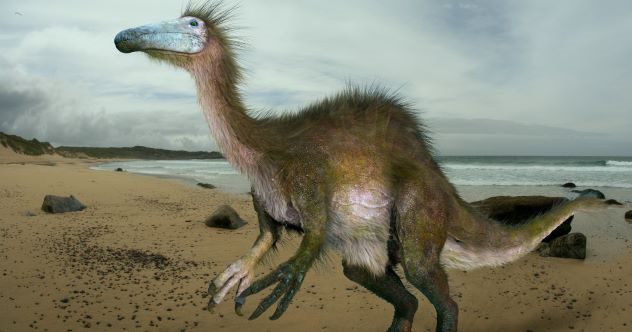
For generations, scientists debated why non-avian dinosaurs disappeared approximately 66 million years ago. Proposed culprits included disease, climate change, competition with mammals, shrinking food supplies, volcanic eruptions, and the possibility that dinosaurs had simply become evolutionarily unfashionable.
The solution
The leading explanation is the Chicxulub asteroid impact near what is now Mexico’s Yucatán Peninsula. Evidence includes a worldwide layer enriched with iridium, shocked minerals created under extreme pressure, impact debris, and a buried crater approximately 110 to 120 miles wide.
The impact caused regional devastation, enormous tsunamis, wildfires, and the release of dust and aerosols that disrupted sunlight and global climate. Food webs collapsed, contributing to the extinction of roughly three-quarters of Earth’s species. Massive eruptions in India’s Deccan Traps may have added environmental stress, but the asteroid is widely regarded as the primary trigger. It was less “dinosaurs forgot to adapt” and more “a mountain from space canceled lunch.”
2. How Did Death Valley’s Rocks Move by Themselves?
The mystery
At Racetrack Playa in Death Valley, heavy stones were repeatedly found at the ends of long trails cut into the dry lakebed. No footprints appeared beside them, and nobody had reliably watched the stones move. Explanations ranged from hurricane-force winds and magnetic forces to practical jokes involving extremely patient pranksters.
The solution
Researchers finally observed the process during the winter of 2013–2014. Rain created a shallow pond that froze overnight. When sunlight began melting the ice, the surface broke into thin floating panels. Light winds pushed these sheets against the rocks, slowly sliding them across the wet, slippery mud.
The stones moved at only a few inches per secondslow enough to be missed from a distance. The required combination of water, freezing temperatures, sunshine, thin ice, and wind is uncommon, which explains why the movement had remained so elusive. No invisible desert giants were required. Just weather with very precise scheduling.
3. Why Does Blood Falls Look Like Antarctica Is Bleeding?
The mystery
Blood Falls pours dark red liquid from Taylor Glacier in Antarctica, creating the cheerful appearance that the glacier has suffered a serious workplace accident. When explorers first documented it, some suspected red algae were responsible.
The solution
The liquid is extremely salty, iron-rich brine originating beneath the glacier. Its high salt concentration lowers its freezing point, allowing it to remain liquid in temperatures that would freeze ordinary water. Radar research helped trace channels and reservoirs capable of transporting the brine through the ice.
When dissolved iron in the brine reaches the surface and encounters oxygen, it oxidizes. Detailed mineral analysis indicates that tiny, iron-containing particles form during this process, producing the striking red color. Blood Falls is therefore closer to rust-colored plumbing than actual bloodalthough “Subglacial Iron-Oxidation Outlet” would probably sell fewer Antarctic postcards.
4. What Produced the Mysterious Ocean Sound Called the Bloop?
The mystery
In 1997, underwater microphones operated by the National Oceanic and Atmospheric Administration recorded an exceptionally powerful, low-frequency sound in the Pacific. It was detected thousands of miles apart and quickly became known as the Bloop.
Because the sound seemed vaguely biological, popular culture imagined an undiscovered animal of ridiculous proportions. Somewhere, a fictional sea monster’s publicist began preparing a press release.
The solution
Scientists later compared the Bloop with sounds recorded around Antarctica. Its acoustic signature matched icequakes produced when enormous icebergs crack, fracture, or break away from glacial ice. These events can release enough energy to send sound through the ocean across immense distances.
The Bloop was enormous, but enormous does not automatically mean alive. Antarctica had simply dropped the world’s loudest ice cube.
5. What Flattened the Forest at Tunguska?
The mystery
On June 30, 1908, a tremendous explosion occurred over a remote area near Russia’s Stony Tunguska River. The blast flattened trees across more than 800 square miles, yet investigators found no obvious impact crater. That absence encouraged theories involving volcanic activity, antimatter, miniature black holes, and malfunctioning extraterrestrial vehicles.
The solution
The best-supported explanation is an atmospheric airburst caused by an asteroid or comet fragment. The object entered Earth’s atmosphere at tremendous speed, heated rapidly, fragmented, and released most of its energy several miles above the ground.
An airburst explains both the huge blast pattern and the missing crater: the object did not remain intact long enough to strike the surface. Its exact composition and dimensions are still debated, so not every Tunguska question is settled. The main mystery, however, has moved from “What impossible weapon did this?” to “Precisely what kind of space rock exploded?” That is a major scientific upgrade.
6. What Caused the Antarctic Ozone Hole?
The mystery
When scientists reported severe seasonal ozone loss over Antarctica in the 1980s, the scale and location were surprising. Researchers already knew that chlorine-containing chemicals could damage ozone, but they needed to explain why destruction became so intense over the South Pole during spring.
The solution
Chlorofluorocarbons, once widely used in refrigeration, air conditioning, foam manufacturing, and aerosol products, rise into the stratosphere. Ultraviolet radiation breaks them apart and releases chlorine. During the dark Antarctic winter, extremely cold conditions create polar stratospheric clouds. Chemical reactions on those cloud particles convert relatively inactive chlorine compounds into more reactive forms.
When sunlight returns in spring, chlorine begins catalytic reactions that destroy ozone repeatedly. The combination of human-made chemicals, extreme cold, specialized clouds, the polar vortex, and returning sunlight explained the hole’s annual behavior. Science solved the mechanism, and international controls on ozone-depleting substances began addressing the cause rather than merely admiring the problem.
7. How Do Wombats Produce Cube-Shaped Poop?
The mystery
Wombats are the only known animals that routinely produce feces shaped like small cubes. The obvious question was anatomical: Did they have square exits? They do not, which is probably comforting information for wombats.
The solution
Researchers examined wombat intestines, measured tissue elasticity, used medical imaging, and developed mathematical models. They found that the final portions of the intestine contain regions with different levels of stiffness and flexibility. As digested material moves through the intestine and loses moisture, contractions and uneven tissue properties shape it into flat surfaces and rounded corners.
The geometry forms inside the intestine rather than during the final moment of extrusion. Cubes may also benefit wombats by remaining on rocks, logs, and other elevated marking locations instead of rolling away like less cooperative droppings. The mechanism is well supported, even though the full evolutionary story remains open for discussion.
8. Why Do Zebras Have Stripes?
The mystery
Charles Darwin and Alfred Russel Wallace debated zebra stripes, and later researchers tested several possibilities. Perhaps stripes provided camouflage, confused predators, helped zebras recognize one another, regulated body temperature, or made lions dizzy enough to reconsider dinner.
The leading solution
A growing body of comparative and experimental evidence points to protection from biting flies as the primary evolutionary benefit. Striped equids are strongly associated with regions where horseflies and tsetse flies are common. Controlled observations also show that flies approach zebras but have difficulty slowing down and landing accurately on striped surfaces.
Stripes therefore appear to interfere with the insects’ visual guidance during the final stage of landing. Scientists continue studying the exact optical mechanism and whether stripes provide secondary benefits, so this mystery is better labeled “strongly answered” than “sealed in a vault.” Still, the fly-deterrence explanation has survived tests that competing ideas have struggled to pass.
9. Why Has Some Roman Concrete Lasted for Millennia?
The mystery
Ancient Roman structures, including aqueducts, harbors, walls, and the Pantheon, contain concrete that has endured for centuries. Meanwhile, certain modern concrete structures begin developing serious cracks while everyone involved is still arguing about the warranty.
The solution
Researchers studying ancient samples found evidence that Roman builders sometimes used a hot-mixing process involving quicklime. This technique produced small white pieces known as lime clasts, once dismissed as signs of careless mixing.
Instead, those clasts may act as reactive repair reservoirs. When a crack forms and water enters, calcium-rich material can dissolve from a clast, move into the damaged area, and recrystallize as calcium carbonate or react with surrounding volcanic material. The new minerals help seal the crack before it spreads.
Roman concrete was not one universal recipe, and lime-based self-healing is not the only reason some structures survived. Nevertheless, hot mixing and reactive lime clasts explain a major part of its durability. The Romans were not bad at mixing; they may have been leaving repair kits inside the walls.
10. What Is Really Happening in the Bermuda Triangle?
The mystery
The loosely defined region between Florida, Bermuda, and Puerto Rico has been blamed for unexplained disappearances involving ships and aircraft. Suggested causes include magnetic anomalies, methane eruptions, time portals, Atlantis, alien abductions, and navigation equipment becoming emotionally unavailable.
The solution
There is no credible evidence that mysterious losses occur there more frequently than in other large, heavily traveled sections of the ocean. The supposed mystery combines unrelated accidents, incomplete reports, exaggerated retellings, and incidents that sometimes occurred outside the commonly drawn triangle.
Real hazards do exist. The region experiences hurricanes, rapidly changing weather, strong currents, reefs, deep water, heavy traffic, mechanical failures, and human navigational errors. The Gulf Stream can also carry debris away quickly, making wreckage difficult to locate.
The Bermuda Triangle was not solved by discovering one exotic force. It was solved by challenging the assumption that an abnormal phenomenon existed in the first place. Occasionally, statistics are the brave detective that enters the haunted house and discovers a leaking pipe.
Experiencing Solved Scientific Mysteries in the Real World
Reading the final explanation is satisfying, but the more valuable experience is learning how investigators reached it. Each mystery becomes a miniature lesson in observing carefully, testing alternatives, and resisting the most entertaining conclusion.
Consider Death Valley’s sailing stones. Photographs of long tracks immediately invite speculation because the movement itself is absent. The breakthrough came when researchers stopped treating the tracks as the whole story. They monitored weather, installed instruments, and returned often enough to witness the rare combination of ice, water, wind, and mud. Visitors who see Racetrack Playa can practice the same habit: study the surface, surrounding slopes, local climate, and scale of the tracks before choosing an explanation. The landscape becomes a natural laboratory rather than merely an unusual photo stop.
Museums offer another useful experience. A dinosaur extinction exhibit may display boundary rocks, iridium evidence, fossils, impact models, and maps of the buried Chicxulub crater. Examining those pieces together reveals how scientific confidence grows. No single mineral grain announces, “An asteroid did it.” The case emerges from independent evidence that points toward the same event.
Sound provides an especially memorable route into scientific investigation. Listening to the Bloop before reading NOAA’s explanation can expose how quickly the brain invents an agent behind an unfamiliar noise. After hearing recordings of cracking or grounding icebergs, the similarities become more obvious. The exercise is a gentle warning that intuition evolved to react quickly, not to classify low-frequency marine acoustics.
Blood Falls creates a similar shift in perception. At first glance, the red outflow looks biological or even theatrical. Learning about iron oxidation turns it into an enormous chemistry demonstration. A familiar processiron reacting in the presence of oxygencan create something extraordinary when it occurs within an ancient, salty system beneath a glacier.
These mysteries also encourage small, responsible experiments. Watch how iron changes after repeated exposure to moisture. Compare how easily flies land on differently patterned outdoor surfaces without trapping or harming them. Observe how thin ice responds to a light horizontal push. Examine cracks in old masonry and note where mineral deposits have formed. Such observations do not reproduce professional studies, but they make the underlying processes tangible.
The most important experience is intellectual. Choose one mysterious claim and build an evidence ladder. Begin with the original observation. Separate firsthand records from later retellings. List several explanations, including ordinary ones. Ask what each hypothesis predicts. Then look for measurements capable of distinguishing among them.
Applying this method to the Bermuda Triangle is particularly revealing. Instead of starting with “What force makes vehicles disappear?” begin with “Do vehicles disappear there unusually often?” That change in wording can eliminate an entire imaginary problem. It is the scientific equivalent of checking whether the door is locked before investigating the alleged ghost that keeps opening it.
Experiencing scientific mysteries this way does not make the world less magical. The real mechanismsasteroid impacts, catalytic atmospheric chemistry, moving ice sheets, self-repairing concrete, and strangely elastic wombat intestinesare usually more surprising than the legends. Reality rarely needs help from aliens.
Conclusion: A Solved Mystery Is Usually a New Beginning
These 10 solved scientific mysteries demonstrate that science advances through patient observation rather than dramatic guessing. Researchers identified asteroid debris, filmed flies approaching stripes, mapped liquid beneath a glacier, recorded rocks sliding across mud, and recreated ancient construction chemistry. In several cases, the answer appeared only after investigators developed instruments capable of observing the event directly.
“Solved” does not mean every detail has been explained. Scientists still debate the precise consequences of the Chicxulub impact, the composition of the Tunguska object, secondary functions of zebra stripes, and variations among Roman building methods. A strong solution narrows the remaining questions and gives researchers a better place to begin.
Note: This article synthesizes findings from U.S. government science agencies, universities, museum resources, and peer-reviewed research. Scientific conclusions should be understood as evidence-based and open to refinement when stronger data become available.