“`
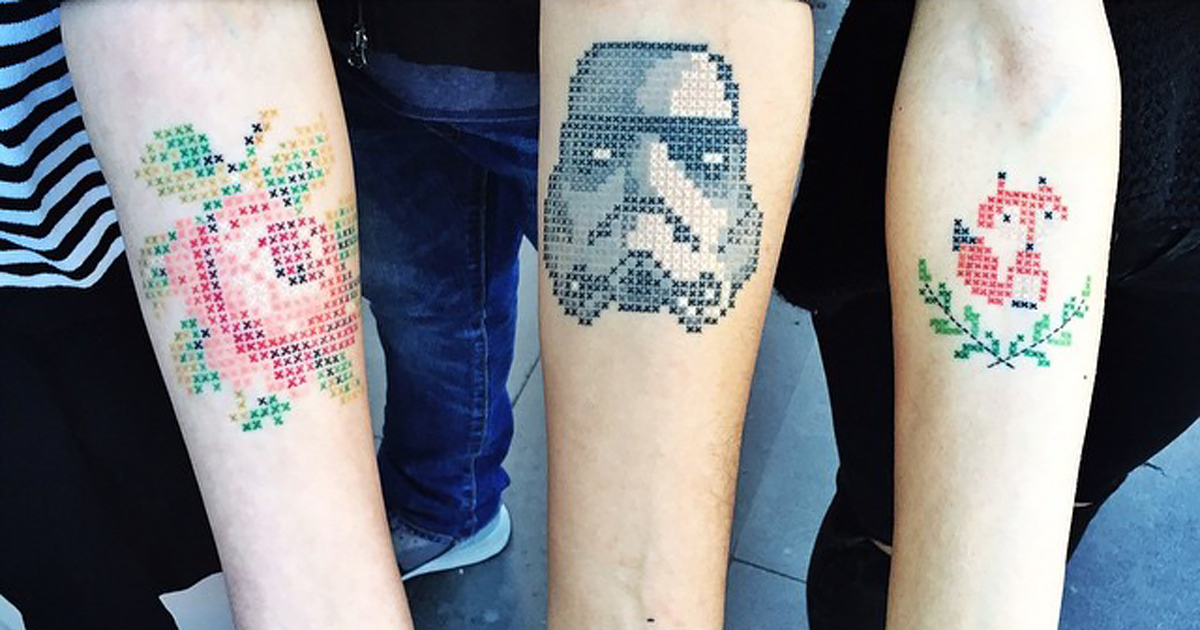
Cross-stitch tattoos by Turkish artist Eva Krbdk are the kind of body art that makes your brain do a tiny double take. At first glance, they look like embroidery. Step closer, and the “thread” becomes ink. Step even closer, and you realize the entire image is built from small, deliberate X-shaped marks, like a sampler escaped grandma’s sewing basket, took a plane to Brooklyn, and started a very chic second career.
Eva Krbdk, also known as Eva Karabudak or Havva Karabudak, is a Turkish fine-art tattooer whose work helped popularize the cross-stitch tattoo style online. Her early cross-stitch designs spread widely because they hit a rare sweet spot: nostalgic, technical, playful, and surprisingly elegant. A rose, a heart, a cartoon character, or even a pop-culture icon can become a tiny grid of color that reads like handmade textile art on skin.
Today, Krbdk is also known for micro-realism tattoos, fine line work, miniature paintings, botanicals, animals, and famous art recreations. Still, her cross-stitch tattoos remain one of the most memorable chapters in modern tattoo culture because they blur the border between folk craft and contemporary ink. They ask a simple, delightful question: What if a tattoo did not have to look drawn, painted, or shaded? What if it looked stitched?
Who Is Eva Krbdk?
Eva Krbdk is the professional name used by Eva Karabudak, a Turkish tattoo artist with a fine arts background and a reputation for highly detailed, delicate work. Born in Turkey, she studied at the Fine Arts Academy of Ankara and began her creative life through drawing, painting, and street murals before moving deeper into tattooing. Her path eventually led from Turkey to Istanbul and then to New York, where she became the founder of Atelier Eva, a refined tattoo studio in Williamsburg, Brooklyn.
What makes Krbdk stand out is not only technical skill but also her ability to translate one medium into another. Instead of treating skin as a flat poster, she treats it like a living canvas that can hold the illusion of fabric, watercolor, oil paint, or miniature illustration. Her tattoo portfolio includes dreamy landscapes, micro animal portraits, floral pieces, art history references, and cross-stitch tattoos that look as if they were made with thread rather than a needle machine.
What Are Cross-Stitch Tattoos?
Cross-stitch tattoos are tattoos designed to mimic the look of cross-stitch embroidery, a counted-thread needlework technique based on small X-shaped stitches. In traditional cross-stitch, the artist builds an image by placing colored thread into a grid. In a tattoo, the artist creates that same effect with ink, arranging tiny X marks in controlled rows and clusters until the full image appears.
The result sits somewhere between embroidery, pixel art, and pointillism. From far away, the eye blends the tiny marks into a recognizable picture. Up close, the image breaks apart into individual crosses. This is why cross-stitch tattoo designs feel both digital and handmade at the same time. They can resemble an old-school video game sprite, a folk-art sampler, or a patch sewn onto denimsometimes all three before lunch.
Why Eva Krbdk’s Cross-Stitch Style Became So Popular
Eva Krbdk’s cross-stitch tattoos became popular because they were instantly recognizable in a crowded feed. Tattoo trends often rely on bold outlines, smooth shading, blackwork, watercolor washes, or fine line minimalism. Krbdk’s stitched effect offered something different: a tattoo that looked soft, crafty, and slightly impossible.
Her designs often avoided heavy black outlines. Instead, the shapes were defined by color placement, much like embroidery or pixel art. This made the tattoos feel airy and tactile rather than heavy. A tiny heart could look sweet without becoming boring. A rose could feel romantic without turning into the same rose tattoo your cousin’s roommate already has. A character or symbol could feel nostalgic without shouting, “I brought my entire childhood to the appointment.”
The Art Behind the Illusion
Cross-stitch tattoos may look cute, but they are not simple. A successful design requires careful planning, steady repetition, color control, and enough spacing to keep the pattern readable as the skin heals. The tiny X marks must be consistent enough to suggest stitching but organic enough to sit naturally on the body.
Unlike a traditional line drawing, where a contour can carry the whole design, cross-stitch tattoos depend on many small marks working together. If the spacing is too tight, the design may blur over time. If it is too loose, the image may lose definition. If the color values are not balanced, the final tattoo can look patchy instead of stitched. It is basically a tiny optical orchestra, and every X has to know its part.
Cross-Stitch Tattoos and Pixel Art
One reason Eva Krbdk’s work appeals to modern audiences is its relationship to pixel art. Both cross-stitch and pixel art build images from small units. Cross-stitch uses thread; pixel art uses squares of digital color; Krbdk’s tattoos use ink marks. The visual language is instantly familiar to anyone who has ever loved old video games, craft patterns, or digital icons.
This makes cross-stitch tattoos especially effective for pop-culture imagery. A stormtrooper helmet, cartoon figure, flower, fruit, heart, or small symbol can be broken into a grid and rebuilt with X-shaped marks. The style adds warmth to images that might otherwise feel too slick. It says, “Yes, this is body art, but it also looks like somebody lovingly stitched it while drinking tea and judging your thread tension.”
Why the Style Feels So Fresh
Cross-stitch tattoos feel fresh because they turn a familiar domestic craft into wearable contemporary art. Embroidery has historically been associated with patience, tradition, family, and handwork. Tattooing, meanwhile, has often been framed as rebellious, bold, public, and permanent. Krbdk’s cross-stitch tattoos bring those two worlds together without making either one feel forced.
The magic lies in the contrast. A tattoo machine is not soft. Skin is not fabric. Ink is not thread. Yet the finished tattoo suggests softness, fiber, and stitched texture. That contradiction gives the style its charm. It is delicate, but not weak. Nostalgic, but not dusty. Technical, but not cold. It is the tattoo equivalent of wearing a cardigan with combat boots and somehow looking cooler than everyone else at brunch.
Popular Cross-Stitch Tattoo Ideas Inspired by Eva Krbdk
Eva Krbdk’s cross-stitch tattoo work has inspired many people to think beyond standard tattoo categories. Instead of asking whether a design should be traditional, realistic, minimalist, or watercolor, clients can ask whether it might work as a stitched image. Some motifs are especially well suited to the style.
Floral Cross-Stitch Tattoos
Flowers are a natural match for cross-stitch tattoos. Roses, daisies, tulips, wildflowers, and tiny bouquets can be translated into small X marks while still keeping their softness. Floral cross-stitch tattoos also benefit from color gradients. A rose, for example, can move from deep red to pink to pale highlight through carefully placed stitches. The result feels like a miniature embroidered patch without the patch.
Hearts, Symbols, and Tiny Motifs
Small hearts are among the most charming cross-stitch tattoo ideas. They are simple enough to remain readable and meaningful enough to avoid feeling random. Stars, initials, cherries, bows, moons, little houses, and tiny animals can also work beautifully. These designs are great for wrists, ankles, inner arms, or small hidden placements.
Pop-Culture Cross-Stitch Tattoos
Because cross-stitch has a pixel-like structure, it works well for pop-culture references. Characters, helmets, icons, and nostalgic symbols can become stitched-style tattoos that feel both geeky and stylish. The trick is restraint. The best pop-culture tattoos in this style are simplified enough to survive the grid but detailed enough to be instantly recognizable.
Anatomical and Fine-Art Variations
One of the most interesting directions for cross-stitch tattoo design is the combination of stitched texture with more serious subject matter. An anatomical heart rendered in pink and purple X marks, for example, can feel poetic, scientific, and handmade all at once. Krbdk’s broader fine-art tattoo practice also shows how classical painting, micro-realism, and textile effects can live inside the same artistic universe.
How Eva Krbdk Connects Cross-Stitch to Fine Art Tattooing
Eva Krbdk is not limited to cross-stitch tattoos, and that is part of why the style matters. Her career shows a larger interest in translating visual traditions into tattoo form. She has recreated famous paintings, explored botanical realism, made tiny framed landscapes, and used fine line techniques to create tattoos that feel more like miniature art objects than standard flash designs.
In that context, cross-stitch tattoos are not a gimmick. They are part of a broader artistic approach: borrowing from another medium and asking how it can be reimagined on skin. A painting tattoo asks how brushstrokes can become ink. A floral micro-realism tattoo asks how delicate color can hold detail at a small scale. A cross-stitch tattoo asks how thread can become illusion.
Where Cross-Stitch Tattoos Fit in Today’s Tattoo Trends
Modern tattoo culture is increasingly interested in small-scale detail, fine line work, micro-realism, botanical designs, personal symbolism, and art-inspired tattoos. Cross-stitch tattoos fit naturally into this moment. They are detailed but not loud, colorful but not chaotic, nostalgic but still highly contemporary.
They also fit the rise of tattoos as personal collectibles. Many people now build tattoo collections slowly, choosing small pieces that represent memories, places, people, jokes, pets, hobbies, or private symbols. A cross-stitch tattoo is perfect for that approach because it can feel like a treasured objecta little embroidered badge from the museum of your own life.
Things to Consider Before Getting a Cross-Stitch Tattoo
Before booking a cross-stitch tattoo, choose the artist carefully. This style requires precision, patience, and a strong understanding of how small marks age. Look for healed photos, not just fresh images. Fresh tattoos often look crisp and bright, but healed tattoos reveal how the artist’s spacing, color choices, and technique hold up over time.
Placement also matters. Areas that get lots of sun, friction, or stretching may not be ideal for tiny detailed tattoos. The wrist, ankle, forearm, upper arm, calf, or shoulder can work well depending on the design and your lifestyle. A good artist will help you choose a size that gives the X-shaped details enough room to breathe. Tattoo design is like furniture shopping in a tiny apartment: scale is everything, and pretending otherwise leads to regret.
Color and Longevity
Cross-stitch tattoos often rely on color to create the embroidered effect. That makes color selection important. Reds, pinks, greens, blues, grays, and purples can all look beautiful, but some colors may fade differently depending on skin tone, sun exposure, aftercare, and ink quality. A skilled tattoo artist will know how to create contrast without overcrowding the design.
Safety and Aftercare
Any tattoo breaks the skin, so safety should be treated as part of the art, not an optional side quest. Choose a licensed, reputable studio that follows sterilization procedures, uses professional equipment, and provides clear aftercare instructions. Keep the tattoo clean, avoid soaking it while it heals, protect it from sun exposure, and contact a medical professional if you notice unusual swelling, spreading redness, fever, pus, or severe pain.
Fine detailed tattoos can be especially sensitive to poor aftercare because scabbing, picking, and sun damage may disrupt the crispness of the tiny marks. In other words: let the tattoo heal. Do not treat it like a scratch-off lottery ticket.
Why Cross-Stitch Tattoos Make People Smile
Part of the appeal of cross-stitch tattoos is emotional. They feel familiar. Many people associate embroidery with grandparents, family homes, handmade gifts, old linens, craft stores, or rainy afternoons spent making something slowly. Turning that feeling into a tattoo gives the design a built-in tenderness.
At the same time, the style has a wink of humor. There is something wonderfully unexpected about seeing a permanent tattoo imitate a craft known for hoops, thread, and tiny scissors. It is not trying too hard to be edgy. It is not flexing. It is simply clever, beautiful, and a little mischievous. That combination is hard to resist.
Experiences Related to Cross-Stitch Tattoos By Turkish Artist Eva Krbdk
Looking at cross-stitch tattoos by Eva Krbdk can feel different from looking at many other tattoo styles because the work invites memory before analysis. You do not only see color and composition. You see the idea of making something by hand. You imagine thread moving through cloth, a pattern slowly appearing, and someone taking the time to build beauty one stitch at a time. That emotional shortcut is powerful, especially for people who grew up around sewing, embroidery, quilting, knitting, or other domestic crafts.
For a first-time tattoo client, a cross-stitch design can feel approachable. A tiny stitched heart or flower does not carry the same visual intensity as a large blackwork piece or a heavy traditional tattoo. It feels sweet, personal, and almost secretive. People who are nervous about tattoos may find the textile illusion comforting because it softens the psychological edge of permanence. It still lasts, of course, but it does not announce itself with a megaphone. It taps you on the shoulder and says, politely, “Hello, I am adorable.”
For craft lovers, the experience can be even more meaningful. A cross-stitch tattoo can honor a grandmother, a mother, a family tradition, or a personal hobby. It can represent hours spent making things with your hands in a world that increasingly rewards speed and screens. Choosing this tattoo style can be a way of saying that slow work matters. Detail matters. Small things, repeated with care, can become something beautiful. That message lands especially well in a culture where everyone is rushing and even coffee needs a productivity strategy.
For artists and designers, Krbdk’s cross-stitch tattoos are a case study in translation. The experience of studying them is not just “that looks pretty.” It is “how did she make ink behave like thread?” The answer is design intelligence: spacing, color value, repetition, contrast, and restraint. These tattoos remind viewers that innovation does not always mean inventing something from nothing. Sometimes it means taking an old visual language and moving it into a new medium with enough respect that both the old and new forms shine.
For people planning their own tattoo, the best experience begins before the appointment. Collect references, but do not ask for a direct copy. Think about what the stitched style adds to the subject. A flower may become softer. A heart may become more nostalgic. A pop-culture symbol may become more playful. A pet portrait may not be ideal unless simplified, while a small paw, collar charm, or favorite toy could work beautifully. The goal is not to force every idea into cross-stitch form. The goal is to find the idea that becomes more meaningful because of it.
After the tattoo, the experience becomes part of daily life. Cross-stitch tattoos tend to invite comments because people notice the illusion. Someone may ask if it is real, embroidered, printed, or “some kind of magical skin sewing.” That curiosity is part of the fun. A good cross-stitch tattoo is not only decoration; it is a conversation starter, a tiny optical trick, and a personal keepsake.
Most importantly, Eva Krbdk’s work shows that tattoos can be gentle without being forgettable. They can be funny without becoming novelty art. They can be feminine, nostalgic, technical, and modern at once. That is why her cross-stitch tattoos continue to matter years after they first traveled across social media. They are not just pretty little X marks. They are proof that tradition can be refreshed, craft can become contemporary, and a tattoo can feel like it was stitched by memory itself.
Conclusion
Cross-stitch tattoos by Turkish artist Eva Krbdk remain one of the most delightful examples of textile-inspired tattoo art. By turning tiny X-shaped marks into flowers, hearts, characters, and detailed miniature images, Krbdk helped bring embroidery aesthetics into modern body art. Her work connects folk craft, pixel art, fine line tattooing, micro-realism, and personal storytelling in a way that feels both playful and sophisticated.
The best cross-stitch tattoos are not just cute; they are carefully designed illusions. They require the right artist, the right scale, smart placement, good color choices, and proper aftercare. When done well, they look handmade, personal, and timeless. They also carry a quiet reminder that art does not have to shout to be unforgettable. Sometimes it can simply cross its little ink stitches and steal the whole room.
“`