Some chairs politely occupy a corner. South American-style leather chairs make the corner look as though it has booked a one-way ticket to Buenos Aires, stopped for architecture in São Paulo, and returned wearing beautifully aged saddle leather.
These designs are recognizable for their relaxed silhouettes, exposed structures, generous use of natural materials, and clever reliance on suspension. Instead of hiding every joint beneath foam and upholstery, they let steel, wood, brass, straps, and leather do the visual talking. The result feels warm but modern, sophisticated but never stiff. In other words, it is furniture that knows how to loosen its collar.
The following ten chairs include authentic Argentine and Brazilian modernist icons alongside contemporary designs that share their low-slung proportions and leather-sling construction. Some are collectible investments; others are practical interpretations for everyday rooms. All offer a useful lesson: comfort does not require a chair the size of a compact SUV.
What Defines a South American-Style Leather Chair?
“South American style” is a convenient design label, not a single historical movement. Argentina, Brazil, Uruguay, Chile, and the continent’s other countries have distinct cultures, materials, climates, and furniture traditions. The phrase is most useful when describing a shared visual vocabulary found in influential 20th-century seating: leather stretched across a visible frame, relaxed ergonomics, architectural lines, and a strong relationship between craftsmanship and modernism.
Many of the best-known examples emerged as Latin American architects reconsidered European modernism for local life. They retained efficient construction and honest materials but often added deeper seats, warmer woods, softer leather, and a more informal posture. Brazilian furniture in particular became known for combining substantial timber with sensuous curves and hammock-like support.
The style works because it balances opposites. Steel feels cooler beside warm cognac leather. A heavy wood frame becomes visually lighter when the seat hangs between it. Hand-finished hide softens precise geometry. Even the patina contributes: small marks usually make good leather look more interesting rather than less presentable.
10 Leather Chairs Worth Knowing
1. The B.K.F. Butterfly Chair
The B.K.F. chair is the essential starting point. Designed in Buenos Aires in 1938 by Antonio Bonet, Juan Kurchan, and Jorge Ferrari Hardoy, it is also known as the Hardoy, butterfly, sling, or safari chair. Its structure is wonderfully direct: a sculptural steel frame supports a single suspended cover, traditionally made from leather or canvas.
The chair reached the United States quickly, with early examples going to the Museum of Modern Art and Frank Lloyd Wright’s Fallingwater. Knoll later produced it, but widespread copying turned the silhouette into one of modern furniture’s most familiar forms. Choose thick leather with carefully reinforced corners; a flimsy cover can transform this classic from architectural poetry into an awkward camping chair.
2. The Paulistano Armchair
Paulo Mendes da Rocha designed the Paulistano in 1957 for the Athletic Club of São Paulo. Its frame appears almost like a line drawing brought into three dimensions: a long piece of bent steel forms the structure, while a loose leather cover becomes the seat and back.
The Paulistano looks severe when empty but becomes notably relaxed once occupied. That contrast is part of its appeal. It belongs comfortably in Brutalist interiors, glass-walled apartments, rustic houses, and rooms where everything else is upholstered within an inch of its life. Natural leather emphasizes warmth; black leather pushes the chair toward a sharper, more graphic mood.
3. The Kilin Lounge Chair
Designed by Sergio Rodrigues in 1973, the Kilin is one of the clearest expressions of Brazilian leather-and-wood furniture. A broad leather sling fits over a shaped wood frame assembled with visible dowels and pins. Compared with Rodrigues’ more massive designs, the Kilin feels light, open, and easy to move.
The seat has a laid-back angle without swallowing the sitter. Its wide leather surface displays natural grain beautifully, making the quality of the hide especially important. The design also rewards restraint: place it beside a simple reading lamp and low table rather than surrounding it with a furniture convention.
4. The Mole Armchair
The Mole, designed by Sergio Rodrigues in 1957, is not a pure sling chair, but it belongs in any serious discussion of South American leather seating. A rounded wood frame supports adjustable leather straps and an oversized cushion that settles into the structure like a luxurious hammock.
“Mole” means soft in Portuguese, and the name is accurate. This is the chair for readers, nappers, and people who announce that they will sit down for five minutes before disappearing for an hour. Its generous scale requires more floor space than the B.K.F. or Paulistano, but the visible frame and open sides keep it from feeling like a sealed upholstery bunker.
5. The Dinamarquesa Lounge Chair
Jorge Zalszupin designed the Dinamarquesa in 1959. Its name means “Danish girl” in Portuguese, reflecting the designer’s dialogue with Scandinavian modernism. The chair combines an elegant wood frame with a low seat and upholstery that may be specified in leather.
Where some Brazilian chairs emphasize muscular timber, the Dinamarquesa is graceful and finely proportioned. It is an excellent option for smaller living rooms because its delicate frame leaves visual space around the body. Pair it with linen, wool, stone, and quiet earth tones for a room that feels collected rather than themed.
6. The Oscar Lounge Armchair
Sergio Rodrigues created the Oscar armchair in 1956 for the São Paulo Jockey Club and named it in honor of architect Oscar Niemeyer. Its flowing wooden frame echoes the curves associated with Brazilian modernist architecture, while leather upholstery or woven cane supplies tactile contrast.
The Oscar is less casual than a butterfly chair but still avoids the formality of a conventional club chair. It can bridge a polished interior and a more relaxed collection of handmade objects. The arms are particularly expressive, giving the chair character without resorting to decorative frills, carved eagles, or any other furniture-related theatrics.
7. The Garza Round Saddle Leather Chair
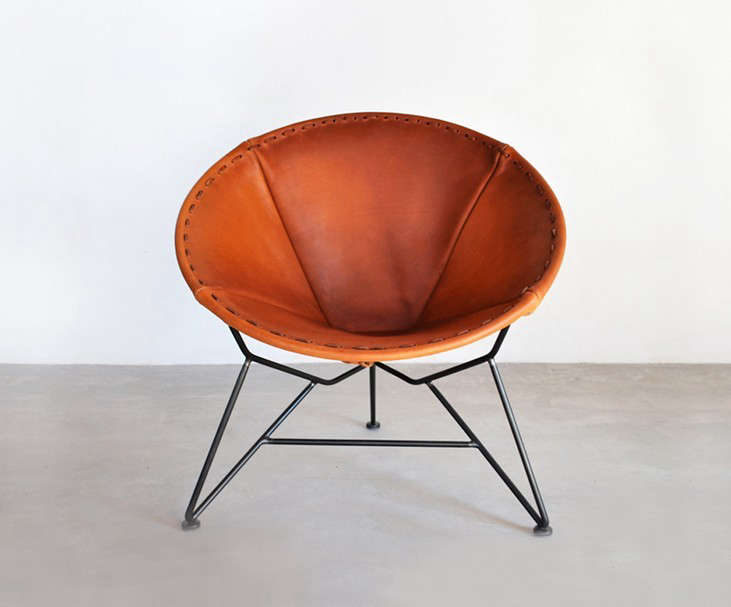
Designed in Marfa, Texas, the Garza Round Chair is a contemporary American piece with a strong affinity for Latin American and Southwestern modernism. Vegetable-tanned saddle-grade leather stretches over a simple steel base, forming a rounded seat that feels simultaneously primitive and refined.
The broad leather panel is the star. As it ages, it can develop deeper color and surface variation, especially in natural finishes. The chair works beautifully in adobe-inspired rooms, desert houses, minimalist lofts, and spaces dominated by plaster, clay, or raw wood. It is also proof that a circle and a few straight lines can have more personality than an entire sectional.
8. The Blu Dot Toro Lounge Chair
Blu Dot’s Toro Lounge Chair translates the leather-sling idea into a more contemporary, high-backed form. Thick saddle leather hangs within a robust architectural frame, offering stronger upper-body support than many low butterfly-style seats.
The taller back makes the Toro particularly appealing for reading areas, bedrooms, and living rooms where comfort must extend beyond a quick cocktail. Its footprint remains relatively controlled, so it can provide visual drama without demanding half the room. An accompanying ottoman creates a more indulgent setup, although the chair remains convincing on its own.
9. The Phloem Peninsula Chair
Phloem Studio’s Peninsula Chair is a craft-focused interpretation of the sling lounge chair. A handcrafted solid-wood frame supports heavyweight bridle leather held by exposed brass rods and screws. The materials are not disguised, and the connections become part of the design.
Its low arms and reclined position produce the enveloping feeling people want from suspended leather, but the detailed joinery gives it a distinctly tailored presence. The Peninsula suits interiors where craftsmanship is meant to be noticed: finely built homes, contemporary cabins, or living rooms where the chair can be viewed from several sides.
10. The Classic Leather Campaign Chair
The folding campaign chair predates modern South American furniture, yet its wood-and-leather construction helped establish the portable seating vocabulary later explored by safari, Tripolina, and butterfly chairs. Modern interpretations usually combine crossed wood frames, leather seats, brass fittings, and collapsible construction.
A campaign chair is a practical choice for buyers who like the South American leather-chair look but need greater flexibility. It can move from a reading corner to a guest room or covered porch without requiring a small relocation committee. Look for stable joinery, replaceable leather panels, and a frame that opens smoothly without wobbling.
How to Choose the Right Leather Sling Chair
Start With the Sitting Position
These chairs vary dramatically in posture. A B.K.F. chair encourages deep reclining, while the Kilin offers a more controlled lounge position. The Paulistano sits low and flexible, and the Toro provides a taller back. Measure seat height and depth before buying, especially when the chair will be used by taller adults, older family members, or anyone who dislikes performing a minor squat workout every time they stand.
Inspect the Leather Specification
Full-grain and high-quality top-grain leather generally develop the richest patina. Vegetable-tanned saddle and bridle leathers are often firm at first, then relax with use. Softer upholstery leather may feel comfortable immediately but depends more heavily on stitching and reinforcement.
Ask whether the material is solid leather, corrected leather, bonded leather, or a synthetic substitute. “Leather look” is a visual description, not a promise of longevity. Bonded products can be affordable, but they rarely age like a substantial hide.
Examine Stress Points
Because the leather often carries much of the sitter’s weight, corners, seams, rods, straps, and attachment holes deserve close attention. Reinforced edges and replaceable covers are valuable. On wood frames, look for solid joinery and smooth surfaces where the hide touches the structure. On steel chairs, check welds and confirm that the frame sits evenly on the floor.
Match Scale to the Room
Low furniture preserves sightlines, making sling chairs useful in compact spaces. Nevertheless, reclined seats can be deeper than they appear in photographs. Mark the dimensions on the floor with painter’s tape and leave space behind the chair. Your elegant new lounger should not surprise everyone entering the room like a leather-covered speed bump.
Styling South American-Style Leather Chairs
Let the materials lead. Cognac leather pairs naturally with limewashed walls, pale plaster, terracotta, dark steel, oak, walnut, and woven rugs. Black leather feels more architectural beside concrete, glass, and monochromatic art. Natural leather brightens as it ages and works particularly well with off-white textiles and warm wood.
A single chair can introduce this aesthetic without turning the room into a design-history exhibit. Position it diagonally rather than flat against a wall, add a small table within easy reach, and use directional lighting. A wool throw can soften the seat in winter, but avoid burying the leather beneath layers of decorative pillows. The chair has already done the hard work.
Caring for Leather Without Ruining Its Character
Begin with the manufacturer’s instructions because leather finishes differ. For routine care, remove dust with a soft cloth and blot spills promptly. A lightly damp cloth or mild soap solution may be appropriate for some finished leathers, but aggressive household cleaners are not.
Avoid ammonia, abrasive products, furniture polish, harsh solvents, and random applications of saddle soap or oil unless the manufacturer specifically approves them. Products intended for boots or equestrian equipment may damage a furniture finish. Keep the chair away from prolonged direct sunlight, heating vents, and extreme dryness. Leather likes consistency; it does not enjoy being roasted beside a window every afternoon.
Patina is not the same as neglect. Natural creases, color variation, and small healed marks can be part of premium leather’s character. Cracking, peeling, loose stitching, or severely stretched attachment points require repair rather than another coat of mystery conditioner.
The Ownership Experience: What These Chairs Are Actually Like to Live With
The first surprise is how much a leather sling chair changes after someone sits in it regularly. A new saddle-leather seat may initially feel firm and slightly formal. Over time, the hide begins to respond to the body, developing a gentler curve and a more natural sitting pocket. This break-in period is part of the experience, much like wearing a well-made leather shoe. The chair becomes more personal without needing motors, settings, or an app that will eventually demand an update.
The second lesson involves placement. These chairs usually look best when they have breathing room. Their frames, straps, and suspended surfaces are designed to be seen from the side and back. Pushing one tightly between a sofa and wall hides the very construction that makes it special. A small open corner, an area beside a fireplace, or the edge of a bedroom often works better. Because many designs sit low, they preserve views across the room and can make a compact interior feel less crowded.
Comfort expectations also matter. A sling chair supports the body differently from a deeply padded recliner. Instead of distributing weight across layers of foam, it allows leather to flex between structural points. Some people immediately love the gently suspended feeling. Others prefer a firmer seat or more upright back. The best approach is to test the chair while performing the activity planned for it. Ten pleasant seconds in a showroom does not reveal whether a seat will support an hour of reading.
Daily maintenance is refreshingly modest. Dust gathers along exposed frames and beneath loose covers, but these areas are generally accessible. Crumbs have fewer secret tunnels than they do in an overstuffed sofa. A soft cloth and occasional inspection of straps, seams, screws, and floor glides usually handle the basics. Natural leather will record life through creases and tonal changes, so households seeking a permanently uniform surface may prefer protected leather in a darker color.
Pets introduce another chapter. Cats may interpret suspended leather as an expensive scratching invitation, while dogs often find the hammock-like seat extremely persuasive. Positioning the chair outside a pet’s usual traffic route can reduce damage. A throw offers temporary protection, although covering the entire chair defeats the purpose. Minor scratches can blend into a rugged patina on natural hides; they stand out more clearly on smooth black leather.
Finally, these chairs tend to influence the rest of a room. Their material honesty makes synthetic finishes and excessive decoration nearby feel more obvious. Owners often respond by simplifying: fewer accessories, better lighting, a more tactile rug, and perhaps one strong piece of art. That is the quiet power of a well-designed leather chair. It provides a place to sit, but it also persuades the surrounding furniture to behave itself.
Conclusion
The best South American-style leather chairs combine structural intelligence with an unmistakable sense of ease. The B.K.F. reduces seating to steel and suspended hide. The Paulistano turns one flowing line into a frame. Sergio Rodrigues’ Kilin, Mole, and Oscar demonstrate how Brazilian woodcraft can feel substantial without becoming stodgy.
Contemporary designs from Garza Marfa, Blu Dot, and Phloem Studio show that the formula remains relevant. Choose a chair with honest materials, strong attachment points, appropriate dimensions, and a sitting position that suits real life. Then allow the leather to age. A few creases are not a design emergency; they are evidence that the chair has finally joined the household.