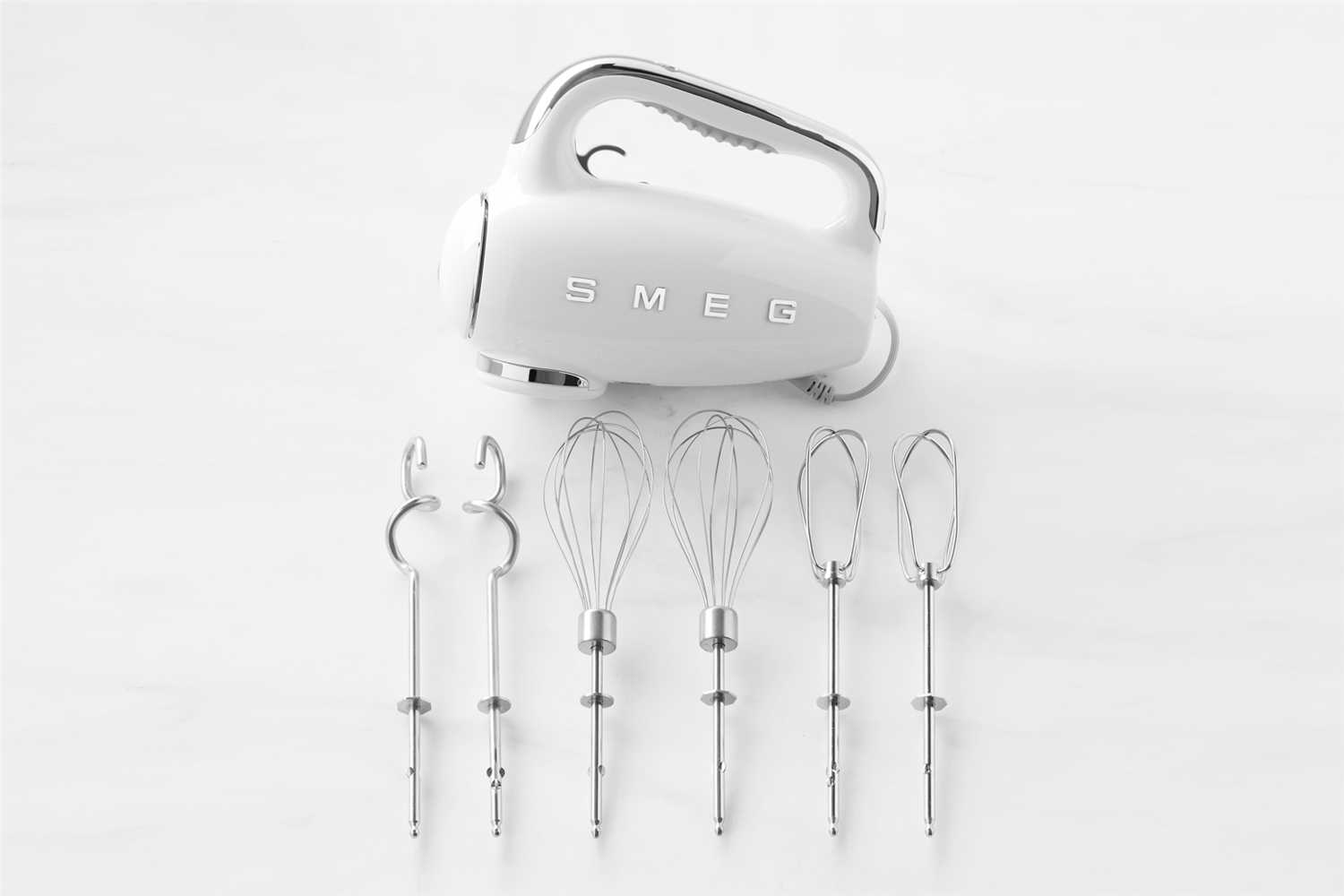
A stand mixer may look impressive on a countertop, but not every batch of frosting needs a machine with the footprint of a small moon lander. For everyday cakes, cookies, whipped cream, fruit fillings, and silky ganache, a well-designed hand mixer or immersion blender is often faster, lighter, and far easier to clean.
The two appliances perform different jobs. A hand mixer uses rotating beaters or whisks to incorporate air, cream butter and sugar, mix batter, and whip egg whites. An immersion blender uses sharp blades to purée, emulsify, and smooth ingredients. Think of the hand mixer as the kitchen’s enthusiastic aerobics instructor and the immersion blender as its detail-obsessed smoothing specialist.
The following ten pieces were selected for useful speed control, comfortable handling, practical attachments, manageable storage, and performance suited to real baking tasks. Some are premium tools with clever engineering; others are simpler machines that quietly get on with the job without demanding their own cabinet.
What to Look for in a Hand Mixer or Blender for Baking
Start with the recipes you make most often
Choose a hand mixer when your regular rotation includes buttercream, meringue, whipped cream, sponge cake, brownies, or cookie dough. At least five speeds are useful because baking frequently requires more than “barely moving” and “launch flour across the kitchen.” Independent testing has also found that good low-speed control, open-style beaters, a comfortable handle, and a clear speed indicator are especially valuable.
Choose an immersion blender when you often make fruit purées, pastry cream, lemon curd, ganache, glaze, cheesecake sauces, crêpe batter, or emulsified frostings. It can blend directly in a saucepan, bowl, jug, or tall container, reducing both transfers and cleanup. Test kitchens generally favor detachable shafts, comfortable grips, effective blade guards, and variable speed control.
Do not judge a mixer by wattage alone
Motor power matters, particularly for stiff cookie dough or thick purées, but the number printed on the box does not tell the whole story. Beater shape, gearing, balance, blade design, torque, and speed control all influence how the appliance performs. A modestly rated mixer with efficient beaters may handle cake batter more gracefully than a louder model that treats every recipe like a demolition project.
Low speed is more important than it sounds
A useful first speed lets you add flour without producing a white cloud over the counter, your shirt, and possibly the family dog. Gradual-start systems are particularly helpful. High speed is necessary for meringue and whipped cream, but controlled low and medium settings are where much of everyday baking happens.
Five Hand Mixers for Cakes, Cookies, and Frostings
1. Breville Handy Mix Scraper
Best for: Frequent bakers who want precise control and thoughtful extras.
The Breville Handy Mix Scraper is a feature-rich option with nine speeds plus a boost setting. Its Beater IQ system recognizes the installed attachment and adjusts the operating range accordingly. The silicone-edged scraper beaters are designed to maintain contact with the bowl while reducing the familiar clank-clank-clank soundtrack of metal beaters hitting the sides.
The angled handle feels natural during longer mixing sessions, while the built-in timer and bowl light are genuinely useful rather than decorative party tricks. Whisks, dough hooks, and a compact storage case are included. It is more expensive than a basic mixer, but it is especially appealing for bakers who make buttercream, cookie dough, and whipped desserts several times a week.
2. Braun MultiMix 5 Hand Mixer
Best for: Dense mixtures and bakers concerned about wrist fatigue.
Braun’s MultiMix 5 places much of the appliance’s weight toward the bowl rather than directly over the user’s hand. That balance can make a noticeable difference when mixing thick cookie dough or beating cream cheese frosting for several minutes.
The U.S. HM5100 model has a 350-watt motor, multiple speed settings, and a sealed housing that helps prevent flour and batter from entering ventilation openings. The beaters and dough hooks give it enough versatility for everyday cakes, cookies, quick breads, and softer yeast doughs. It is a practical choice for anyone who wants substantial mixing power without holding a top-heavy appliance at an awkward angle.
3. KitchenAid 9-Speed Hand Mixer
Best for: Bakers who want a broad speed range and multiple attachments.
The KitchenAid 9-Speed Hand Mixer moves from a gentle first speed for folding in nuts or chocolate chips to faster settings for meringue and whipped cream. A soft-start function gradually brings the beaters up to speed, helping keep dry ingredients in the bowl rather than on the backsplash.
Depending on the model package, accessories may include stainless steel turbo beaters, a whisk, dough hooks, and a blending rod. The lockable swivel cord can be positioned to suit left- or right-handed use. It is compact enough for a drawer or cabinet yet versatile enough to handle most small and medium baking batches.
4. Cuisinart Power Advantage Plus 9-Speed Hand Mixer
Best for: Organized kitchens and bakers who routinely lose attachments.
Cuisinart’s Power Advantage Plus combines nine speeds with three low-start settings intended to reduce splashing and flour spray. Automatic feedback adjusts the power as resistance changes, which is helpful when a light batter gradually turns into a heavier cookie dough.
The beaters, chef’s whisk, dough hooks, spatula, and other accessories fit into a clear storage case that attaches beneath the mixer. It is a small design decision with a large practical benefit: the whisk is less likely to disappear into the mysterious cabinet dimension where measuring spoons and matching food-container lids live. Removable components are dishwasher-safe.
5. Hamilton Beach Professional 5-Speed Hand Mixer
Best for: Budget-conscious bakers who still want a controlled low speed.
This Hamilton Beach model focuses on the features that matter most: five speeds, a slow-start setting, a QuickBurst button, a whisk, beaters, and snap-on storage. The low starting speed is particularly useful when combining cocoa powder, confectioners’ sugar, or flour.
The lockable swivel cord stays out of the way, and the quick-release trigger makes it easy to eject attachments without grabbing sticky beaters. It may lack the digital screens and attachment-detection systems of premium competitors, but it offers the functionality needed for whipped cream, cake batter, frosting, mashed fillings, and ordinary cookie dough.
Five Immersion Blenders for Purées, Ganache, and Fillings
6. Breville Control Grip Immersion Blender
Best for: Fruit sauces, custards, and blending in delicate cookware.
The Breville Control Grip uses a bell-shaped base with internal ribbing to reduce suction. This helps prevent the blender from gripping the bottom of a container like a tiny stainless steel octopus. Its trigger-style handle encourages a more natural wrist position, while the non-scratch base is useful when blending in coated pots.
An eight-inch immersion depth accommodates taller containers, and the included whisk expands its usefulness for light cream, eggs, and thin batters. For baking, it is particularly good for berry sauce, pastry cream, fruit curd, ganache, and smooth glazes.
7. Vitamix 5-Speed Immersion Blender
Best for: Powerful blending and exceptionally smooth textures.
Vitamix’s immersion blender offers five speeds and enough strength for fibrous fruit, frozen ingredients, nuts, and thick mixtures. Its four-pronged blade assembly creates smooth purées quickly, making it useful for fruit coulis, nut-based fillings, silky sauces, and blended cheesecake toppings.
The power is impressive, but restraint is wise. Begin on the lowest setting, especially in a narrow container, unless decorating the cabinets with raspberry sauce is part of the plan. Independent testers have praised its power and comfortable controls while noting that its intensity can be excessive for very small portions.
8. Braun MultiQuick 7 Hand Blender
Best for: One-handed speed adjustment and stubborn ingredients.
Instead of using a traditional numbered dial, the Braun MultiQuick 7 increases speed according to how firmly its control is pressed. A gentle squeeze produces a coarse blend; more pressure creates a finer texture. This makes it easy to adjust power without stopping to reach for another control.
The ActiveBlade shaft moves slightly up and down to increase its cutting area, while the bell-shaped guard helps manage splashing and suction. Depending on the package, accessories may include a whisk, chopper, beaker, or masher. Bakers can use it for nut fillings, fruit compotes, ganache, frosting emulsions, and smooth pastry components.
9. Cuisinart Smart Stick Variable Speed Hand Blender
Best for: An affordable all-purpose baking prep set.
The Cuisinart Smart Stick has a 300-watt DC motor, an eight-inch stainless steel shaft, and variable speed control. Its package includes a whisk, chopper-grinder, and mixing cup, allowing one appliance to handle several small jobs.
The whisk can prepare light cream or egg mixtures, the chopper can process nuts and cookie crumbs, and the blending shaft can smooth curd, pastry cream, sauces, or fruit purée. The long shaft reaches into deeper pots and pitchers, while the detachable components simplify cleanup. It is a strong value for bakers who want flexibility without buying several separate machines.
10. All-Clad 600-Watt Immersion Blender
Best for: Large batches and deep pots.
The All-Clad immersion blender pairs a 600-watt motor with a variable-speed dial, turbo control, and an extra-long shaft. It is well suited to large quantities of fruit filling, custard base, sauce, or purée prepared in a deep pot.
The long reach is an advantage when working with big batches, although it may feel oversized for blending two tablespoons of glaze in a coffee mug. Its strong vortex and substantial construction favor demanding tasks. Bakers who frequently prepare layered desserts, preserves, or fillings in quantity may appreciate the added reach and power.
How to Use These Tools for Better Baking
Cream butter and sugar deliberately
Properly creamed butter and sugar should become lighter, fluffier, and paler as air is incorporated. More mixing is not automatically better, however. Excessive creaming can create too much aeration and contribute to gummy streaks or uneven cake texture. Stop when the mixture looks aerated and cohesive rather than waiting for it to turn nearly white.
Start slowly when adding dry ingredients
Use the lowest setting when flour, cocoa powder, or confectioners’ sugar enters the bowl. Mix only until the dry streaks begin disappearing, then finish according to the recipe. Some cakes actually suffer from undermixing, especially when the batter does not develop enough structure, so “never mix more than three seconds” is not a universal law. Follow the visual cues and method specified by the recipe.
Use the right attachment
Standard beaters handle cake batter, cookies, brownies, and basic frosting. Balloon whisks are better for whipping cream, egg whites, and airy mixtures. Dough hooks can assist with softer dough, but a handheld machine is not the ideal tool for repeatedly kneading very stiff bread dough. An immersion-blender blade is designed for smoothing and emulsifying, not for whipping egg whites into a stable meringue.
Choose a tall, narrow container for immersion blending
A container only slightly wider than the blade guard encourages ingredients to circulate through the blades. Keep the guard submerged before switching on the motor, start low, and move the blender gradually. For emulsions such as ganache or glaze, avoid pumping the shaft aggressively because excess air can create bubbles that remain visible on a finished cake.
Practical Baking Experience: What These Tools Teach You
The first lesson from regular baking is that convenience often beats theoretical power. A large stand mixer may be stronger, but dragging it out for one cup of whipped cream can feel like using a moving truck to deliver a birthday card. A hand mixer is ready in seconds, fits into an ordinary bowl, and can be cleaned before the oven finishes preheating.
Handle balance becomes more important than expected during a long recipe. A mixer may feel perfectly acceptable during a thirty-second demonstration but surprisingly heavy halfway through a batch of cream cheese frosting. Models that direct their weight toward the bowl or use an angled handle are less tiring. Moving the mixer slowly around the bowl also works better than holding it motionless in the center and hoping the ingredients wander over voluntarily.
Good low-speed control is another feature that earns appreciation immediately. The difference between a true gentle start and an overly enthusiastic first speed is the difference between a clean counter and a kitchen that looks as though a bag of flour sneezed. Beginning with the beaters resting in the ingredients, rather than spinning above them, also prevents splatter.
Whipped cream provides an excellent lesson in paying attention. It can move from soft peaks to stiff peaks and then to grainy, overwhipped clumps faster than expected. A pause button, visible speed display, or responsive control helps, but no appliance can rescue a baker who walks away to answer six messages. If cream is only slightly overwhipped, slowly blending in a little fresh liquid cream may bring it back together.
Immersion blenders reveal a different set of habits. They are especially satisfying when smoothing warm berry filling or chocolate ganache directly in the cooking vessel. There is no need to pour hot ingredients into a countertop blender, scrape them back into the pan, and then discover that half the mixture is still decorating the blender jar.
The best immersion-blender results come from patience rather than frantic movement. Start with the blade guard flat against the bottom of a tall container. Allow the mixture to begin emulsifying, then tilt or lift the blender slightly so new ingredients flow toward the blade. This method is useful for ganache because it encourages a glossy emulsion without beating in large air bubbles.
Container size matters more than many buyers expect. A powerful immersion blender may struggle with a tiny amount of liquid in a wide bowl because the ingredients sit below or outside the blades. A narrow cup solves the problem. Conversely, a short shaft is inconvenient in a deep saucepan. The appliance should match both the recipe volume and the cookware already in the kitchen.
Attachments deserve realistic expectations. A mini chopper is handy for toasted nuts, cookie crumbs, or small quantities of fruit, but it will not replace a full food processor for a mountain of pie dough. A whisk attachment is useful for light mixtures, yet a dedicated hand mixer is more stable for thick frosting and cookie batter. The cleverest kitchen setup is not the one with the most accessories; it is the one in which every attachment has a job.
Storage also changes how frequently a tool gets used. Mixers with snap-on cases are far more inviting than appliances whose beaters are scattered across three drawers. Detachable immersion-blender shafts are easier to wash and store, while cords that swivel or wrap neatly reduce countertop wrestling. A tool buried behind the holiday roasting pan is technically owned but functionally missing.
Finally, neither appliance substitutes for observing the mixture. Recipes use words such as “fluffy,” “ribbon stage,” “glossy,” and “just combined” because texture is more informative than an exact number of seconds. Ribbon stage, for example, describes beaten eggs and sugar that fall from the whisk in a thick trail that briefly remains visible on the surface. Learning those visual cues produces better baking than simply pressing the highest-speed button and trusting destiny.
Final Verdict
For traditional baking jobs, the Breville Handy Mix Scraper offers the most complete premium hand-mixer experience, while the Hamilton Beach Professional 5-Speed is a practical value choice. Bakers who prioritize balance and dense mixtures should consider the Braun MultiMix 5, and those who want organized accessory storage may prefer the Cuisinart Power Advantage Plus.
Among immersion blenders, the Breville Control Grip provides excellent control for delicate cookware and everyday sauces. The Vitamix suits bakers who want maximum smoothing power, while the Cuisinart Smart Stick offers a versatile collection of attachments at a more approachable level.
The best choice ultimately depends on what needs to happen inside the bowl. Choose beaters when the recipe needs air, structure, and whipping. Choose blades when it needs smoothing, puréeing, or emulsifying. Choose both when your baking ambitions are large but your cabinets are not.
Note: Product specifications, included accessories, colors, and availability can change. Confirm the current model details before purchasing, particularly when comparing similarly named versions from the same manufacturer.