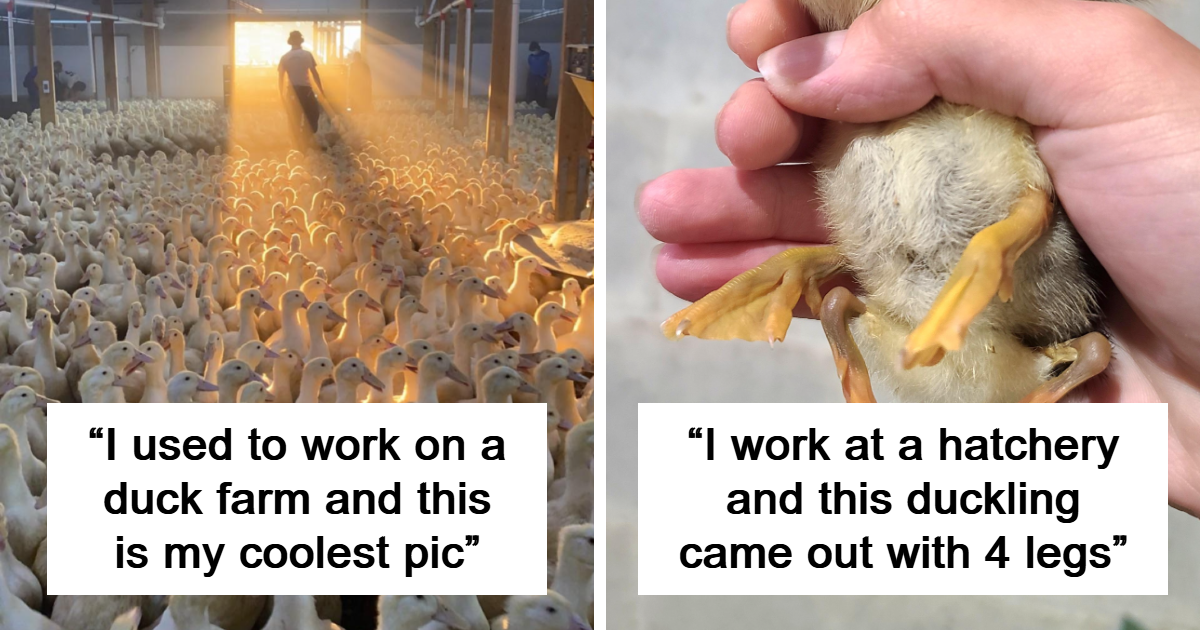
Some jobs come with spreadsheets. Some come with steel-toed boots. Some come with a badge, a hairnet, a forklift, a radio, a wrench, a camera, or a suspiciously large key ring that makes the employee sound like a medieval jailer walking down the hall. And then there are jobs that come with views so strange, rare, funny, beautiful, or oddly satisfying that a person cannot resist taking a photo.
That is the magic behind the viral appeal of “cool pics people took at their jobs.” These are not glossy stock photos of people smiling at laptops while pointing at invisible charts. They are real behind-the-scenes workplace photos: the kind that show what the public never gets to see. A NASA photographer capturing space hardware. A mechanic finding the world’s most dramatic oil leak. A baker standing in front of 900 identical rolls like a proud carb shepherd. A warehouse worker discovering that bubble wrap can become an accidental mountain range. A zookeeper meeting an animal with the confidence of a middle manager.
The title “Worked As A Photographer For NASA” instantly grabs attention because it sounds like the beginning of a story nobody wants to skip. It suggests access, curiosity, and a little professional envy. After all, most people’s workday view is a monitor, a mop bucket, a steering wheel, or the underside of a printer that has chosen violence. But workplace photography reminds us that every job has a secret world inside it. The office, lab, hospital, restaurant, factory, studio, farm, cockpit, classroom, and construction site all contain moments that are ordinary to insiders and fascinating to everyone else.
Why Job Photos Are So Addictive
Workplace photos satisfy one of the internet’s favorite cravings: the feeling of sneaking backstage without actually trespassing. We love seeing what happens behind the “Employees Only” door. We want to know how airplanes are serviced, how movie props are stored, how bread looks before it becomes breakfast, how giant machines are repaired, and how a NASA photo shoot works when the model is not a person but a spacecraft part worth more than a small country’s annual snack budget.
These pictures work because they combine three things: access, surprise, and authenticity. Access gives the viewer a rare peek into a place they usually cannot enter. Surprise delivers the “Wait, that’s part of your job?” reaction. Authenticity makes the photo feel trustworthy. It was not staged by a marketing department wearing matching polos. It was taken by someone who was there, doing the job, noticing something worth sharing.
There is also a strong human element. A job photo can make a technical profession feel personal. NASA imagery, for example, is not just about rockets and planets; it is also about the people who document missions, archive images, build equipment, and translate complex science into something the public can actually feel. Industrial photos can do the same thing. A picture of a welder’s perfectly finished seam, a chef’s prep station before service, or a lineman’s view from high above the street turns labor into a story.
The NASA Photographer Effect: When Work Looks Like Science Fiction
Few workplace-photo captions can compete with “I worked as a photographer for NASA.” That sentence has the gravitational pull of a black hole, except instead of swallowing light, it swallows your attention span. NASA’s public image collections are famous because they turn engineering into wonder. Launch pads, astronaut training, mission control, Earth seen from orbit, and close-ups of spacecraft hardware all show what happens when documentation becomes art.
NASA photography is especially fascinating because it lives at the intersection of science, public communication, and history. A camera at NASA is not merely there to make something look cool, although it often succeeds wildly at that. Images help document mission progress, support education, preserve records, and invite the public into projects that would otherwise feel distant or abstract. When people see a spacecraft being assembled, an astronaut training underwater, or Earth glowing from orbit, they are not just looking at a picture. They are seeing proof that human beings are extremely good at making complicated things and then labeling them with acronyms.
That is why the “NASA photographer” idea fits perfectly into a collection of unexpected job photos. It represents the dream version of workplace access: a job where the behind-the-scenes view includes rockets, clean rooms, test equipment, and possibly someone saying “stand back” in a tone that suggests both professionalism and excellent insurance.
What Makes a Workplace Photo “Cool”?
Not every job photo needs a rocket engine to be interesting. A photo becomes cool when it reveals scale, skill, rarity, humor, danger avoided, or beauty hiding in routine work. The best workplace pictures often fall into a few irresistible categories.
1. The “I Had No Idea This Existed” Photo
These are the pictures that make viewers suddenly realize how little they know about the systems around them. The inside of a theater lighting rig. A massive underground pipe. A hotel laundry room with towels stacked like a soft white fortress. The hidden machinery behind an escalator. The storage area where a museum keeps objects too delicate for display. These photos make everyday life feel like a series of secret levels.
2. The “That Is Way Bigger Than I Expected” Photo
Scale is internet catnip. A person standing next to a wind turbine blade, a mining tire, a ship chain, a commercial oven, a telescope mirror, or a rocket component instantly gives the viewer a sense of awe. Humans love measuring things against other humans. It is the same reason every dinosaur exhibit includes a tiny person silhouette. We need to know exactly how small we are before we can say, “Nice.”
3. The “Oddly Satisfying” Photo
Perfect rows of tools. Freshly poured concrete. A bakery tray arranged with military precision. Color-coded wires. Clean welds. A warehouse shelf organized so neatly it could reduce blood pressure. These pictures are satisfying because they show competence. Someone knew what they were doing, and the result is visually calm. The internet, which is mostly chaos wearing sunglasses, appreciates this.
4. The “My Job Is Weird Today” Photo
This category includes the plumber who finds a child’s toy in a pipe, the veterinarian holding an animal with royal-level attitude, the IT worker discovering a computer full of dust bunnies, or the office employee whose coworker labeled the communal fridge like a crime scene. These images are funny because they prove that every job eventually becomes a sitcom.
5. The “Beautiful by Accident” Photo
Some workplace photos are not funny or dramatic. They are quietly gorgeous. Sparks flying from metalwork. Steam rising in a kitchen before sunrise. A delivery driver’s view of a snow-covered street. A nurse seeing a city wake up after a night shift. A mechanic looking at rainbow-colored oil on wet pavement. These images remind us that beauty often clocks in before we notice it.
Why People Share Photos From Work
People share job photos for many reasons. Sometimes they are proud. Sometimes they are amazed. Sometimes they need proof that their day really did get that weird. A picture says, “You will not believe what happened,” and then politely provides evidence.
Workplace photos also help people explain what they do. Many jobs are difficult to describe in a single sentence. Try explaining a specialized lab role, aviation maintenance, stage production, geological fieldwork, or industrial design to a relative at Thanksgiving and watch their eyes slowly turn into mashed potatoes. But a single good photo can communicate the job instantly. It shows the tools, the environment, the stakes, and the mood.
There is also pride in craft. A carpenter may share a finished joint because it represents hours of precision. A chef may photograph a perfect sauce because it survived the dinner rush with dignity. A photographer at NASA may share a behind-the-scenes image because the scene connects human effort to cosmic ambition. These photos say: “This is what I helped make happen.”
The Line Between Sharing and Oversharing
Of course, not every workplace photo belongs online. The best job-photo posts respect safety, privacy, confidentiality, and common sense. Nobody wants to go viral because they accidentally posted a client’s private document, a patient’s information, a restricted area, a trade secret, or a coworker eating lunch in the background with the expression of a raccoon caught in a porch light.
Before posting a workplace photo, employees should consider a few basic questions. Does the photo reveal private information? Does it show a person who did not agree to be photographed? Could it create a security issue? Does the employer have a policy about social media or photography? Is the image funny without being cruel? Could the same post still feel harmless if a supervisor, customer, or future employer saw it?
This does not mean workplace photography should disappear. It simply means the best photos are shared responsibly. A picture of a fascinating machine, a neat process, or a funny non-sensitive moment can entertain thousands of people. A careless photo can create trouble faster than an office printer can jam five minutes before a deadline.
How Workplace Photos Turn Ordinary Jobs Into Stories
The most powerful thing about job photos is that they change how we see work. A grocery store looks simple from the customer side, but behind the scenes there is logistics, timing, stocking, refrigeration, cleaning, food safety, and a daily battle against shopping carts that migrate like wild animals. A hospital looks like a place of treatment, but behind each hallway are nurses, technicians, cleaners, doctors, administrators, and support staff making thousands of tiny decisions. A theater performance looks effortless until someone shows the backstage cables, props, cue sheets, costumes, and exhausted stage crew holding the whole illusion together with gaff tape and caffeine.
Photos compress all of that hidden labor into a single frame. They make the invisible visible. They remind us that the world is maintained by people doing specialized tasks in places most of us never enter.
Historically, workplace photography has done more than entertain. Documentary photographers helped reveal labor conditions, preserve social history, and show the human side of industry. Today’s casual job photos are usually lighter, funnier, and more internet-friendly, but they still belong to that larger tradition. They show how people work, what tools they use, what environments they navigate, and what surprises appear along the way.
Examples of Cool and Unexpected Job Photo Moments
A strong collection of 74 job photos might include a wide range of workplaces. Imagine a NASA photography studio with carefully lit aerospace hardware. A marine biologist holding a creature that looks like it was designed during a very imaginative lunch break. A construction worker photographing a sunrise from the top of a half-built tower. A librarian discovering a pressed flower inside a century-old book. A mechanic showing the inside of an engine that looks more like modern sculpture than machinery.
In a restaurant, a line cook might capture the brief, peaceful moment before the dinner rush when every container is full and every knife is sharp. Five minutes later, that same kitchen will sound like a drumline falling down stairs. In a hospital, a technician might photograph the careful arrangement of sterile tools, showing the quiet discipline behind medical care. In a factory, a worker might capture molten material glowing like a tiny manufactured sunset. In an office, someone might photograph a sticky-note system so elaborate it deserves its own municipal government.
These images are compelling because they turn work into discovery. The viewer learns something while being entertained. That is a rare combination, like finding a meeting that ends early.
The Humor Hidden Inside Professional Life
Work is serious, but workers are funny. That is one of the reasons job photos travel so well online. The humor comes from contrast. A highly technical workplace can produce a deeply silly moment. A serious uniform can stand next to a ridiculous object. A perfectly professional employee can encounter a problem so absurd that the only proper response is to document it for future historians.
There is a special joy in seeing experts deal with weirdness. A pest control worker discovering a raccoon with the confidence of a landlord. A delivery driver facing a “beware of dog” sign and then meeting a dog smaller than a sandwich. A repair technician opening a panel and finding a previous repair that appears to have been performed by a raccoon with tape. These moments are funny because they reveal the improvisational side of work. No manual covers everything. Sometimes the job description is simply “figure it out without screaming.”
Why These Photos Perform Well in Search and Social Media
From an SEO perspective, workplace photo stories have strong appeal because they combine curiosity, relatability, and visual storytelling. Searchers are drawn to phrases like “unexpected workplace photos,” “cool pictures from people’s jobs,” “behind-the-scenes job photos,” “NASA photographer,” and “funny work pictures” because they promise quick entertainment with a dose of discovery.
The title also has a built-in hook. Quotation-style headlines feel personal because they suggest a real person’s experience. The number “74” signals a large collection, which makes the reader feel there will be plenty to explore. Words like “cool,” “curious,” and “unexpected” create variety. The topic is broad enough to include science, trades, offices, animals, food, transportation, healthcare, and manufacturing. In other words, it is not a one-note joke. It is a whole workplace orchestra, and yes, someone in the back is probably playing the triangle incorrectly.
What We Learn From Job Photos
At their best, job photos teach us to appreciate labor. They show that expertise exists everywhere. The person repairing an elevator, sorting medical samples, installing fiber optic cable, photographing a rocket component, baking hundreds of pastries, cleaning a public space, or restoring an old building is part of a larger system that most of us rely on without thinking.
They also challenge assumptions. Many people imagine certain jobs as boring because they only see the customer-facing result. But inside almost every profession are moments of tension, beauty, comedy, and invention. A warehouse can look like a puzzle. A farm can look like an engineering project. A lab can look like a spaceship. A school can look like controlled chaos with bulletin boards. A photo can turn “just another shift” into a tiny documentary.
Experiences Related to “Worked As A Photographer For NASA”: The Human Side of Workplace Photos
The most memorable workplace-photo experiences usually begin with a moment when someone stops and thinks, “Nobody outside this job would believe this.” That instinct is powerful because every profession has its own version of normal. For one person, normal is arranging camera gear near aerospace equipment under strict lighting conditions. For another, normal is climbing a utility pole before sunrise, checking a restaurant freezer at midnight, washing paint from a theater floor, or labeling hundreds of lab samples while pretending the alphabet has not personally betrayed them.
People who take interesting photos at work often develop a sharper eye for details. A NASA photographer may notice how light reflects off spacecraft materials, how scale changes when a technician stands beside a component, or how a clean room can look both sterile and dramatic. A mechanic notices patterns of wear. A chef notices color and texture. A farmer notices weather. A nurse notices order, urgency, and quiet. A museum worker notices the emotional weight of objects most visitors never see. The camera becomes a way of saying, “This part matters too.”
Another experience tied to job photos is the pleasure of explaining your world to outsiders. When someone posts a picture from work, the comments often fill with questions: What is that machine? Why is the room yellow? How heavy is that tool? Is that safe? Do you need special training? Is the animal supposed to look that judgmental? Answering those questions can be satisfying because it turns the worker into a guide. Instead of being reduced to a job title, the person gets to show the knowledge, humor, and problem-solving behind the role.
There is also a bonding effect. Workers in the same field recognize details outsiders miss. A beautiful tool setup may impress anyone, but another professional will notice the exact method, the clever workaround, or the tiny mistake hiding in the corner. These photos create small communities of recognition. A nurse laughs because another nurse knows. A stagehand nods because another stagehand sees the cable management. A photographer appreciates the lighting choice. A cook understands why that perfectly organized prep station is basically a love letter.
At the same time, the best workplace-photo experiences come with respect. The goal is not to mock customers, expose coworkers, or leak private information. The goal is to share wonder. A good job photo makes people curious about work, not careless with it. It captures the strange beauty of earning a living in a world full of hidden rooms, specialized tools, impossible schedules, and people who know exactly what to do when something starts beeping.
That is why a collection like “Worked As A Photographer For NASA”: 74 Cool, Curious, And Unexpected Pics People Took At Their Jobs feels so satisfying. It is not just about unusual images. It is about perspective. It reminds readers that behind every ordinary service, product, building, meal, delivery, repair, performance, flight, or scientific achievement, there are people witnessing moments the rest of us never see. Sometimes they are breathtaking. Sometimes they are hilarious. Sometimes they are both. And sometimes they are simply proof that work, even on the weirdest day, can still surprise us.
Conclusion
Cool workplace photos endure because they reveal the hidden architecture of daily life. They show the public what workers see from the inside: the tools, the scale, the mistakes, the beauty, the humor, and the rare “you had to be there” moments that turn a regular shift into a story worth sharing.
A NASA photographer may have one of the most obviously fascinating jobs in the world, but the larger truth is that every workplace contains something worth noticing. Behind the counter, above the stage, under the hood, inside the lab, past the loading dock, and beyond the “authorized personnel only” sign, people are solving problems and seeing things most of us would never imagine. That is what makes these photos more than internet entertainment. They are tiny windows into the strange, skilled, funny, and surprisingly beautiful world of work.